Kirjojen hintavertailu – 12 903 735 kirjaa ja 27 kauppaa
Kirjailija
Stephen M. Kosslyn
Kirjat ja teokset yhdessä paikassa: 13 kirjaa, julkaisuja vuosilta 1986–2024, suosituimpiin kuuluu Wet Mind. Vertaile teosten hintoja ja tarkista saatavuus suomalaisista kirjakaupoista.
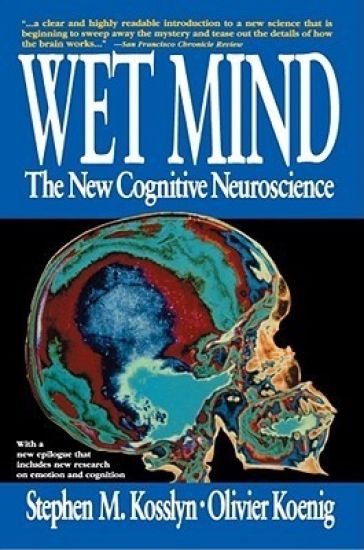
How do our brains allow us to recognize objects and locate them accurately in space, use mental imagery to remember yesterday's breakfast, read, understand speech, learn to dance, and recall a new telephone number? Recent breakthroughs in brain scanning and computing techniques have allowed researchers to plumb the secrets of the healthy brain's operation; simultaneously, much new information has been learned about the nature and causes of neuropsychological deficits in animals and humans following various sorts of brain damage in different locations. In this first comprehensive, integrated, and accessible overview of recent insights into how the brain gives rise to mental activity, the authors explain the fundamental concepts behind and the key discoveries that draw on neural network computer models, brain scans, and behavioral studies. Drawing on this analysis, the authors also present an intriguing theory of consciousness. In addition, this paperback edition contains an epilogue in which the authors discuss the latest research on emotion and cognition and present new information on working memory.
This timely book affirms that humans can flourish in the Age of AI by relying on their distinctive strengths, and explores the skills and knowledge that are required to interact effectively, efficiently, and responsibly with AIs, both today and in the future. In Part I, this book develops the "Cognitive Amplifier Loop," which allows humans to use AI to build on their cognitive and emotional strengths and manage their limitations. Kosslyn discusses ways to employ this loop to offload tasks to AI and to utilize it to train us effectively and efficiently, as well as how to use it to both learn and engage in critical thinking, creative problem solving, and manage cognitive and emotional constraints. Part II establishes how to draw on the Cognitive Amplifier Loop to help us improve our human relationships, addressing emotional intelligence, effective communication, leadership, followership, and collaboration skills. Finally, Part III builds on previous chapters to consider how to interact with AIs to help each of us learn and grow. Throughout the book, Kosslyn provides practical strategies and AI-assisted exercises to help readers develop these essential skills and knowledge. Kosslyn argues that by cultivating distinctively human capabilities, we can not only coexist with AI but flourish in an AI-infused world. This book is a must-read for anyone involved with AI, education, or Learning and Development in industry. It will also appeal to anyone studying thinking and decision making, AI and psychology, and the use of technology in the classroom.
This timely book affirms that humans can flourish in the Age of AI by relying on their distinctive strengths, and explores the skills and knowledge that are required to interact effectively, efficiently, and responsibly with AIs, both today and in the future. In Part I, this book develops the "Cognitive Amplifier Loop," which allows humans to use AI to build on their cognitive and emotional strengths and manage their limitations. Kosslyn discusses ways to employ this loop to offload tasks to AI and to utilize it to train us effectively and efficiently, as well as how to use it to both learn and engage in critical thinking, creative problem solving, and manage cognitive and emotional constraints. Part II establishes how to draw on the Cognitive Amplifier Loop to help us improve our human relationships, addressing emotional intelligence, effective communication, leadership, followership, and collaboration skills. Finally, Part III builds on previous chapters to consider how to interact with AIs to help each of us learn and grow. Throughout the book, Kosslyn provides practical strategies and AI-assisted exercises to help readers develop these essential skills and knowledge. Kosslyn argues that by cultivating distinctively human capabilities, we can not only coexist with AI but flourish in an AI-infused world. This book is a must-read for anyone involved with AI, education, or Learning and Development in industry. It will also appeal to anyone studying thinking and decision making, AI and psychology, and the use of technology in the classroom.
Cognitive neuroscience has grown into a rich and complex discipline, some 35 years after the term was coined. Given the great expanse of the field, an inclusive and authoritative resource such as this handbook is needed for examining the current state-of-the-science in cognitive neuroscience. Spread across two volumes, the 59 chapters included in this handbook systemically survey all aspects of cognitive neuroscience, spanning perception, attention, memory, language, emotion, self and social cognition, higher cognitive functions, and clinical applications. Additional chapters cover topics ranging from the use of top-down cognitive processes in visual perception to the representation and recognition of objects and spatial relations; attention and its relationship to action as well as visual motor control; language and related core abilities including semantics, speech perception and production, the distinction between linguistic competence and performance, and the capacity for written language. Special coverage is also given to chapters describing the psychopharmacology of cognition, the theory of mind, the neuroscience underlying the regulation of emotion, and neuropsychological and neuroimaging evidence that supports the special status of self-knowledge in memory. This handbook provides a comprehensive compendium of research on cognitive neuroscience that will be widely accessible to students, researchers, and professionals working in this exciting and growing field.
"This volume is the most important if not the final word on the great imagery debate. It examines issues critical to all cognition. For example, whether the brain is a general purpose computer and if the brain's structure imposes limits on what can be represented in our minds." Michael I. Posner, Prof. Emeritus University of Oregon |k No "The Case for Mental Imagery is destined to be a classic text in psychology. [the authors] present an in-depth, philosophically sophisticated, and empirically supported argument that clarifies and settles many of the most contentious issues in the longstanding, decades-long 'imagery debate'... This is an impressive achievement and an outstanding example of the way controversies can be addressed through a combination of sophisticated theoretical concepts paired with expertly conducted scientific research programs."--PsycCRITIQUES |k No "This is an outstanding book that presents a roadmap of the psychological and neural mechanisms underlying mental imagery. The field of mental imagery has a long and somewhat dark history and the study of the critical cognitive ability has only been considered scientifically legitimate relatively recently. In this book, Kosslyn and colleagues not only summarize the wealth of their own recent scientific findings but elegantly place these findings and their theoretical perspective in the larger historical and contemporary context of studies on mental imagery. The book distills a rich, complicated domain into a series of accessible topics and will serve as an invaluable guide to those entering the field, a refresher for those with passing knowledge, and a major reference for the cognoscenti."--Marlene Behrmann, Professor of Psychology, Carnegie Mellon University "For centuries, mental imagery has been recognized as one of the keys to understanding human intelligence, emotion, and creativity. Stephen Kosslyn developed the first comprehensive theory of this faculty of mind, and for three decades has explored it with theoretical depth, experimental ingenuity, and a relentless drive to get to the bottom of puzzles and controversies. Kosslyn has now given us a magisterial account of this crucial aspect of mental life. A seamless synthesis of mind and brain, The Case for Mental Imagery is a case of cognitive neuroscience at its finest."--Steven Pinker, Johnstone Family Professor of Psychology, Harvard University "The definitive treatment of mental imagery from a pictorialist point of view."--Ned Block, Silver Professor of Philosophy and Psychology, New York University
Making PowerPoint presentations that are clear, compelling, memorable, and even enjoyable is not an obscure art. In this book, Stephen Kosslyn, a renowned cognitive neuroscientist, presents eight simple principles for constructing a presentation that takes advantage of the information modern science has discovered about perception, memory, and cognition. Using hundreds of images and sample slides, he shows the common mistakes many people make and the simple ways to fix them. For example, never use underlining to emphasize a word, the line will cut off the bottom of letters that have descending lines (such as p and g), which interferes with the brain's ability to recognize text. Other tips include why you should state your conclusion at the beginning of a presentation, when to use a line graph versus a bar graph, and how to use color correctly. By following Kosslyn's principles, anyone will be able to produce a presentation that works!
Graphs have become a fixture of everyday life, used in scientific and business publications, in magazines and newspapers, on television, on billboards, and even on cereal boxes. Nonetheless, surprisingly few graphs communicate effectively. Many graphs fail because they do not take into account the goals, needs and abilities of the viewers. This book addresses the problems that arise when we attempt to convey information with visual displays such as graphs by presenting eight psychological principles for constructing effective graphs. These principles are solidly rooted in the scientific literature on how we perceive and comprehend graphs, and also in general facts about how our eyes and brains process visual information. The principles lead to hundreds of specific recommendations that serve as a concrete, step-by-step guide to constructing graphs that will be understood at a glance, help the reader decide whether a graph is an appropriate display for their information, and help the reader to choose the correct type of graph for a specific type of data and message. These psychological principles can be used to construct not only effective graphs, but also effective maps, diagrams, and other types of visual displays.
Mental imagery has always been a controversial topic in psychology. The major problem has been the inherently private nature of mental images, which has traditionally prevented objective assessment of their structure and function. Between researchers in cognitive psychology and computer-science, a debate, now commonly called 'the imagery debate' arose about what exactly constitutes a mental image. Although the imagery researchers in cognitive psychology assumed that mental images were in fact images, and hence often compared them to pictures, the computer-science researchers relied on language-like internal representations that are easy to implement in programming languages. On the side of the computer-science researchers, Zenon Pylyshyn has argued that the picture metaphor underlying theoretical discussions of visual mental imagery is seriously misleading, particularly because it suggests that an image is an entity to be perceived. Pylyshyn has claimed that to describe what we know adequately, we must posit mental structures that describe, that are conceptual and propositional in nature, rather than sensory or pictorial-symbolic descriptions, rather than images. On the side of the mental-imagery researchers, Stephen Kosslyn has argued that the idea that mental depict, as opposed to describe, is not only defensible, but most consistent with the emerging body of data about imagery. In this volume, Stephen Kosslyn revisits the debate some 30 years later, when it has evolved to bear on a much more general concern: the relation between mental phenomena and underlying natural substrates. Kosslyn summarises the arguments and positions, puts them in context, and shows how modern neuroscientific methods can illustrate the representational nature of mental imagery.
Our subjective inner life is what really matters to us as human beings--and yet we know relatively little about how it arises. Over a long and distinguished career Benjamin Libet has conducted experiments that have helped us see, in clear and concrete ways, how the brain produces conscious awareness. For the first time, Libet gives his own account of these experiments and their importance for our understanding of consciousness. Most notably, Libet's experiments reveal a substantial delay--the "mind time" of the title--before any awareness affects how we view our mental activities. If all conscious awarenesses are preceded by unconscious processes, as Libet observes, we are forced to conclude that unconscious processes initiate our conscious experiences. Freely voluntary acts are found to be initiated unconsciously before an awareness of wanting to act--a discovery with profound ramifications for our understanding of free will. How do the physical activities of billions of cerebral nerve cells give rise to an integrated conscious subjective awareness? How can the subjective mind affect or control voluntary actions? Libet considers these questions, as well as the implications of his discoveries for the nature of the soul, the identity of the person, and the relation of the non-physical subjective mind to the physical brain that produces it. Rendered in clear, accessible language, Libet's experiments and theories will allow interested amateurs and experts alike to share the experience of the extraordinary discoveries made in the practical study of consciousness.
The mainstays of brain imaging techniques have been positron emission tomography (PET), functional magnetic resonance imaging (fMRI), magnetoencephalography (MEG), and event-related potentials (ERPs). These methods all record direct or indirect measures of brain activity and correlate the activity patterns with behavior. But to go beyond the correlations established by these techniques and prove the necessity of an area for a given function, cognitive neuroscientists need to be able to reverse engineer the brain-i.e., to selectively remove components from information processing and assess their impact on the output. This book is about transcranial magnetic stimulation (TMS), a technique that emerged during the same period as neuroimaging and has made it possible to reverse engineer the human brain's role in behavioral and cognitive functions. The subject areas that can be studied using TMS run the gamut of cognitive psychology-attention, perception, awareness, eye movements, action selection, memory, plasticity, language, numeracy, and priming. The book presents an overview of historical attempts at magnetic brain stimulation, ethical considerations of the technique's use, basic technical and practical information, the results of numerous TMS studies, and a discussion of the future of TMS in the armamentarium of cognitive neuropsychology.
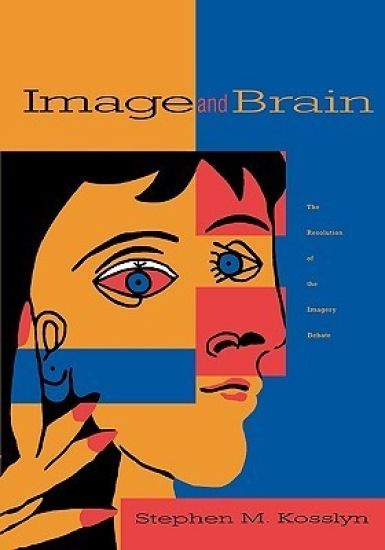
This long-awaited work by prominent Harvard psychologist Stephen Kosslyn integrates a twenty-year research program on the nature of high-level vision and mental imagery. Image and Brain marshals insights and empirical results from computer vision, neuroscience, and cognitive science to develop a general theory of visual mental imagery, its relation to visual perception, and its implementation in the human brain. It offers a definitive resolution to the long-standing debate about the nature of the internal representation of visual mental imagery. Kosslyn reviews evidence that perception and representation are inextricably linked, and goes on to show how "quasi-pictorial" events in the brain are generated, interpreted, and used in cognition. The theory is tested with brain-scanning techniques that provide stronger evidence than has been possible in the past. Known for his work in high-level vision, one of the most empirically successful areas of experimental psychology, Kosslyn uses a highly interdisciplinary approach. He reviews and integrates an extensive amount of literature in a coherent presentation, and reports a wide range of new findings using a host of techniques. A Bradford Book
Are images an important means of recalling information from memory and solving problems? Or are images just display lights on the mind’s computer? In Image and Mind, Stephen Kosslyn makes an impressive case for the view that images are critically involved in the life of the mind. In a series of ingenious experiments, he provides hard evidence that people can construct elaborate mental images, search them for specific information, and perform such other internal operations as mental rotation. Kosslyn demonstrates that these results are best explained by a two-tiered model in which images are stored in abstract form in long-term memory and then assembled for internal display in much the way that images on a TV screen can be created from files in a computer memory. Kosslyn shows how this model can be used to solve many of the persistent questions which have traditionally plagued theories of imagery that attempted to install imagery as the exclusive medium of mental representation. Unlike any other work on imagery, Image and Mind provides an integrated account of most of the modern empirical results from imagery research within the framework of a coherent theory. The book also introduces a host of new experimental techniques and major hypotheses to guide future research. The result is a landmark book and a major event in the study of the mind.