Kirjojen hintavertailu – 12 859 824 kirjaa ja 27 kauppaa

Kirjailija

Stephen Pattison

Kirjat ja teokset yhdessä paikassa: 18 kirjaa, julkaisuja vuosilta 1994–2020, suosituimpiin kuuluu Invitation to Research in Practical Theology. Vertaile teosten hintoja ja tarkista saatavuus suomalaisista kirjakaupoista.

18 kirjaa

Kirjojen julkaisuvuodet: 1994–2020.

Invitation to Research in Practical Theology

Invitation to Research in Practical Theology

Zoë Bennett; Elaine Graham; Stephen Pattison; Heather Walton

Routledge
2018
nidottu
Practical theology as a subject area has grown and become more sophisticated in its methods and self-understanding over the last few decades. This book provides a complete and original research primer in the major theories, approaches and methods at the cutting-edge of research in contemporary practical theology. It represents a reflection on the very practice of the discipline itself, its foundational questions and epistemological claims. Each chapter examines different aspects of the research process: starting with experience and practice, aspects of research design and epistemology, communities of learning, the influence of theological norms and tradition on the practice of research, and ethical considerations about what constitutes ‘the good’ in advanced research. The uniqueness of this book rests in its authoritative overview of current practical theological research across a range of traditions and approaches, combined with a comprehensive introduction to research methodology. It offers worked examples from the authors, their colleagues and research students that serve to illustrate key ideas and approaches in practical theological research. The four authors are all internationally-leading scholars and rank amongst the most influential figures in practical theology of their generation. The book promises to be of interest to students, teachers and researchers in practical theology, especially those looking to conduct original practice-based enquiry in the field.

Transforming Enterprise?

Transforming Enterprise?

Andrew Yancey; Stephen Pattison

Pickwick Publications
2020
sidottu
How does Christian faith integrate with capitalism? This question has been at the heart of Christian ethics for more than three hundred years, but rarely as complex and important as now. The polarizing influence of consumer capitalism has extended into virtually every domain of human life. On the one hand, capitalism has contributed to increases in standards of living and life expectancy, especially among those in extreme poverty. On the other, it has exacerbated income inequality, environmental damages, and social displacement. For contemporary American evangelical theology, this is problematic. It has long been on a quest to show that Christian faith harmonizes with capitalistic enterprise. But can faith harness the transformational power of consumer capitalism without being affected by its excesses? For many, the election of Donald Trump as president has revealed a great divide within American evangelicalism about the links between Christianity, economic power, and moral character. Working from the field of academic practical theology in interdisciplinary dialogue with business management ethics, Transforming Enterprise? shows why and how a reframing of the relationship between Christian faith and capitalistic enterprise is needed in the contemporary postsecular milieu.
Chaplaincy and the Soul of Health and Social Care

Chaplaincy and the Soul of Health and Social Care

Stephen Pattison

Jessica Kingsley Publishers
2019
pokkari
Gathering together thoughts and visions of experienced practitioners, academics, educators and strategic leaders from around the world, this edited volume sheds light on the nature of chaplaincy and its role and significance within ever-changing contemporary healthcare systems. A wide range of issues central to spiritual care delivery are covered, including reflections on what it feels like to be cared for by a chaplain through illness; the nature of chaplaincy as a profession; and how chaplains can engage with healthcare institutions in ways that have integrity yet are also deeply spiritual. The focus throughout is that chaplaincy should not only be guidance for people in distress, as a form of crisis intervention, but is rather about helping to promote wellbeing and enhance people's quality of life. Where specialisms tend to fragment systems and individuals, this book seeks to show that true health and wellbeing can only be found through a holistic approach, and shows how chaplaincy can bring this to the table. This book is for anyone who recognises the centrality of spirituality for wellbeing, and wishes to see what that might look like in practice.
SCM Studyguide

SCM Studyguide

Judith Thompson; Stephen Pattison; Ross Thompson

SCM Press
2019
nidottu
Since it was first published, the SCM Studyguide to Theological Reflection has quickly gained a reputation for being a vital and accessible guide to the subject for all who embark on it for the first time. This studyguide offers newcomers a step by step introduction to understanding what theological reflection is and helps them to explore which of the methods introduced best suits them and their particular situation. It is practical in emphasis, providing students with a wide variety of worked examples and opportunities to carry out their own exercises. This 2nd edition will bring the content up to date, offering a revised and improved bibliography and updated and refreshed examples and exercises, including new sections on scriptural reasoning and contemplative theology.
In Such Times

In Such Times

Lorraine Cavanagh; Stephen Pattison

Cascade Books
2018
pokkari
What are the fears that govern our lives? Why do we seldom share them with others? How do they inform the way we think of the politics of the day and the life of the church? These are some of the questions addressed by Lorraine Cavanagh in this short and readable book. Her reflections take us through the kind of private fears that originate in early childhood and remain deeply embedded in the adult psyche, so that they later shape the person's thinking and often define that person's life. They also emerge as fear worked out through the need for power and control over others and how that can lead to collective dependency on the kind of leaders we most fear. Fear is also rooted in loneliness, the loneliness of the individual and the endemic loneliness of Western society, both of which we try to evade with the help of social media and the private screen worlds we inhabit. Through imaginative imagery drawn from the Christian tradition, In Such Times speaks of the need to re-learn trust in the corporate contexts of both church and world. As its title suggests, it is a book whose time has come. ""In this present season of anxiety, Lorraine Cavanagh's timely and trenchant exploration of the divisive effects of fear and the ways in which it alienates us from our true selves, one another, and the world around us could not be more urgently needed. Power masquerading as strength, be it political or ecclesiastical, is exposed as the mask fear wears in the threatening presence of the 'other.' In Such Times is far from a surrender to despair, but a clear call to recover in our personal and collective heart the re-creating and re-generating 'perfect love' worked in us by the Spirit which 'casts out fear.'"" --Frank T. Griswold, XXV Presiding Bishop, The Episcopal Church ""The Christian way might be seen by some of its cultured despisers as an evasion of suffering and fear, a fanciful, imaginary bulwark against the darkness. Religion can perform this kind of suspect ideological function. At its best, however, it is a springboard for living life courageously, with full creative awareness."" --Stephen Pattison, University of Birmingham, UK Lorraine Cavanagh is a theologian and an Anglican priest in the Church in Wales. Her books include Finding God in Other Christians, Making Sense of God's Love: Atonement and Redemption, and Waiting on the Word: Preaching Sermons That Connect People with God. She blogs at lorrainecavanaghsblog.wordpress.com.
Invitation to Research in Practical Theology

Invitation to Research in Practical Theology

Zoë Bennett; Elaine Graham; Stephen Pattison; Heather Walton

Routledge
2018
sidottu
Practical theology as a subject area has grown and become more sophisticated in its methods and self-understanding over the last few decades. This book provides a complete and original research primer in the major theories, approaches and methods at the cutting-edge of research in contemporary practical theology. It represents a reflection on the very practice of the discipline itself, its foundational questions and epistemological claims. Each chapter examines different aspects of the research process: starting with experience and practice, aspects of research design and epistemology, communities of learning, the influence of theological norms and tradition on the practice of research, and ethical considerations about what constitutes ‘the good’ in advanced research. The uniqueness of this book rests in its authoritative overview of current practical theological research across a range of traditions and approaches, combined with a comprehensive introduction to research methodology. It offers worked examples from the authors, their colleagues and research students that serve to illustrate key ideas and approaches in practical theological research. The four authors are all internationally-leading scholars and rank amongst the most influential figures in practical theology of their generation. The book promises to be of interest to students, teachers and researchers in practical theology, especially those looking to conduct original practice-based enquiry in the field.

Values in Health and Social Care

Values in Health and Social Care

Ray Samuriwo; Stephen Pattison; Andrew Todd; Ben Hannigan

Jessica Kingsley Publishers
2017
pokkari
This innovative workbook enables students and those working in health and social care to deepen their understanding of the values that underpin their practice. Rich in practical exercises and downloadable resources that invite the reader to engage with their own values, it explores how values, though not often reflected on, define the quality of care delivered. Supported by case studies and including a glossary of key terms and concepts, the workbook provides an overview of how values are adopted and adapted in professional contexts across health and social care services. With an emphasis on the ever-evolving nature of values, it examines professional ethics through the lens of legislation, codes of conduct, cost-effectiveness and whole-organisation management. This unique resource allows readers to gain a clearer picture of what their values are and how they can realistically implement them in their work, thus achieving the highest possible quality of care delivery.
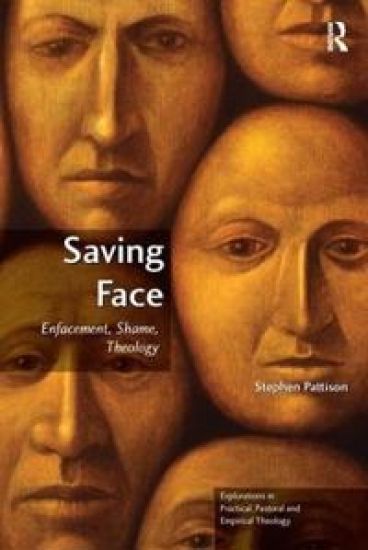
Saving Face

Saving Face

Stephen Pattison

Ashgate Publishing Limited
2013
nidottu
Faces are all around us and fundamentally shape both everyday experience and our understanding of people. To lose face is to be alienated and experience shame, to be enfaced is to enjoy the fullness of life. In theology as in many other disciplines faces, as both physical phenomena and symbols, have not received the critical, appreciative attention they deserve. This pioneering book explores the nature of face and enfacement, both human and divine. Pattison discusses questions concerning what face is, how important face is in human life and relationships, and how we might understand face, both as a physical phenomenon and as a series of socially-inflected symbols and metaphors about the self and the body. Examining what face means in terms of inclusion and exclusion in contemporary human society and how it is related to shame, Pattison reveals what the experience of people who have difficulties with faces tell us about our society, our understandings of, and our reactions to face. Exploring this ubiquitous yet ignored area of both contemporary human experience and of the Christian theological tradition, Pattison explains how Christian theology understands face, both human and divine, and the insights might it offer to understanding face and enfacement. Does God in any sense have a physically visible face? What is the significance of having an enfaced or faceless God for Christian life and practice? What does the vision of God mean now? If we want to take face and defacing shame seriously, and to get them properly into perspective, we may need to change our theology, thought and practice - changing our ways of thinking about God and about theology.
Saving Face

Saving Face

Stephen Pattison

Ashgate Publishing Limited
2013
sidottu
Faces are all around us and fundamentally shape both everyday experience and our understanding of people. To lose face is to be alienated and experience shame, to be enfaced is to enjoy the fullness of life. In theology as in many other disciplines faces, as both physical phenomena and symbols, have not received the critical, appreciative attention they deserve. This pioneering book explores the nature of face and enfacement, both human and divine. Pattison discusses questions concerning what face is, how important face is in human life and relationships, and how we might understand face, both as a physical phenomenon and as a series of socially-inflected symbols and metaphors about the self and the body. Examining what face means in terms of inclusion and exclusion in contemporary human society and how it is related to shame, Pattison reveals what the experience of people who have difficulties with faces tell us about our society, our understandings of, and our reactions to face. Exploring this ubiquitous yet ignored area of both contemporary human experience and of the Christian theological tradition, Pattison explains how Christian theology understands face, both human and divine, and the insights might it offer to understanding face and enfacement. Does God in any sense have a physically visible face? What is the significance of having an enfaced or faceless God for Christian life and practice? What does the vision of God mean now? If we want to take face and defacing shame seriously, and to get them properly into perspective, we may need to change our theology, thought and practice - changing our ways of thinking about God and about theology.
Seeing Things

Seeing Things

Stephen Pattison

SCM Press
2007
nidottu
Gifford Lectures series, 2007. Seeing Things is a highly original book that will have appeal across humanity departments including visual studies, theology, art history, sociology, anthropology and ethics. The book considers in detail, the experience of perceiving visual objects, from high art to everyday artefacts. It looks in particular at the problems encountered with the ways we in Western culture look upon the world and things, and encourages and argues for ways to look and visualise the world more critically, broadly and widely. Sight is one of the main ways we perceive and relate to the world, and yet it is mostly assumed rather than actively reflected on. Objects designated as art and the realm of aesthetics attract some active attention and reflection, but most of the visible world is ignored in the context of what Pattison describes as our ‘ordinary blindness’. The book argues that the range of things we choose to see and value is arbitrary and limited and the ways in which we relate to things and objects are mostly crude and un-nuanced. Pattison argues that it is desirable to consider more person-like relationships with all manner of visibly perceived objects, from classical sculptures to tennis rackets. If we begin to apply this person-like relationship with things, we transgress the Western secular and religious practice and belief that maintains that the realm of the manufactured is ‘dead’ and so can be treated by humans exactly as they wish without consideration. Pattison argues that this person-like relationship does not mean re-animating or re-sacramentalising the world, rather he argues for observation and exploration of the actual phenomenology of the object.
Values in Professional Practice

Values in Professional Practice

Stephen Pattison; Roisin Pill

Radcliffe Publishing Ltd
2001
nidottu
Dentists and members of the dental practice team increasingly need to know how to deal with potential risks to patients dentists staff and premises; and how to manage risk with common sense procedures. This book shows the reader how. It addresses risk issues and helps dentists and dental professionals find the answers. It is a comprehensive guide including topics such as complaints claims consent health and safety dental records radiology treatment planning and finance management. The book can be read cover to cover or referred to as needed for specific topics. Icons help guide the reader through the text and exercises for individuals and team groups are also included.
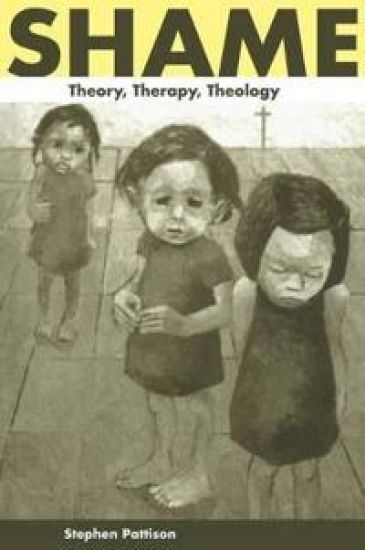
Shame

Shame

Stephen Pattison

Cambridge University Press
2000
pokkari

Halvin toimitettuna 62,60 €

Stephen Pattison considers the nature of shame as it is discussed in the diverse discourses of literature, psychology, psychoanalysis, philosophy, history and sociology and concludes that ‘shame’ is not a single unitary phenomenon, but rather a set of separable but related understandings in different discourses. Situating chronic shame primarily within the metaphorical ecology of defilement, pollution and toxic unwantedness, Pattison goes on to examine the causes and effects of shame. He then considers the way in which Christianity has responded to and used shame. Psychologists, philosophers, theologians and therapists will find this a fascinating source of insight, and it will be of particular use to pastoral workers and those concerned with religion and mental health.
Shame

Shame

Stephen Pattison

Cambridge University Press
2000
sidottu
In this book, first published in 2000, Stephen Pattison considers the nature of shame as it is discussed in the diverse discourses of literature, psychology, psychoanalysis, philosophy, history and sociology and concludes that 'shame' is not a single unitary phenomenon, but rather a set of separable but related understandings in different discourses. Situating chronic shame primarily within the metaphorical ecology of defilement, pollution and toxic unwantedness, Pattison goes on to examine the causes and effects of shame. He then considers the way in which Christianity has responded to and used shame. Psychologists, philosophers, theologians and therapists will find this a fascinating source of insight, and it will be of particular use to pastoral workers and those concerned with religion and mental health.
Faith of the Managers

Faith of the Managers

Stephen Pattison

Geoffrey Chapman
1997
nidottu
According to Stephen Pattison, managers have become the cultural heroes of our time. In this book, he examines some of the values, assumptions, beliefs and practices they embrace. Managerialism, he argues, is a form of religious faith, and he criticises the utopianism of those whom managers look upon as gurus. He suggests that managers should apply to their faith some of the critical spirit that theologians have applied to religious belief. His book will be of interest all who want more from management that manipulative technique and incomprehesible jargon. Stephen Pattison is a senior lecturer in the School of Health and Social Welfare at The Open University. He has been an ethicist, a management specialist and a theologian.
Pastoral Care and Liberation Theology

Pastoral Care and Liberation Theology

Stephen Pattison

Cambridge University Press
1994
sidottu
This is the first book to show how Latin American liberation theology can be applied to and can transform pastoral care in countries such as Britain and the USA. Hitherto pastoral care has tended to concentrate on looking after individuals. Stephen Pattison suggests that much of the suffering endured by individuals is actually socially and politically caused, and so is avoidable if the appropriate action is taken. The author argues that what we now require is a socio-politically aware and committed pastoral care which makes an option for oppressed and poor people and engages in practical struggle against the forces of injustice and oppression. Focussing as it does especially on mentally ill people and on women, the book will be of interest to all those who want to broaden their vision and knowledge of liberation theology or pastoral care, whether theologians, pastors, students for ministry, members of caring professions, or users of the services they provide.