Kirjojen hintavertailu – 12 859 828 kirjaa ja 27 kauppaa

Kirjailija

Stephen Quilley

Kirjat ja teokset yhdessä paikassa: 6 kirjaa, julkaisuja vuosilta 2002–2023, suosituimpiin kuuluu Exploring the Tomato. Vertaile teosten hintoja ja tarkista saatavuus suomalaisista kirjakaupoista.

6 kirjaa

Kirjojen julkaisuvuodet: 2002–2023.

Exploring the Tomato

Exploring the Tomato

Mark Harvey; Stephen Quilley; Huw Beynon

Edward Elgar Publishing Ltd
2004
nidottu
Exploring the Tomato engages with an apparently simple fruit in order to reveal major changes to society and economy. It treats the tomato as an object of fascination and as a probe into major historical changes in twentieth century capitalism. From first domestication to genetic modification, from Aztec salsa to supermarket pizza, the tomato has been continually transformed in the ways it has been produced, exchanged and consumed. This book explores what brings about a variety that is at once biological, historical and socio-economic. A conceptual framework of 'instituted economic process' demonstrates how different tomato forms are an expression of dynamic processes in capitalist economies and societies during the twentieth century. As both an early pioneer in mass production and a contemporary contributor to the creation of global cuisines, the tomato has been subject to intense innovation. Computerised total ecologies under glass, producing fresh tomatoes of all shapes, colours and sizes, compete with sun and southern climates across the world. To enter the variety of tomato worlds is to discover the variety of capitalism. Written in an accessible style, this book makes a major contribution to the emerging field of economic sociology and to our understanding of the innovation process. It should be read by anyone concerned with social science, particularly economists and sociologists, as well as those interested in food and the history of food.
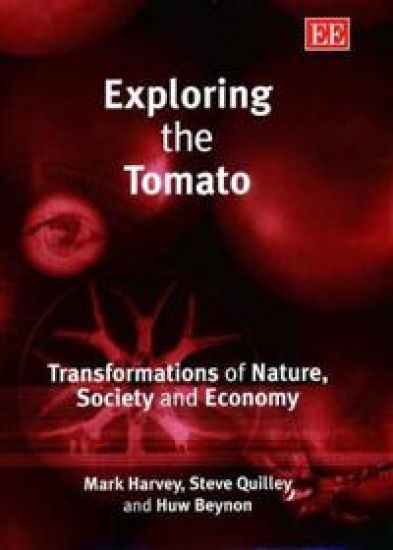
Exploring the Tomato

Exploring the Tomato

Mark Harvey; Stephen Quilley; Huw Beynon

Edward Elgar Publishing Ltd
2002
sidottu
Exploring the Tomato engages with an apparently simple fruit in order to reveal major changes to society and economy. It treats the tomato as an object of fascination and as a probe into major historical changes in twentieth century capitalism. From first domestication to genetic modification, from Aztec salsa to supermarket pizza, the tomato has been continually transformed in the ways it has been produced, exchanged and consumed. This book explores what brings about a variety that is at once biological, historical and socio-economic. A conceptual framework of 'instituted economic process' demonstrates how different tomato forms are an expression of dynamic processes in capitalist economies and societies during the twentieth century. As both an early pioneer in mass production and a contemporary contributor to the creation of global cuisines, the tomato has been subject to intense innovation. Computerised total ecologies under glass, producing fresh tomatoes of all shapes, colours and sizes, compete with sun and southern climates across the world. To enter the variety of tomato worlds is to discover the variety of capitalism. Written in an accessible style, this book makes a major contribution to the emerging field of economic sociology and to our understanding of the innovation process. It should be read by anyone concerned with social science, particularly economists and sociologists, as well as those interested in food and the history of food.
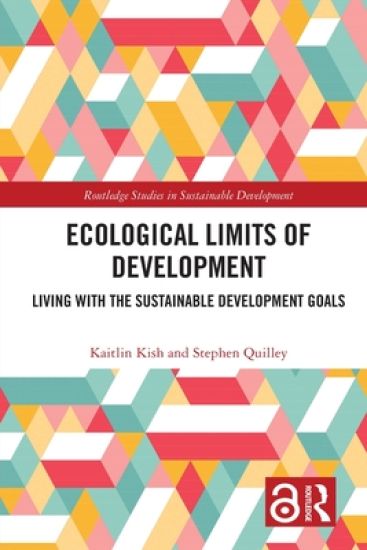
Ecological Limits of Development

Ecological Limits of Development

Kaitlin Kish; Stephen Quilley

TAYLOR FRANCIS LTD
2023
nidottu
Embracing the reality of biophysical limits to growth, this volume uses the technical tools from ecological economics to recast the Sustainable Development Goals (SDGs) as Ecological Livelihood Goals – policy agendas and trajectories that seek to reconcile the social and spatial mobility and liberty of individuals, with both material security and ecological integrity. Since the 1970s, mainstream approaches to sustainable development have sought to reconcile ecological constraints with modernization through much vaunted and seldom demonstrated strategies of ‘decoupling’ and ‘dematerialization’. In this context, the UN SDGs have become the orchestrating drivers of sustainability governance. However, biophysical limits are not so easily sidestepped. Building on an ecological- economic critique of mainstream economics and a historical- sociological understanding of state formation, this book explores the implications of ecological limits for modern progressive politics. Each chapter outlines leverage points for municipal engagement in local and regional contexts. Systems theory and community development perspectives are used to explore under- appreciated avenues for the kind of social and cultural change that would be necessary for any accommodation between modernity and ecological limits. Drawing on ideas from H. T. Odum, Herman Daly, Zigmunt Bauman, and many others, this book provides guiding research for a convergence between North and South that is bottom-up, household-centred, and predicated on a re- emerging domain of Livelihood. In each chapter, the authors provide recommendations for reconfiguring the UN’s SDGs as Ecological Livelihood Goals – a framework for sustainable development in an era of limits. This book will be of great interest to students and scholars of ecological economics, socio- ecological systems, political economy, international and community development, global governance, and sustainable development.
Ecological Limits of Development

Ecological Limits of Development

Kaitlin Kish; Stephen Quilley

Routledge
2021
sidottu
Embracing the reality of biophysical limits to growth, this volume uses the technical tools from ecological economics to recast the Sustainable Development Goals (SDGs) as Ecological Livelihood Goals – policy agendas and trajectories that seek to reconcile the social and spatial mobility and liberty of individuals, with both material security and ecological integrity. Since the 1970s, mainstream approaches to sustainable development have sought to reconcile ecological constraints with modernization through much vaunted and seldom demonstrated strategies of ‘decoupling’ and ‘dematerialization’. In this context, the UN SDGs have become the orchestrating drivers of sustainability governance. However, biophysical limits are not so easily sidestepped. Building on an ecological- economic critique of mainstream economics and a historical- sociological understanding of state formation, this book explores the implications of ecological limits for modern progressive politics. Each chapter outlines leverage points for municipal engagement in local and regional contexts. Systems theory and community development perspectives are used to explore under- appreciated avenues for the kind of social and cultural change that would be necessary for any accommodation between modernity and ecological limits. Drawing on ideas from H. T. Odum, Herman Daly, Zigmunt Bauman, and many others, this book provides guiding research for a convergence between North and South that is bottom-up, household-centred, and predicated on a re- emerging domain of Livelihood. In each chapter, the authors provide recommendations for reconfiguring the UN’s SDGs as Ecological Livelihood Goals – a framework for sustainable development in an era of limits. This book will be of great interest to students and scholars of ecological economics, socio- ecological systems, political economy, international and community development, global governance, and sustainable development.
State Power and Asylum Seekers in Ireland

State Power and Asylum Seekers in Ireland

Steven Loyal; Stephen Quilley

Springer Nature Switzerland AG
2018
nidottu
This book aims to account for the reception, treatment and sometimes, eventual deportation, of asylum seekers in Ireland, by analysing how they are framed and dealt with by the Irish state. Both historically and theoretically grounded, it will discuss contemporary immigration policies and issues in light of the overall social, historical, and economic development of Irish society and state immigration policy. State Power and Asylum Seekers in Ireland will be of interest to scholars and students in the fields of historical sociology, sociological theory and social policy, with a focus on discourses of patterns of European migration, the changing role and function of the state and its policies, and the psycho-social experience of asylum seekers.
State Power and Asylum Seekers in Ireland

State Power and Asylum Seekers in Ireland

Steven Loyal; Stephen Quilley

Springer International Publishing AG
2018
sidottu
This book aims to account for the reception, treatment and sometimes, eventual deportation, of asylum seekers in Ireland, by analysing how they are framed and dealt with by the Irish state. Both historically and theoretically grounded, it will discuss contemporary immigration policies and issues in light of the overall social, historical, and economic development of Irish society and state immigration policy. State Power and Asylum Seekers in Ireland will be of interest to scholars and students in the fields of historical sociology, sociological theory and social policy, with a focus on discourses of patterns of European migration, the changing role and function of the state and its policies, and the psycho-social experience of asylum seekers.