Kirjojen hintavertailu – 12 859 828 kirjaa ja 27 kauppaa

Kirjailija

Stephen Quinn

Kirjat ja teokset yhdessä paikassa: 17 kirjaa, julkaisuja vuosilta 2001–2023, suosituimpiin kuuluu Funding Journalism in the Digital Age. Vertaile teosten hintoja ja tarkista saatavuus suomalaisista kirjakaupoista.

17 kirjaa

Kirjojen julkaisuvuodet: 2001–2023.

Funding Journalism in the Digital Age

Funding Journalism in the Digital Age

Jeff Kaye; Stephen Quinn

Peter Lang Publishing Inc
2010
nidottu
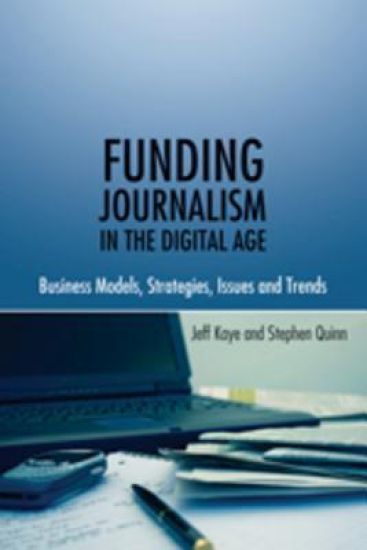
The news media play a vital role in keeping the public informed and maintaining democratic processes. But that essential function has come under threat as emerging technologies and changing social trends, sped up by global economic turmoil, have disrupted traditional business models and practices, creating a financial crisis. Quality journalism is expensive to produce – so how will it survive as current sources of revenue shrink? Funding Journalism in the Digital Age not only explores the current challenges, but also provides a comprehensive look at business models and strategies that could sustain the news industry as it makes the transition from print and broadcast distribution to primarily digital platforms. The authors bring widespread international journalism experience to provide a global perspective on how news organizations are evolving, investigating innovative commercial projects in the United States, United Kingdom, Australia, Norway, South Korea, Singapore and elsewhere.

How a Ledger Became a Central Bank

How a Ledger Became a Central Bank

Stephen Quinn; William Roberds

Cambridge University Press
2023
pokkari
Before the US Federal Reserve and the Bank of England, the Bank of Amsterdam ('Bank') was a dominant central bank with a global impact on money and credit. How a Ledger Became a Central Bank draws on extensive archival data and rich secondary literature, to offer a new and detailed portrait of this historically significant institution. It describes how the Bank struggled to manage its money before hitting a modern solution: fiat money in combination with a repurchase facility and discretionary open market operations. It describes techniques the Bank used to monitor and stabilize money stock, and how foreign sovereigns could exploit the liquidity of the Bank for state finance. Closing with a discussion of commonalities of the Bank of Amsterdam with later central banks, including the Federal Reserve, this book has generated a great deal of excitement among scholars of central banking and the role of money in the macroeconomy.
How a Ledger Became a Central Bank

How a Ledger Became a Central Bank

Stephen Quinn; William Roberds

Cambridge University Press
2023
sidottu
Before the US Federal Reserve and the Bank of England, the Bank of Amsterdam ('Bank') was a dominant central bank with a global impact on money and credit. How a Ledger Became a Central Bank draws on extensive archival data and rich secondary literature, to offer a new and detailed portrait of this historically significant institution. It describes how the Bank struggled to manage its money before hitting a modern solution: fiat money in combination with a repurchase facility and discretionary open market operations. It describes techniques the Bank used to monitor and stabilize money stock, and how foreign sovereigns could exploit the liquidity of the Bank for state finance. Closing with a discussion of commonalities of the Bank of Amsterdam with later central banks, including the Federal Reserve, this book has generated a great deal of excitement among scholars of central banking and the role of money in the macroeconomy.
Clarity

Clarity

Stephen Quinn

Mojo Media Insights
2018
pokkari
If you can walk or talk, you have evidence that you can learn to write. That is the message of this book. But you must be prepared to work, just as you worked hard to learn to walk and talk. Clarity: second edition.
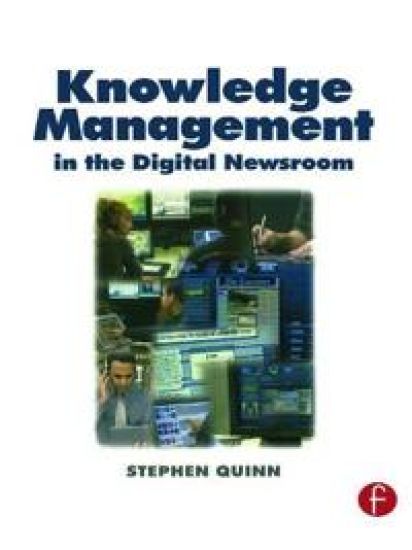
Knowledge Management in the Digital Newsroom
If you are an editor or newsroom manager seeking new and more efficient ways of managing the ever increasing flow of information through your newsroom, this book will provide the information you need to make informed decisions about crucial organisational and equipment changes. Case studies from newsrooms worldwide are used to present an overview of the information management tools and processes that are available to help journalists and media executives deal with information. Answers are suggested for some of the most pressing issues, including:What are the factors driving change in newsrooms? How are news organizations around the world re-organising their newsrooms to deal with information in new ways? How are the opposing needs to cut costs and yet maintain journalistic quality being met? What digital tools are currently available, e.g. for computer-assisted reporting? How can reporters become more mobile? How can trainee journalists be better prepared for operating within the changing newsroom environment? Each chapter is supplemented by a 'how to learn more' section, suggesting further resources for tackling each issue. Whether you are planning major change in your newsroom or simply wish to keep up with the latest industry trends, this is the book you have been waiting for.
Digital Sub-Editing and Design

Digital Sub-Editing and Design

Stephen Quinn

Routledge
2016
sidottu
This excellent book covers editing in the digital age, demonstrating the tools needed for effective text editing. Learn how to write powerful headlines and captions, and how to edit body text quickly and cleanly. It also concentrates on design in the digital environment, introducing typography and the related issues of readability and legibility. The skills of picture editing are explored, including image selection, cropping, manipulation and the ethics involved. These core skills and methods are then applied to the World Wide Web. Recent research into how people navigate Web pages is considered, and recommends ways to write more effectively for the online medium. The first section concentrates on editing in the digital age, demonstrating the tools needed for effective text editing. Dr Quinn shows how to write powerful headlines and captions, and how to edit body text quickly and cleanly. The middle section concentrates on design in the digital environment. Chapter five introduces typography and the related issues of readability and legibility. Chapter six covers the principles of design and how they can be applied to print and electronic publications. Chapter seven looks at the skills of picture editing, including image selection, cropping, manipulation and the ethics involved. Chapter eight investigates other forms of visual presentation such as diagrams, logos, maps and cartoons. In the final section, these core skills and methods are applied to the World Wide Web. Chapter nine considers recent research into how people navigate Web pages, and recommends ways to write more effectively for the online medium. Chapter ten examines how the principles of print design can (and cannot) be applied to Web pages.
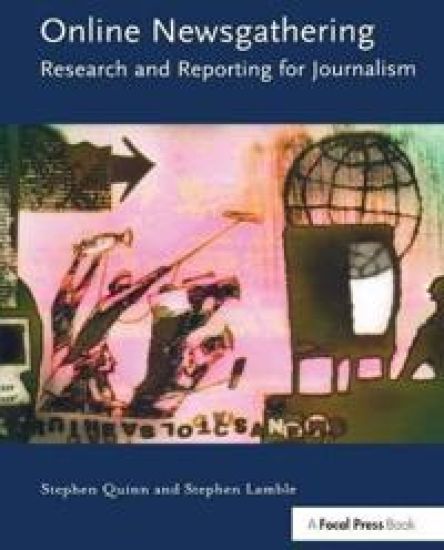
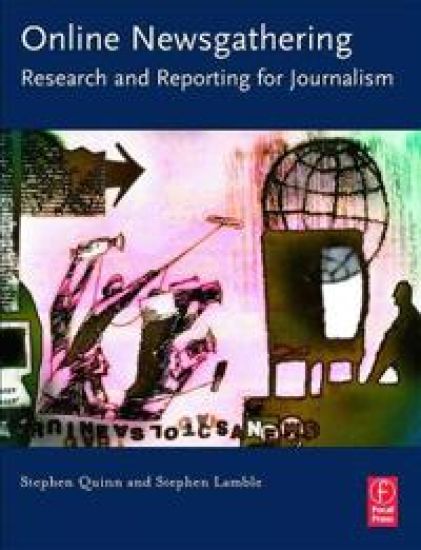
Online Newsgathering: Research and Reporting for Journalism
Journalists used to rely on their notepad and pen. Today, professional journalists rely on the computer-and not just for the writing. Much, if not all, of a journalist's research happens on a computer. If you are journalist of any kind, you need to know how to find the information you need online. This book will show you how to find declassified governmental files, statistics of all kinds, simple and complex search engines for small and large data gathering, and directories of subject experts. This book is for the many journalists around the world who didn't attend a formal journalism school before going to work, those journalists who were educated before online research became mainstream, and for any student studying journalism today. It will teach you how to use the Internet wisely, efficiently and comprehensively so that you will always have your facts straight and fast. Online Newsgathering: . reflects the most current thinking . is pertinent to both industry and education . focuses on what people need to know Please visit the authors' companion website at http://computerassistedreporting.com for additional resources.
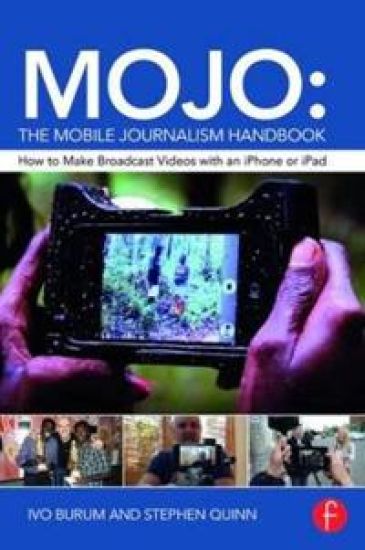
MOJO: The Mobile Journalism Handbook

MOJO: The Mobile Journalism Handbook

Ivo Burum; Stephen Quinn

Routledge
2015
sidottu
MOJO: The Mobile Journalism Handbook is the first book devoted specifically to training citizens, journalism students and media professionals to produce professional-quality videos with only a mobile device. As journalism becomes increasingly competitive, students and emerging professionals need a broader skillset to make themselves more employable, whether as mainstream or entrepreneurial journalists. This book by Dr. Ivo Burum and Dr. Stephen Quinn, world experts in mobile journalism, provides comprehensive coverage of all the skills and practices needed to be a mobile journalist. Key features: Burum and Quinn underline the importance of story and storytelling, the crucial context journalists always need to keep in mind. Other books and tutorials merely offer step-by-step guidance to mobile technology and apps. The book synthesizes the knowledge and more than 70 years of combined expertise of two of the world’s leading mobile journalism practitioners, offering sage advice and tips from people who have trained mojos in more than 20 countries. Companion Website: How-to videos on the companion website offer powerful ways for learners to absorb the content easily, walking them through the key mojo components of research, shooting, scripting, voice-over, editing and post-production.www.routledge.com/cw/burumIvo Burum is an award-winning writer, director and television executive producer. He has more than 30 years’ experience working across genres including frontline international current affairs. A pioneer in UGS creation, Dr. Burum lectures in multimedia journalism. This is his second book about mojo. He runs Burum Media, a mojo and web TV consultancy that provides training for journalists, educators and remote communities internationally. Stephen Quinn was a journalist for 20 years before he became a university professor in 1996. Dr. Quinn taught journalism in five countries until he returned to journalism in 2011 in Hong Kong. His UK-based company MOJO Media Insights trains mobile journalists around the world. This is his twenty-first print book. He has also produced 5 iBooks. He co-writes a weekly column syndicated to seven countries.
MOJO: The Mobile Journalism Handbook

MOJO: The Mobile Journalism Handbook

Ivo Burum; Stephen Quinn

Routledge
2015
nidottu
MOJO: The Mobile Journalism Handbook is the first book devoted specifically to training citizens, journalism students and media professionals to produce professional-quality videos with only a mobile device. As journalism becomes increasingly competitive, students and emerging professionals need a broader skillset to make themselves more employable, whether as mainstream or entrepreneurial journalists. This book by Dr. Ivo Burum and Dr. Stephen Quinn, world experts in mobile journalism, provides comprehensive coverage of all the skills and practices needed to be a mobile journalist. Key features: Burum and Quinn underline the importance of story and storytelling, the crucial context journalists always need to keep in mind. Other books and tutorials merely offer step-by-step guidance to mobile technology and apps. The book synthesizes the knowledge and more than 70 years of combined expertise of two of the world’s leading mobile journalism practitioners, offering sage advice and tips from people who have trained mojos in more than 20 countries. Companion Website: How-to videos on the companion website offer powerful ways for learners to absorb the content easily, walking them through the key mojo components of research, shooting, scripting, voice-over, editing and post-production.www.routledge.com/cw/burumIvo Burum is an award-winning writer, director and television executive producer. He has more than 30 years’ experience working across genres including frontline international current affairs. A pioneer in UGS creation, Dr. Burum lectures in multimedia journalism. This is his second book about mojo. He runs Burum Media, a mojo and web TV consultancy that provides training for journalists, educators and remote communities internationally. Stephen Quinn was a journalist for 20 years before he became a university professor in 1996. Dr. Quinn taught journalism in five countries until he returned to journalism in 2011 in Hong Kong. His UK-based company MOJO Media Insights trains mobile journalists around the world. This is his twenty-first print book. He has also produced 5 iBooks. He co-writes a weekly column syndicated to seven countries.
Online Newsgathering: Research and Reporting for Journalism

Online Newsgathering: Research and Reporting for Journalism

Stephen Quinn; Stephen Lamble

Focal Press
2007
nidottu
Journalists used to rely on their notepad and pen. Today, professional journalists rely on the computer-and not just for the writing. Much, if not all, of a journalist's research happens on a computer. If you are journalist of any kind, you need to know how to find the information you need online. This book will show you how to find declassified governmental files, statistics of all kinds, simple and complex search engines for small and large data gathering, and directories of subject experts. This book is for the many journalists around the world who didn't attend a formal journalism school before going to work, those journalists who were educated before online research became mainstream, and for any student studying journalism today. It will teach you how to use the Internet wisely, efficiently and comprehensively so that you will always have your facts straight and fast. Online Newsgathering: . reflects the most current thinking . is pertinent to both industry and education . focuses on what people need to know Please visit the authors' companion website at www.journalismaustralia.com for additional resources.
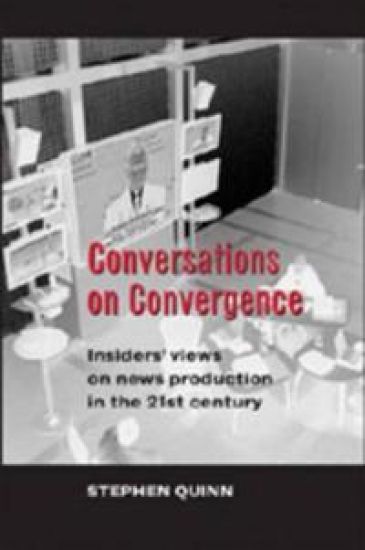
Conversations on Convergence

Conversations on Convergence

Stephen Quinn

Peter Lang Publishing Inc
2006
nidottu
Convergence is a major topic of discussion at professional and academic journalism conferences and seminars around the world. This book presents the insights of major players and academics in the field of convergence. Here is your chance to read what the experts think about one of the most significant changes that journalism faces. It should be on the desk of all managers keen to know where the future will take us, and on the reading list of every student of journalism and media.
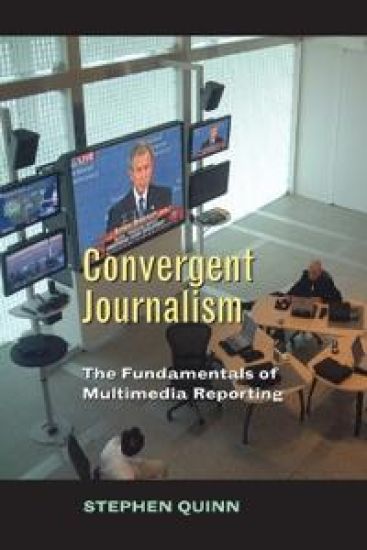
Convergent Journalism

Convergent Journalism

Stephen Quinn

Peter Lang Publishing Inc
2005
nidottu
Convergence is happening around the world. It represents a new form of reporting and may well be the future for journalism. Full convergence involves a radical change in approach and mindset among journalists and their managers. It involves a shared assignment desk where the key people, the multimedia assignment editors, assess each news event on its merits and send the most appropriate people to the story. Convergence coverage should thus be driven by the significance of the news event. Depending on variables unique to each country and company, convergence is one of the most likely scenarios for media organizations around the world. This book explains the phenomenon of media convergence, defines what has been until recently a confusing topic, describes the main business models, provides case studies of successful convergent newsrooms around the world, and explains how to introduce convergence into the newsroom. Stephen Quinn provides a practical introduction to the changing landscape of news reporting, and has written a useful book for students and professionals alike.
Knowledge Management in the Digital Newsroom
If you are an editor or newsroom manager seeking new and more efficient ways of managing the ever increasing flow of information through your newsroom, this book will provide the information you need to make informed decisions about crucial organisational and equipment changes. Case studies from newsrooms worldwide are used to present an overview of the information management tools and processes that are available to help journalists and media executives deal with information. Answers are suggested for some of the most pressing issues, including:What are the factors driving change in newsrooms? How are news organizations around the world re-organising their newsrooms to deal with information in new ways? How are the opposing needs to cut costs and yet maintain journalistic quality being met? What digital tools are currently available, e.g. for computer-assisted reporting? How can reporters become more mobile? How can trainee journalists be better prepared for operating within the changing newsroom environment? Each chapter is supplemented by a 'how to learn more' section, suggesting further resources for tackling each issue. Whether you are planning major change in your newsroom or simply wish to keep up with the latest industry trends, this is the book you have been waiting for.
Digital Sub-Editing and Design

Digital Sub-Editing and Design

Stephen Quinn

Focal Press
2001
nidottu
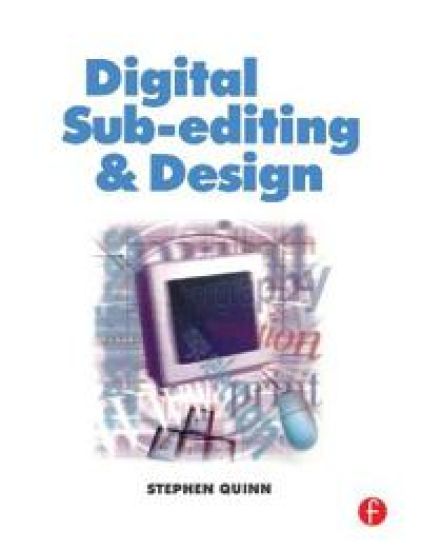
This excellent book covers editing in the digital age, demonstrating the tools needed for effective text editing. Learn how to write powerful headlines and captions, and how to edit body text quickly and cleanly. It also concentrates on design in the digital environment, introducing typography and the related issues of readability and legibility. The skills of picture editing are explored, including image selection, cropping, manipulation and the ethics involved. These core skills and methods are then applied to the World Wide Web. Recent research into how people navigate Web pages is considered, and recommends ways to write more effectively for the online medium. The first section concentrates on editing in the digital age, demonstrating the tools needed for effective text editing. Dr Quinn shows how to write powerful headlines and captions, and how to edit body text quickly and cleanly. The middle section concentrates on design in the digital environment. Chapter five introduces typography and the related issues of readability and legibility. Chapter six covers the principles of design and how they can be applied to print and electronic publications. Chapter seven looks at the skills of picture editing, including image selection, cropping, manipulation and the ethics involved. Chapter eight investigates other forms of visual presentation such as diagrams, logos, maps and cartoons. In the final section, these core skills and methods are applied to the World Wide Web. Chapter nine considers recent research into how people navigate Web pages, and recommends ways to write more effectively for the online medium. Chapter ten examines how the principles of print design can (and cannot) be applied to Web pages.