Kirjojen hintavertailu – 12 903 725 kirjaa ja 27 kauppaa

Kirjailija

Stephen Robertson

Kirjat ja teokset yhdessä paikassa: 6 kirjaa, julkaisuja vuosilta 2010–2024, suosituimpiin kuuluu B C, Before Computers. Vertaile teosten hintoja ja tarkista saatavuus suomalaisista kirjakaupoista.

6 kirjaa

Kirjojen julkaisuvuodet: 2010–2024.

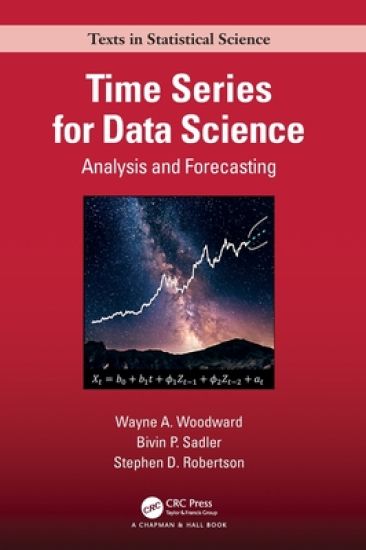
Time Series for Data Science

Time Series for Data Science

Wayne A. Woodward; Bivin Philip Sadler; Stephen Robertson

TAYLOR FRANCIS LTD
2024
nidottu

Halvin toimitettuna 89,20 €

Data Science students and practitioners want to find a forecast that “works” and don’t want to be constrained to a single forecasting strategy, Time Series for Data Science: Analysis and Forecasting discusses techniques of ensemble modelling for combining information from several strategies. Covering time series regression models, exponential smoothing, Holt-Winters forecasting, and Neural Networks. It places a particular emphasis on classical ARMA and ARIMA models that is often lacking from other textbooks on the subject. This book is an accessible guide that doesn’t require a background in calculus to be engaging but does not shy away from deeper explanations of the techniques discussed. Features:Provides a thorough coverage and comparison of a wide array of time series models and methods: Exponential Smoothing, Holt Winters, ARMA and ARIMA, deep learning models including RNNs, LSTMs, GRUs, and ensemble models composed of combinations of these models. Introduces the factor table representation of ARMA and ARIMA models. This representation is not available in any other book at this level and is extremely useful in both practice and pedagogy. Uses real world examples that can be readily found via web links from sources such as the US Bureau of Statistics, Department of Transportation and the World Bank. There is an accompanying R package that is easy to use and requires little or no previous R experience. The package implements the wide variety of models and methods presented in the book and has tremendous pedagogical use.
Time Series for Data Science

Time Series for Data Science

Wayne A. Woodward; Bivin Philip Sadler; Stephen Robertson

TAYLOR FRANCIS LTD
2022
sidottu
Data Science students and practitioners want to find a forecast that “works” and don’t want to be constrained to a single forecasting strategy, Time Series for Data Science: Analysis and Forecasting discusses techniques of ensemble modelling for combining information from several strategies. Covering time series regression models, exponential smoothing, Holt-Winters forecasting, and Neural Networks. It places a particular emphasis on classical ARMA and ARIMA models that is often lacking from other textbooks on the subject. This book is an accessible guide that doesn’t require a background in calculus to be engaging but does not shy away from deeper explanations of the techniques discussed. Features:Provides a thorough coverage and comparison of a wide array of time series models and methods: Exponential Smoothing, Holt Winters, ARMA and ARIMA, deep learning models including RNNs, LSTMs, GRUs, and ensemble models composed of combinations of these models. Introduces the factor table representation of ARMA and ARIMA models. This representation is not available in any other book at this level and is extremely useful in both practice and pedagogy. Uses real world examples that can be readily found via web links from sources such as the US Bureau of Statistics, Department of Transportation and the World Bank. There is an accompanying R package that is easy to use and requires little or no previous R experience. The package implements the wide variety of models and methods presented in the book and has tremendous pedagogical use.
Precursor: Perceptions of Time

Precursor: Perceptions of Time

Stephen Robertson

Createspace Independent Publishing Platform
2018
nidottu
Dr. David Gordon has discovered the secret to unlocking the subconscious mind's innate ability to heal itself from trauma, loss and suffering. This discovery will change everything medical science knows about the mind while expanding the possibilities for cognitive and intellectual development. However, those who plan to pervert this into a terrible weapon of war; "to enhance interrogation" without leaving evidence of physical torture, threaten to leverage it to dominate humanity, with no hope of escape. Chased around the globe, he looks for answers from his past, using all he has learned from his service as a Naval Officer, and Academic. Aided by a retired Gunnery Sergeant, his late father's mistress, and Emily Barker (a Librarian with secrets of her own), they attempt to evade rouge governments, competing intelligence services, corporate mercenaries, and perhaps his deadliest adversary of all, his ex-girlfriend
Playing the Numbers

Playing the Numbers

Shane White; Stephen Garton; Stephen Robertson; Graham White

Harvard University Press
2010
sidottu
The phrase “Harlem in the 1920s” evokes images of the Harlem Renaissance, or of Marcus Garvey and soapbox orators haranguing crowds about politics and race. Yet the most ubiquitous feature of Harlem life between the world wars was the game of “numbers.” Thousands of wagers, usually of a dime or less, would be placed on a daily number derived from U. S. bank statistics. The rewards of “hitting the number,” a 600-to-1 payoff, tempted the ordinary men and women of the Black Metropolis with the chimera of the good life. Playing the Numbers tells the story of this illegal form of gambling and the central role it played in the lives of African Americans who flooded into Harlem in the wake of World War I. For a dozen years the “numbers game” was one of America’s rare black-owned businesses, turning over tens of millions of dollars every year. The most successful “bankers” were known as Black Kings and Queens, and they lived royally. Yet the very success of “bankers” like Stephanie St. Clair and Casper Holstein attracted Dutch Schultz, Lucky Luciano, and organized crime to the game. By the late 1930s, most of the profits were being siphoned out of Harlem. Playing the Numbers reveals a unique dimension of African American culture that made not only Harlem but New York City itself the vibrant and energizing metropolis it was. An interactive website allows readers to locate actors and events on Harlem’s streets.