Kirjojen hintavertailu – 12 903 725 kirjaa ja 27 kauppaa

Kirjailija

Stephen Schneider

Kirjat ja teokset yhdessä paikassa: 13 kirjaa, julkaisuja vuosilta 2007–2024, suosituimpiin kuuluu Transnational and Cross-Border Criminal Law. Vertaile teosten hintoja ja tarkista saatavuus suomalaisista kirjakaupoista.

13 kirjaa

Kirjojen julkaisuvuodet: 2007–2024.

Transnational and Cross-Border Criminal Law

Transnational and Cross-Border Criminal Law

Robert J. Currie; Donald K. Piragoff; Gillian MacNeil; Joseph Rikhof; Michael Nesbitt; Christopher Ram; Leah West; Robin Parker; Peter M. German; James Cohen; Sanaa Ahmed; Michelle Gallant; Joanna Harrington; W. Michael G. Osborne; Kathryn Zedde; Stephen Schneider; Frédéric Mégret; Jeffrey G. Johnston; Amélie Aubut; Adelina Iftene; Olivia Genge; Fraser M. Kelly; Elizabeth Bennett

Irwin Law
2023
pokkari
The time of globalization has seen an onslaught of criminal activity that crosses borders. The legal suppression and prosecution of transnational and cross-border crime raise unique and complex legal issues, and law enforcement, lawyers, and judges have struggled to keep up. Transnational & Cross-Border Criminal Law: Canadian Perspectives fills a pronounced gap in Canadian legal literature. Written by subject matter experts, each chapter exposes and analyzes a current and pressing issue in this realm and is designed both to serve as a resource for researchers and to provide cutting-edge insight on front-burner issues. The group of authors -- made up of prosecutors, defence lawyers, government counsel, academics, and civil society advocates -- take on a variety of subjects, including terrorism, financial crime and corruption, jurisdiction, extradition, money laundering, trafficking, maritime enforcement, cross-border evidence-gathering, and the international transfer of prisoners. This unique collection will help to advance general understanding of one of the most pressing public policy issues of our time.

An Ontology of Organized Crime

An Ontology of Organized Crime

Stephen Schneider

TAYLOR FRANCIS LTD
2024
sidottu
One of the most elusive pursuits in the study of organized crime is developing a definition, description, or conceptual model that captures its complexity, diversity, and ever-changing nature. This book takes a comprehensive approach to unraveling the intricacies and variations of organized crime, providing a detailed account of its many attributes. Based on a review of the theoretical literature, the author has created a holistic typology essential to understanding organized crime. The typology comprises 28 attributes divided into five thematic categories: associational (the relationship among the offenders that leads to some discernible structure), commercial (revenue-generating crimes), operational (support functions and expenditures), institutional (factors that sustain a criminal association and activities over time), and cultural/behavioral (the norms, values, and codes of organized crime and how they affect the actions of offenders). These categories are not simply used to classify the different attributes; each one represents a structural pillar of an organized criminal association. As a meta-analytical framework, the typology is the first to incorporate the foremost ways in which organized crime has been conceptualized in the literature: as an association of offenders, the crimes perpetrated, how organized crimes are carried out, and as a form of underworld governance. The book also adapts the static typology into a flexible and testable conceptual model that recognizes the many variations among organized criminal associations, and which can be used to determine when a group of offenders constitutes organized crime. Besides their theoretical and empirical purposes, the typology and conceptual model have been constructed as applied frameworks for informing strategic enforcement (setting priorities), tactical enforcement (targeting and denigrating the structural pillars of an organized criminal association), and policy purposes (as a basis for a comprehensive multi-sectoral control plan). This book is invaluable for students and scholars studying organized crime as well as criminal justice professionals looking for guidance on enforcement strategies and public policies.
An Ontology of Organized Crime

An Ontology of Organized Crime

Stephen Schneider

TAYLOR FRANCIS LTD
2024
nidottu

Halvin toimitettuna 54,30 €

One of the most elusive pursuits in the study of organized crime is developing a definition, description, or conceptual model that captures its complexity, diversity, and ever-changing nature. This book takes a comprehensive approach to unraveling the intricacies and variations of organized crime, providing a detailed account of its many attributes. Based on a review of the theoretical literature, the author has created a holistic typology essential to understanding organized crime. The typology comprises 28 attributes divided into five thematic categories: associational (the relationship among the offenders that leads to some discernible structure), commercial (revenue-generating crimes), operational (support functions and expenditures), institutional (factors that sustain a criminal association and activities over time), and cultural/behavioral (the norms, values, and codes of organized crime and how they affect the actions of offenders). These categories are not simply used to classify the different attributes; each one represents a structural pillar of an organized criminal association. As a meta-analytical framework, the typology is the first to incorporate the foremost ways in which organized crime has been conceptualized in the literature: as an association of offenders, the crimes perpetrated, how organized crimes are carried out, and as a form of underworld governance. The book also adapts the static typology into a flexible and testable conceptual model that recognizes the many variations among organized criminal associations, and which can be used to determine when a group of offenders constitutes organized crime. Besides their theoretical and empirical purposes, the typology and conceptual model have been constructed as applied frameworks for informing strategic enforcement (setting priorities), tactical enforcement (targeting and denigrating the structural pillars of an organized criminal association), and policy purposes (as a basis for a comprehensive multi-sectoral control plan). This book is invaluable for students and scholars studying organized crime as well as criminal justice professionals looking for guidance on enforcement strategies and public policies.
Social Movement Literature

Social Movement Literature

Stephen Schneider

TAYLOR FRANCIS LTD
2024
nidottu
Social Movement Literature introduces readers to the study of those cultural texts that have come to define modern social movements. Looking at movements such as the US civil rights movement, gay liberation movement, environmental movement, and contemporary movement such as #metoo and Black Lives Matter, this volume focuses not just on the texts that social movements have produced, but also on those that have inspired and been inspired by those movements. As such, Social Movement Literature seeks to address a number of key questions: how do social movements develop and present not just their goals, but also their broader identities, using texts and other media? How are these movement texts received and further disseminated? Are there common features across movement texts? How and why do some of these texts continue to resonate today? By combining both textual and historical approaches to the analysis of social movements, this volume aims to give readers both an understanding of how social movements emerge and why they remain both political and culturally relevant today.
Social Movement Literature

Social Movement Literature

Stephen Schneider

TAYLOR FRANCIS LTD
2024
sidottu
Social Movement Literature introduces readers to the study of those cultural texts that have come to define modern social movements. Looking at movements such as the US civil rights movement, gay liberation movement, environmental movement, and contemporary movement such as #metoo and Black Lives Matter, this volume focuses not just on the texts that social movements have produced, but also on those that have inspired and been inspired by those movements. As such, Social Movement Literature seeks to address a number of key questions: how do social movements develop and present not just their goals, but also their broader identities, using texts and other media? How are these movement texts received and further disseminated? Are there common features across movement texts? How and why do some of these texts continue to resonate today? By combining both textual and historical approaches to the analysis of social movements, this volume aims to give readers both an understanding of how social movements emerge and why they remain both political and culturally relevant today.
Crime Prevention

Crime Prevention

Stephen Schneider

Routledge
2020
nidottu
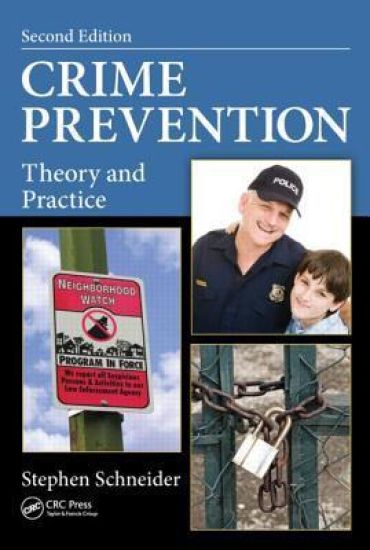
In Crime Prevention: Theory and Practice, Second Edition, Dr. Schneider has updated every chapter in this reliable text using the latest research, the most recently published articles and books, and feedback from professors and students using the first edition. Providing an introduction to dominant approaches, key concepts, theories, and research, the book supplies concrete advice on planning, implementing, and evaluating a crime prevention plan. This edition includes a new chapter applying crime prevention through social development principles to adolescents and young adults. This chapter is a recognition of the disproportionate rate of offending by adolescents and young adults as well as the distinctive risk factors faced by these groups. It also emphasizes the unique nature of applying social problem-solving solutions to adolescents and young adults who have been in formal contact with the criminal justice system. The focus is on recidivism prevention, an often-ignored, but critical aspect of crime prevention. Laying out a systematic blueprint for a successful crime prevention project, the book also updates the extant literature on crime prevention—in particular the addition of research that has been published since the first edition of this book. Updated case studies reflecting new data present real examples of crime prevention programs and organizations and illustrate the conceptual, theoretical, and empirical elements of the book. Learning objectives, discussion questions, and exercises facilitate learning and retention and a companion website provides ancillary material for students and professors.
Crime Prevention

Crime Prevention

Stephen Schneider

Routledge Member of the Taylor and Francis Group
2014
sidottu
In Crime Prevention: Theory and Practice, Second Edition, Dr. Schneider has updated every chapter in this reliable text using the latest research, the most recently published articles and books, and feedback from professors and students using the first edition. Providing an introduction to dominant approaches, key concepts, theories, and research, the book supplies concrete advice on planning, implementing, and evaluating a crime prevention plan. This edition includes a new chapter applying crime prevention through social development principles to adolescents and young adults. This chapter is a recognition of the disproportionate rate of offending by adolescents and young adults as well as the distinctive risk factors faced by these groups. It also emphasizes the unique nature of applying social problem-solving solutions to adolescents and young adults who have been in formal contact with the criminal justice system. The focus is on recidivism prevention, an often-ignored, but critical aspect of crime prevention. Laying out a systematic blueprint for a successful crime prevention project, the book also updates the extant literature on crime prevention—in particular the addition of research that has been published since the first edition of this book. Updated case studies reflecting new data present real examples of crime prevention programs and organizations and illustrate the conceptual, theoretical, and empirical elements of the book. Learning objectives, discussion questions, and exercises facilitate learning and retention and a companion website provides ancillary material for students and professors.
The Genesis Strategy

The Genesis Strategy

Stephen Schneider

Springer-Verlag New York Inc.
2012
nidottu
In a scientifically exacting world scientists must assume responsibility for the consequences of science and technology . . . . The individual member of the educational and scientific estate may wish to avoid responsibility; but he cannot justify it by the claim of higher commitment. -JOHN KENNETH GALBRAITH The New Industrial State Scientists can no longer afford to be ndive about the political effects of publicly stated scientific opinions. If the effect of their scientific views is politically potent, they have an obligation to declare their political or value assumptions, and to try to be honest with themselves, their colleagues and their audience about the degree to which these assumptions have affected their selection and interpretation of scientific evidence. Once scientific opinion enters into the public domain, the possibility of political neutrality disappears, but this does not mean that objectivity should be thrown to the winds. HARVEY BROOKS, 1973 Harvard University Imagine a huge ship-let's call it Titanic Il-crossing the North Atlantic. While the passengers enjoy the comfort for which they are paying so dearly, the first mate at the helm believes he sees the dreaded form of an iceberg about three miles ahead through the thick fog. He hurries to tell the captain about it. As a veteran of countless uneventful voyages, the captain is skeptical of the danger. Nevert- ix The Genesis Strategy less, he proceeds quickly to the helm, but fails to see any obstacle ahead in the fog.
The Board Game

The Board Game

Brian Scanlon; Stephen Schneider

LID Publishing
2011
sidottu
This book, by two leading executive coaches, provides insight, advice and savviness on becoming a successful company board member. It analyses the pitfalls and traps of the company boardroom and how they can be avoided.
Refocusing Crime Prevention

Refocusing Crime Prevention

Stephen Schneider

University of Toronto Press
2007
pokkari
Despite widespread concern over crime, public participation in local crime prevention programs is generally low and limited to a small, homogeneous group of middle-class home-owing residents. Conspicuously absent from these programs are the very people who are the most vulnerable to crime: the poor, immigrants, and visible minorities. Refocusing Crime Prevention explores the capacity of disadvantaged neighbourhoods to organize around local crime and disorder problems. Obstacles to the mobilization of communities around crime are strongly related to demographic and socio-psychological characteristics of residents, including low socioeconomic status and a lack of local social integration. Other obstacles stem from weaknesses in program implementation, such as inappropriate or ineffectual community outreach and communications, a lack of resources, and leadership voids. Many of these afore-mentioned barriers flow from broader structural factors, including politico-economic forces that spatially concentrate poverty, crime, and apathy; a culture of pervasive individualism, and a reliance on the welfare state for local problem solving. Using thorough ethnographic research, Stephen Schneider identifies, comprehensively details, and critically examines the many factors that obstruct public participation in community crime prevention programs, while formulating strategies and theories that attempt to empower disadvantaged and marginalized communities. Refocusing Crime Prevention will aid immensely in the struggle for crime reduction and safer neighbourhoods.
Refocusing Crime Prevention

Refocusing Crime Prevention

Stephen Schneider

University of Toronto Press
2007
sidottu
Despite widespread concern over crime, public participation in local crime prevention programs is generally low and limited to a small, homogeneous group of middle-class home-owing residents. Conspicuously absent from these programs are the very people who are the most vulnerable to crime: the poor, immigrants, and visible minorities. Refocusing Crime Prevention explores the capacity of disadvantaged neighbourhoods to organize around local crime and disorder problems. Obstacles to the mobilization of communities around crime are strongly related to demographic and socio-psychological characteristics of residents, including low socioeconomic status and a lack of local social integration. Other obstacles stem from weaknesses in program implementation, such as inappropriate or ineffectual community outreach and communications, a lack of resources, and leadership voids. Many of these afore-mentioned barriers flow from broader structural factors, including politico-economic forces that spatially concentrate poverty, crime, and apathy; a culture of pervasive individualism, and a reliance on the welfare state for local problem solving. Using thorough ethnographic research, Stephen Schneider identifies, comprehensively details, and critically examines the many factors that obstruct public participation in community crime prevention programs, while formulating strategies and theories that attempt to empower disadvantaged and marginalized communities. Refocusing Crime Prevention will aid immensely in the struggle for crime reduction and safer neighbourhoods.