

Kirjailija
Stephen Skinner
Kirjat ja teokset yhdessä paikassa: 63 kirjaa, julkaisuja vuosilta 1990–2026, suosituimpiin kuuluu Michael Psellus on the Operation of Dæmons. Vertaile teosten hintoja ja tarkista saatavuus suomalaisista kirjakaupoista.
63 kirjaa
Kirjojen julkaisuvuodet: 1990–2026.
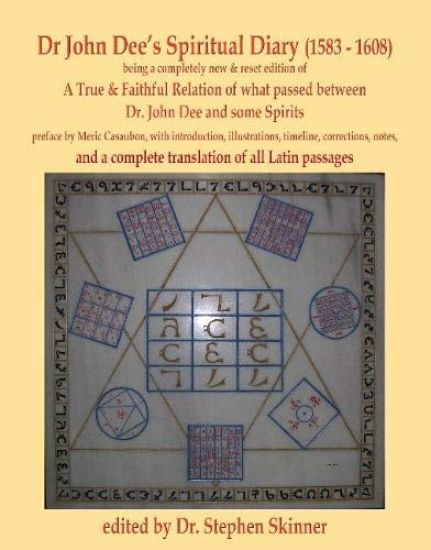
The Sourcework of Dee's Enochian Magic, transcribed from his original manuscript with literally thousands of corrections
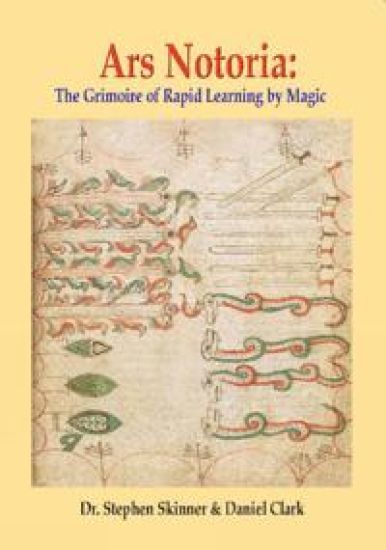
The Ars Notoria is a mediaeval grimoire, or magician's manual, which was widely distributed and very popular in the 13th-16th century, but virtually unknown today. It is however still very relevant in the 21st century because it contains detailed techniques to enable the practitioner to absorb whole subjects very rapidly, and to understand very complex subjects on first reading, as well as remembering whatever has been read. Of all the grimoires attributed to the Solomonic tradition of magic, one of the oldest and most enigmatic is the Ars Notoria. Like the many magic manuscripts this work was pseudepigraphically attributed to several famous individuals ranging from Solomon (who reputedly received the book directly from God via the hand of the angel Pamphilius), through its supposed translation by the magician Apollonius of Tyana who called it Flores aurei, or the Golden flowers, to Euclid of Thebes. The Ars Notoria stands alone in its own category of angel grimoires, for while most other Solomonic grimoires are concerned with the evocation of spirits or demons, the Ars Notoria instead was concerned only with memory and the ability to understand and absorb whole subjects rapidly. It offered to grant almost instant proficiency in any of the seven Liberal Arts, making it a veritable students grimoire, a key to obtaining knowledge rapidly. Yet despite its popularity and enduring history the Ars Notoria has never been printed in its complete form. From its early published Latin appearance in Agrippa's Opera Omnia to the first and only English translation by Robert Turner in 1657, all published versions of this work have omitted the most vital component of its operation, the notae, a set of complex pictorial illustrations that are the heart of its system. That is however until now. The present edition contains all the notae which have always been left out of other printed editions, without which the system just does not work. For the first time ever the Ars Notoria is presented in its complete form. In this edition we present not just one but five complete sets of notae taken from various manuscripts, alongside a corrected edition of Turners English translation. We also present a complete facsimile of Yale University's Beinecke MS Mellon 1 in full colour, the earliest known manuscript of this work, with a complete copy of the 1620s printed Latin text. Detailed commentary is provided on its origins, content, possible authors, owners, methods of use, and practical considerations as well as comprehensive tables of the almost 100 notae variants. The progress of the Ars Notoria is traced from its Greek origins, via its flourishing 13th century monastic life to its supposed inclusion in the Lemegeton.

In its case law on the use of lethal and potentially lethal force, the European Court of Human Rights declares a fundamental connection between the right to life in Article 2 of the European Convention on Human Rights and democratic society. This book discusses how that connection can be understood by using narrative theory to explore Article 2 law’s specificities and its deeper historical, social and political significance. Focusing on the domestic policing and law enforcement context, the book draws on an extensive analysis of case law from 1995 to 2017. It shows how the connection with democratic society in Article 2’s substantive and procedural dimensions underlines the right to life’s problematic duality, as an expression of a basic value demanding a high level of protection and a contextually limited provision allowing states leeway in the use of force. Emphasising the need to identify clear standards in the interpretation and application of the right to life, the book argues that Article 2 law’s narrative dimensions bring to light its core purposes and values. These are to extract meaning from pain and death, ground democratic society’s foundational distinction between acceptable force and unacceptable violence, and indicate democratic society’s essential attributes as a restrained, responsible and reflective system.
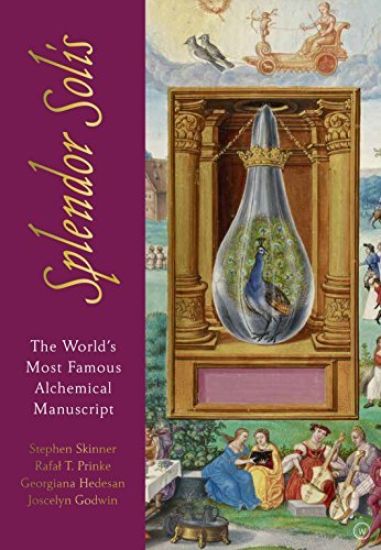
The Splendor Solis
Stephen Skinner; Rafal T. Prinke; Georgiana Hedesan; Joscelyn Godwin
Watkins Publishing
2019
sidottu
Halvin toimitettuna 29,20 €
A magnificent edition of Splendor Solis for all those interested in alchemy, magic and mysterious manuscripts. Popularly attributed to the legendary figure Salomon Trismosin, Splendor Solis (‘Splendour of the Sun’) is the most beautiful alchemical manuscript ever made, with 22 fabulous illustrations rich in allegorical and mystical symbolism. The paintings are given a fitting showcase in this new Watkins edition, which accompanies them with Joscelyn Godwin’s excellent contemporary translation of the original 16th-century German text, as well as interpretation from alchemical experts Stephen Skinner and Georgiana Hedesan, and from Rafal T. Prinke, an authority in central and Eastern European esoteric manuscripts. Stephen Skinner explains the symbolism of both the text and the illustrations, suggesting that together they describe the physical process of the alchemical transmutation of base metal into gold. Rafal T. Prinke explains the theories about the authorship of both text and illustrations, discussing Splendor Solis as the turning point in alchemical iconography passing from the medieval tradition to that of the Baroque and the reasons for the misattribution of Splendor Solis to Poysel and Trismosin. Georgiana Hedesan looks at the legendary figure of Salomon Trismosin and his creation by followers of Theophrastus Paracelsus as part of an attempt to integrate their master in a lineage of ancient alchemical philosophers. The images are taken from the British Library manuscript Harley 3469, the finest example of the Splendor Solis to survive.
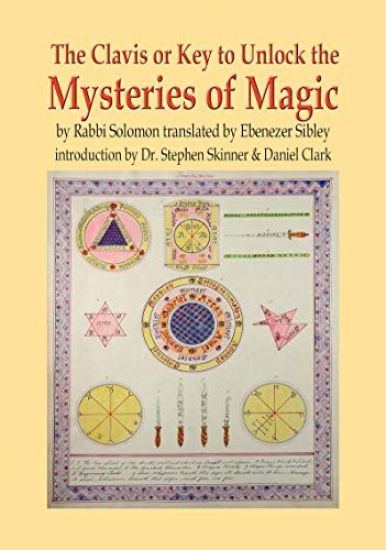
The Clavis or Key to Unlock the Mysteries of Magic: By Rabbi Solomon Translated by Ebenezer Sibley
Stephen Skinner; Daniel Clark
Llewellyn Publications
2019
sidottu
Ritualists, occultists, and collectors will love this complete, four-color edition of the Mysteries of Magic (also known as The Clavis) by Ebenezer Sibley and Rabbi Solomon. The Clavis was created during the high point of calligraphic Victorian grimoires, and it became one of the most important grimoires in circulation during the 19th century. This attractive hardcover edition includes commentary and transcription by Dr. Stephen Skinner and Daniel Clark, and it also features content derived from Frederick Hockley's manuscripts. This book is a very significant magical text with details of practice that are not found in other grimoires, and this edition--with its more than 200 pages of additional commentary and explanation--will be a treasure to those who have a passion for the historical underpinnings of occult magic. Partial Table of Contents: Preface: Ebenezer Sibley Part 1. Clavis or Key Part 2. The Pentacles Part 3. Four Experiments with Specific Spirits Part 4. The Wheel of Wisdom Part 5. A Secret and Complete Book of Magic Science Part 6. Crystallomancy Part 7. Miscellaneous Examples and Experiments Part 8. Geomancy Part 9. Magical Experiments Part 10. Magical Tables Introduction Background to Magic The Present Manuscript Analysis of the Magic in the Clavis The French Source English Sources Versions of the Clavis Manuscript Short Biographies of the Main Players Ebenezer Sibley John Denley Robert Cross Frederick Hockley Major F G Irwin Robert Thomas Cross aka Raphael Transcription of the Full Text of the Clavis Appendix 1. Contents of all known Manuscripts of Sibley's Clavis Appendix 2. M lusine and the Wyvern Bibliography Index
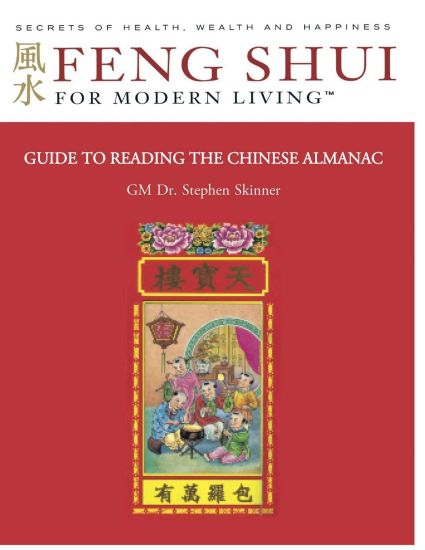
Explanations of typical pages from the Chinese Almanac, the Tung Shu.
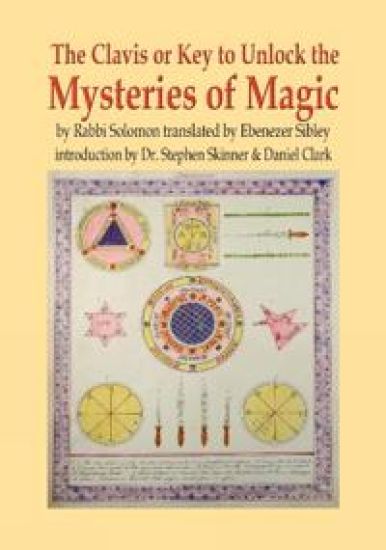
Clavis or Key to Unlock the MYSTERIES OF MAGIC
Stephen Skinner; Daniel Clark
Golden Hoard Press Ltd
2018
sidottu
This is the highpoint of calligraphic Victorian grimoires, full colour throughout. A very significant magical text with lots of detail not normally found in a grimoire
Hellenismos
Tony Mierzwicki; Stephen Skinner
Llewellyn Publications,U.S.
2018
nidottu
Halvin toimitettuna 24,40 €
The religion of the ancient Greeks has lain dormant for too long. In Hellenismos, Tony Mierzwicki shows how to bring it back in all of its primal glory. Learn how to forge personal relationships with the ancient Greek deities. Recreate the practices of the Greeks and enjoy the richness of their spiritual practice. Explore this accessible introduction to Greek reconstruction and discover: Ancient Greek history and culture Deities, Daimones, and Heroes Simple daily observances and personal practice The lunar cycle and monthly, yearly, and festival observances How to incorporate reconstruction and magick into Pagan or Wiccan practice Controversial issues regarding Greek reconstruction
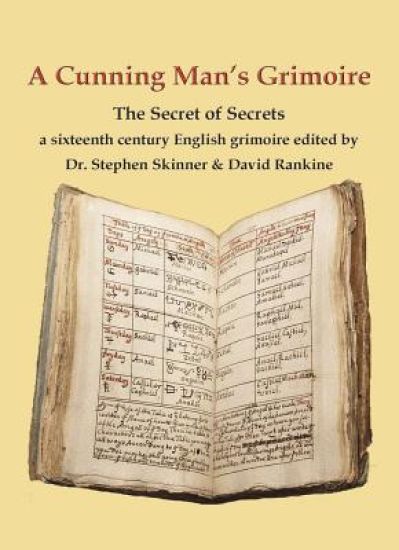
A Cunning Man's Grimoire: The Secret of Secrets
Stephen Skinner; David Rankine
Llewellyn Publications
2018
sidottu
From Dr. Stephen Skinner and the Golden Hoard Press comes a historical grimoire that features a fascinating blend of high magic and local village magic. Originally a handbook for a working sorcerer, this book includes a wealth of magical workings in addition to a treasure trove of critical astrological information, including a unique set of astrological tables that are generally absent from other grimoires. Going beyond the planetary days and hours, A Cunning Man's Grimoire reveals detailed aspects of timing and magical operations connected with the 28 Mansions of the Moon and image magic, which rarely appear in Solomonic grimoires. This practical manual of magic is strongly influence by Arabic and Indian roots, placing it at the crossroads of several powerful magical streams.

Advanced Flying Star Feng Shui
Stephen Skinner
Golden Hoard Press Ltd
2018
nidottu
Halvin toimitettuna 50,80 €
This is the first book in English on Flying Star Feng shui which explains how it compatibly relates to Eight Mansion feng shui, and provides 216 giving lower kua Flying Star charts as well as all of the variant Substitution Star (ti Kua) charts. Although the Flying Stars were originally related to the stars of astronomical Big Dipper asterism, in their feng shui usage they are simply terms for changing types of subtle chi(qi) energy present in our living environment, our homes, and our workplaces, Flying Stars assumes there is a very reals link between the present time, the time a building was built, its directional orientation, the birthplaces of its occupants and the consequential changing of luck of its occupants. Contrary to popular mis-conception, Flying Star Feng shui is completely compatible with Eight Mansion feng shui. The effects of using Flying Star feng shui correctly can often be impressive and very rapid, often within then days. Flying Star feng shui is one of the components of Hsuan Kung (Xuan Kong), which is in turn part of the San Yuan School of feng shui, which relies upon the 8 Trigrams Kua (gua) and their combinations. By contrast San He (the other great school of feng shui) relies upon combinations of the 5 Elements (in their yin and yang forms) with the 12 Early Branches, forming 60 chia-tzu (jia zi) or dragons. Much of the knowledge in this book comes from the Chinese text of perhaps the most famous Hsuan Kung (Xuan Kong) master of the 20th century, Shen Chu Reng and his book on Flying Star entitled San Yuan Ti Li Tai Hsuan Kung.

One of the largest bank robberies of the 20th century: a retelling of a real event that was hushed up.
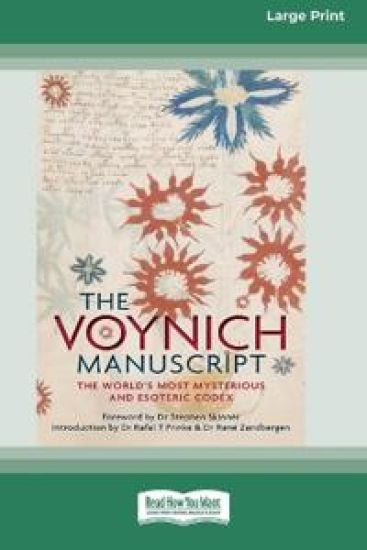
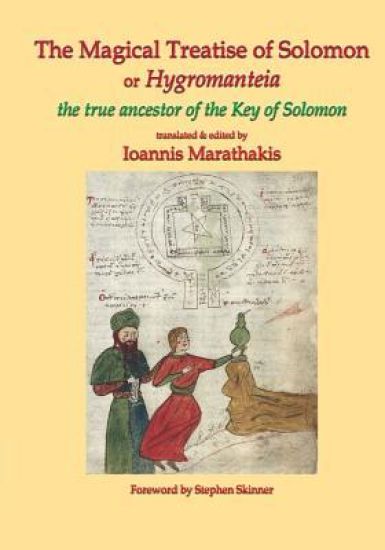
This is the true ancestor of the famous grimoire the Key of Solomon. The book includes translations of 12 different manuscripts of the Hygromanteia. This book is sometimes called the Hygromanteia. Throughout history thousands of people have been fascinated by the grimoire the Key of Solomon. This is the original Greek book of magic that was the source of the Key of Solomon, and in turn the ancestor of most of the grimoire-based ceremonial magic practiced in Europe and the US from the 15th century to the present day. This is a ground-breaking work. For the first time (outside of a handful of pages in academic works) the full Greek original of the Key of Solomon appears in English. Contrary to popular opinion the Key of Solomon was not translated from a Hebrew original. During the gradual decline and fall of the Byzantine Empire, this precious text, along with many others, was taken from Constantinople to Italy probably around 1453 were it was translated into Latin and Italian. Abridged Latin copies entitled the Clavicula Salomonis circulated in Europe, going through many changes, languages and versions to become the Key of Solomon as we know it (some of those manuscripts are published as Volume IV of the present series). Now for the first time you can read the whole text (large slabs of which were left out of the Latin translations) arranged clearly in the order in which it was meant to be read.
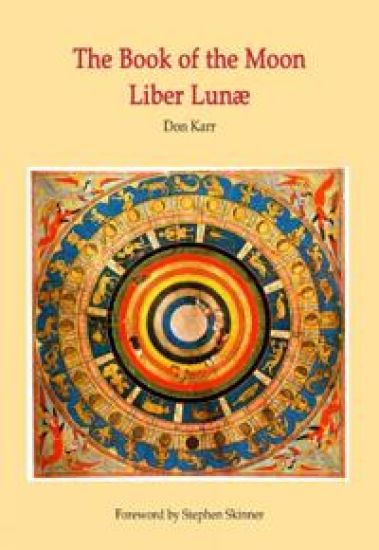
Chapters: Liber Lunae, Sepher ha-Levanah, 28 Mansions of the Moon, the Hours of the day and night, Appendix.

Original Eight Mansions Formula
Stephen Skinner
Createspace Independent Publishing Platform
2016
nidottu


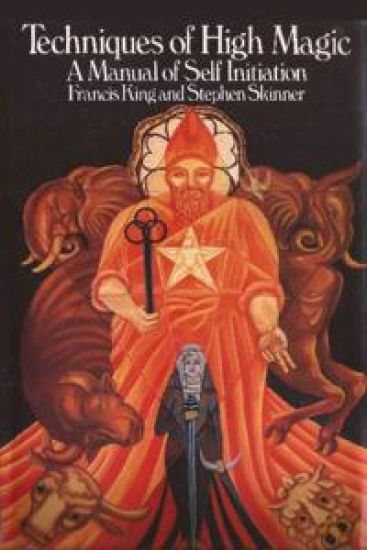
Self-initiation into practical magic with clear instructions on how to perform invocation and evocations, achieve astral projection, make effective talismans, or practice divination using either geomancy, tarot or I Ching. Useful for a complete beginner or those further along the path.
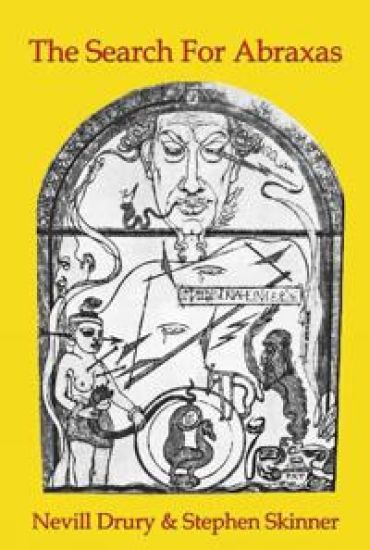
This is a re-release of Stephen Skinner's first book on magic (written jointly with Nevill Drury) which is organised as a collection of essays. At the time it broke a lot of new ground, and was enthusiastically reviewed by Colin Wilson who wrote, The authors of this book represent a new phenomenon: the serious study of the practice of magic. ... What is so interesting about this latest wave of occultism is it is more sober and rational than any of its predecessors. These practicing magicians have decided that there is something in magic, something as objective as radio waves. They have set out to investigate it in a spirit in which Yeats romanticism combines with scientific empiricism. They seem determined to get to the bottom of it, or at least, to go further in understanding it than any of their predecessors have attempted. After setting the scene with essays on the Gnostics, the Rosicrucians and the Hermetic Order of the Golden Dawn, the book moves on to modern magicians such as Austin Osman Spare. In fact, apart from one privately printed monograph, this was the first book to explain Spare's genius and his system of sigil magic, long before his Zos-Kia cultus became popular in the occult world. The connection between magic and the hippie culture is examined in the context of Carlos Casteneda, and original material on Surrealist art and astral projection rounds off the book.