Kirjojen hintavertailu – 12 903 725 kirjaa ja 27 kauppaa
Kirjailija
Stephen W.K. Chiu
Kirjat ja teokset yhdessä paikassa: 4 kirjaa, julkaisuja vuosilta 1995–2020, suosituimpiin kuuluu East Asia and the World Economy. Vertaile teosten hintoja ja tarkista saatavuus suomalaisista kirjakaupoista.
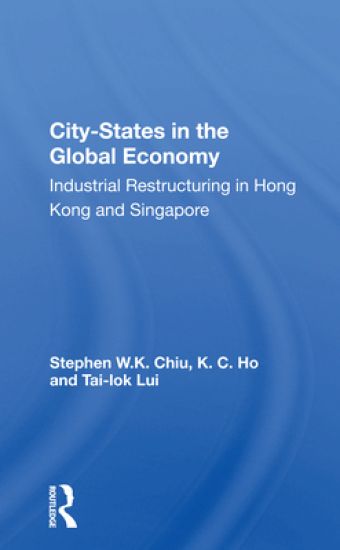
This book considers the patterns, strategies, and consequences of industrial restructuring in two dynamic Asian city-states, Hong Kong and Singapore, in the global economy. It highlights the institutional differences between the two industrial economies.
This is the first serious comparative study of two dynamic Asian city-states that are emerging as key regional–indeed global–cities. Providing both historical comparisons and analyses of contemporary issues, the authors consider the patterns, strategies, and consequences of industrial restructuring. They build their analysis around the interrelationships of four institutional spheres: the global economy, the state, the financial system, and the labor market. This leads to a unique emphasis on the distinctiveness of individual newly industrialized countries (NICs), as opposed to much of the literature in the field, which tends to group these Asian dragons together as a single, undifferentiated case. The book addresses three basic sets of questions tied to industrial restructuring in Hong Kong and Singapore: First, what are the basic patterns of restructuring in the two economies? What corporate strategies have manufacturers used to restructure their operations? Are Hong Kong and Singapore diverging or utilizing the same restructuring strategies? Second, how should the process of restructuring in the two economies and the concomitant similarities or divergencies be explained? Third, what are the consequences of the restructuring process for the two economies? How are these processes shaped by the shared histories of Hong Kong and Singapore as colonial port cities, their current status as NICs "squeezed" between industrialized western societies and the Third World, and their role as important regional cities in East and Southeast Asia?
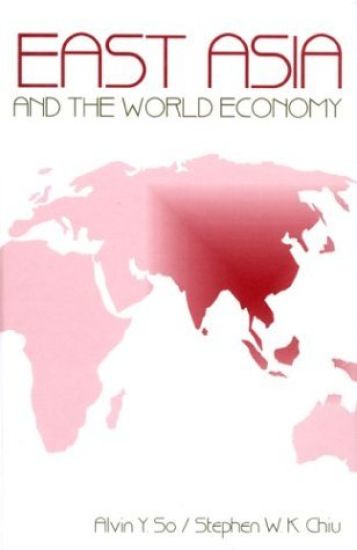
What role do East Asian states play in the world economy? Can the world-systems model originally designed for studying development in Europe and North America be applied to East Asia? To what extent has the rivalry between the United States and Japan had an impact on the development of East Asia? Examining these and other key questions, the authors offer a clear, comprehensive analysis of the economic development of East Asia. Offering a unique perspective, this book examines the origins and transformation of East Asia from a world-systems analysis. In contrast to the literature's focus on market, culture, state, and dependency, East Asia and the World Economy points to the crucial role of geopolitical and regional factors in East Asian development. The authors provide a cohesive review of the world-systems model as it applies to East Asia, exploring its intellectual heritage, the historical context through which it arose, its basic assumptions, and its policy implications. To illustrate how this model works in East Asia, the authors examine the economies of Hong Kong, Taiwan, China, North Korea, and Japan. The result is a fascinating study that demonstrates how the world-systems model provides a more focused explanation of East Asia's peculiar pattern of development. For scholars and students in the fields of political science, economics, Asian studies, international affairs, and development studies, this book is a must. "This book applies world-systems analysis to explain the peculiar pattern of East Asian development over the past two centuries. . . . It offers a fresh and fascinating approach to the study of economic and political evolution in the East asian nations. The volume is well organized and written for both scholars and students. It will make an excellent text for an undergraduate course in East Asian Economics and politics." --Choice CONTENTS: I. Theoretical Introduction // 1. Current Perspectives on East Asian Development // II. Incorporation // 2. The Decline of the Chinese Empire / 3. The Great Escape of Japan // III. Regionalization // 4. Japan and Its Colonial Empire / 5. The Sino-Japanese War and the Chinese Communist Revolution // IV. Ascent // 6. The Social Trajectories of China and North Korea / 7. The "Corization" of Japan / 8. The Semiperipherization of the NIEs (Hong Kong, South Korea, Taiwan) // V. Centrality // 9. United States - Japan Hegemonic Rivalry / 10. The Chinese Triangle of Mainland - Taiwan - Hong Kong / 11. Conclusion / Index ABRIDGED CONTENTS: I. Theoretical Introduction / II. Incorporation / III. Regionalization / IV. Ascent / V. Centrality
What role do East Asian states play in the world economy? Can the world-systems model originally designed for studying development in Europe and North America be applied to East Asia? To what extent has the rivalry between the United States and Japan had an impact on the development of East Asia? Examining these and other key questions, the authors offer a clear, comprehensive analysis of the economic development of East Asia. Offering a unique perspective, this book examines the origins and transformation of East Asia from a world-systems analysis. In contrast to the literature's focus on market, culture, state, and dependency, East Asia and the World Economy points to the crucial role of geopolitical and regional factors in East Asian development. The authors provide a cohesive review of the world-systems model as it applies to East Asia, exploring its intellectual heritage, the historical context through which it arose, its basic assumptions, and its policy implications. To illustrate how this model works in East Asia, the authors examine the economies of Hong Kong, Taiwan, China, North Korea, and Japan. The result is a fascinating study that demonstrates how the world-systems model provides a more focused explanation of East Asia's peculiar pattern of development. For scholars and students in the fields of political science, economics, Asian studies, international affairs, and development studies, this book is a must. "This book applies world-systems analysis to explain the peculiar pattern of East Asian development over the past two centuries. . . . It offers a fresh and fascinating approach to the study of economic and political evolution in the East asian nations. The volume is well organized and written for both scholars and students. It will make an excellent text for an undergraduate course in East Asian Economics and politics." --Choice CONTENTS: I. Theoretical Introduction // 1. Current Perspectives on East Asian Development // II. Incorporation // 2. The Decline of the Chinese Empire / 3. The Great Escape of Japan // III. Regionalization // 4. Japan and Its Colonial Empire / 5. The Sino-Japanese War and the Chinese Communist Revolution // IV. Ascent // 6. The Social Trajectories of China and North Korea / 7. The "Corization" of Japan / 8. The Semiperipherization of the NIEs (Hong Kong, South Korea, Taiwan) // V. Centrality // 9. United States - Japan Hegemonic Rivalry / 10. The Chinese Triangle of Mainland - Taiwan - Hong Kong / 11. Conclusion / Index ABRIDGED CONTENTS: I. Theoretical Introduction / II. Incorporation / III. Regionalization / IV. Ascent / V. Centrality