Kirjojen hintavertailu – 12 859 819 kirjaa ja 27 kauppaa

Kirjailija

Stephen Ward

Kirjat ja teokset yhdessä paikassa: 54 kirjaa, julkaisuja vuosilta 1992–2027, suosituimpiin kuuluu Claude AI Full Course 2026. Vertaile teosten hintoja ja tarkista saatavuus suomalaisista kirjakaupoista.

54 kirjaa

Kirjojen julkaisuvuodet: 1992–2027.

The Garden City

The Garden City

Stephen Ward

Routledge
2011
nidottu
** Please note, the HB was published in 1992. The PB version, an exact reprint of the HB, was released in 2011**This examination of a phenomenon of nineteenth century planning traces the origins, implementation, international transference and adoption of the Garden City idea. It also considers its continuing relevance in the late twentietth century and into the tewnty-first century.
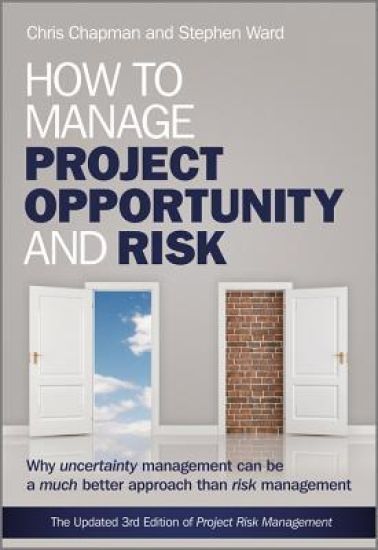
How to Manage Project Opportunity and Risk

How to Manage Project Opportunity and Risk

Stephen Ward; Chris Chapman

John Wiley Sons Inc
2011
sidottu
Since I wrote the Foreword for the second edition of this book, risk management processes have become much more widely used, but controversy about what should be done and how best to do it has grown. Managing risk is a risky business. Chapman and Ward provide an in-depth explanation of why it is important to understand and manage underlying uncertainty in all its forms, in order to realise opportunities more fully and enhance corporate performance. They show what best practice should look like. The implications go well beyond the conventional wisdom of project risk management, providing an enlightening new perspective. —Professor Tony M. Ridley Imperial College London, Past President, Institution of Civil Engineers Chris Chapman and Stephen Ward continue to educate the profession with this masterful exposition of the differences between, and the potentials for combinations of, risk, uncertainty and opportunity. Particularly welcome is the way they integrate this trio into the project lifecycle – the bedrock of project management control and organization. —Peter W. G. Morris Head of School and Professor of Construction and Project Management University College London Chris Chapman and Stephen Ward’s books on Project Risk Management have been an essential part of my repertoire for twenty years, and they are top of my recommended reading for the courses I do on that subject. In this book they have enhanced their previous work to focus on uncertainty management and emphasise more strongly opportunities for improving project performance, rather then just identifying what can go wrong. A structured process is an essential part of managing project uncertainty, and their process is one of the most powerful. This book will be added to my repertoire. —Rodney Turner Professor of Project Management, SKEMA Business School Lille A profoundly important book. With How to Manage Project Opportunity and Risk, Chris Chapman and Stephen Ward take a good thing and make it better. Members of the project management profession have been influenced for years by their insights into project risk management. With this latest instalment the authors demonstrate that risk and uncertainty needn’t be dreaded; in fact, the reverse side of the ‘risk coin’ has always been opportunity. My sincere appreciation to Chapman and Ward for turning this particular coin over and showing readers, academic and practitioner alike, the opportunity embedded in managing projects. —Jeffrey K. Pinto Andrew Morrow and Elizabeth Lee Black Chair in Management of Technology Sam and Irene Black School of Business, Penn State Erie
Does Every Child Matter?

Does Every Child Matter?

Catherine A. Simon; Stephen Ward

Routledge
2010
sidottu
Every Child Matters represents the most radical change to education and welfare provision in almost two decades. This book moves beyond a descriptive ‘how to’ framework to examine the underlying political and social aims of this policy agenda. The authors’ analysis reveals that Every Child Matters represents the Government’s attempt to codify perceived risks in society and to formulate their responses. In doing so, children are made the strategic focus of much wider social policy reform, the effects of which are first felt in education. Does Every Child Matter? explores the ramifications of this along three key lines of analysis:the restructuring of the state beyond its welfare functionschanges in governance and the creation of new binariesa redefining of the education sector around the needs of the child. This book provides a unique and insightful critique of Every Child Matters and its contribution to understandings of New Labour social policy. It locates the genesis of the policy in terms of its social, political and historical contexts and questions the validity of constructing social policy around issues of child welfare. Students, academics and researchers in education studies and education policy will find this book of great interest.
Does Every Child Matter?

Does Every Child Matter?

Catherine A. Simon; Stephen Ward

Routledge
2010
nidottu
Every Child Matters represents the most radical change to education and welfare provision in almost two decades. This book moves beyond a descriptive ‘how to’ framework to examine the underlying political and social aims of this policy agenda. The authors’ analysis reveals that Every Child Matters represents the Government’s attempt to codify perceived risks in society and to formulate their responses. In doing so, children are made the strategic focus of much wider social policy reform, the effects of which are first felt in education. Does Every Child Matter? explores the ramifications of this along three key lines of analysis:the restructuring of the state beyond its welfare functionschanges in governance and the creation of new binariesa redefining of the education sector around the needs of the child. This book provides a unique and insightful critique of Every Child Matters and its contribution to understandings of New Labour social policy. It locates the genesis of the policy in terms of its social, political and historical contexts and questions the validity of constructing social policy around issues of child welfare. Students, academics and researchers in education studies and education policy will find this book of great interest.
Key Issues in Education Policy

Key Issues in Education Policy

Stephen Ward; Christine E Eden

SAGE Publications Ltd
2009
sidottu
'Ward and Eden have produced a useful and elegant text which deserves a place on the reading list of any education degree. I certainly hope that its readership goes beyond the most obvious target audience, as anyone involved in education would do well to read and enjoy this text' - ESCalate 'Education Policy is increasingly complex and opaque - this timely book brings clarity and reason to bear and is an ideal starting point for students and teachers struggling to understand the political world in which they work' - Professor Stephen J Ball, Institute of Education, University of London What effect has two decades of intensive state direction and government involvement had on education? Designed for Education Studies students who have probably grown up in this context of government intervention, this book deconstructs accepted notions and provides readers with the resources to discuss critically the role of the governments in education and schooling. The book examines government policy in a series of key areas, such as the curriculum, market forces, educational inequality and race issues. Throughout it considers the political and economic factors in education policy, introducing some of the fundamental concepts required to analyse the ideologies of education and the state. The authors explore the role of education policy in the context of the general direction of government policy, politics and the economy, making links with other policy areas such as health, social services, home affairs and foreign policy. They also explain the nature of government policy in terms of a globalization and the knowledge economy.
Key Issues in Education Policy

Key Issues in Education Policy

Stephen Ward; Christine E Eden

SAGE Publications Ltd
2009
nidottu
'Ward and Eden have produced a useful and elegant text which deserves a place on the reading list of any education degree. I certainly hope that its readership goes beyond the most obvious target audience, as anyone involved in education would do well to read and enjoy this text' - ESCalate 'Education Policy is increasingly complex and opaque - this timely book brings clarity and reason to bear and is an ideal starting point for students and teachers struggling to understand the political world in which they work' - Professor Stephen J Ball, Institute of Education, University of London What effect has two decades of intensive state direction and government involvement had on education? Designed for Education Studies students who have probably grown up in this context of government intervention, this book deconstructs accepted notions and provides readers with the resources to discuss critically the role of the governments in education and schooling. The book examines government policy in a series of key areas, such as the curriculum, market forces, educational inequality and race issues. Throughout it considers the political and economic factors in education policy, introducing some of the fundamental concepts required to analyse the ideologies of education and the state. The authors explore the role of education policy in the context of the general direction of government policy, politics and the economy, making links with other policy areas such as health, social services, home affairs and foreign policy. They also explain the nature of government policy in terms of a globalization and the knowledge economy.
Planning and Urban Change

Planning and Urban Change

Stephen Ward

SAGE Publications Inc
2004
sidottu
Fully revised and thoroughly updated, the Second Edition of Planning and Urban Change provides an accessible yet richly detailed account of British urban planning. Stephen Ward demonstrates how urban planning can be understood through three categories: ideas - urban planning history as the development of theoretical approaches: from radical and utopian beginnings, to the `new right' thinking of the 1980s, and recent interest in green thought and sustainability; policies - urban planning history as an intensely political process, the text explains the complicated relation between planning theory and political practice; and impacts - urban planning history as the divergence of expectation and outcome, each chapter shows how intended impacts have been modified by economic and social forces. This Second Edition features an entirely new chapter on the key policy changes that have occurred under the Major and Blair governments, together with a critical review of current policy trends.
Planning and Urban Change

Planning and Urban Change

Stephen Ward

SAGE Publications Inc
2004
nidottu
Fully revised and thoroughly updated, the Second Edition of Planning and Urban Change provides an accessible yet richly detailed account of British urban planning. Stephen Ward demonstrates how urban planning can be understood through three categories: ideas - urban planning history as the development of theoretical approaches: from radical and utopian beginnings, to the `new right' thinking of the 1980s, and recent interest in green thought and sustainability; policies - urban planning history as an intensely political process, the text explains the complicated relation between planning theory and political practice; and impacts - urban planning history as the divergence of expectation and outcome, each chapter shows how intended impacts have been modified by economic and social forces. This Second Edition features an entirely new chapter on the key policy changes that have occurred under the Major and Blair governments, together with a critical review of current policy trends.
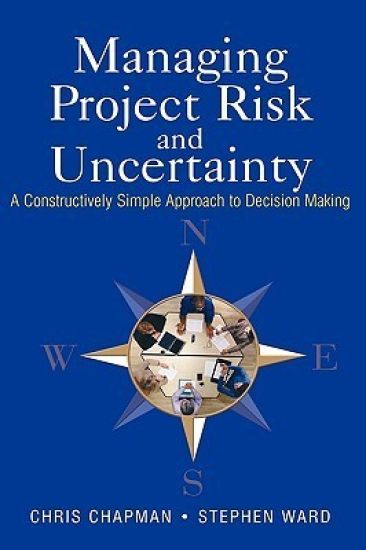
Managing Project Risk and Uncertainty

Managing Project Risk and Uncertainty

Chris Chapman; Stephen Ward

John Wiley Sons Inc
2002
sidottu
Rigorously grounded conceptually but developed to meet practical concerns, this book underpins and extends the scope and power of current approaches to the management of risk and uncertainty in projects and related operational and strategic management decision making. Ten tales, based on real cases, explore a range of project related problems, including: cost estimation, pricing competitive bids, risk allocation and incentive contract design, evaluation of threats and opportunities, buffer management in a supply chain, investment appraisal, portfolio management, and strategy formulation. Each tale provides practical guidance on achieving effective and efficient uncertainty management through simple analysis and discussion of emergent issues. Using a 'constructively simple' approach to model building and the associated decision support processes, the authors show the reader how to take the guesswork out of managing risk and uncertainty. Keeping formal analysis simple, without being simplistic, and adding complexity only when it facilitates additional insights, they provide a framework for 'constructive simplicity' which can be used to enhance risk and uncertainty management in any area of managerial decision making, whether in a project, operational, or strategic context. "This is not just another book about risk. Chapman and Ward focus on decision-making in a holistic way, based on the analysis of uncertainty. The concepts are illustrated by "ten tales about uncertainty management". These are short stories based on case studies in which the authors have been involved. They believe in KISS - not the usual definition but 'keep it simple systematically." —Professor Tony M. Ridley, Imperial College, London "Abundantly illustrated with case studies, this interesting book rightly highlights the need for simple, flexible models to manage risk and uncertainty. The author was associated with development of the PRAM model, which gives a rich variety of practical techniques for risk appraisal. The RAMP model provides a broad strategic framework, giving decision-makers an overall picture of the risks and rewards in a project. This book takes the discussion a stage further and provides many useful insights into the issues that arise in practice." —C G Lewin, Chairman, Risk Management Steering Group, Institute of Actuaries "This book presents a holistic and comprehensive approach to management decision making. Whilst the concepts are readily understood, they are used to provide a thorough background to the management of uncertainty. This is an invaluable book for anyone facing decision-making and uncertainty in either management or programme and project environments." —Alan R Walker, Cabinet Office, Improving Programme and Project Delivery team "Chris Chapman and Stephen Ward, through their constructively simple approach, and using Ockham's razor, show how simple models can be constructed that capture the essentials of any business and project scenario. By interpreting the problems as short stories, they are brought to life, showing that the decision is not just based on the quantitative and qualitative analysis of the risk, but also on the human condition, people's motivations, right down to whether they like the cup of tea." —Rodney Turner, Director of Erasmus University, Rotterdam, and Director of EuroProjex "In this well written book the reader is drawn from simple to advanced concepts of risk management by stories that reflect situations we all recognize. Chapman and Ward continually test the robustness of their conclusions by exercising the assumptions against reality and common sense, and they remind us about the importance of understanding the quality of the data being used. By the end of the book, the reader will have experienced a rather concentrated journey through many sophisticated analytical concepts and have shared in exercises in mature professional judgement. This book will well reward careful study by beginners and practitioners alike." —David T. Hulett Ph. D., Hulett & Associates LLC, Project Management Consultants "Many organizations, particularly in hi-tech businesses, are organized around a changing portfolio of projects. These can only be managed properly if there is a proper understanding of project risks and uncertainties and, sadly, this is an area in which there is considerable room for improvement. Chapman and Ward's book has a pleasing blend of quantitative and qualitative insights and will help train a generation of managers who are better equipped to manage successful projects." —Mike Pidd, Professor of Management Science, Lancaster University

Selling Places

Selling Places

Stephen Ward

Spon Press
1998
sidottu
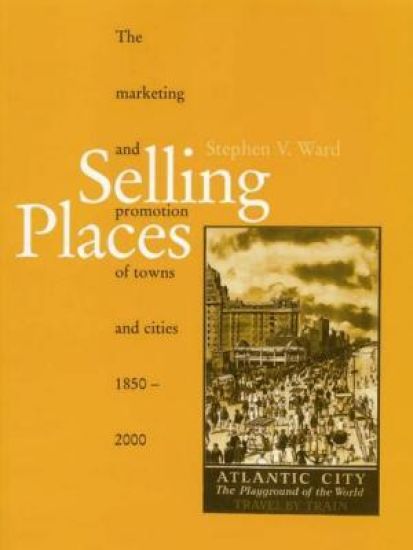
Selling Places explores the fascinating development of the place marketing and promotion over the last 150 years, drawing on examples from Northern America, Britain and continental Europe. The processes involved and the promotional imagery employed are meticulously presented and richly illustrated.
Selling Places

Selling Places

Stephen Ward

Spon Press
1998
nidottu
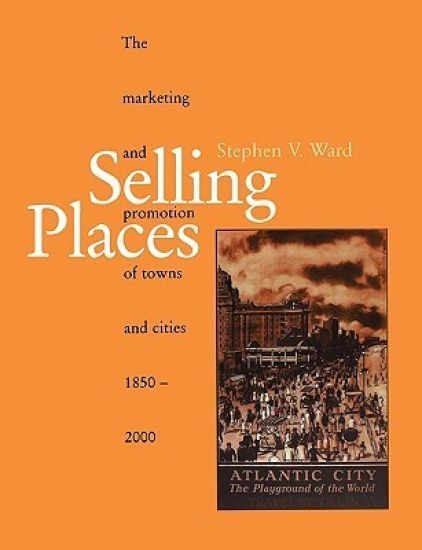
Selling Places explores the fascinating development of the place marketing and promotion over the last 150 years, drawing on examples from Northern America, Britain and continental Europe. The processes involved and the promotional imagery employed are meticulously presented and richly illustrated.
The Garden City

The Garden City

Stephen Ward

Spon Press
1992
sidottu
This examination of a phenomenon of 19th century planning traces the origins, implementation, international transference and adoption of the Garden City idea. It also considers its continuing relevance in the late 20th century and into the 21st century.