Kirjojen hintavertailu – 12 859 828 kirjaa ja 27 kauppaa
Kirjailija
Steve Fleetwood
Kirjat ja teokset yhdessä paikassa: 4 kirjaa, julkaisuja vuosilta 1995–2014, suosituimpiin kuuluu Hayek's Political Economy. Vertaile teosten hintoja ja tarkista saatavuus suomalaisista kirjakaupoista.
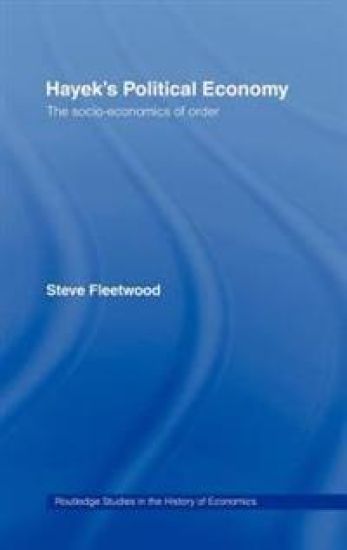
In a society where no central agency coordinates the human activity of producing, selling and buying, why is there order and not chaos? This fundamental question has taxed generations of economists. Hayek's notion of spontaneous order goes some way to providing an answer. Hayek's Political Economy argues that afer explicitly rejecting positivism, Hayek was free to embrace reality and offer an explanation of the process involved in bringing about order.
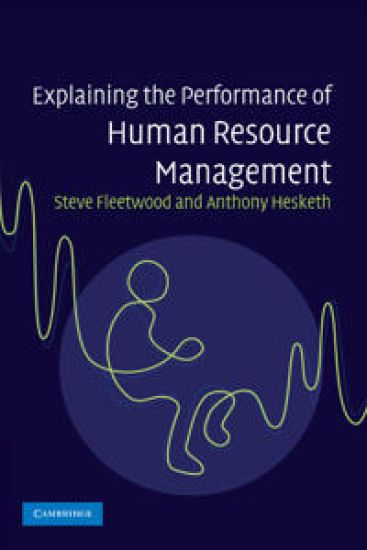
Human resource departments increasingly use the statistical analysis of performance indicators as a way of demonstrating their contribution to organizational performance. In this book, Steve Fleetwood and Anthony Hesketh take issue with this 'scientific' approach by arguing that its preoccupation with statistical analysis is misplaced because it fails to take account of the complexities of organizations and the full range of issues that influence individual performance. The book is split into three parts. Part I deconstructs research into the alleged link between people and business performance by showing that it cannot explain the associations it alleges. Part II attributes these shortcomings to the importation of spurious 'scientific' methods, before going on to suggest more appropriate methods that might be used in future. Finally, Part III explores how HR executives and professionals understand their work and shows how a critical realist stance adds value to this understanding through enhanced explanation.
Human resource departments increasingly use the statistical analysis of performance indicators as a way of demonstrating their contribution to organizational performance. In this book, Steve Fleetwood and Anthony Hesketh take issue with this 'scientific' approach by arguing that its preoccupation with statistical analysis is misplaced because it fails to take account of the complexities of organizations and the full range of issues that influence individual performance. The book is split into three parts. Part I deconstructs research into the alleged link between people and business performance by showing that it cannot explain the associations it alleges. Part II attributes these shortcomings to the importation of spurious 'scientific' methods, before going on to suggest more appropriate methods that might be used in future. Finally, Part III explores how HR executives and professionals understand their work and shows how a critical realist stance adds value to this understanding through enhanced explanation.
In a society where no central agency coordinates the human activity of producing, selling and buying, why is there order and not chaos? This fundamental question has taxed generations of economists. Hayek's notion of spontaneous order goes some way to providing an answer. Hayek's Political Economy argues that afer explicitly rejecting positivism, Hayek was free to embrace reality and offer an explanation of the process involved in bringing about order.