Kirjojen hintavertailu – 12 903 725 kirjaa ja 27 kauppaa

Kirjailija

Steve Holmes

Kirjat ja teokset yhdessä paikassa: 14 kirjaa, julkaisuja vuosilta 2010–2025, suosituimpiin kuuluu Christian Doctrine. Vertaile teosten hintoja ja tarkista saatavuus suomalaisista kirjakaupoista.

14 kirjaa

Kirjojen julkaisuvuodet: 2010–2025.

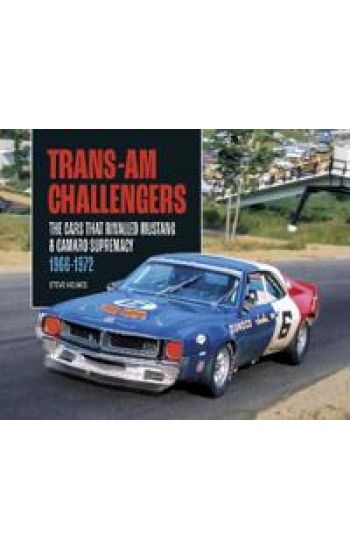
Trans-Am Challengers

Trans-Am Challengers

Steve Holmes

DAVID CHARLES
2025
sidottu

Halvin toimitettuna 32,50 €

Trans-Am Challengers: The Story Behind Detroit's Racing Revolution In April 1964, Ford’s Mustang pony car stormed onto the scene, igniting a sales phenomenon that forced Detroit’s other automakers to scramble to create their own competitors. Around the same time, the Sports Car Club of America (SCCA) was transforming from a purely amateur organisation into a professional racing powerhouse, introducing prize-money championships. By 1966, the SCCA launched two landmark series: the Canadian-American Challenge Cup (Can-Am) and the Trans-American Sedan Championship (Trans-Am). While Can-Am focused on unlimited FIA Group 7 sports cars, Trans-Am catered to FIA Group 2 touring cars, with classes divided by engine sizes: up to 2000cc and 2001-5000cc. The Over-2000cc class was crafted specifically with the Mustang in mind, ensuring Ford’s interest and leveraging the growing pony car wars. Chevrolet answered Ford’s Mustang with the launch of the Camaro in September 1966, sparking fierce competition on the track and in showrooms. Soon, Mercury, Pontiac, Dodge, Plymouth, and AMC joined the fray, turning the Trans-Am series into a battleground for Detroit’s ‘Big Four’. Manufacturers saw Trans-Am success as a path to dominance, investing heavily in developing race-ready cars and unleashing low-production homologation specials like the Mustang Boss 302, Camaro Z28, Pontiac Firebird Trans-Am, AMC Javelin Mark Donohue Edition, Dodge Challenger T/A, and Plymouth ’Cuda AAR—now some of the rarest and most valuable classic American cars. Beyond the famous Mustang and Camaro rivalry, this book uncovers the untold stories of their challengers and the relentless pursuit of sales glory. Mercury nearly claimed the championship in 1967, and AMC triumphed in 1971 and 1972 with Penske Racing. The fierce competition left an indelible mark on American motorsport history. A chapter also explores lesser-known contenders from outside the U. S., such as Ford Falcon Sprints in the British Saloon Car Championship and the powerful Holden Monaros and Ford Falcons that dominated Australian circuits. This is more than just a tale of Mustang versus Camaro—it’s the story of an era when Detroit’s finest fought to conquer the track and the showroom floor, leaving a legacy of engineering brilliance and motorsport passion.
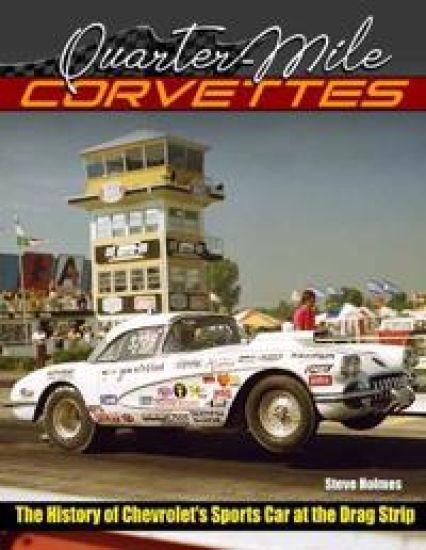
Quarter-Mile Corvettes

Quarter-Mile Corvettes

Steve Holmes

Cartech Inc
2024
nidottu
Re-live Corvette's early years at the drag strip Famously known as "America's sports car," the Chevrolet Corvette came to market in 1953. That same year, the newly established National Hot Rod Association (NHRA) hosted its first event. The Corvette was never intended for quarter-mile drag racing, and it appeared to be completely at odds with the sport. Early equipment included an underpowered Blue Flame 6-cylinder motor and automatic transmission. But somehow, the two have become forever entwined. The Corvette brought an element of class and style to drag racing. On the showroom and on the street, it has always been unique. It is truly American. Likewise, the uniqueness that sets it apart from everything else also meant that it had no natural competition on the drag strip. However, that fact didn't dampen enthusiasm. Indeed, the NHRA and other governing bodies introduced Sports Car divisions in the late 1950s, catering to both stock and modified vehicles. Naturally, these classes were packed with Corvettes. Racing historian Steve Holmes breaks new ground by unearthing the complete early history of the Corvette in drag racing. Quarter-Mile Corvettes focuses on the period from 1955 to 1975, which spans the first 20 years of Corvette V-8 production. Fittingly, this was also the era considered by many to be the greatest in drag racing's history, and Corvettes encapsulated the vibrancy of the period in a way that will never be repeated. Certainly, Chevrolet never intended for the Corvette to become a quarter-mile terror, but today, its nameplate has become one of the longest running in all of drag racing.
Mopar Factory Drag Cars 1961-1972

Mopar Factory Drag Cars 1961-1972

Steve Holmes

Cartech Inc
2022
nidottu
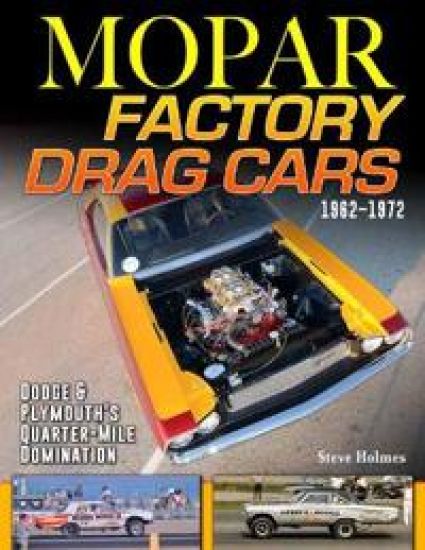
Blast down the quarter mile in your favorite 413 Long Ram, 426 Max Wedge, and 426 Hemi in Mopar Factory Drag Cars: Dodge & Plymouth's Quarter-Mile Domination 1962-1972 Stock-based drag racing throughout the 1960s demanded that the cars competing on the track be genuine production models and that they could be purchased by anyone. The strict regulations dictated total commitment from the manufacturers if they were to be successful. No one was more committed than Chrysler. Chrysler attacked Stock (Super Stock) drag racing in the 1960s with the same fervor as it did the NASCAR Grand National, which itself spawned the reintroduction of the Hemi engine. Its engineers designed and produced a new factory Super Stock turnkey race car most years throughout the decade and enjoyed absolute success on the track, forever cementing its legendary performance status. The introduction of Pro Stock in 1970 brought with it exciting heads-up racing with the expectation of producing multiple winners from a variety of brands. Instead, it resulted in total Mopar supremacy, as Hemi-powered Chrysler cars won 12 of the 15 national races throughout the first two years, prompting the NHRA to introduce weight breaks to scupper the Chrysler domination. The new 1972 regulations favored small-block-powered compact cars and were the first major step toward Pro Stock spiraling away from its roots and into the tube-frame silhouette formula seen today. Racing historian Steve Holmes delves into this fascinating period, capturing the careers of the Ramchargers, Melrose Missile, Bud Faubel, Dick Landy, Sox & Martin, Herb McCandless, Don Grotheer, Motown Missile, and countless others, providing a blow-by-blow account of Chrysler's factory drag car programs and the incredible cars it produced to trounce its rivals during the most epic era in Stock drag racing history.
Racing Camaros

Racing Camaros

Steve Holmes

Veloce Publishing Ltd
2021
sidottu
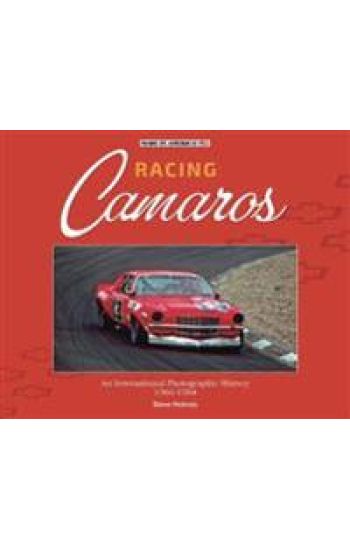
Chevrolet created the Camaro in response to the runaway sales success of the Ford Mustang, the first pony car. The Mustang went on sale in April 1964, and by August that same year, General Motors launched an intensive program to bring its own pony car to market. In September 1966, the Camaro went on sale. Chevrolet wanted the Camaro to be better than the Mustang in every area, including style, ride-quality, and performance. To that end, with the Mustang having already achieved so much racing success, Chevrolet wanted to beat it on the track also. Racing Camaros: An International Photographic History 1966 - 1984 is a photographic celebration of road racing Camaros throughout the world. It focuses on production-based cars, rather than the heavily modified tube-frame silhouette machines that began appearing in the late 1970s. Included are images of big-budget factory-supported cars competing in the Trans-Am series, right through to low-buck independents, and cars competing throughout the world. For the first time, the international road racing representation of the Camaro is featured in a book, which includes countless photos that have never been published. Technical detail is provided throughout, from concept and design, right through its racing career, and the challenges and developments that took place to make it a winner. Only period images have been used. This is a true photographic history depicting the global popularity of the Chevrolet Camaro as a road racing car.
Racing Mustangs

Racing Mustangs

Steve Holmes

Veloce Publishing Ltd
2020
nidottu
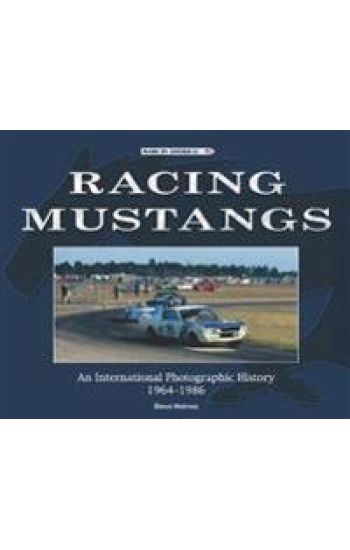
Virtually from the moment of its launch in April, 1964, the Ford Mustang has been a favorite among road racers. From the Tour de France, to production sports car racing, the SCCA Trans-Am series, regional and national A/Sedan competitions, and international and domestic sedan championships in Great Britain, Europe, Australia, and New Zealand, the Mustang has enjoyed a following like few other models. This book is a photographic celebration of road racing Mustangs throughout the world. It focuses on production-based cars, rather than the heavily modified tube-frame silhouette machines that began appearing in the late 1970s. Included are images of big-budget factory-supported cars competing in the Trans-Am series, right through to low-buck independents, and cars competing throughout the world. Using only period images, including countless photos that have never before been published, this is a true photographic history, depicting the global popularity of the Ford Mustang as a road racing car.
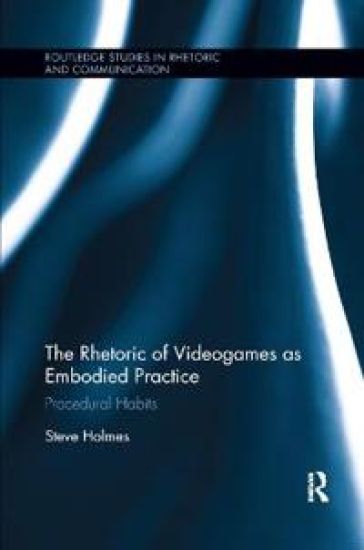
The Rhetoric of Videogames as Embodied Practice
The Rhetoric of Videogames as Embodied Practice offers a critical reassessment of embodiment and materiality in rhetorical considerations of videogames. Holmes argues that rhetorical and philosophical conceptions of "habit" offer a critical resource for describing the interplay between thinking (writing and rhetoric) and embodiment. The book demonstrates how Aristotle's understanding of character (ethos), habit (hexis), and nature (phusis) can productively connect rhetoric to what Holmes calls "procedural habits": the ways in which rhetoric emerges from its interactions with the dynamic accumulation of conscious and nonconscious embodied experiences that consequently give rise to meaning, procedural subjectivity, control, and communicative agency both in digital game design discourse and the activity of play.
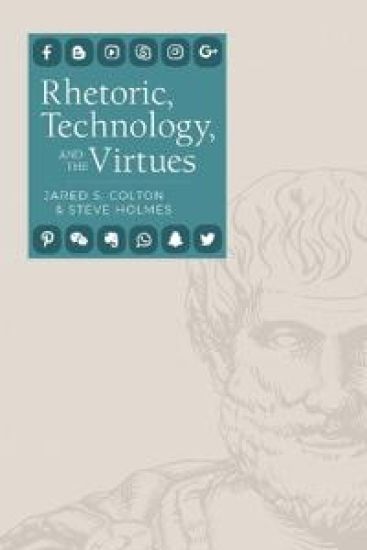
Rhetoric, Technology, and the Virtues

Rhetoric, Technology, and the Virtues

Jared S. Colton; Steve Holmes

University Press of Colorado
2018
nidottu
Rhetoric, Technology, and the Virtues offers a framework for theorizing ethics in digital and networked media. While the field of rhetoric and writing studies has traditionally given attention to Plato's Gorgias and Phaedrus dialogues, this volume updates Aristotle's basic framework of hexis for the digital age. According to Aristotle, "When men change their hexeis--their dispositions, habits, comportments, and so on, in relation to an activity--they change their thought." Rhetoric, Technology, and the Virtues argues that virtue ethics supports postmodern criticisms of rational autonomy and universalism while also enabling a discussion of the actual ethical behaviors that digital users form through their particular communicative ends and various rhetorical purposes. Authors Jared Colton and Steve Holmes extend Aristotle's hexis framework through contemporary virtue ethicists and political theorists whose writing works from a tacit virtue ethics framework. They examine these key theorists through a range of case studies of digital habits of human users, including closed captioning, trolling, sampling, remixing, gamifying for environmental causes, and using social media, alongside a consideration of the ethical habits of nonhuman actors. Tackling a needed topic with clarity and defined organization, Rhetoric, Technology, and the Virtues carefully synthesizes various strands of ethical thinking, convincingly argues that virtue ethics is a viable framework for digital rhetoric, and provides a practical way to assess the changing hexeis encountered across the network of ethical situations in the digital world.
The Rhetoric of Videogames as Embodied Practice
The Rhetoric of Videogames as Embodied Practice offers a critical reassessment of embodiment and materiality in rhetorical considerations of videogames. Holmes argues that rhetorical and philosophical conceptions of "habit" offer a critical resource for describing the interplay between thinking (writing and rhetoric) and embodiment. The book demonstrates how Aristotle's understanding of character (ethos), habit (hexis), and nature (phusis) can productively connect rhetoric to what Holmes calls "procedural habits": the ways in which rhetoric emerges from its interactions with the dynamic accumulation of conscious and nonconscious embodied experiences that consequently give rise to meaning, procedural subjectivity, control, and communicative agency both in digital game design discourse and the activity of play.
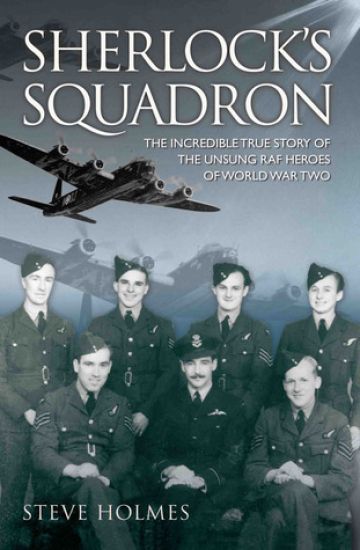
Sherlock's Squadron - The Incredible True Story of the Unsung Heroes of World War Two
John Holmes was a schoolboy when World War II broke out in 1939, but even then he knew his destiny lay in the skies. 'Boys from these parts don't join the RAF', he was told on more than one occasion. But they were wrong. After many months undergoing selection and training he eventually made it into the air crew of 196 Squadron. It was there he embarked on a love affair with the Stirling Bomber, and it was there that he met up with his crew - his brothers in arms. With in-depth research, Steve Holmes' inspirational, harrowing and at times humorous book charts the wartime exploits of his father, John 'Sherlock' Holmes, and his flight crew. Through many hours of research and contact with living relatives of 'Sherlock's Squadron' Steve has pulled together a unique and personal insight into the most brutal and devastating armed conflict in history. Verified and independently confirmed by the MOD, War Office Bomber Command and preserved navigator's records and pilots' log books of the time, this is a comprehensive and compelling account of World War II from the eyes of a group of young RAF men from distant corners of the globe.
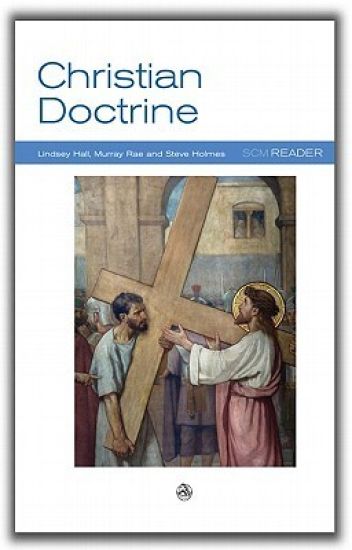
Christian Doctrine

Christian Doctrine

Lindsey Hall; Steve Holmes; Murray Rae

SCM Press
2010
nidottu
The SCM Reader Christian Doctrine is a volume of selected readings from the whole period of Christian history. The book's nine chapters cover each of the main Christian doctrines. Each chapter begins with a short introduction written by one of the editors. The aim of the book is to give an overview of the discussions which have taken place in Christian theology in relation to particular doctrines. Each chapter will cover the formulation of doctrine, challenges and developments. This book is primarily aimed at undergraduate students although it will also be of interest to anyone who is interested in learning more about Christian doctrine and theology. It is ideal for introductory courses in Christian doctrine at university level or as wider reading for courses focusing on particular Christian doctrines.