Kirjojen hintavertailu – 12 859 829 kirjaa ja 27 kauppaa

Kirjailija

Steve Humble

Kirjat ja teokset yhdessä paikassa: 8 kirjaa, julkaisuja vuosilta 2002–2025, suosituimpiin kuuluu The Experimenter's A-Z of Mathematics. Vertaile teosten hintoja ja tarkista saatavuus suomalaisista kirjakaupoista.

8 kirjaa

Kirjojen julkaisuvuodet: 2002–2025.

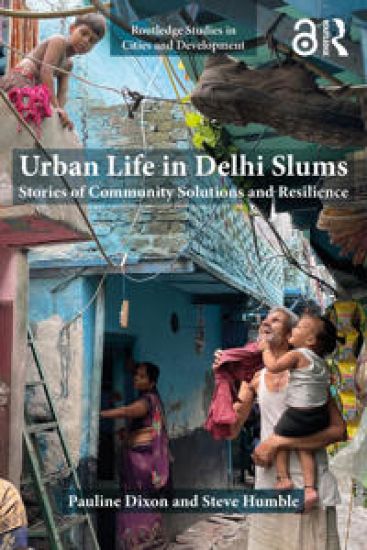
Urban Life in Delhi Slums

Urban Life in Delhi Slums

Pauline Dixon; Steve Humble

TAYLOR FRANCIS LTD
2025
sidottu
This book investigates urban life in the slums of Delhi, demonstrating how individuals and communities self-organize to solve problems that arise in their neighbourhoods. Around one-quarter of the world’s urban population live in informal, slum and squatter settlements, representing a significant economic and cultural force. Despite this, settlements are often perceived as marginal, homogenous places, overlooking the resilience and agency of the diverse actors, networks and social groups working collectively within them. This book draws on extensive qualitative and quantitative data from squatter and resettlement colonies in and around Delhi, foregrounding the voices of residents to build a bottom-up picture of place and urban development. The book analyses the contexts in which households operate within their communities, and the adaptiveness of individuals living in different slum types, with differing levels of governance. In doing so, the book demonstrates the effect which different institutional agreements and governance systems have on enterprise, empowerment, resilience, trust, dignity, and engaging in life that has purpose and meaning. This book’s detailed assessment of slum spaces and networks will be of interest to researchers across a range of fields, including international development, geography, urban planning, politics, and sociology, as well as to policy makers and civil society organisations.
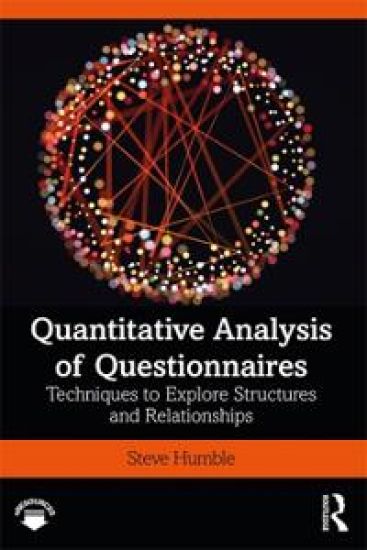
Quantitative Analysis of Questionnaires
Bringing together the techniques required to understand, interpret and quantify the processes involved when exploring structures and relationships in questionnaire data, Quantitative Analysis of Questionnaires provides the knowledge and capability for a greater understanding of choice decisions. The ideal companion for non-mathematical students with no prior knowledge of quantitative methods, it highlights how to uncover and explore what lies within data that cannot be achieved through descriptive statistics. This book introduces significance testing, contingency tables, correlations, factor analysis (exploratory and confirmatory), regression (linear and logistic), discrete choice theory and item response theory. Using simple and clear methodology, and rich examples from a range of settings, this book: provides hands-on analysis with data sets from both SPSS and Stata packages; explores how to articulate the calculations and theory around statistical techniques; offers workable examples in each chapter with concepts, applications and proofs to help produce a higher quality of research outputs; discusses the use of formulas in the appendix for those who wish to explore a greater mathematical understanding of the concepts. Quantitative Analysis of Questionnaires is the ideal introductory textbook for any student looking to begin and or improve statistical learning as well as interpretation.
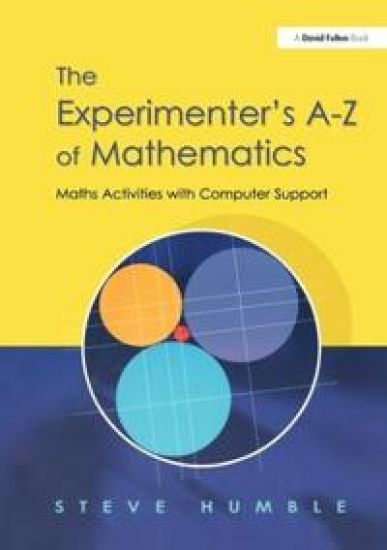
The Experimenter's A-Z of Mathematics
Mathematics at all levels is about the joy in the discovery; it's about finding things out. This fascinating book is a guide to that discovery process, presenting ideas for practical classroom-based experiments and extension activities. Each experiment is based on the work of a key mathematician who has shaped the way that the subject looks today, and there are historical notes to help teachers bring this work to life. The book includes instructions on how to recreate the experiments using practical mathematics, computer programs and graphical calculators; ideas for follow-up work; background information for teachers on the mathematics involved; and links to the new secondary numeracy strategy framework. Accompanying the book are downloadable resources with computer programs that can be used and reworked as part of the experimental process. With a wide range of topics covered, and plenty of scope for interesting follow-up activities, the book will be a valuable tool for mathematics teachers looking to extend the curriculum.
How to be Inventive When Teaching Primary Mathematics
Have you ever taken your children on a maths walk? Are your pupils shape detectives? How to be Inventive When Teaching Primary Mathematics is a pocket guide to inspire primary teachers to become confident, effective, imaginative teachers who enjoy teaching, and whose pupils enjoy learning. It is packed with exciting, creative, unexpected ideas, to help teachers and pupils open their eyes to the mathematical world around them. It gives teachers the tools to develop their own classroom activities and experiences, supporting learners as they move fluently between mathematical ideas and develop their ownership of mathematics: Take your pupils on a maths walk, meet dinosaurs, visit art galleries, learn your destiny number, create your first human graph in the playground and learn how to be an algebra magician. Written by Steve Humble, expert teacher, teacher trainer and, as Dr Maths, advocate for the power and potential of mathematics, this friendly, stimulating guide offers a fresh, practical approach to teaching mathematics, based on the best research and practice, and years of experience in the field. Focussing on five key mathematical topics - number, geometry, measurement, statistics and algebra – it is structured in the form of a journey, introducing historical facts, ideas for innovative and inventive classroom activities and explorations of the key misconceptions for each topic. How to be Inventive When Teaching Primary Mathematics will challenge you to think about your own beliefs and how they influence your practice, and help you understand how best to transform your teaching to stimulate children’s emotions to improve knowledge, learning and enjoyment of the beauty of maths.
Hidden Secrets from the World of Dr Maths
This book is an enhanced collection of Dr Maths newspaper columns answering queries from readers about their maths questions and concerns. Contains 40 stories on topics as varied as The Perfect Body, Global Warming, Mobile Phones, Deal or No Deal, Lucky Numbers, What is Average?, Finding Mr Right, Golf & Horse Racing, Coin & Card Magic, Mad Hatter's Tea Party, Premium Bonds and Coco Chanel to name but a few.
The Experimenter's A-Z of Mathematics

The Experimenter's A-Z of Mathematics

Steve Humble

David Fulton Publishers Ltd
2002
nidottu
Mathematics at all levels is about the joy in the discovery; it's about finding things out. This fascinating book is a guide to that discovery process, presenting ideas for practical classroom-based experiments and extension activities. Each experiment is based on the work of a key mathematician who has shaped the way that the subject looks today, and there are historical notes to help teachers bring this work to life. The book includes instructions on how to recreate the experiments using practical mathematics, computer programs and graphical calculators; ideas for follow-up work; background information for teachers on the mathematics involved; and links to the new secondary numeracy strategy framework. Accompanying the book are downloadable resources with computer programs that can be used and reworked as part of the experimental process. With a wide range of topics covered, and plenty of scope for interesting follow-up activities, the book will be a valuable tool for mathematics teachers looking to extend the curriculum.