
Kirjojen hintavertailu – 12 903 735 kirjaa ja 27 kauppaa

Kirjailija

Steve Ostovich

Kirjat ja teokset yhdessä paikassa: 3 kirjaa, julkaisuja vuosilta 2011–2026, suosituimpiin kuuluu Political Theology as Critical Theory. Vertaile teosten hintoja ja tarkista saatavuus suomalaisista kirjakaupoista.

3 kirjaa

Kirjojen julkaisuvuodet: 2011–2026.

Political Theology as Critical Theory

Political Theology as Critical Theory

Steve Ostovich

ANTHEM PRESS
2026
nidottu
This work describes a new path for thinking critically about history and culture. It frames a critical theory using categories and concepts derived from political theology for insights into the human political condition and to raise ongoing questions regarding meaningful action. It is a response to the failure of modern liberal individualism to provide a coherent political theory capable of shaping a good life together. These problems arise already in Thomas Hobbes’s Leviathan. Hobbes used biblical myth to characterize the power of the sovereign as “mortal god,” but his biblical criticism and scientific reasoning led to a split between the public and private uses of reason that undermined his social contract theory and still clouds our political thinking. The new political theology of Johann Baptist Metz offers an alternative way to think politically that remains rooted in history while developing an understanding of historical time and action in conversation with biblical prophetic and apocalyptic traditions. Metz’s own engagement with Critical Theory provides the impetus for developing a political theology that in the present work moves beyond God and reliance on metaphysical grounding for political judgment and towards political reason acting in history and political subjectivity.
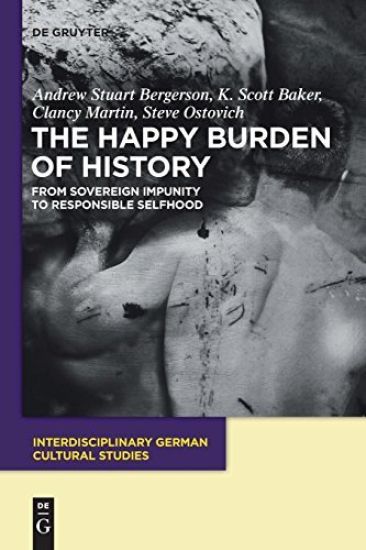
The Happy Burden of History

The Happy Burden of History

Andrew S. Bergerson; K. Scott Baker; Clancy Martin; Steve Ostovich

De Gruyter
2016
isokokoinen pokkari
Germans are often accused of failing to take responsibility for Nazi crimes, but what precisely should ordinary people do differently? Indeed, scholars have yet to outline viable alternatives for how any of us should respond to terror and genocide. And because of the way they compartmentalize everyday life, our discipline-bound analyses often disguise more than they illuminate. Written by a historian, literary critic, philosopher, and theologian, The Happy Burden of History takes an integrative approach to the problem of responsible selfhood. Exploring the lives and letters of ordinary and intellectual Germans who faced the ethical challenges of the Third Reich, it focuses on five typical tools for cultivating the modern self: myths, lies, non-conformity, irony, and modeling. The authors carefully dissect the ways in which ordinary and intellectual Germans excused their violent claims to mastery with a sense of ‘sovereign impunity.’ They then recuperate the same strategies of selfhood for our contemporary world, but in ways that are self-critical and humble. The book shows how viewing this problem from within everyday life can empower and encourage us to bear the burden of historical responsibility - and be happy doing so.
The Happy Burden of History

The Happy Burden of History

Andrew S. Bergerson; K. Scott Baker; Clancy Martin; Steve Ostovich

De Gruyter
2011
sidottu
Germans are often accused of failing to take responsibility for Nazi crimes, but what precisely should ordinary people do differently? Indeed, scholars have yet to outline viable alternatives for how any of us should respond to terror and genocide. And because of the way they compartmentalize everyday life, our discipline-bound analyses often disguise more than they illuminate. Written by a historian, literary critic, philosopher, and theologian, The Happy Burden of History takes an integrative approach to the problem of responsible selfhood. Exploring the lives and letters of ordinary and intellectual Germans who faced the ethical challenges of the Third Reich, it focuses on five typical tools for cultivating the modern self: myths, lies, non-conformity, irony, and modeling. The authors carefully dissect the ways in which ordinary and intellectual Germans excused their violent claims to mastery with a sense of ‘sovereign impunity.’ They then recuperate the same strategies of selfhood for our contemporary world, but in ways that are self-critical and humble. The book shows how viewing this problem from within everyday life can empower and encourage us to bear the burden of historical responsibility - and be happy doing so.