Kirjojen hintavertailu – 12 859 818 kirjaa ja 27 kauppaa
Kirjailija
Steve Parker
Kirjat ja teokset yhdessä paikassa: 102 kirjaa, julkaisuja vuosilta 2000–2026, suosituimpiin kuuluu Natural Disasters: Moving Earth. Vertaile teosten hintoja ja tarkista saatavuus suomalaisista kirjakaupoista.
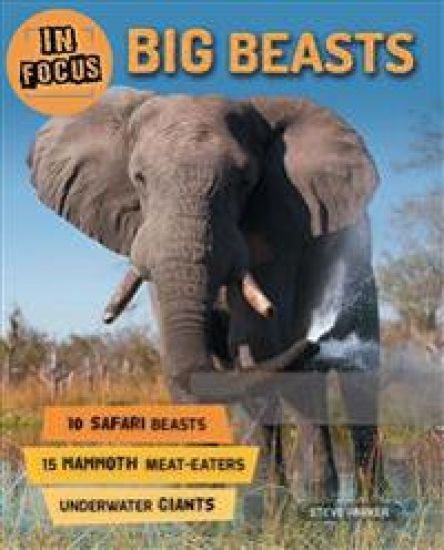
Which animal is the biggest on Earth? Where do the most big beasts live? Which big animal is the most dangerous in Africa? In Focus: Big Beasts has the answers In Focus is a cool information series that's perfect for curious kids. These fun books feature modern, magazine-style pages, including top 10 lists, fast facts, and more With pages packed with vivid photography and fun facts, kids will have fun learning about the world around them Each In Focus book features a contents page, glossary, and index.
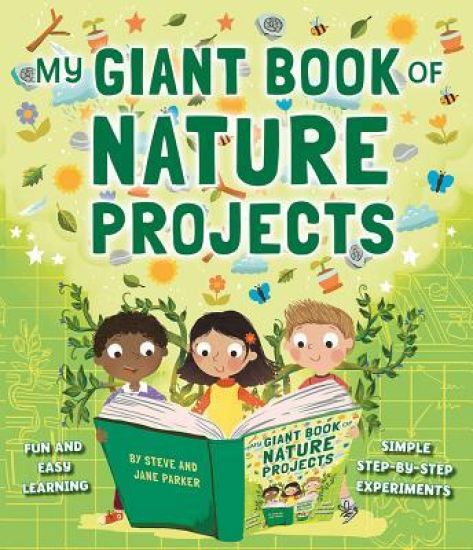
Combining learning and play, this book is designed to introduce young children to nature study with fascinating practical examples. Once children have discovered some of the smaller wonders of the natural world, they can learn to appreciate and care for it throughout their lives. The ten terrific projects to help youngsters learn about the world around them include a wild flower window box, a shoe-box museum, a bean-in-a-box maze, a wiggly wormery, bark and leaf rubbings, a miniature pond, a book of pressed flowers, and a garden grown from muddy boots! Each project is accompanied by an illustrated list of materials and there are additional tips on safety and being a good naturalist. Clear stage-by-stage photographs show children completing each project so that young readers learn alongside them, and the ideas use simple materials and basic equipment that are easy to find around the home. An informative introduction provides simple instructions on safety and caring for the environment. This is the perfect starter book for 3- to 7-year-olds - for older readers to use with minimum supervision, or for younger ones to enjoy with adult help.
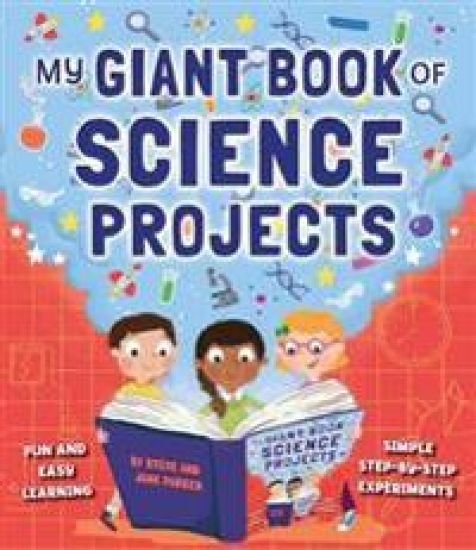
The world around us is a source of incredible wonder and amazement to children. This book will reveal and explain how things work, and will respond to youngsters' first questions. It encourages readers to carry out their own practical experiments, instilling real understanding and the excitement and enthusiasm that will carry them into more `serious' science in the future. See how the wind moves a homemade sailboat, how you can hold a glass of water upside down without spilling it, and how to simulate a volcanic eruption with a simple chemical reaction! This is the perfect starter book for ages 3 to 7 - for older readers to use with minimum supervision, or for younger ones to enjoy with adult help. Ten terrific projects to help children learn about science by conducting their own experiments. These introduce and explain very simple ideas in physics, chemistry and the natural world, with activities on themes of light and shade, electricity, water, wind and volcanoes. Find out how mirrors work, tell the time by the sun, make a sound cannon to knock down skittles, and stir up a snowstorm with static electricity! All the experiments are shown in clear step-by-step photographs, and use simple materials and very basic equipment that can be found around the home.
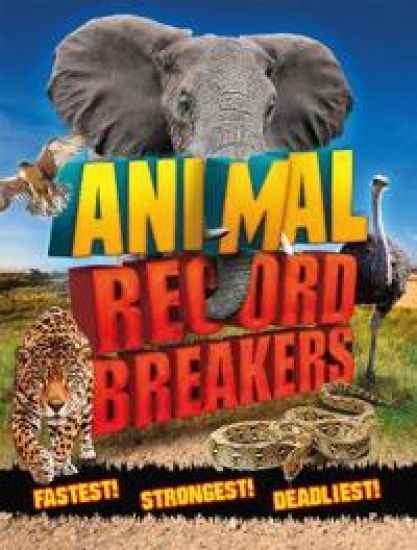
Packed with amazing infographics and awesome stats, this best-selling series has a fun and accessible world-record book approach. With bold and colourful illustrations, eye-catching photographs and the latest expert research, Record Breakers books are the perfect purchase for kids who love brain-bending facts! From man-eating sharks to snakes that grow longer than buses, check out the greatest record breakers of the animal world! This book is packed with awesome and extreme creatures, on land, in the sea and in the sky. Discover the fastest, the biggest, the tiniest and the deadliest animals in the world! Statistics are presented through colourful graphics, with lots of freaky facts to fascinate.
En Estados Unidos, un puente colapsa y cae en el r o Mississippi durante la hora de mayor tr nsito. En la ciudad de Nueva York, las dos torres del World Trade Center colapsan y se derrumban despu s de ser impactadas por dos aviones secuestrados. Gases radioactivos se propagan desde Ucrania a trav s de Europa, despu s del peor accidente nuclear en la historia. Encuentra c mo la ciencia explica qu pas en estos y otros ejemplos de la vida real de los desastres causados por el hombre.
En Jap n, un terremoto desencaden uno de los m s devastadores tsunamis en la historia. En Colombia, un pueblo entero fue devastado por olas de lava mezcladas con agua. En Camer n, gases mortales ascendieron de un lago y sofocaron a la gente y al ganado de los poblados de los alrededores. Cu les son las razones cient ficas de estos desastres de la vida real? Este libro tiene las respuestas.
En Pakist n, inundaciones provocadas por un catastr fico monz n cubren una quinta parte del pa s. En Portugal, un avi n es derribado por una microrr faga. En Estados Unidos, el hurac n Katrina, de 400 kil metros de ancho, devast la ciudad de Nueva Orleans. Encuentra c mo la ciencia explica qu pas en estos y otros ejemplos de la vida real de los desastres naturales causados por el clima.
En ekstra innholdsrik bok i suksess-serien Gullstjerne - med hjernebry og aktiviteter som gjør det gøy å lære den nyttige kunnskapen. Reis jorda rundt til lands, til vanns og i lufta for å utforske det fantastiske dyrelivet på planeten vår. Har du lurt på hvordan tukanen klarer å bære det digre nebbet? Mens du finner fram i labyrinter, løser bildegåter, bygger en beverhytte, sammenligner dyrenes rekorder med dine og vennenes, eller mens du tegner, lærer du en masse om ulike dyrearter og habitatene deres. Denne boka gir barnet en pangstart på naturfagundervisningen i skolen!
'Magnificent in its breadth and illustration' Booklist. Dinosaurus was published in North America in 2003 and went on to sell 15,000 in hardcover and more in paperback. Now 13 years have passed during which there have been dozens of new discoveries. Fully revised and published in the UK for the first time, this edition of Dinosaurus is simply too exceptional to pass up. There have been many incredible discoveries recently. For example: Yi qi (“ee chee”, “strange wing”), the earliest known flying non-avian dinosaur; The “Chicken from Hell,” a bird-like beaked, clawed and feathered dinosaur that roamed the Dakotas; Zhenyuanlong suni, a cousin of Velociraptor, suggests that this family has been inaccurately depicted. The new 5-foot-long dino more resembles a feathered poodle than the brute of Jurassic Park; “Superduck,” at 5 tons and with a mate-attracting head crest it is thought to be a missing link between two other known duck-billed head-crested dinosaur species. Perhaps most exciting is that in 2016 the American Museum of Natural History opened a new exhibition featuring the astonishing, newly discovered 122-foot-long titanosaur, yet to be named. The plant-eating colossus is the largest dinosaur ever found — it weighed around 77 tons — as much as 14 or 15 African elephants! No other life form captures the imagination like dinosaurs. Organized by the major dinosaur families, Dinosaurus identifies 500 species. It describes in detail and stunning illustrations what they looked like, what they ate and how they fought, lived and died. The features include: Concise explanations of species’ traits and habits; Vivid full-colour illustrations representing life among the dinosaurs; Stunning colour photographs of dinosaur discoveries; Latin name, translation and pronunciation; Height specifics and comparison to humans; Diet and habitat; Global distribution. Brimming with research from digs in Europe, North America, Mongolia, China and elsewhere, Dinosaurus is an encyclopedic and vividly illustrated reference for all ages.
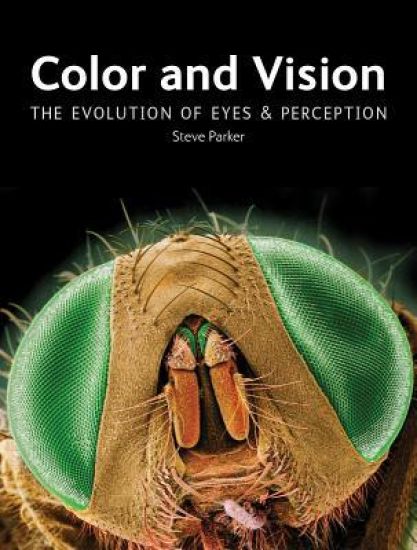
This thought-provoking book examines life before there was vision and considers how it changed when the image-forming eye evolved. It goes back to the earliest life on Earth to trace the evolution of vision and color in nature. For color to exist there needs to be light, an image-forming eye, and a brain to process the data. We know that more than 543 million years ago there were no image-forming eyes, only basic light receptors that allowed organisms to tell the difference between light and dark. We also know that about two million years later there were roughly six major groups of animals in existence. It was not until just 20 million years later -- a blink of the eye in evolutionary history -- that there were 38 groups, about the same number that exists today. This dramatic and rapid increase may be explained by the evolution of image-forming eyes. With the world suddenly in focus for many species, and with an ability to perceive color, the benefit of being able to hide oneself, appear threatening or attractive, and communicate with one's own species or others, became much more acute. The better the vision, the greater the chance of survival. Drawing on spectacular specimens from the collections of London's Museum of Natural History, Color and Vision looks at the evolution of the eye, the uses of color in nature, from a warning or disguise to an irresistible invitation, and explains how color works. From the first race between hunters and hunted, to the rich color of today's natural world, it traces the intertwined evolutionary history of color and vision. Color and Vision is an essential selection that will be of interest to popular science and natural history readers, amateur naturalists, and researchers.
Seeing a wolf stalking its prey would be almost impossible to witness up close. It wouldn't be safe to be so near such a deadly predator's jaws when it's on the hunt But in this book, readers can see wolves, owls, and many more terrifying predators do what they do best--capture prey. Up-close, full-color photographs highlight the sharp teeth, long claws, and huge paws of some of the world's deadliest animals. Fact boxes include fascinating information about animal bodies and behavior and statistics about each animal's size, range, and lifespan.
The great white shark is the biggest predatory fish on Earth. Its formidable teeth and ability to swim up to 37 miles (60 km) per hour make it a deadly enemy. Readers can check out the great white shark up close, as well as 19 other amazing species of shark. Full-color photographs introduce readers to the teeth, fins, and other body adaptations that make sharks some of the coolest animals out there. Fact boxes detail each shark's behaviors, including hunting practices, and statistics telling their lifespan, size, and range.
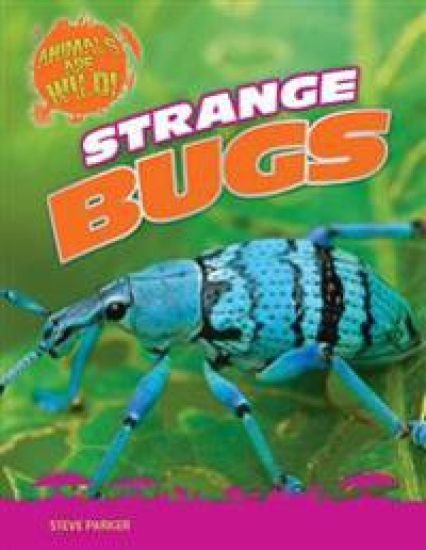
Bugs are some of the most interesting members of the animal kingdom Some are brightly colored and quite beautiful. Many have wings, some just have legs, and still others have no limbs at all. Through full-color photographs and detailed fact boxes, readers are introduced to many members of the wonderful world of bugs. This up-close look reveals that spiders have fangs, leg and wing shape can tell a lot about a bug's behavior, and that people have a lot to learn about bugs
Build your child’s reading confidence at home with books at the right level Plants are amazing, different around the world – and the biggest living things ever. There are leaves twice as long as a bus, flowers that attract insects by smelling like dead bodies, and trees that grow taller than the Statue of Liberty or weigh ten times as much as a blue whale! Copper/Band 12 books provide more complex plots and longer chapters that develop reading stamina. Text type – An information book. The book is organised into short chapters to help children practise the skills of locating and identifying important information. The glossary and index on pages 30 and 31 can be used to develop children's information retrieval skills further. Curriculum links – Science
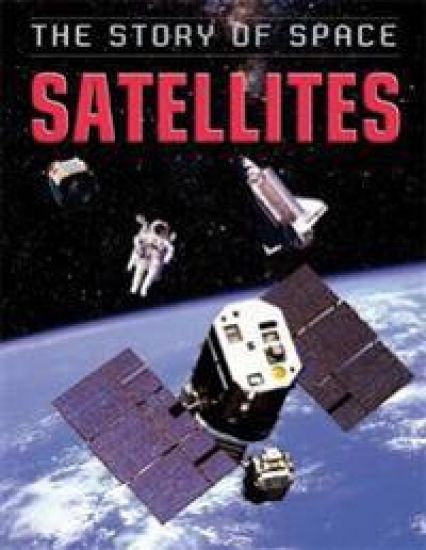
More than 3,000 satellites have been placed in orbit around Earth since the very first, Sputnik 1, made history in 1957. Satellites perform a huge variety of functions. From the huge Hubble Space Telescope to weather and communications satellites, these objects make a difference to our lives here on Earth every day. How do they get there, how do they stay up there and what job does each of them do? Find out in this in-depth look at all kinds of satellites. Six books that reveal the thrilling journeys, triumphs and disasters that men and women have experienced in the exploration of our universe. These books examine the mind-blowing technologies involved in space endeavours and tells the all too human stories of some of the key figures.
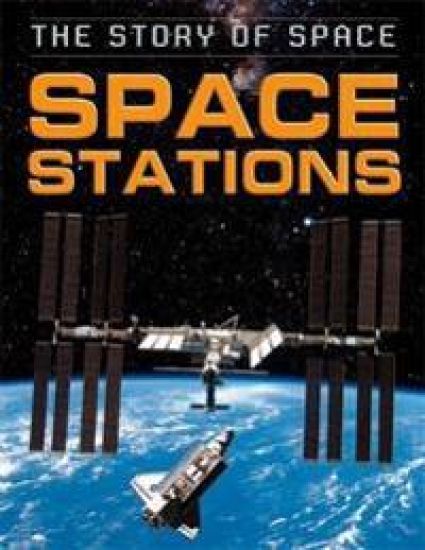
Space stations, including Skylab, Mir and the ISS are a vital outposts of scientific endeavour. Although only the ISS remains in orbit, the story of man's quest to live and conduct experiments in space is a tale of adventure, tragedy and genius. Six books that reveal the thrilling journeys, triumphs and disasters that men and women have experienced in the exploration of our universe. These books examine the mind-blowing technologies involved in space endeavours and tells the all too human stories of some of the key figures.
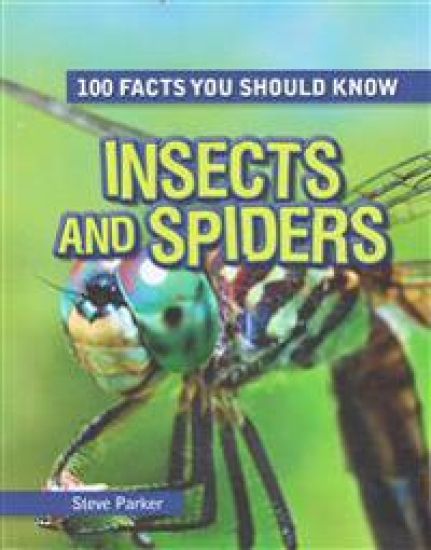
As the largest animal group in the world, with millions of species, insects should be a significant focus in the science classroom. And while spiders are often grouped with bugs, they aren't insects. This notable book explains why within its 100 facts about both groups that will astound, entertain, and perhaps even gross out readers Discussion of the life cycles of these creatures offers need-to-know vocabulary words and concepts such as larva, pupa, and molting. Images throughout the book support the accessible text, while activities and quizzes keep readers assessing and building on their understanding.
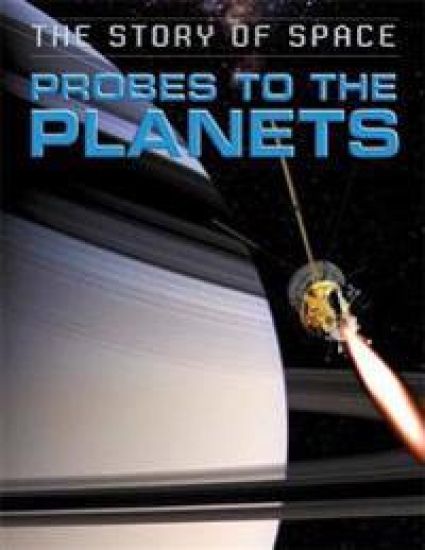
Every planet in our solar system and some of the moons and other space objects have been visited by at least one probe and in the future, more probes and craft will visit these worlds in our endeavour to learn about space and the possibility of extraterrestrial life. Some probes, such at the Verena 13 probe that landed on Venus, were designed to last just a few minutes. Others, such as the Voyager probes, are still sending data back to Earth from far out towards the edge of our Solar System. Each probe is designed to do a unique job and this book reveals the genius of their design. Six books that reveal the thrilling journeys, triumphs and disasters that men and women have experienced in the exploration of our universe. These books examine the mind-blowing technologies involved in space endeavours and tells the all too human stories of some of the key figures.
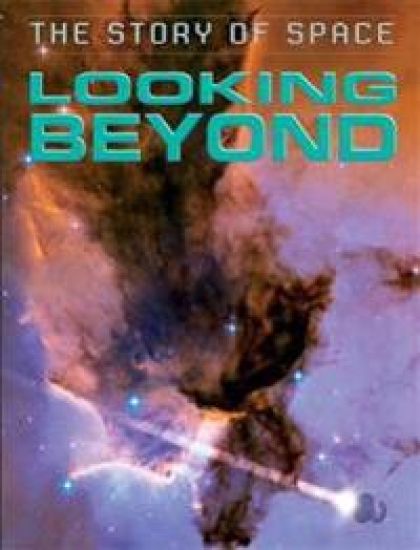
Most of space is a mystery, but astronomers and scientists have spent years studying some of the biggest questions, such as what are black holes, how do galaxies form and what happened during the Big Bang? What we do know about space and the cycle of life and death of stars and other space objects makes incredible reading and will delight readers who want to know just that bit more about the universe we live in. Six books that reveal the thrilling journeys, triumphs and disasters that men and women have experienced in the exploration of our universe. These books examine the mind-blowing technologies involved in space endeavours and tells the all too human stories of some of the key figures.