Kirjojen hintavertailu – 12 859 828 kirjaa ja 27 kauppaa
Kirjailija
Steve Pile
Kirjat ja teokset yhdessä paikassa: 10 kirjaa, julkaisuja vuosilta 1996–2021, suosituimpiin kuuluu City Worlds. Vertaile teosten hintoja ja tarkista saatavuus suomalaisista kirjakaupoista.
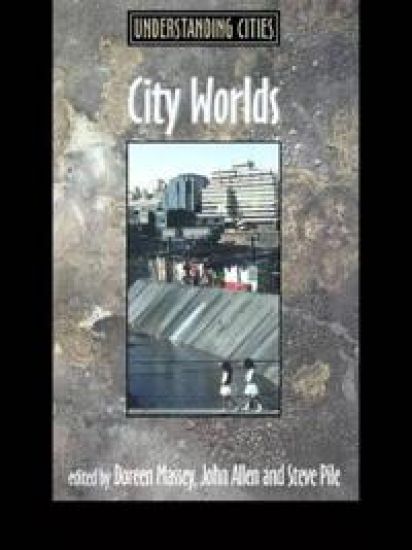
For the first time in history, half of the worlds population is living in mega-cities. Never before have we confronted such a geography of the worlds people. Analysing cities through spatial understanding, City Worlds explores how different worlds within the city are brought into close proximity. The authors outline new ways to address the ambiguities of cities: their promise and potential, their problems and threats.
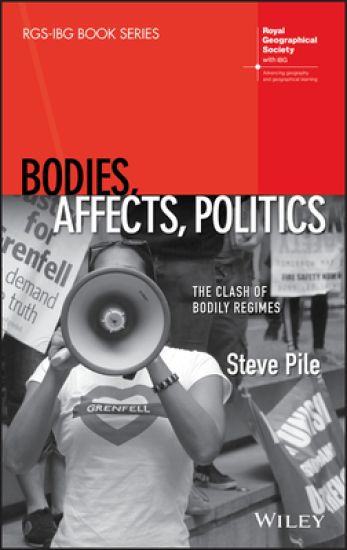
This book seeks to understand the coexistence of bodily regimes and the politics that emerge from the clash between them: Presents a novel conceptual model for understanding the relationship between bodies and affectsReworks Rancière's notions of the distribution of the sensible and the aesthetic unconsciousEstablishes a dynamic and multiple understanding of the repressive, distributive and communicative unconscious by rethinking Freudian psychoanalysisUtilizes a variety of empirical materials, from Hollywood movies to Freud's case studiesSets its argument about politics within the context of significant social events to ensure its conceptual and empirical material is relevant to the contemporary political moment
This book seeks to understand the coexistence of bodily regimes and the politics that emerge from the clash between them: Presents a novel conceptual model for understanding the relationship between bodies and affectsReworks Rancière's notions of the distribution of the sensible and the aesthetic unconsciousEstablishes a dynamic and multiple understanding of the repressive, distributive and communicative unconscious by rethinking Freudian psychoanalysisUtilizes a variety of empirical materials, from Hollywood movies to Freud's case studiesSets its argument about politics within the context of significant social events to ensure its conceptual and empirical material is relevant to the contemporary political moment
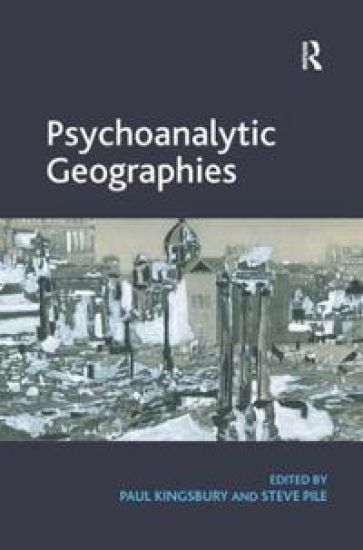
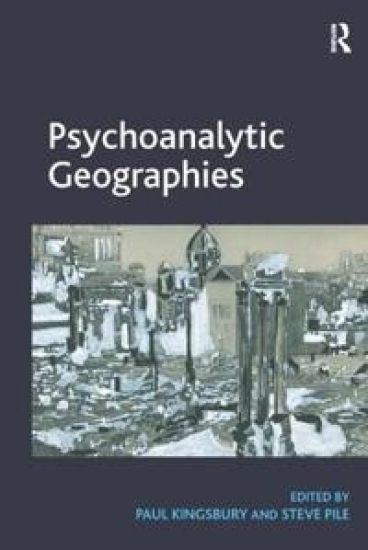
Psychoanalytic Geographies is a unique, path-breaking volume and a core text for anyone seeking to grasp how psychoanalysis helps us understand fundamental geographical questions, and how geographical understandings can offer new ways of thinking psychoanalytically. Elaborating on a variety of psychoanalytic approaches that embrace geographical imaginations and a commitment toward spatial thinking, this book demonstrates the breadth, depth, and vitality of cutting edge work in psychoanalytic geographies and presents readers with as wide a set of options as possible for taking psychoanalysis forward in their own work. It covers a wide range of themes and perspectives in terms of theoretical approaches such as Freudian, Lacanian, Kristevan, and Irigarayian; conceptual issues such as space, power, identity, culture, political economy, colonialism, ethics, and aesthetics; disciplinary insights including Geography, English, Sexuality Studies, and History of Science; as well as empirical contexts such as the reception of psychoanalysis in early twentieth century England, psychoanalytic geographies of violence and creativity in a small Mexican city, visual cultures of second-generation Iranian artists living in Los Angeles, and the hysterical underpinnings of climate change scepticism.
Psychoanalytic Geographies is a unique, path-breaking volume and a core text for anyone seeking to grasp how psychoanalysis helps us understand fundamental geographical questions, and how geographical understandings can offer new ways of thinking psychoanalytically. Elaborating on a variety of psychoanalytic approaches that embrace geographical imaginations and a commitment toward spatial thinking, this book demonstrates the breadth, depth, and vitality of cutting edge work in psychoanalytic geographies and presents readers with as wide a set of options as possible for taking psychoanalysis forward in their own work. It covers a wide range of themes and perspectives in terms of theoretical approaches such as Freudian, Lacanian, Kristevan, and Irigarayian; conceptual issues such as space, power, identity, culture, political economy, colonialism, ethics, and aesthetics; disciplinary insights including Geography, English, Sexuality Studies, and History of Science; as well as empirical contexts such as the reception of psychoanalysis in early twentieth century England, psychoanalytic geographies of violence and creativity in a small Mexican city, visual cultures of second-generation Iranian artists living in Los Angeles, and the hysterical underpinnings of climate change scepticism.
'...this is a book with an interesting thesis, and a welcome contribution to the literature. Pile has opened up a productive theoretical and empirical space for further study and exploration' - RGS-IBG Urban Geography Research Group What is real about city life? Real Cities shows why it is necessary to take seriously the more imaginary, fantastic and emotional aspects of city life. Drawing inspiration from the work of Walter Benjamin, Sigmund Freud and Georg Simmel, Pile explores the dream-like and ghost-like experiences of the city. Such experiences are, he argues, best described as phantasmagorias. The phantasmagorias of city life, though commonplace, are far from self-evident and little understood. This book is a path-breaking exploration of urban phantasmagorias, grounded empirically in a series of unusual and exciting case studies. In this study, four substantial phantasmagorias are identified: dreams, magic, vampires and ghosts. The investigation of each phantasmagoria is developed using a wide variety of clear examples. Thus, voodoo in New York and New Orleans shows how ideas about magic are forged within cities. Meanwhile vampires reveal how specific fears about sex and death are expressed within, and circulate between, cities such as London and Singapore. Taken together, such examples build a unique picture of the diverse roles of the imaginary, fantastic and the emotional in modern city life. What is "real" about the city has radical consequences for how we think about improving city life, for all too often these are over-looked in utopian schemes for the city. Real Cities forcefully argues that an appreciation of urban phantasmagorias must be central to what is considered real about city life.
'...this is a book with an interesting thesis, and a welcome contribution to the literature. Pile has opened up a productive theoretical and empirical space for further study and exploration' - RGS-IBG Urban Geography Research Group What is real about city life? Real Cities shows why it is necessary to take seriously the more imaginary, fantastic and emotional aspects of city life. Drawing inspiration from the work of Walter Benjamin, Sigmund Freud and Georg Simmel, Pile explores the dream-like and ghost-like experiences of the city. Such experiences are, he argues, best described as phantasmagorias. The phantasmagorias of city life, though commonplace, are far from self-evident and little understood. This book is a path-breaking exploration of urban phantasmagorias, grounded empirically in a series of unusual and exciting case studies. In this study, four substantial phantasmagorias are identified: dreams, magic, vampires and ghosts. The investigation of each phantasmagoria is developed using a wide variety of clear examples. Thus, voodoo in New York and New Orleans shows how ideas about magic are forged within cities. Meanwhile vampires reveal how specific fears about sex and death are expressed within, and circulate between, cities such as London and Singapore. Taken together, such examples build a unique picture of the diverse roles of the imaginary, fantastic and the emotional in modern city life. What is "real" about the city has radical consequences for how we think about improving city life, for all too often these are over-looked in utopian schemes for the city. Real Cities forcefully argues that an appreciation of urban phantasmagorias must be central to what is considered real about city life.
For the first time in history, half of the worlds population is living in mega-cities. Never before have we confronted such a geography of the worlds people. Analysing cities through spatial understanding, City Worlds explores how different worlds within the city are brought into close proximity. The authors outline new ways to address the ambiguities of cities: their promise and potential, their problems and threats.
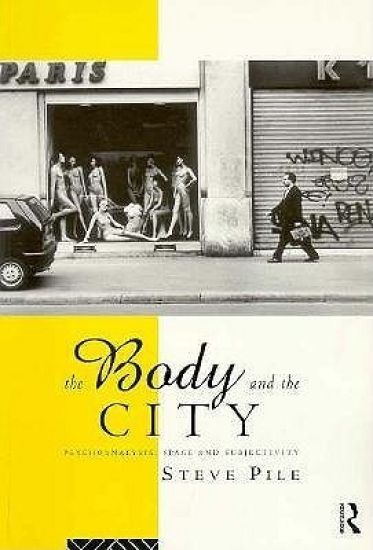
Over the last century, psychoanalysis has transformed the ways in which we think about our relationships with others. Psychoanalytic concepts and methods, such as the unconscious and dream analysis, have greatly impacted on social, cultural and political theory. Reinterpreting the ways in which Geography has explored people's mental maps and their deepest feelings about places, The Body and the City outlines a new cartography of the subject. The author maps key coordinates of meaning, identity and power across the sites of body and city. Exploring a wide range of critical thinking, particularly the work of Lefebvre, Freud and Lacan, he analyses the dialectic between the individual and the external world to present a pathbreaking psychoanalysis of space.
Over the last century, psychoanalysis has transformed the ways in which we think about our relationships with others. Psychoanalytic concepts and methods, such as the unconscious and dream analysis, have greatly impacted on social, cultural and political theory. Reinterpreting the ways in which Geography has explored people's mental maps and their deepest feelings about places, The Body and the City outlines a new cartography of the subject. The author maps key coordinates of meaning, identity and power across the sites of body and city. Exploring a wide range of critical thinking, particularly the work of Lefebvre, Freud and Lacan, he analyses the dialectic between the individual and the external world to present a pathbreaking psychoanalysis of space.