
Kirjailija
Steve Tatham
Kirjat ja teokset yhdessä paikassa: 9 kirjaa, julkaisuja vuosilta 2006–2024, suosituimpiin kuuluu Information Operations. Vertaile teosten hintoja ja tarkista saatavuus suomalaisista kirjakaupoista.
9 kirjaa
Kirjojen julkaisuvuodet: 2006–2024.
Information Operations
Steve Tatham
Howgate Publishing Limited
2024
nidottu
Halvin toimitettuna 31,60 €
In this timely and realistic examination of social media, two world-class British experts examine exactly, in the defense context, what social media is and what it should and should not be used for in the future. In setting out their arguments, they define social media in four distinctly different ways: first, they assess, perhaps self-evidently, that it is a media channel, and actually differs little to newspapers and radio in anything other than reach and immediacy; second, they see it as an interactive medium that might have potential for exerting influence, but only when accompanied by robust target audience analysis (TAA); third, they see it as a means of establishing a dialogue and communications within already well-established networks and groups; and, finally, they see it as a real-time sensor network that may possibly provide the first indication of globally important events-albeit unsubstantiated and raw in its content and reporting.
Using Target Audience Analysis to Aid Strategic Level Decisionmaking
Steve Tatham; Strategic Studies Institute; U.S. Army War College
Lulu.com
2015
nidottu
Albert Einstein famously stated that: "Any fool can know; the point is to understand." Over the past 20 years, the United States has known that there exist people with a profound hatred of all that it and the West are, and all that it stands for. During that time the American people and our allies abroad have known war in Iraq, in Afghanistan, and we know that today in Syria, Iraq, in Nigeria and North Africa those enemies plan and plot more violence and more hatred against us. Yet, do we really understand? If there is one observation that has been repeated by military commanders and policymakers alike from almost every nation in our various coalitions, it is the idea that we have not understood our adversary properly. Our nations have the world's most sophisticated intelligence gathering capabilities. We are masters of electronic intelligence, of human intelligence, of signal intelligence, open-source intelligence, and technical intelligence.
Training Humans for the Human Domain
Steve Tatham; Mr. Keir Giles; Strategic Studies Institute; U.S. Army War College
Lulu.com
2015
nidottu
In this timely monograph, British authors Mr. Keir Giles and Dr. Steve Tatham fuse key lessons from two disparate theaters to argue persuasively for greater education of Army personnel in human terrain disciplines. Dr. Tatham, an expert in strategic communications and influence operations with extensive experience in Iraq and Afghanistan, and Mr. Giles, a long-term scholar of Russian military and political decisionmaking processes, both contribute a wealth of accessible examples and anecdotes to argue their case for greater investment in human domain skills, both as an insurance against future conflict and in order to prevail in that conflict should it be joined. Drawing on a range of sources across social science and linguistics, they make the crucial point that both commanders and junior personnel must be not only prepared but also educated to set aside their cultural, social, and even linguistic preconceptions in order to accurately assess the options open to an adversary.
U.S. Governmental Information Operations and Strategic Communications: A Discredited Tool or User Failure? Implications for Future Conflict (Enlarged Edition)
Strategic Studies Institute; U.S. Army War College; Steve Tatham
Lulu.com
2014
nidottu
Through the prism of operations in Afghanistan, the author examines how the U. S. Government's Strategic Communication (SC) and, in particular, the Department of Defense's (DoD) Information Operations (IO) and Military Information Support to Operations (MISO) programs, have contributed to U. S. strategic and foreign policy objectives. It assesses whether current practice, which is largely predicated on ideas of positively shaping audiences perceptions and attitudes towards the United States, is actually fit for purpose. Indeed, it finds that the United States has for many years now been encouraged by large contractors to approach communications objectives through techniques heavily influenced by civilian advertising and marketing, which attempt to change hostile attitudes to the United States and its foreign policy in the belief that this will subsequently reduce hostile behavior. While an attitudinal approach may work in convincing U. S. citizens to buy consumer products...
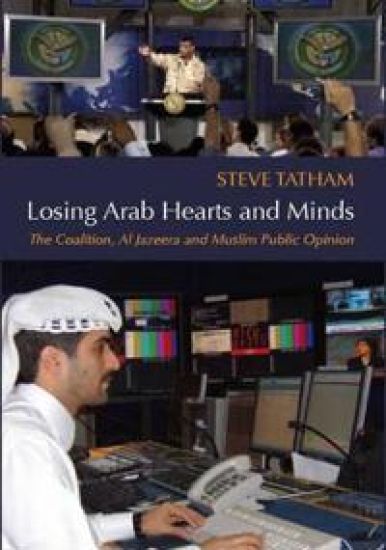
From November 2002 to May 2003, Steve Tatham worked alongside American military planners in the Gulf, coordinating the huge media campaign that foreshadowed and accompanied the eventual invasion of Iraq. From first hand experience he witnessed how, in advance of the outbreak of hostilities, the US planned to win over sceptical Arab hearts and minds. Yet as the campaign unfolded, Tatham, the Royal Navy's public spokesman in Iraq, saw how differently the British and Americans regarded the media and how badly journalists from the Arab world, in particular from Al-Jazeera satellite television, were treated in comparison to those from coalition nations. His book is highly critical of how the United States handled its information war. Notwithstanding the best efforts of well meaning senior US officials, the mounting death toll, both military and civilian, saw the Americans all but ignore the Arab media , focusing instead on a largely acquiescent domestic press, one still obsessed with Al Qaeda's 9/11 attacks on the homeland and only too happy to fly the Stars and Stripes. Images of dead and captured coalition servicemen led to Arab channels being accused of bias against western forces, and such was the demonisation of some channels that many observers began to wonder if President Bush's declaration that 'you are either with us or against us' applied not just to nation states but also to the world's media.