Kirjojen hintavertailu – 12 903 725 kirjaa ja 27 kauppaa

Kirjailija

Steven C. Hahn

Kirjat ja teokset yhdessä paikassa: 6 kirjaa, julkaisuja vuosilta 2004–2025, suosituimpiin kuuluu Light on the Path. Vertaile teosten hintoja ja tarkista saatavuus suomalaisista kirjakaupoista.

6 kirjaa

Kirjojen julkaisuvuodet: 2004–2025.

Light on the Path

Light on the Path

Eric E. Bowne; Steven C. Hahn; David J. Hally; Scott Jones; William Martin Jurgelski; Adam King; Stephen A. Kowalewski; Jerald T. Milanich

The University of Alabama Press
2006
nidottu
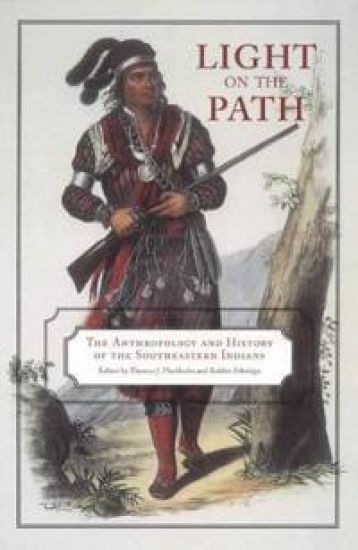
The past 20 years have witnessed a change in the study of the prehistory and history of the native peoples of the American South. This paradigm shift is the bridging of prehistory and history to fashion a seamless social history that includes not only the 16th-century Late Mississippian period and the 18th-century colonial period but also the largely forgotten - and critically important - century in between. The shift is in part methodological, for it involves combining methods from anthropology, history, and archaeology. It is also conceptual and theoretical, employing historical and archaeological data to reconstruct broad patterns of history - not just political history with Native Americans as a backdrop, nor simply an archaeology with added historical specificity, but a true social history of the Southeastern Indians, spanning their entire existence in the American South. The scholarship underlying this shift comes from many directions, but much of the groundwork can be attributed to Charles Hudson. The papers in this volume were contributed by Hudson's colleagues and former students (many now leading scholars themselves) in his honor. The assumption linking these papers is that of a historical transformation between Mississippian societies and the Indian societies of the historic era that requires explanation and critical analysis. In all of the chapters, the legacy of Hudson's work is evident. Anthropologists, archaeologists, and historians are storming the bridge that connects prehistory and history in a manner unimaginable 20 years ago. While there remains much work to do on the path toward understanding this transformation and constructing a complete social history of the Southeastern Indians, the work of Charles Hudson and his colleagues have shown the way.

A Pirate's Life No More

A Pirate's Life No More

Steven C. Hahn

UNIVERSITY OF GEORGIA PRESS
2025
sidottu
In 1718 the British crown in the Bahamas pardoned 209 mariners accused of piracy. In A Pirate's Life No More, Steven C. Hahn explores the lives of these "retired” pirates. While there are a number of "famous" names on that list—Benjamin Hornigold, Charles Vane, and Palsgrave Williams, for example—the vast majority of the pardoned are "mostly nobodies." By focusing holistically on pirates—and on the pirates who aren’t famous—the book reclaims their humanity, connects the story of piracy at sea with the land-based communities that sometimes supported it, and illuminates the entangled histories of far-flung places in the Atlantic world. This study reveals that, for most individuals, forays into piracy were fleeting and opportunistic. Moreover, class, age, and regional divisions beset the pirate community, thereby precluding adherence to any single ideology justifying their actions. The pardon was most attractive to mariners possessing greater social and economic capital, which explains why so many of them were able to return to their homes and quickly return to honest maritime work. In addition to the standard sources employed by maritime historians, Hahn utilizes local administrative records from Britain and its American colonies, such as property, court, and church records. In so doing, he sheds new light on the ordinary activities in which the sailors were engaged when not involved in piracy and explores how they coped in the Bahamas and elsewhere after being pardoned. What emerges in this collective biography, then, are pirates who were mariners—of course—but also husbands, fathers, parishioners, and property owners.
A Pirate's Life No More

A Pirate's Life No More

Steven C. Hahn

UNIVERSITY OF GEORGIA PRESS
2025
pokkari
In 1718 the British crown in the Bahamas pardoned 209 mariners accused of piracy. In A Pirate's Life No More, Steven C. Hahn explores the lives of these "retired” pirates. While there are a number of "famous" names on that list—Benjamin Hornigold, Charles Vane, and Palsgrave Williams, for example—the vast majority of the pardoned are "mostly nobodies." By focusing holistically on pirates—and on the pirates who aren’t famous—the book reclaims their humanity, connects the story of piracy at sea with the land-based communities that sometimes supported it, and illuminates the entangled histories of far-flung places in the Atlantic world. This study reveals that, for most individuals, forays into piracy were fleeting and opportunistic. Moreover, class, age, and regional divisions beset the pirate community, thereby precluding adherence to any single ideology justifying their actions. The pardon was most attractive to mariners possessing greater social and economic capital, which explains why so many of them were able to return to their homes and quickly return to honest maritime work. In addition to the standard sources employed by maritime historians, Hahn utilizes local administrative records from Britain and its American colonies, such as property, court, and church records. In so doing, he sheds new light on the ordinary activities in which the sailors were engaged when not involved in piracy and explores how they coped in the Bahamas and elsewhere after being pardoned. What emerges in this collective biography, then, are pirates who were mariners—of course—but also husbands, fathers, parishioners, and property owners.
The Invention of the Creek Nation, 1670-1763

The Invention of the Creek Nation, 1670-1763

Steven C. Hahn

University of Nebraska Press
2014
pokkari
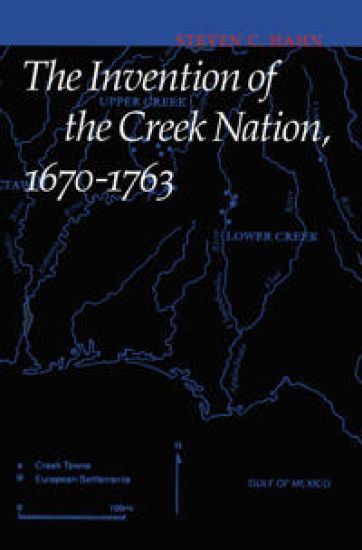
Drawing on archaeological evidence and often-neglected Spanish source material, The Invention of the Creek Nation, 1670–1763 explores the political history of the Creek Indians of Georgia and Alabama and the emergence of the Creek Nation during the colonial era in the American Southeast. In part a study of Creek foreign relations, this book examines the creation and application of the "neutrality" policy—defined here as the Coweta Resolution of 1718—for which the Creeks have long been famous, in an era marked by the imperial struggle for the American South. Also a study of the culture of internal Creek politics, this work shows the persistence of a "traditional" kinship-based political system in which town and clan affiliation remained supremely important. These traditions, coupled with political intrusions by the region's three European powers, promoted the spread of Creek factionalism and mitigated the development of a regional Creek Confederacy. But while traditions endured, the struggle to maintain territorial integrity against Britain also promoted political innovation. In this context the territorially defined Creek Nation emerged as a legal concept in the era of the French and Indian War, as imperial policies of an earlier era gave way to the territorial politics that marked the beginning of a new one.
The Life and Times of Mary Musgrove

The Life and Times of Mary Musgrove

Steven C. Hahn

University Press of Florida
2012
sidottu
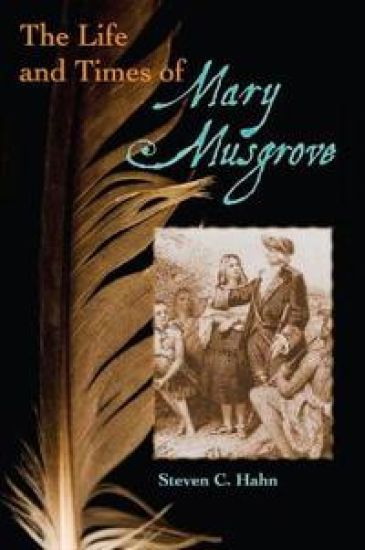
The story of Mary Musgrove (1700-1764), a Greek Indian-English woman struggling for success in colonial society, is an improbable one. As a literate Christian, entrepreneur, and wife of an Anglican clergyman, Mary was one of a small number of ""mixed blood"" Indians to achieve a position of prominence among English colonists. Born to a Creek mother and an English father, Mary's bicultural heritage prepared her for an eventful adulthood spent in the rough and tumble world of Colonial Georgia Indian affairs. Active in diplomacy, trade, and politics--affairs typically dominated by men--Mary worked as an interpreter between the Creek Indians and the colonists--although some argue that she did so for her own gains, altering translations to sway transactions in her favour. Widowed twice in the prime of her life, Mary and her successive husbands claimed vast tracts of land in Georgia (illegally, as British officials would have it) by virtue of her Indian heritage, thereby souring her relationship with the colony's governing officials and severely straining the colony's relationship with the Creek Indians. Using Mary's life as a narrative thread, Steven Hahn explores the connected histories of the Creek Indians and the colonies of South Carolina and Georgia. He demonstrates how the fluidity of race and gender relations on the southern frontier eventually succumbed to more rigid hierarchies that supported the region's emerging plantation system.
The Invention of the Creek Nation, 1670-1763

The Invention of the Creek Nation, 1670-1763

Steven C. Hahn

University of Nebraska Press
2004
sidottu
Drawing on archaeological evidence and often-neglected Spanish source material, The Invention of the Creek Nation, 1670–1763 explores the political history of the Creek Indians of Georgia and Alabama and the emergence of the Creek Nation during the colonial era in the American Southeast. In part a study of Creek foreign relations, this book examines the creation and application of the "neutrality" policy—defined here as the Coweta Resolution of 1718—for which the Creeks have long been famous, in an era marked by the imperial struggle for the American South. Also a study of the culture of internal Creek politics, this work shows the persistence of a "traditional" kinship-based political system in which town and clan affiliation remained supremely important. These traditions, coupled with political intrusions by the region's three European powers, promoted the spread of Creek factionalism and mitigated the development of a regional Creek Confederacy. But while traditions endured, the struggle to maintain territorial integrity against Britain also promoted political innovation. In this context the territorially defined Creek Nation emerged as a legal concept in the era of the French and Indian War, as imperial policies of an earlier era gave way to the territorial politics that marked the beginning of a new one.