Kirjojen hintavertailu – 12 859 819 kirjaa ja 27 kauppaa

Kirjailija

Steven Heys

Kirjat ja teokset yhdessä paikassa: 3 kirjaa, julkaisuja vuosilta 2013–2020, suosituimpiin kuuluu Wars, Pestilence and the Surgeon's Blade. Vertaile teosten hintoja ja tarkista saatavuus suomalaisista kirjakaupoista.

3 kirjaa

Kirjojen julkaisuvuodet: 2013–2020.

Bydand

Bydand

Steven Heys; Jim Hamilton

Lulu.com
2020
pokkari
This book documents the history of the Gordon Highlanders Association Drums and Pipes from its formation in 1997 until the present day. It also contains information about some key events of particular relevance to the Gordon Highlanders and key figures in piping history. We have included small biographies of the current members and as many of those who have played with the Band previously have also acknowledged our tutors with information about their achievements. Given the outstanding tradition and the achievements of the Gordon Highlanders themselves, you will find some details of key events from military history
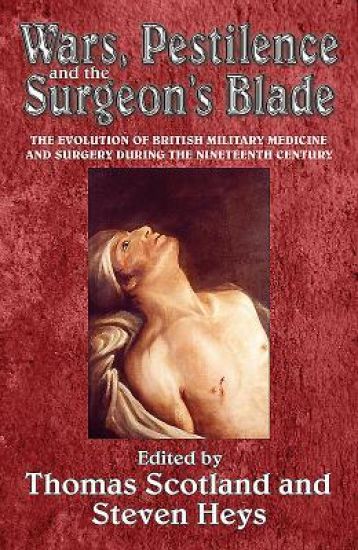
Wars, Pestilence and the Surgeon's Blade

Wars, Pestilence and the Surgeon's Blade

Steven Heys; Thomas Scotland

Helion Company
2019
nidottu
Wars in the 19th Century were accompanied by a very heavy loss of life from infectious diseases. Typhus fever, dysentery, malaria, typhoid fever and yellow fever caused many more deaths than wounds inflicted by enemy actions. During the Peninsular War, for example, for every soldier dying of a wound, four succumbed to disease. This book examines the development and evolution of surgical practice against this overwhelming risk of death due to disease. It reviews three major conflicts during this time: the Peninsular War, the Crimean War and the Boer War and also considers many minor wars fought by the British Empire in the intervening years, and highlights significant medical and surgical developments during these conflicts. War surgery in the first part of the 19th Century was brutal, and it had to be carried out swiftly. It was performed at speed because there were no anaesthetics and the wounded often died during the procedure. Surgeons focussed their attention on wounds of the arms and legs, because limbs were both easily accessible to the surgeon (unlike organs inside the abdomen and chest) and lent themselves well to amputation. This was commonly the operation of choice for many war wounds of arms and legs. Some surgeons performed more difficult surgical procedures to try to preserve the limbs and attempted to repair damaged tissues, but these operations took longer and caused greater suffering to the patient. Abdominal and chest wounds were not treated since surgeons did not have the means, the ability, or the understanding, to cut into the abdomen and chest to repair the damaged organs successfully. An important development which contributed to surgery moving forwards was the discovery of general anaesthesia, which became available in time for the Crimean War. However, whilst it certainly rendered operations pain-free, it was associated with significant numbers of deaths during surgery on wounded soldiers because of the poorly understood effects that anaesthetics had, particularly on the heart. As a result, operative surgery did not extend its scope a great deal, and military surgery remained focussed on surgery of the limbs. However, fewer amputations were performed during the Boer War at the end of this period. Britain sent observers to several wars in which it was not involved to learn military lessons and to understand the medical and surgical aspects of war. The American Civil War and the Franco-Prussian War were two such conflicts. The Russo-Japanese War resulted in a very significant advance in surgery for abdominal wounds, but Western observers either failed to notice or ignored pioneering work performed by a Russian female surgeon called Vera Gedroits. As a result, when the Great War began in 1914, lessons had to be re-learned by British surgeons, and many soldiers who suffered penetrating abdominal wounds lost their lives when they should have survived. Unfortunately, one of the hallmarks of war surgery is that successive generations of surgeons make the same mistakes as their forebears and the same lessons have to be learned time and again.
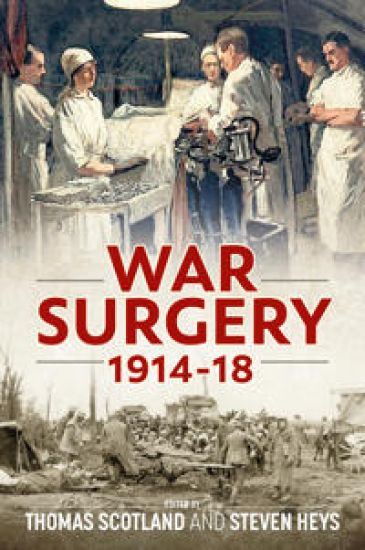
War Surgery 1914-18

War Surgery 1914-18

Thomas Scotland; Steven Heys

Helion Company
2013
nidottu
The Great War, 1914-1918 resulted in enormous numbers of casualties who had sustained filthy contaminated wounds from high explosive shellfire, bomb and mortar blast, and from rifle and machine gun bullet. Such wounds were frequently multiple, severe, and almost invariably became infected. Surgical experience from previous conflicts was of little value, and it became quickly apparent that early surgical intervention with radical removal of all dead and devitalised tissue was absolutely vital to help reduce the chances of infections, especially the lethal gas gangrene, from developing. War Surgery 1914-1918 explains how medical services responded to deal with the casualties. It discusses the evacuation pathway, and explains how facilities, particularly casualty clearing stations, evolved to cope with major, multiple wounds to help reduce their mortality. There are chapters dealing with the advances made in anaesthesia, resuscitation and blood transfusion, the pathology and microbiology of wounding, and diagnostic radiology. There are also chapters dealing with the development of orthopaedic surgery, both on the Western Front and in the United Kingdom, the treatment of abdominal wounds, chest wounds, wounds of the skull and brain, and the development of plastic and reconstructive surgery for those with terribly mutilating facial wounds. Major advances took place in the surgical management of casualties with all types of wound. Initially, abdominal wounds were treated by"expectant treatment". Observations by brilliant clinicians working in a logical and methodical way resulted in early surgical intervention with significant improvements in survival. Management of chest wounds became more aggressive as confidence and experience grew. Major exposure of combined chest and abdominal wounds through an incision opening both the chest and the abdomen became standard practice and these experiences laid the foundations for how these wounds are managed today. There is no doubt, however, that the evolution of orthopaedic surgery was one of the most important developments during the Great War. The vision and action of Moynihan`s surgical colleague, Sir Robert Jones, in establishing the principles of segregation of patients with orthopaedic wounds, unity of control and continuity of treatment became one of the outstanding chapters of British surgery in the twentieth century. This book is firmly aimed at all those with a passion for the history of this period. While it will be of interest to those in healthcare professions the editors have ensured that the essays are accessible and of interest to a non-medical readership. War Surgery 1914-18 contributes greatly to our understanding of the surgery of warfare. Surgeons working in Casualty Clearing Stations during the years 1914-1918 laid the foundations for modern war surgery as practiced today in Afghanistan and elsewhere.