Kirjojen hintavertailu – 12 859 819 kirjaa ja 27 kauppaa

Kirjailija

Steven M. Goodman

Kirjat ja teokset yhdessä paikassa: 13 kirjaa, julkaisuja vuosilta 2014–2025, suosituimpiin kuuluu Extinct Madagascar. Vertaile teosten hintoja ja tarkista saatavuus suomalaisista kirjakaupoista.

Nimi esiintyy myös muodoissa: Steven M Goodman

13 kirjaa

Kirjojen julkaisuvuodet: 2014–2025.

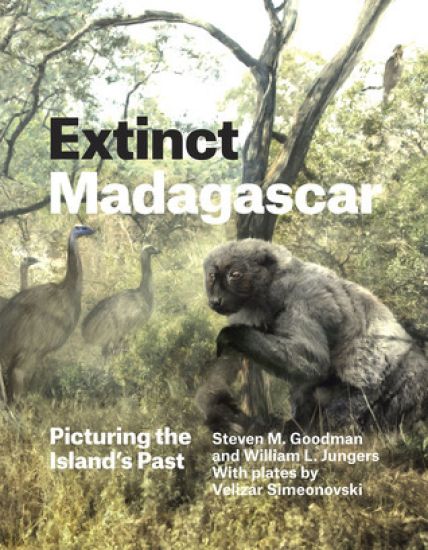
Extinct Madagascar

Extinct Madagascar

Steven M. Goodman; William L. Jungers

University of Chicago Press
2014
sidottu
The landscapes of Madagascar have long delighted zoologists, who have discovered, in and among the island's baobad trees and thickets, a dizzying array of animals, including something approaching one hundred species of lemur. Madagascar's mammal fauna, for example, is far more diverse, and more endemic, than early explorers and naturalists ever dreamed of. But in the 2,500 or so years since the arrival of the island's first human settlers, the vast majority of its forests have disappeared, and in the wake of this loss a number of species unique to Madagascar have vanished forever into extinction. In Extinct Madagascar, noted scientists Steven M. Goodman and William L. Jungers explore the recent past of these land animal extinctions. Beginning with an introduction to the geologic and ecological history of Madagascar that provides context for the evolution, diversification, and, in some cases, rapid decline of the Malagasy fauna, Goodman and Jungers then seek to recapture these extinct mammals in their environs. Aided in their quest by artist Velizar Simeonovski's beautiful and haunting paintings - images of both individual species and ecosystem assemblages reproduced here in full color - Goodman and Jungers reconstruct the lives of these lost animals and trace their relationships to those still living. Published in conjunction with an exhibition of Simeonovski's paintings set to open at the Field Museum, Chicago, in the fall of 2014, Goodman and Jungers' awe-inspiring book will serve not only as a sobering reminder of the very real threat of extinction, but also as a stunning tribute to Madagascar's biodiversity and a catalyst for further research and conservation.
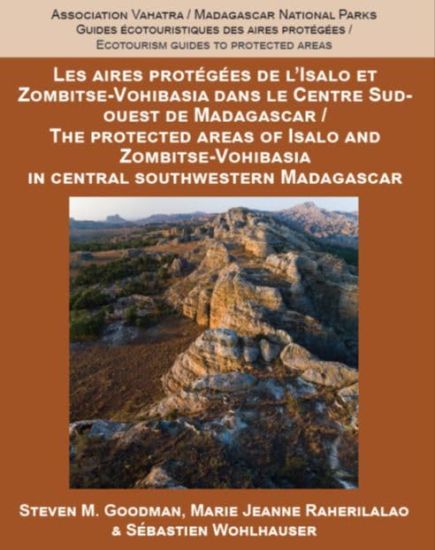
The Protected Areas of Isalo and Zombitse-Vohibasia in Central Southwestern Madagascar

The Protected Areas of Isalo and Zombitse-Vohibasia in Central Southwestern Madagascar

Steven M. Goodman; Marie Jeanne Raharilalao; Sébastien Wohlhauser

Association Vahatra in Antananarivo
2025
nidottu
An up-to-date synthesis designed for tourists that focuses on different aspects of two protected areas in central western Madagascar. This bilingual French-English tourist pocket guide covers two protected areas in central western Madagascar. These sites are excellent examples of the natural ecosystems of western inland areas of the island and include two national parks, the extensively visited Isalo (often referred to as the "Grand Canyon" of Madagascar), and the transitional dry deciduous forests of Zombitse-Vohibasia. Ecotourists can experience at both sites Malagasy forest ecosystems in all of their splendors. Both parks are near the national road that links Antananarivo (Tananarive) to the southwestern city of Toliara (Tulear). Tourists visiting the fascinating central-western portion of the island and interested in the natural world will find this guide indispensable to understanding and appreciating the regional ecological complexity and beauty.
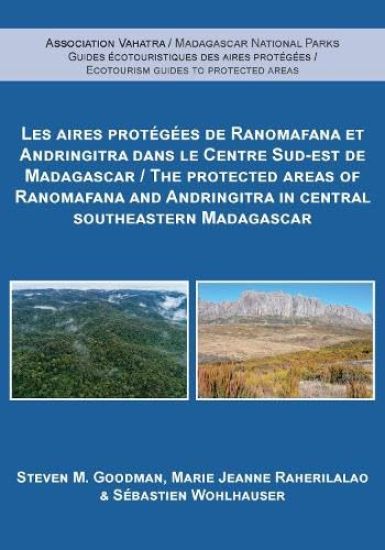
The Protected Areas of Ranomafana and Andringitra in Central Southeastern Madagascar

The Protected Areas of Ranomafana and Andringitra in Central Southeastern Madagascar

Steven M. Goodman; Marie Jeanne Raharilalao; Sébastien Wohlhauser

Association Vahatra in Antananarivo
2024
nidottu
An up-to-date pocket guide of two Malagasy protected areas. This bilingual French-English pocket guide covers two protected areas in southeastern Madagascar: the evergreen forests of Ranomafana and the high mountain zone of Andringitra. Given the proximity of the two parks to the national road that links Antananarivo (Tananarive) to the southwestern city of Toliara (Tulear) and its knowledgeable local guides, ecotourists can easily experience these largely untouched Malagasy ecosystems in all their splendor. With this book in hand, ecotourists traveling across this portion of the island and interested in the natural world will be able to discover and marvel at the region’s ecological complexity and beauty.
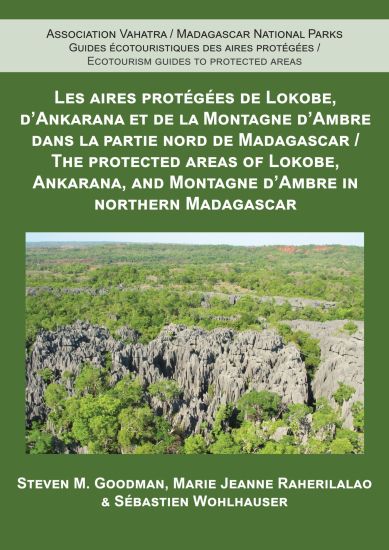
The Protected Areas of Lokobe, Ankarana, and Montagne d'Ambre in Northern Madagascar

The Protected Areas of Lokobe, Ankarana, and Montagne d'Ambre in Northern Madagascar

Steven M. Goodman; Marie Jeanne Raherilalo; Sébastien Wohlhauser

Association Vahatra in Antananarivo
2023
nidottu
The latest research into the biodiversity of three protected areas of northern Madagascar. This bilingual French-English pocket guide covers three protected areas in northern Madagascar that form a sort of natural tourist circuit for those traveling from Nosy Be to Antsiranana (Diego Suarez) or in the opposite direction. These sites encapsulate an important portion of the terrestrial biotic diversity of this ecologically diverse area of the island and include the lowland moist evergreen forests of Lokobe on the adjacent island of Nosy Be; the dry deciduous, humid semi-deciduous, and tsingy forests of Ankarana, north of Ambilobe; and the montane moist evergreen forests of Montagne d’Ambre, in close proximity to Antsiranana. As the result of varying geological formations and history, superimposed on differing climatic regimes, the flora and fauna of these three protected areas are dramatically different from one another, while their proximity enables visitors to the region to view and experience these contrasting biodiversity treasures. The manner and range of different details presented for each site allow ecotourists, whether nationals or people coming from overseas, to understand some of the unique aspects of each site and better enjoy their visits to them.
The Protected Areas of Mantadia and Analamazaotra in Central Eastern Madagascar

The Protected Areas of Mantadia and Analamazaotra in Central Eastern Madagascar

Steven M. Goodman; Marie Jeanne Raharilalao; Sébastien Wohlhauser

Association Vahatra in Antananarivo
2023
nidottu
The latest research on the biodiversity of two protected areas in central eastern Madagascar. This bilingual French-English pocket guide covers two protected areas in central eastern Madagascar that are adjacent to each another. These sites encapsulate the biotic diversity of the medium altitude moist evergreen forests of the island and include two national parks, the extensively visited Analamazaotra, where a range of lemur species are well habituated to visitors, and the forests of Mantadia, a place ecotourists can experience a largely untouched Malagasy forest ecosystem and all of its splendors. Both parks are relatively close to Moramanga and near the main road linking Antananarivo (Tananarive) to the coastal city of Toamasina (Tamatave). Tourists visiting this fascinating area of Madagascar and interested in the natural world will be able to discover and marvel at the regional ecological complexity and beauty, and the combination of easy road access, excellent local guides speaking many different European languages, and a range of local accommodations visiting easy.
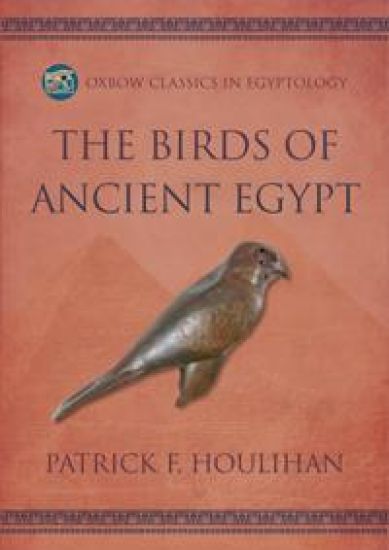
The Birds of Ancient Egypt

The Birds of Ancient Egypt

Patrick F Houlihan; Steven M Goodman

Casemate Publishers
2023
nidottu
Hailed as a sumptuously produced and finely illustrated outstanding contribution to ancient Egyptian studies, this facsimile reprint of Patrick Houlihan’s 1986 comprehensive study makes a welcome return in the Oxbow Classics in Egyptology series. Animals of all kinds are amply illustrated in Egyptian art, none more so than birds, in both secular and religious contexts and in hieroglyphic scripts. A great variety of bird species has for millennia made twice yearly migrations passing over Egypt, which is also an important overwintering area for many. These migrant birds, together with indigenous species were an abundant and easily exploited source of food for ancient Egyptians, for domestication and status display. Tomb scenes displaying birds provided as food for the deceased are abundant, as are procession scenes of offering with bearers bringing gifts of fowl. Many birds also had religious associations. Houlihan provides a systematic and unparalleled survey of all the bird life depicted by the ancient Egyptians in art and hieroglyphic writing – some 72 species (plus bats) – with a list of known mummified species, discussions on their religious and secular associations, and many illustrations. Their present-day distributions are compared with that known from the time of the Pharoahs. A checklist of the birds of modern Egypt is provided by Steven Goodman.
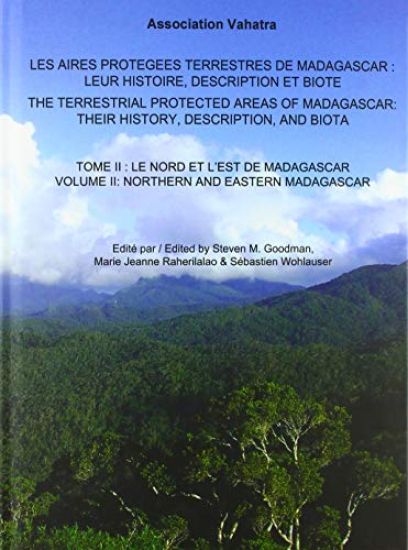
The Terrestrial Protected Areas of Madagascar – Their History, Description, and Biota

The Terrestrial Protected Areas of Madagascar – Their History, Description, and Biota

Steven M. Goodman; Marie Jeanne Raherilalao; Sébastien Wohlhauser; Fanja Andriamialisoa

Association Vahatra in Antananarivo
2019
sidottu
In 1989, a book written by Martin E. Nicoll and Olivier Langrand was published on the protected areas of Madagascar, which heralded in a new era of conservation for this island nation. In the subsequent three decades, there was an important increase in inventories and studies on Madagascar’s terrestrial biota. This work led to significant changes in the systematics of Malagasy plants and animals, a large percentage unique to the island, and a notable augmentation in knowledge on Malagasy biodiversity. In addition, the considerable expansion of the protected area network, reinforcement of legal tools, and the development of new management modes and tools have contributed to a modernization of the protected area network. The purpose of these bilingual, French-English books is to present a large-scale update of information available from 98 terrestrial protected areas, various analyses to understand general trends in the conservation of these sites, and a synthesis to assess the needs for future scientific programs. Beautifully illustrated throughout with color maps, graphs, and photos, these three volumes will be an important reference for students, researchers, protected area managers, conservationists, and visiting ecotourists.
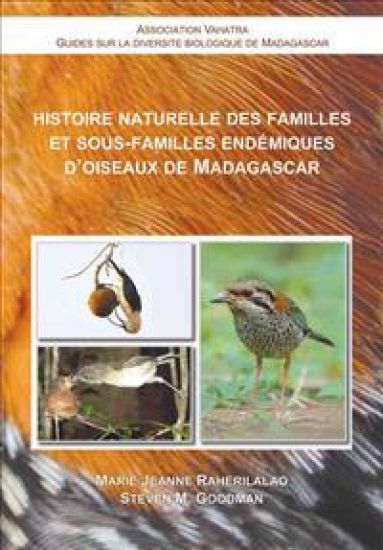
Histoire Naturelle des Familles et Sous–Familles Endemiques d'Oiseaux de Madagascar

Histoire Naturelle des Familles et Sous–Familles Endemiques d'Oiseaux de Madagascar

Marie Jeanne Raherilalao; Steven M. Goodman

Association Vahatra in Antananarivo
2018
nidottu
Madagascar, with its unique and highly endemic flora and fauna, is a world conservation priority. Although the number of bird species occurring on the island is less diverse than that of most other tropical countries, the level of endemism is remarkable and includes five endemic families and two subfamilies. This pocket-sized book, written in non-technical French and beautifully illustrated throughout, provides a general introduction to Malagasy birds as well as a detailed and up-to-date synthesis of information related to the ecology and natural history of all of Madagascar’s unique bird families and subfamilies. Birdwatchers and researchers are almost unanimously enchanted by the extraordinary natural history and morphological characteristics of the island’s avifauna, and as such, birds are among the most studied vertebrate groups on Madagascar. However, certain aspects of how these birds live have only recently been discovered, and this book will be an informative resource for even the most seasoned of birdwatchers.
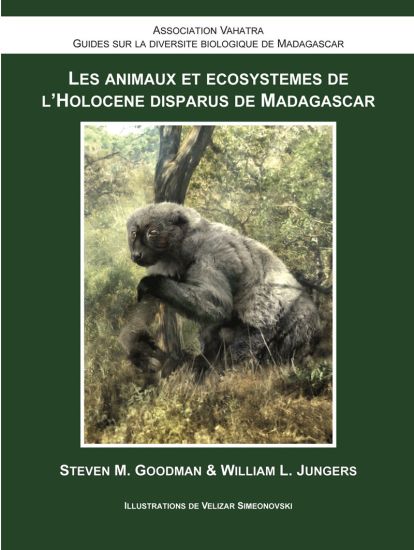
Les Animaux et Écosystèmes de l`Holocène Disparus de Madagascar

Les Animaux et Écosystèmes de l`Holocène Disparus de Madagascar

Steven M. Goodman; William L. Jungers

Association Vahatra in Antananarivo
2016
nidottu
While the current biodiversity of Madagascar is the subject of international attention from both evolutionary biologists and conservationists, no in-depth synthesis exists to describe ecological changes on the island during the Holocene and, most importantly, during the periods before and after human colonization. This concise, French-language book provides the first such explication of those alterations. Drawing on various aspects of the morphology and extrapolated habitat use of extinct animals identified from paleontological and archaeological sites, as well as characteristics of extant species, Steven M. Goodman and William L. Jungers reconstruct these organisms’ natural history and the ecosystems in which they lived. These windows into the past are presented in twenty different vignettes beautifully illustrated with plates from Velizar Simeonovski.
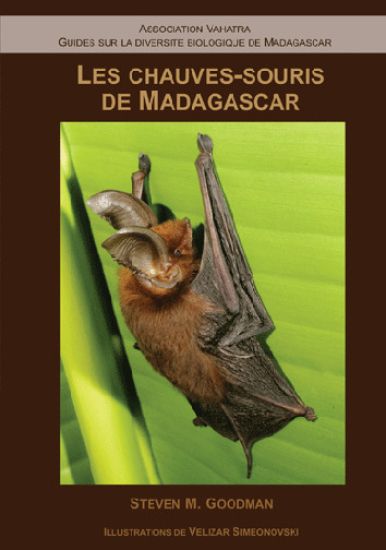
Les Chauves–Souris de Madagascar

Les Chauves–Souris de Madagascar

Steven M. Goodman

Association Vahatra in Antananarivo
2015
nidottu
The island of Madagascar, with its unique and highly endemic flora and fauna, is a world conservation priority. Until recent years, the bats of the island were not studied in detail, but the latest research has led to the discovery of a considerable number of species previously unknown to science and revealed many details of their distribution and natural history. This pocket-sized book, written in accessible French and illustrated throughout with informative photographs and drawings of all bat species known to occur on the island, presents numerous details of Madagascar’s extraordinary bat fauna. The first section provides a general introduction to these flying mammals, while the second section provides accounts of all currently recognized Malagasy species and offers insights into their ecological roles. Madagascar’s fruit bats, for instance, have been found to be among the most important vertebrates on the island in the regeneration of natural forests, as they pollinate different types of plants and disperse seeds. In addition, small insectivorous species have been shown to provide a vital service because they help control agricultural pests and eat different insects that transmit diseases to humans.
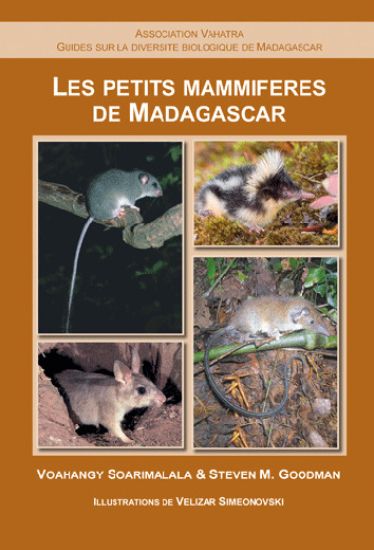
Les Petits Mammifères de Madagascar

Les Petits Mammifères de Madagascar

Voahangy Soarimalala; Steven M. Goodman

Association Vahatra in Antananarivo
2014
nidottu
Madagascar, with its unique and highly endemic flora and fauna, is a world conservation priority, but until now, no detailed synthesis has been available for the small mammals of the island. This pocket-sized book, written in non-technical French and beautifully illustrated throughout, fills that gap with both a general introduction to Malagasy small mammals and detailed entries for fifty-nine endemic species, many only recently described by science. Small mammals covered include Madagascar’s endemic rodent species—the mice and rats of the greatly diversified subfamily Nesomyinae, which have evolved to fill a variety of ecological niches—as well as the snouted, insectivore-like mammals of the family Tenrecidae.
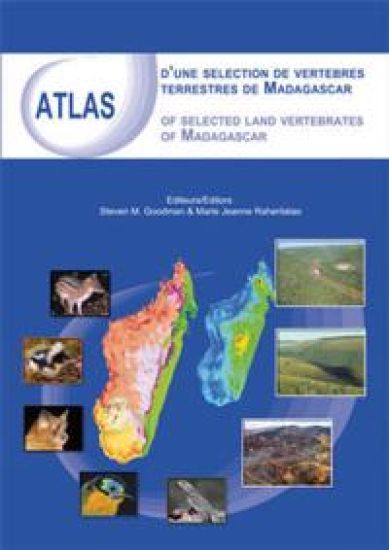
Atlas of Selected Land Vertebrates of Madagascar

Atlas of Selected Land Vertebrates of Madagascar

Steven M. Goodman; Marie Jeanne Raherilalao; Olivier Langrand; Joelisoa Ratsirarson

Association Vahatra in Antananarivo
2014
sidottu
One of the largest islands in the world, Madagascar is home to an astonishing array of endemic vertebrate biodiversity. While recent decades have seen numerous publications on the subject-ranging from technical papers to species descriptions and field guides-no detailed atlas exists. This bilingual French-English volume, Atlas of Selected Land Vertebrates of Madagascar, fills that niche. With more than four hundred color illustrations and maps, the Atlas brings together information from numerous sources-including data gathered during extensive biological inventories in some of the most remote forests of the island, from specimens in natural history museums around the world, and from the relevant literature - to present distributional maps on a range of taxa as well as descriptive text that interprets associated patterns and, for most taxa, provides potential habitat models. Featuring reptiles from plated to iguanid lizards; birds from paradise flycatchers to serpent eagles; and mammals from flying foxes-fruit-eating bats with meter-wide wingspans - to the enigmatic tenrecs and puma-like fossa, a member of an endemic family of Carnivora; this volume represents the culmination of decades of research. The Atlas will be an important reference for all students, researchers, naturalists, and conservationists interested in the land vertebrates of Madagascar, one of the most extraordinary and threatened biodiversity hotspots on Earth.