Kirjojen hintavertailu – 12 903 725 kirjaa ja 27 kauppaa

Kirjailija

Steven N. Zane

Kirjat ja teokset yhdessä paikassa: 3 kirjaa, julkaisuja vuosilta 2021–2025, suosituimpiin kuuluu Explaining Variation in Juvenile Punishment. Vertaile teosten hintoja ja tarkista saatavuus suomalaisista kirjakaupoista.

3 kirjaa

Kirjojen julkaisuvuodet: 2021–2025.

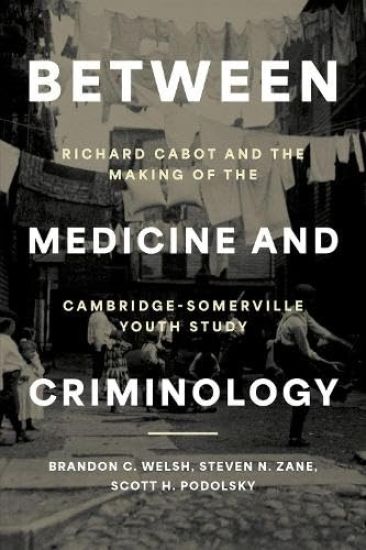
Between Medicine and Criminology

Between Medicine and Criminology

Brandon C. Welsh; Steven N. Zane; Scott H. Podolsky

OXFORD UNIVERSITY PRESS INC
2025
sidottu
In 1935, Richard Cabot (1868-1939), a renowned physician and professor of clinical medicine and social ethics at Harvard University, founded the Cambridge-Somerville Youth Study. Appalled by high recidivism rates of reformatories of the day, Cabot wanted to do something to help young, underprivileged boys from engaging in delinquency and embarking on a life of crime. Described as character development through positive role models, with similarities to today's mentoring programs, the prevention intervention enrolled 650 boys (later reduced to 506) from Cambridge and Somerville (Mass.) and operated from 1939-45. Over the next 30 years, three major follow-ups would be undertaken, producing a wealth of knowledge on the development and prevention of offending over the life-course. As the earliest randomized controlled trial in criminology, one of the earliest trials of a social intervention, and the longest running trial in the Western world-with the latest follow-up currently tracing participants well into old age-the CSYS is a famous and consequential study in the annals of criminology. But Cabot was not a criminologist. Instead, he worked at the interface of medicine and the social sciences, bringing to bear his important grounding in social ethics and engaging with leading academicians, including Sheldon and Eleanor Glueck and William Healy. In the years to come, Joan McCord-a leading criminologist in her own right-would take over the study and bring it into the modern era. Drawing on extensive archival materials and published works, Between Medicine and Criminology is the first book about the history of the making of the CSYS, as well as what this history holds for modern criminology. It interrogates and describes in fascinating detail the personal, professional, and institutional influences that led Cabot to develop the study; the social and intellectual contexts during the 1920s and 1930s that helped shape the study's novel and rigorous evaluation design; how the operation of the study and changes from the original design may have contributed to its ineffectiveness in preventing delinquency and later offending; and the impacts-and limitations-of this iconic study in the history of criminology.

Explaining Variation in Juvenile Punishment

Explaining Variation in Juvenile Punishment

Steven N. Zane

TAYLOR FRANCIS LTD
2023
nidottu
This research monograph provides a comparative analysis of juvenile court outcomes, exploring the influence of contextual factors on juvenile punishment across systems and communities. In doing so, it investigates whether, how, and to what extent macro-social context influences variation in juvenile punishment. The contextual hypotheses under investigation evaluate three prominent macro-sociall theoretical approaches: the conflict-oriented perspective of community threat, the consensus-oriented perspective of social disorganization, and the organizational perspective of the political economy of the juvenile court. Using multilevel modeling techniques, the study investigates these macro-social influences on juvenile justice outcomes across nearly 500 counties in seven states—Alabama, Connecticut, Missouri, Oregon, South Carolina, Texas, and Utah. Findings suggest that the contextual indicators under investigation did not explain variation in juvenile court punishment across communities and systems, and the study proposes several implications for future research and policy. This monograph is essential reading for scholars of juvenile justice system impact and reform as well as practitioners engaged in youth policy and juvenile justice work. It is unique in taking a comparative perspective that acknowledges that there is no one juvenile justice system in the United States, but many such systems.
Explaining Variation in Juvenile Punishment
This research monograph provides a comparative analysis of juvenile court outcomes, exploring the influence of contextual factors on juvenile punishment across systems and communities. In doing so, it investigates whether, how, and to what extent macro-social context influences variation in juvenile punishment. The contextual hypotheses under investigation evaluate three prominent macro-sociall theoretical approaches: the conflict-oriented perspective of community threat, the consensus-oriented perspective of social disorganization, and the organizational perspective of the political economy of the juvenile court. Using multilevel modeling techniques, the study investigates these macro-social influences on juvenile justice outcomes across nearly 500 counties in seven states—Alabama, Connecticut, Missouri, Oregon, South Carolina, Texas, and Utah. Findings suggest that the contextual indicators under investigation did not explain variation in juvenile court punishment across communities and systems, and the study proposes several implications for future research and policy. This monograph is essential reading for scholars of juvenile justice system impact and reform as well as practitioners engaged in youth policy and juvenile justice work. It is unique in taking a comparative perspective that acknowledges that there is no one juvenile justice system in the United States, but many such systems.