

Kirjailija
Steven Rosen
Kirjat ja teokset yhdessä paikassa: 10 kirjaa, julkaisuja vuosilta 2006–2026, suosituimpiin kuuluu Focused. Vertaile teosten hintoja ja tarkista saatavuus suomalaisista kirjakaupoista.
10 kirjaa
Kirjojen julkaisuvuodet: 2006–2026.
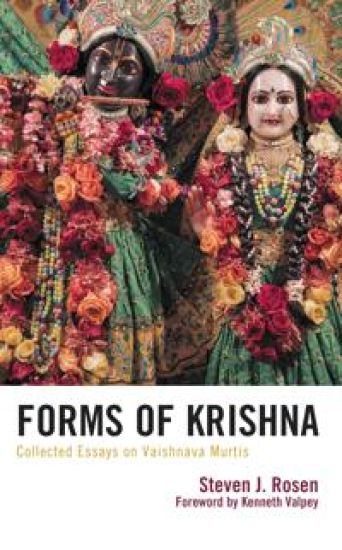
Scholars of religion and seekers in general will find Forms of Krishna: Collected Essays on Vaishnava Murtis to be an informative introduction to Indic philosophy and Vaishnava history, particularly in terms of Krishna’s form and the underlying theological and scriptural background for the worship of his iconic image. For those who are already so informed, many details of Krishna and his worship are unveiled for the first time (at least in the English language), and this is especially so for the much beloved icons explored in these pages, whose full story may be hard to find, even in Sanskrit and Bengali literature. Just as Krishna’s form and its many variants are central to Gau?iya Vaishnava thought, the entire philosophy of Indian spirituality, including yoga and meditation, can be understood through these forms in both direct and indirect ways. Steven J. Rosen, well known in the field as founding editor of the Journal of Vaishnava Studies, brings his vast learning to bear, as readers are brought into the esoteric world of Vaishnavism.

Lost Cincinnati Concert Venues of the '50s and '60s
Steven Rosen; Jim Tarbell
History Pr
2022
sidottu
Cincinnati in the '50s and '60s offered a stunning array of live music and entertainment venues. Although many of them no longer exist, their memories live on. Fulfilling an obligation to mobsters, blues crooner Charles Brown played a residency at the Sportsman's Club in Newport. Incendiary comedian Lenny Bruce performed at the Surf Club on the city's conservative west side. Jim Tarbell's short-lived but iconic Ludlow Garage became a major stop on the national ballroom circuit that grew up around rock 'n' roll as it matured into its progressive, experimental era. Signaling an end to the '60s, Iggy Pop created a sensation at the 1970 Cincinnati Summer Pop Festival at Crosley Field. Join seasoned journalist Steven Rosen on a tour through historically heady days in the Queen City's music scene.
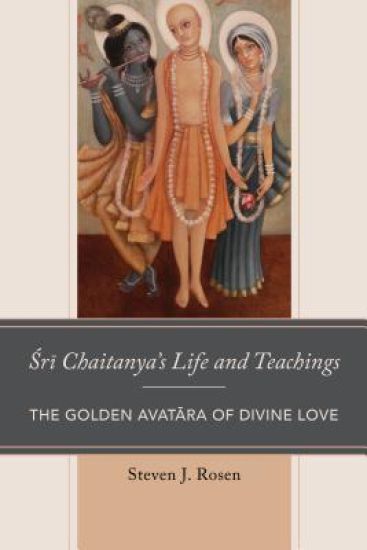
Tucked away in ancient Sanskrit and Bengali texts is a secret teaching, a blissful devotional (bhakti) tradition that involves sacred congregational chanting (kirtana), mindfulness practices (japa, smara?am), and the deepening of one’s relationship with God (rasa). Brought to the world’s stage by Sri Chaitanya Mahaprabhu (1486–1533), and fully documented by his immediate followers, the Six Goswamis of Vrindavan, these unprecedented teachings were passed down from master to student in Gau?iya Vaishnava lineages. The Golden Avatara of Love: Sri Chaitanya’s Life and Teachings, by contemporary scholar Steven J. Rosen, makes the profound truths of this confidential knowledge easily accessible for an English language audience. In his well-researched text, modern readers—spiritual practitioners, scholars, and seekers of knowledge alike—will encounter a treasure of hitherto unrevealed spiritual teachings, and be able to fathom sublime dimensions of Sri Chaitanya’s method. Using the ancient texts themselves and the findings of contemporary academics, Rosen succeeds in summarizing and establishing Sri Chaitanya’s life and doctrine for the modern world.
Tucked away in ancient Sanskrit and Bengali texts is a secret teaching, a blissful devotional (bhakti) tradition that involves sacred congregational chanting (kirtana), mindfulness practices (japa, smara?am), and the deepening of one’s relationship with God (rasa). Brought to the world’s stage by Sri Chaitanya Mahaprabhu (1486–1533), and fully documented by his immediate followers, the Six Goswamis of Vrindavan, these unprecedented teachings were passed down from master to student in Gau?iya Vaishnava lineages. The Golden Avatara of Love: Sri Chaitanya’s Life and Teachings, by contemporary scholar Steven J. Rosen, makes the profound truths of this confidential knowledge easily accessible for an English language audience. In his well-researched text, modern readers—spiritual practitioners, scholars, and seekers of knowledge alike—will encounter a treasure of hitherto unrevealed spiritual teachings, and be able to fathom sublime dimensions of Sri Chaitanya’s method. Using the ancient texts themselves and the findings of contemporary academics, Rosen succeeds in summarizing and establishing Sri Chaitanya’s life and doctrine for the modern world.
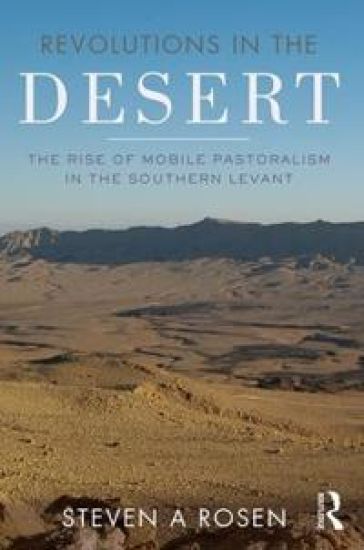
Revolutions in the Desert investigates the development of pastoral nomadism in the arid regions of the ancient Near East, challenging the prevailing notion that such societies left few remains appropriate for analytic study. Few prior studies have approached the deeper past of desert nomadic societies, which have been primarily recognized only as a complement to the study of sedentary agricultural societies in the region. Based on decades of archaeological field work in the Negev of southern Israel, both excavations and surveys, and integrating materials from adjacent regions, Revolutions in the Desert offers a deeper and more dynamic view of the rise of herding societies beyond the settled zone. Rosen offers the first archaeological analysis of the rise of herding in the desert, from the first introduction of domestic goats and sheep into the arid zones, more than eight millennia ago, to the evolution of more recent Bedouin societies. The adoption of domestic herds by hunter-gatherer societies, contemporary with and peripheral to the first farming settlements, revolutionized all aspects of desert life, including subsistence, trade, cult, social organization, and ecology. Inviting processual comparison to the agricultural revolution and the secondary spread of domestication beyond the Near East, this volume traces the evolution of nomadic societies in the archaeological record and examines their ecological, economic and social adaptations to the deserts of the Southern Levant. With maps and illustrations from the author’s own collection, Revolutions in the Desert is a thoughtful and engaging approach to the archaeology of desert nomadic societies.
Revolutions in the Desert investigates the development of pastoral nomadism in the arid regions of the ancient Near East, challenging the prevailing notion that such societies left few remains appropriate for analytic study. Few prior studies have approached the deeper past of desert nomadic societies, which have been primarily recognized only as a complement to the study of sedentary agricultural societies in the region. Based on decades of archaeological field work in the Negev of southern Israel, both excavations and surveys, and integrating materials from adjacent regions, Revolutions in the Desert offers a deeper and more dynamic view of the rise of herding societies beyond the settled zone. Rosen offers the first archaeological analysis of the rise of herding in the desert, from the first introduction of domestic goats and sheep into the arid zones, more than eight millennia ago, to the evolution of more recent Bedouin societies. The adoption of domestic herds by hunter-gatherer societies, contemporary with and peripheral to the first farming settlements, revolutionized all aspects of desert life, including subsistence, trade, cult, social organization, and ecology. Inviting processual comparison to the agricultural revolution and the secondary spread of domestication beyond the Near East, this volume traces the evolution of nomadic societies in the archaeological record and examines their ecological, economic and social adaptations to the deserts of the Southern Levant. With maps and illustrations from the author’s own collection, Revolutions in the Desert is a thoughtful and engaging approach to the archaeology of desert nomadic societies.

52 Sales Management Tips: The Sales Managers' Success Guide
Steven Rosen
Star Solutions That Achieve Results Inc.
2012
nidottu
![Gloire et mystere de l'Inde [French edition]](/covers/9789171495211.jpg)
As a world religion, Hinduism remains one of the most elusive for many. Its teachings, beliefs, practices, and history are reviewed here by an expert hoping to introduce readers to the world of Hinduism. While there are many forms of Hinduism, and offshoots as well, the complex nature of this faith makes it elusive to many. This straightforward overview, focusing on Vaishnavism-the most common form of Hinduism—is ideal for those who wish to learn more about this ancient tradition.. Beginning with chapters about the foundations of Hinduism, Rosen clearly lays out what is otherwise a complicated history. Providing Hindu terms alongside English translations, he is able to bring the faith alive for readers unacquainted with its varieties and its tenets. Moving on to chapters about practices, including festivals, teachings, chanting, eating habits and more, Rosen brings Hinduism to life in vivid detail.