Kirjojen hintavertailu – 12 903 724 kirjaa ja 27 kauppaa
Kirjailija
Steven Shankman
Kirjat ja teokset yhdessä paikassa: 9 kirjaa, julkaisuja vuosilta 1994–2023, suosituimpiin kuuluu Turned Inside Out. Vertaile teosten hintoja ja tarkista saatavuus suomalaisista kirjakaupoista.
In Talmudic Verses, Steven Shankman reflects on his own experience, and on contemporary events, through the lens of the ancient Babylonian Talmud, the crown jewel of the oral tradition of Judaism. He in effect "translates" the Hebrew and Aramaic of several tractates of the Talmud into the universal language of a poetry that ranges from ecstatic free verse to rhymed and unrhymed verse composed in iambic pentameter. Shankman brings the searching and profound ethical dilemmas posed by the ancient rabbis to life in moving, meditative verse.
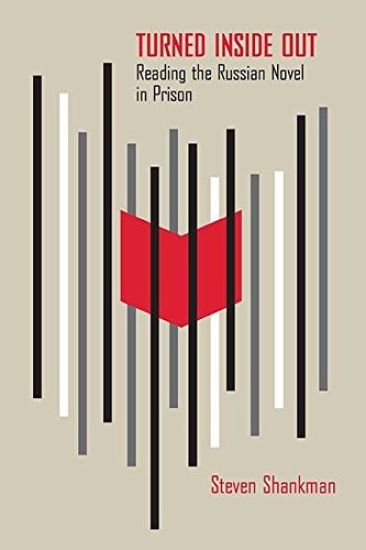
In Turned Inside Out: Reading the Russian Novel in Prison, Steven Shankman reflects on his remarkable experience teaching texts by Fyodor Dostoevsky, Vasily Grossman, and Emmanuel Levinas in prison to a mix of university students and inmates. These persecuted writers—Shankman argues that Dostoevsky’s and Levinas’s experiences of incarceration were formative—describe ethical obligation as an experience of being turned inside out by the face-to-face encounter. Shankman relates this experience of being turned inside out to the very significance of the word “God,” to Dostoevsky’s tormented struggles with religious faith, to Vasily Grossman’s understanding of his Jewishness in his great novel Life and Fate, and to the interpersonal encounters the author has witnessed reading these texts with his students in the prison environment. Turned Inside Out will appeal to readers with interests in the classic novels of Russian literature, in prisons and pedagogy, or in Levinas and phenomenology. At a time when the humanities are struggling to justify the centrality of their mission in today’s colleges and universities, Steven Shankman by example makes an undeniably powerful case for the transformative power of reading great texts.
In Turned Inside Out: Reading the Russian Novel in Prison, Steven Shankman reflects on his remarkable experience teaching texts by Fyodor Dostoevsky, Vasily Grossman, and Emmanuel Levinas in prison to a mix of university students and inmates. These persecuted writers—Shankman argues that Dostoevsky’s and Levinas’s experiences of incarceration were formative—describe ethical obligation as an experience of being turned inside out by the face-to-face encounter. Shankman relates this experience of being turned inside out to the very significance of the word “God,” to Dostoevsky’s tormented struggles with religious faith, to Vasily Grossman’s understanding of his Jewishness in his great novel Life and Fate, and to the interpersonal encounters the author has witnessed reading these texts with his students in the prison environment. Turned Inside Out will appeal to readers with interests in the classic novels of Russian literature, in prisons and pedagogy, or in Levinas and phenomenology. At a time when the humanities are struggling to justify the centrality of their mission in today’s colleges and universities, Steven Shankman by example makes an undeniably powerful case for the transformative power of reading great texts.
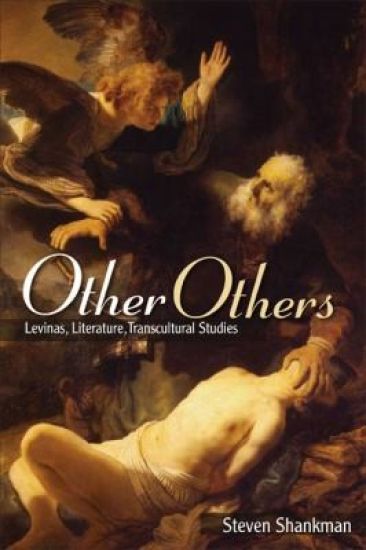
Looks at literary works from outside the Judeo-Christian tradition to test Levinas's notion of "the Other." In literary and cultural studies today, the term "the Other" appears to have largely lost its moorings in the primacy of the intersubjective encounter, focusing rather on the social construction of the Other. For Emmanuel Levinas, in contrast, the Other is precisely that which eludes construction and categorization. In a study that ranges from literature of ancient China, Greece, and Israel to modern Egypt, Italy, West Africa, and America, Steven Shankman tests Levinas's ideas by reading literary works from outside the Judeo-Christian orbit for figurations equivalent to Levinas's notion of the Other. He also places ethics at the center of intercultural-or, in his words, "transcultural"-comparative literature. In contemporary literary and cultural studies, it is often assumed that culture has the last word. However, as Levinas insists-and as Shankman argues throughout this book-it is ethics that is the "presupposition of all Culture," that is situated "before Culture." At the University of Oregon, Steven Shankman is UNESCO Chair in Transcultural Studies, Interreligious Dialogue, and Peace and Distinguished Professor of English and Classics. His books include Early China/Ancient Greece: Thinking through Comparisons, also published by SUNY Press, and The Siren and the Sage: Knowledge and Wisdom in Ancient Greece and China.
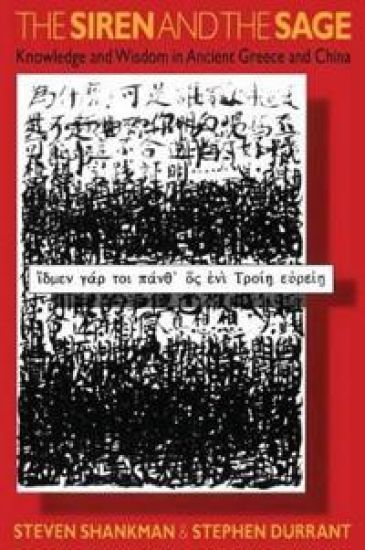
The cultures of ancient China and ancient Greece have exerted immeasurable influence on later civilizations. The texts and cultural values of classical China spread throughout East Asia and became the foundation of learning in Korea, Japan and Vietnam. Greek learning and culture receive credit for many of the intellectual paradigms of the West. Probably the one which is most distinctly Western is the tradition of logical proof and the related assumption that, as Aristotle put it in 'Metaphysics' 980, 'we all desire to know.' In contrast, the Chinese tradition, as exemplified by Laozi's 'Dao de jing, ' cautions that through our desire to know we may forfeit wisdom, thus engendering a split between knowledge and wisdom. 'The Siren and the Sage' is a comparative study of what some of the most influential writers of ancient China and ancient Greece thought it meant to know and whether they distinguished knowledge from wisdom. It surveys selected works of poetry, history and philosophy from roughly the eighth through the second centuries BCE, focusing on the 'Odyssey, ' the ancient Chinese 'Classic of Poetry, ' Thucydides' 'History of the Peloponnesian War, ' Sima Qian's 'Records of the Historian, ' Plato's 'Symposium, ' Laozi's 'Dao de jing' and the writings of Zhuangzi. The intention, through such juxtaposition, is to introduce foundational texts of each tradition, texts which continue to influence most of the world's peoples. It is intriguing to ask what awareness, if any, these distinctive cultures had of each other. A considerable body of scholarship comparing ancient Greece and ancient China now exists. Scholars are presenting evidence that the two cultures may actually have been aware of each other's presence, even though that awareness was presumably indirect, perhaps mediated by the nomadic peoples of Central Asia. While not directly contributing evidence, the authors argue that comparing the cultures of Greece and China will continue to be an irresistible and important scholarly debate. The book offers a provocative study which is accessible to students and general readers and at the same time contributes to the debate.
A comparative study of what the most influential writers of Ancient Greece and China thought it meant to have knowledge and whether they distinguished knowledge from other forms of wisdom. It surveys selected works of poetry, history and philosophy from the period of roughly the eighth through to the second century BCE, including Homer's "Odyssey", the ancient Chinese "Classic of Poetry", Thucydides' "History of the Peloponnesian War", Sima Qian's "Records of the Historian", Plato's "Symposium", and Laozi's "Dao de Jing and the writings of Zhuangzi". The intention, through such juxtaposition, is to introduce the foundational texts of each tradition which continue to influence the majority of the world's population.
The "classical," Steven Shankman argues, should not be confused with a particular historical period of Western antiquity, although it may owe its original articulation to the literary and philosophical explorations of ancient Greek authors. Shankman's book searches for and attempts to formulate the shape of the continuing presence—as embodied in particular literary works mainly from Western antiquity and the neoclassical and modern periods—of what the author calls a "classical" understanding of literature. For Shankman, literature, defined from a classical perspective, is a coherent, compelling, and rationally defensible representation that resists being reduced either to the mere recording of material reality or to the bare exemplification of an abstract philosophical precept. He derives his definition largely from his reading of Greek literature from Homer through Plato, from the history of literary criticism, and from the Greco-Roman tradition in English, American, and French literature. Shankman reveals unsuspected yet convincing connections among authors of such widely disparate times and places. His idea of the "classic" that authorizes these connections is presented as normative, thus making possible the evaluation of literary works and, in turn, forthright discussion of what constitutes the "literary" as distinct from other kinds of discourse. Shankman's study runs counter to a strong tendency of contemporary criticism that argues precisely against any distinct category of the "literary." He offers a series of interpretations that cumulatively advance theoretical discussion by challenging scholars to rethink the critical paradigms of postmodernism. At the center of the book is a discussion of the quintessentially classic Valéry poem Le Cimetière marin and the classic qualities it shares with Pindar's third Pythian ode, from which Valéry derives the epigraph for his poem.