

Kirjailija
Steven Vertovec
Kirjat ja teokset yhdessä paikassa: 10 kirjaa, julkaisuja vuosilta 2000–2024, suosituimpiin kuuluu Superdiversität. Vertaile teosten hintoja ja tarkista saatavuus suomalaisista kirjakaupoista.
10 kirjaa
Kirjojen julkaisuvuodet: 2000–2024.

Superdiversity explores processes of diversification and the complex, emergent social configurations that now supersede prior forms of diversity in societies around the world. Migration plays a key role in these processes, bringing changes not just in social, cultural, religious, and linguistic phenomena, but also in the ways that these phenomena combine with others like gender, age, and legal status. The concept of superdiversity has been adopted by scholars across the social sciences in order to address a variety of forms, modes, and outcomes of diversification. Central to this field is the relationship between social categorization and social organization, including stratification and inequality. Increasingly complex categories of social “difference” have significant impacts across scales, from entire societies to individual identities. While diversification is often met with simplifying stereotypes, threat narratives, and expressions of antagonism, superdiversity encourages a perspective on difference as comprising multiple social processes, flexible collective meanings, and overlapping personal and group identities. A superdiversity approach encourages the re-evaluation and recognition of social categories as multidimensional, unfixed, and porous as opposed to views based on hardened, one-dimensional thinking about groups. Diversification and increasing social complexity are bound to continue, if not intensify, in light of climate change. This will have profound impacts on the nature of global migration, social relations, and inequalities. Superdiversity presents a convincing case for recognizing new social formations created by changing migration patterns and calls for a re-thinking of public policy and social scientific approaches to social difference. This introduction to the multidisciplinary concept of superdiversity will be of considerable interest to students and researchers in a range of fields in the humanities and social sciences. The Open Access version of this book, available at www.taylorfrancis.com, has been made available under a Creative Commons Attribution-Non Commercial-No Derivatives 4.0 license.

Superdiversity explores processes of diversification and the complex, emergent social configurations that now supersede prior forms of diversity in societies around the world. Migration plays a key role in these processes, bringing changes not just in social, cultural, religious, and linguistic phenomena, but also in the ways that these phenomena combine with others like gender, age, and legal status. The concept of superdiversity has been adopted by scholars across the social sciences in order to address a variety of forms, modes, and outcomes of diversification. Central to this field is the relationship between social categorization and social organization, including stratification and inequality. Increasingly complex categories of social “difference” have significant impacts across scales, from entire societies to individual identities. While diversification is often met with simplifying stereotypes, threat narratives, and expressions of antagonism, superdiversity encourages a perspective on difference as comprising multiple social processes, flexible collective meanings, and overlapping personal and group identities. A superdiversity approach encourages the re-evaluation and recognition of social categories as multidimensional, unfixed, and porous as opposed to views based on hardened, one-dimensional thinking about groups. Diversification and increasing social complexity are bound to continue, if not intensify, in light of climate change. This will have profound impacts on the nature of global migration, social relations, and inequalities. Superdiversity presents a convincing case for recognizing new social formations created by changing migration patterns and calls for a re-thinking of public policy and social scientific approaches to social difference. This introduction to the multidisciplinary concept of superdiversity will be of considerable interest to students and researchers in a range of fields in the humanities and social sciences. The Open Access version of this book, available at www.taylorfrancis.com, has been made available under a Creative Commons Attribution-Non Commercial-No Derivatives 4.0 license.

There are relatively few books that provide comparative analysis of European cities in relation to immigrants and political participation. This fresh and insightful volume, from the same team that published Multicultural Policies and Modes of Citizenship in European Cities in 2001, analyzes how the presence of immigrants is perceived in politics, how this affects their status and how far minorities are able to (politically) participate in European cities. The comparative studies address the influence of (minority) politics, as well as that of migrant mediators and ethnic organizations on the participation of minorities. There are a variety of case studies from northern and southern Europe, offering insights into countries that differ in their modes of citizenship. The volume will be of specific interest to scholars, researchers and policy makers in migration, citizenship and multiculturalism, as well as a more general audience of sociologists, political sociologists, political scientists, anthropologists and social geographers.
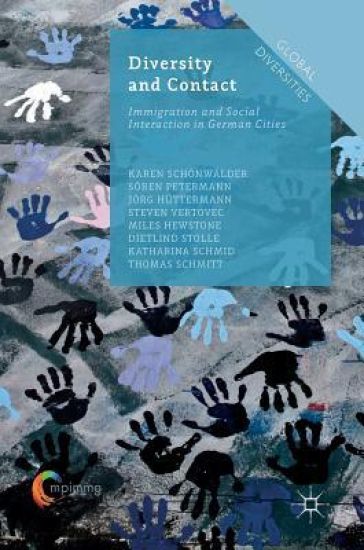
Diversity and Contact
Karen Schönwälder; Sören Petermann; Jörg Hüttermann; Steven Vertovec; Miles Hewstone; Dietlind Stolle; Katharina Schmid; Thomas Schmitt
Palgrave Macmillan
2016
sidottu
This book analyzes how the socio-demographic and cultural diversity of societies affect the social interactions and attitudes of individuals and groups within them. Focusing on Germany, where in some cities more than one third of the population are first or second-generation immigrants, it examines how this phenomenon impacts on the ways in which urban residents interact, form friendships, and come to trust or resent each other. The authors, a distinguished team of sociologists, political scientists, social psychologists, anthropologists and geographers, present the results of their wide-ranging empirical research, which combines a 3-wave-panel survey, qualitative fieldwork, area explorations and analysis of official data. In doing so, they offer representative findings and deeper insights into how residents experience different neighbourhood contexts. Their conclusions are a significant contribution to our understanding of the implications of immigration and diversity, and of the conditions and consequences of intergroup interaction. This ground-breaking work will appeal to scholars across the Social Sciences.

'Transnationalism' refers to multiple ties and interactions linking people or institutions across the borders of nation-states. This book surveys the broader meanings of transnationalism within the study of globalization before concentrating on migrant transnational practices. Each chapter demonstrates ways in which new and contemporary transnational practices of migrants are fundamentally transforming social, political and economic structures simultaneously within homelands and places of settlement. Transnationalism provides a much-needed single, clear and condensed text concerning a major concept in academic and policy discourse today. The book is for advanced undergraduate students, postgraduates and academics.

'Transnationalism' refers to multiple ties and interactions linking people or institutions across the borders of nation-states. This book surveys the broader meanings of transnationalism within the study of globalization before concentrating on migrant transnational practices. Each chapter demonstrates ways in which new and contemporary transnational practices of migrants are fundamentally transforming social, political and economic structures simultaneously within homelands and places of settlement. Transnationalism provides a much-needed single, clear and condensed text concerning a major concept in academic and policy discourse today. The book is for advanced undergraduate students, postgraduates and academics.

There are relatively few books that provide comparative analysis of European cities in relation to immigrants and political participation. This fresh and insightful volume, from the same team that published Multicultural Policies and Modes of Citizenship in European Cities in 2001, analyzes how the presence of immigrants is perceived in politics, how this affects their status and how far minorities are able to (politically) participate in European cities. The comparative studies address the influence of (minority) politics, as well as that of migrant mediators and ethnic organizations on the participation of minorities. There are a variety of case studies from northern and southern Europe, offering insights into countries that differ in their modes of citizenship. The volume will be of specific interest to scholars, researchers and policy makers in migration, citizenship and multiculturalism, as well as a more general audience of sociologists, political sociologists, political scientists, anthropologists and social geographers.
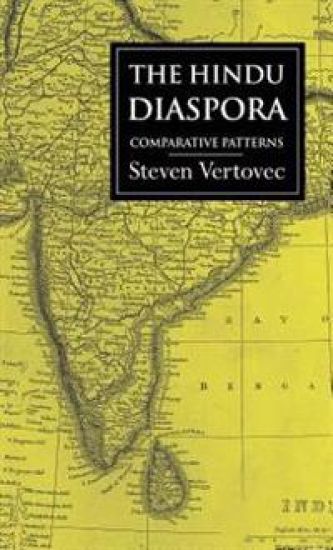
Hinduism outside the Indian subcontinent represents a contrasting and scattered community. From Britain to the Caribbean, diasporic Hindus have substantially reformed their beliefs and practices in accordance with their historical and social circumstances. In this theoretically innovative analysis Steven Vertovec examines: * the historical construction of the category 'Hinduism in India' * the formation of a distinctive Caribbean Hindu culture during the nineteenth century * the role of youth groups in forging new identities during Trinidad's Hindu Renaissance * the reproduction of regionally based identities and frictions in Britain's Hindu communities * the differences in temple use across the diaspora. This book provides a rich and fascinating view of the Hindu diaspora in the past, present and its possible futures.
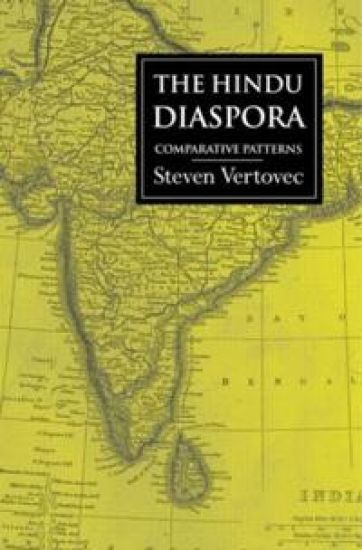
Hinduism outside the Indian subcontinent represents a contrasting and scattered community. From Britain to the Caribbean, diasporic Hindus have substantially reformed their beliefs and practices in accordance with their historical and social circumstances. In this theoretically innovative analysis Steven Vertovec examines: * the historical construction of the category 'Hinduism in India' * the formation of a distinctive Caribbean Hindu culture during the nineteenth century * the role of youth groups in forging new identities during Trinidad's Hindu Renaissance * the reproduction of regionally based identities and frictions in Britain's Hindu communities * the differences in temple use across the diaspora. This book provides a rich and fascinating view of the Hindu diaspora in the past, present and its possible futures.