Kirjojen hintavertailu – 12 859 819 kirjaa ja 27 kauppaa

Kirjailija

Steven W. May

Kirjat ja teokset yhdessä paikassa: 5 kirjaa, julkaisuja vuosilta 2014–2023, suosituimpiin kuuluu English Renaissance Manuscript Culture. Vertaile teosten hintoja ja tarkista saatavuus suomalaisista kirjakaupoista.

5 kirjaa

Kirjojen julkaisuvuodet: 2014–2023.

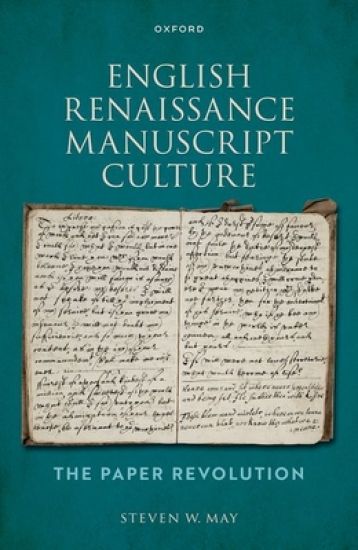
English Renaissance Manuscript Culture

English Renaissance Manuscript Culture

Steven W. May

Oxford University Press
2023
sidottu

Halvin toimitettuna 117,30 €

English Renaissance Manuscript Culture: The Paper Revolution traces the development of a new type of scribal culture in England that emerged early in the fourteenth century. The main medieval writing surfaces of parchment and wax tablets were augmented by a writing medium that was both lasting and cheap enough to be expendable. Writing was transformed from a near monopoly of professional scribes employed by the upper class to a practice ordinary citizens could afford. Personal correspondence, business records, notebooks on all sorts of subjects, creative writing, and much more flourished at social levels where they had previously been excluded by the high cost of parchment. Steven W. May places literary manuscripts and in particular poetic anthologies in this larger scribal context, showing how its innovative features affected both authorship and readership. As this amateur scribal culture developed, the medieval professional culture expanded as well. Classes of documents formerly restricted to parchment often shifted over to paper, while entirely new classes of documents were added to the records of church and state as these institutions took advantage of relatively inexpensive paper. Paper stimulated original composition by making it possible to draft, revise, and rewrite works in this new, affordable medium. Amateur scribes were soon producing an enormous volume of manuscript works of all kinds--works they could afford to circulate in multiple copies. England's ever-increasing literate population developed an informal network that transmitted all kinds of texts from single sheets to book-length documents efficiently throughout the kingdom. The operation of restrictive coteries had little if any role in the mass circulation of manuscripts through this network. However, paper was cheap enough that manuscripts could also be readily disposed of (unlike expensive parchment). More than 90% of the output from this scribal tradition has been lost, a fact that tends to distort our understanding and interpretation of what has survived. May illustrates these conclusions with close analysis of representative manuscripts.
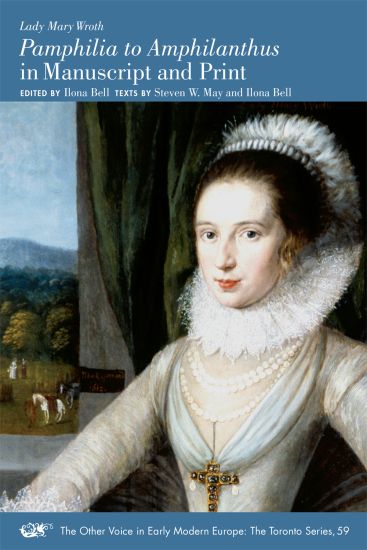
"Pamphilia to Amphilanthus" in Manuscript and Print

"Pamphilia to Amphilanthus" in Manuscript and Print

Lady Mary Wroth; Ilona Bell; Steven W. May

State University of New York at Binghamton,Medieval Renaissance Texts Studies
2017
nidottu

Halvin toimitettuna 56,50 €

Lady Mary Wroth’s private manuscript, printed here for the first time, shows her to be a great poet, more psychologically insightful, verbally sophisticated, and boldly original than scholars had realized. Her carefully curated and re-conceptualized printed collection also reveals her to be a remarkably self-reflexive and critically astute writer. When the manuscript and printed sequences are read together, as this edition encourages readers to do, Wroth’s poetry is seen clearly as innovative, erotic, and shrewdly multivalent.
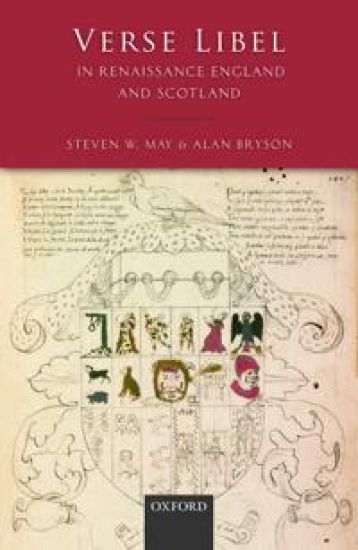
Verse Libel in Renaissance England and Scotland

Verse Libel in Renaissance England and Scotland

Steven W. May; Alan Bryson

Oxford University Press
2016
sidottu
In Renaissance England and Scotland, verse libel was no mere sub-division of verse satire but a fully-developed, widely-read poetic genre in its own right. This fact has been hidden from literary historians by the nature of the genre itself: defamation was rigorously prosecuted by state and local authorities throughout the period. Thus most (but not all) libelling, in verse or prose, was confined to manuscript circulation. This comprehensive survey of the genre identifies all sixteenth-century verse libel texts, printed and transcribed. It makes fifty-two of the least familiar of these poems accessible for further study by providing critical texts with glosses and explanatory notes. In reconstructing the contexts of these poems, we identify a number of the libellers, their targets, the circumstances of attack, and the workings of the scribal networks that disseminated many of them over wide areas, often for decades. The book's concentration on poems restricted to manuscript circulation throws substantial new light on the nature of Renaissance scribal culture. As poetic technicians, its practitioners were among the age's most experimental and creative. They produced some of the most popular, widely read works of their age and beyond, while their output established the foundation upon which the seventeenth-century tradition of verse libel developed organically.
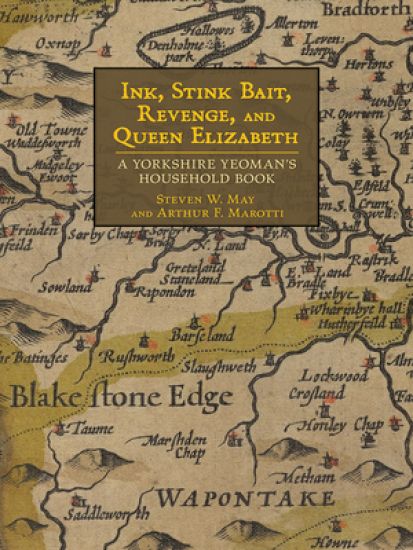
Ink, Stink Bait, Revenge, and Queen Elizabeth

Ink, Stink Bait, Revenge, and Queen Elizabeth

Steven W. May; Arthur F. Marotti

Cornell University Press
2014
sidottu
In Ink, Stink Bait, Revenge, and Queen Elizabeth, Steven W. May and Arthur F. Marotti present a recently discovered "household book" from sixteenth-century England. Its main scribe, John Hanson, was a yeoman who worked as a legal agent in rural Yorkshire. His book, a miscellaneous collection of documents that he found useful or interesting, is a rare example of a middle-class provincial anthology that contains, in addition to works from the country's cultural center, items of local interest seldom or never disseminated nationally. Among the literary highlights of the household book are unique copies of two ballads, whose original print versions have been lost, describing Queen Elizabeth's procession through London after the victory over the Spanish Armada; two poems attributed to Elizabeth herself; and other verse by courtly writers copied from manuscript and print sources. Of local interest is the earliest-known copy of a 126-stanza ballad about a mid-fourteenth-century West Yorkshire feud between the Eland and Beaumont families. The manuscript's utilitarian items include a verse calendar and poetic Decalogue, model legal documents, real estate records, recipes for inks and fish baits, and instructions for catching rabbits and birds. Hanson combined both professional and recreational interests in his manuscript, including material related to his legal work with wills and real estate transactions. As May and Marotti argue in their cultural and historical interpretation of the text, Hanson's household book is especially valuable not only for the unusual texts it preserves but also for the ways in which it demonstrates the intersection of the local and national and of popular and elite cultures in early modern England.
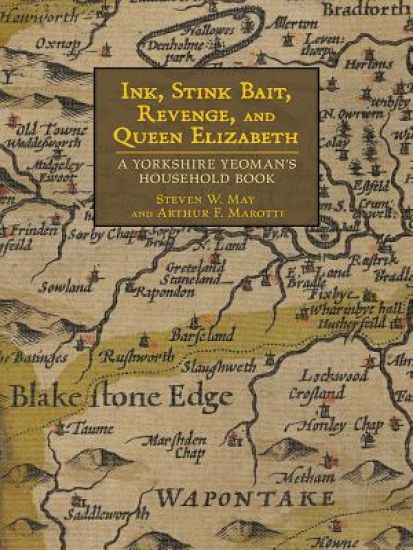
Ink, Stink Bait, Revenge, and Queen Elizabeth

Ink, Stink Bait, Revenge, and Queen Elizabeth

Steven W. May; Arthur F. Marotti

Cornell University Press
2014
pokkari
In Ink, Stink Bait, Revenge, and Queen Elizabeth, Steven W. May and Arthur F. Marotti present a recently discovered "household book" from sixteenth-century England. Its main scribe, John Hanson, was a yeoman who worked as a legal agent in rural Yorkshire. His book, a miscellaneous collection of documents that he found useful or interesting, is a rare example of a middle-class provincial anthology that contains, in addition to works from the country's cultural center, items of local interest seldom or never disseminated nationally. Among the literary highlights of the household book are unique copies of two ballads, whose original print versions have been lost, describing Queen Elizabeth's procession through London after the victory over the Spanish Armada; two poems attributed to Elizabeth herself; and other verse by courtly writers copied from manuscript and print sources. Of local interest is the earliest-known copy of a 126-stanza ballad about a mid-fourteenth-century West Yorkshire feud between the Eland and Beaumont families. The manuscript's utilitarian items include a verse calendar and poetic Decalogue, model legal documents, real estate records, recipes for inks and fish baits, and instructions for catching rabbits and birds. Hanson combined both professional and recreational interests in his manuscript, including material related to his legal work with wills and real estate transactions. As May and Marotti argue in their cultural and historical interpretation of the text, Hanson's household book is especially valuable not only for the unusual texts it preserves but also for the ways in which it demonstrates the intersection of the local and national and of popular and elite cultures in early modern England.