Kirjojen hintavertailu – 12 903 725 kirjaa ja 27 kauppaa

Kirjailija

Stewart Wolf

Kirjat ja teokset yhdessä paikassa: 10 kirjaa, julkaisuja vuosilta 1996–2018, suosituimpiin kuuluu The Artery and the Process of Arteriosclerosis. Vertaile teosten hintoja ja tarkista saatavuus suomalaisista kirjakaupoista.

10 kirjaa

Kirjojen julkaisuvuodet: 1996–2018.
Experimental Medicine

Experimental Medicine

Claude Bernard; Stewart Wolf

Routledge
2018
sidottu
The French physiologist Claude Bernard was responisble for investigating the chemical phenomena of digestion. This text reproduces his research into experimental medicine. A new introduction looks at his impact on the world of medicine.
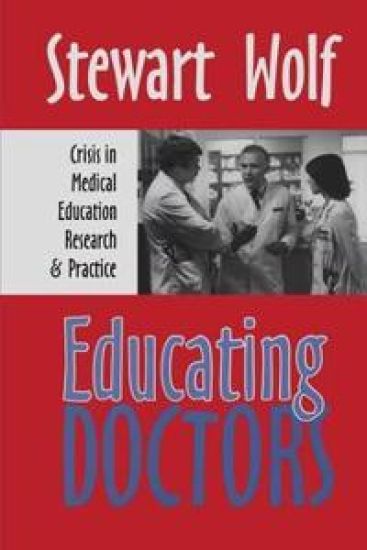
Educating Doctors

Educating Doctors

Stewart Wolf

Routledge
2018
nidottu
At a time when medical care for the people of the United States is undergoing wrenching change due mainly to vast and costly technological progress, doctors have had to cede much of their initiative and responsibility to third parties. Medicine has become a commercial enterprise. Patients must affiliate themselves with a managed health care organization in order to have access to their doctors. In the hurly-burly of today's techno-medicine, many physicians are too busy to spend time in dialogue with their patients. As a consequence, social and emotional circumstances that have been thoroughly documented to affect physiology and susceptibility to disease are overlooked. Stewart Wolf here critiques the medical establishment and the way those concerned with its various responsibilities discharge them. He puts medicine's responsibilities to society into historical perspective, relating it to social changes. He begins with the ways medical candidates are selected. He continues with commentary on currently designed teaching and learning, the qualities required in a physician and in a medical scientist, and the nature and challenges of disease and what can be done about them. Finally, Wolf provides a useful way of thinking about human biology, to better understand why people become sick or well and what people have to contend with to stay well. Throughout he emphasizes the role of the brain in controlling behavior of all sorts, general and visceral. Wolf emphasizes the regulatory power of the nervous system as it perceives and evaluates life experiences and influences learning, behavior, and susceptibility to disease. Wolf'sgoal is not to supply a recipe for the achievement of better health, but to encourage a better understanding of ourselves and the paths toward health. Educating Doctors reexamines the responsibilities, goals, and activities of the medical establishment. As such it is a must read for policymakers, sociologists, and professionals working in the medical field.
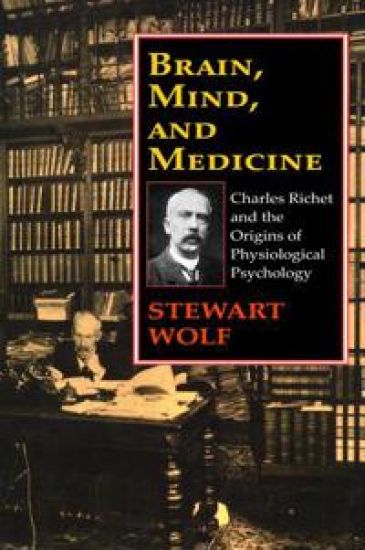
Brain, Mind, and Medicine

Brain, Mind, and Medicine

Stewart Wolf

Routledge
2017
sidottu
Charles Richet was one of the most remarkable figures in the history of medical science. He is best known for his work on the body's immune reactions to foreign substances for which he won the Nobel Prize in medicine in 1913. Richet was also a poet, playwright, historian, bibliographer, political activist, classical scholar, and pioneer in aircraft design. Brain, Mind, and Medicine is the first major biography of Richet in any language. Wolf brilliantly situates Richet's work in the intellectual currents of Europe during the latter half of the nineteenth and early twentieth century. Richet was a contemporary of Wilhelm Wundt and William James. All three considered psychology to be an aspect of physiology governed by biological laws. But while James and Wundt considered consciousness as a process influenced by experience without much reference to neural structures, Richet's focus was on the brain itself as shaped by genetics and experience and serving as the organ of the mind. Brain, Mind, and Medicine illuminates a significant chapter in scientific and cultural history. It should be read by medical scientists, historians, and individuals interested in medicine and psychology.
The Artery and the Process of Arteriosclerosis

The Artery and the Process of Arteriosclerosis

Stewart Wolf

Springer-Verlag New York Inc.
2012
nidottu
Substantial progress toward reconciling disparate theories of the pathogenesis of arteriosclerosis was recorded in Volume I of this book. the proceedings of an interdisciplinary workshop conference held at Lindau. Germany, April 19-25, 1970. Strong evidence was ad­ duced that the early stages of arteriosclerosis consist of intimal proliferation similar to that associated with the increase in arteri­ al size and caliber that characterizes normal growth. The findings described recall a theory proposed by Richard Thoma (Thoma and Kaefer, 1889) of Heidelberg toward the end of the nineteenth century. He sug­ gested that the pathogenesis of arteriosclerosis began with intimal thickening that was initially adaptive. Past a certain point, how­ ever, the thickening compromised the nutrition of the artery wall, leading inevitably to degenerative changes. In 1944 Hueper (Hueper, 1944), reemphasized the threat to the nu­ tritional support of the artery and proposed that the many etiologic factors capable of inducing arterial atheroma did so through the final common pathway of interfering with oxidative mechanisms in the vessel wall. Thus, it is proposed that arteriosclerosis is basically an aspect of the "behavior" of the artery. The nature of the lesion, therefore, depends more on the biochemical and structural response capabilities of the tissue itself than on the characteristics of the various etiologic agents. The idea that arteriosclerosis begins as uncontrolled or disturbed adaptive behavior was shared by Duff and also by Winternitz (Duff, 1954; Winternitz, 1954).
Brain, Mind, and Medicine

Brain, Mind, and Medicine

Stewart Wolf

AldineTransaction
2012
nidottu
Charles Richet was one of the most remarkable figures in the history of medical science. He is best known for his work on the body's immune reactions to foreign substances for which he won the Nobel Prize in medicine in 1913. Richet was also a poet, playwright, historian, bibliographer, political activist, classical scholar, and pioneer in aircraft design. Brain, Mind, and Medicine is the first major biography of Richet in any language. Wolf brilliantly situates Richet's work in the intellectual currents of Europe during the latter half of the nineteenth and early twentieth century. Richet was a contemporary of Wilhelm Wundt and William James. All three considered psychology to be an aspect of physiology governed by biological laws. But while James and Wundt considered consciousness as a process influenced by experience without much reference to neural structures, Richet's focus was on the brain itself as shaped by genetics and experience and serving as the organ of the mind. Brain, Mind, and Medicine illuminates a significant chapter in scientific and cultural history. It should be read by medical scientists, historians, and individuals interested in medicine and psychology.
Structure and Function of the Circulation

Structure and Function of the Circulation

Colin J. Schwartz; Nicholas T. Werthessen; Stewart Wolf
Springer-Verlag New York Inc.
2012
nidottu
This is the third volume of the comprehensive series on Struc­ ture and Function of the Circulation, edited by Dr. Colin J. Schwartz with the collaboration of Nicholas T. Werthessen and Stewart Wolf. Dr. Schwartz, an authority on vascular structure and function and a respected investigator in this field for many years, selected as authors for the chapters an outstanding group of scientists from various parts of the world. As indicated in the Preface, the impetus for this broad treat­ ise evolved from the scientific sessions of three interdisciplinary international conferences held in Lindau in 1970, in Heidelberg in 1973, and Totts Gap, Pennsylvania, in 1976 as well as from numerous informal discussions. The subjects dealt with in these three volumes range from the roots of our knowledge in ancient history to the most recent inform­ ation on contractile proteins of smooth muscle cells. The structure, distribution, and dynamics of arteries, veins, and lymphatics are described in chapters on the systemic circulation as well as that of the heart, the vessels themselves, the brain, nerves, and viscera. Descriptions of ultrastructure, histochemistry, metabolism, and func­ tion of endothelium and of vascular smooth muscle and of vascular changes in aging are all included in the vast scope of this under­ taking.
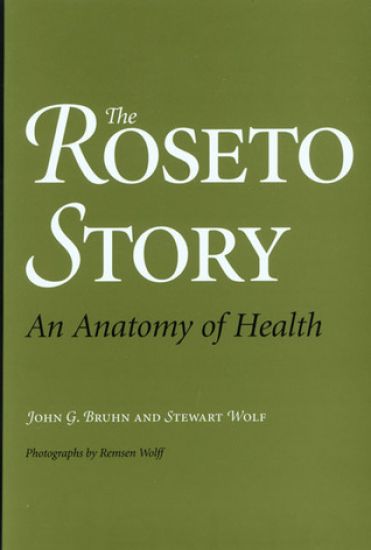
The Roseto Story

The Roseto Story

John G. Bruhn; Stewart Wolf

University of Oklahoma Press
2004
nidottu

Halvin toimitettuna 36,90 €

Roseto is a small Italian-American community in east-central Pennsylvania. This fifteen-year study drawing on medical histories, physical examinations, and laboratory tests, compared a large sample of Rosetans to inhabitants of two neighboring communities, Bangor and Nazareth, and followed up this research with a sociological study of the three communities. Despite a greater prevalence of obesity in Roseto, and despite similar dietary, smoking, and exercise habits and similar ethnic and genetic background, the inhabitants of Roseto were relatively immune to heart disease at the beginning of the research in 1963. They were also strikingly tenacious in adhering to Old World values and customs. When these traditional values and relationship were abandoned by the rising generation, the death rate from heart disease climbed toward the American norm. The study concluded that unconditional interpersonal support counteracts life stress and thus preserves life.
Experimental Medicine

Experimental Medicine

Claude Bernard; Stewart Wolf

Transaction Publishers
1999
nidottu
The French physiologist Claude Bernard was responisble for investigating the chemical phenomena of digestion. This text reproduces his research into experimental medicine. A new introduction looks at his impact on the world of medicine.
The Power of Clan

The Power of Clan

Stewart Wolf

Transaction Publishers
1998
nidottu
Medical sociologists have long recognized the importance of community and family structure in the health of individuals. However, the past quarter century in America has seen an increasing emphasis on individualism and materialism that has effectively diminished the cohesiveness and emotional support provided by these basic social units. The Power of Clan examines the health effects of social change in a largely Italian-American town over a twenty-five-year period and provides substantial evidence of the protective effect of family bonds and shared social values against coronary heart disease and sudden death. The unique feature of the Roseto, Pennsylvania community was its remarkably low death rate from heart attacks, this in spite of the fact that such risk factors as smoking, lack of exercise, high fat and cholesterol diet were found to be just as prevalent in Roseto as in four nearby control towns. Roseto's traditional, family-oriented social structure, however, differed vastly from that of neighboring towns where materialistic values were predominant and where the individual, rather than the family, was considered to be the unit of society. At the beginning of their study in the early 1960s, the authors noted indications of imminent social change toward a more Americanized system of values and behavior. Interviews with younger inhabitants revealed much respect for old-world traditions but not as much enthusiasm for living by them. The study's prediction that the abandonment of selfless, communal standards would undermine Rosetans relative immunity to heart disease was borne out as death rates from heart attack climbed to levels comparable to those of the control towns by 1975. The Power of Clan is the product of twenty-five years of continuous observation. The findings of its original study have been carefully examined and its predictions largely confirmed. It is a landmark volume in the longitudinal study of health in an advanced industrial society. It also constitutes a large step forward in the cooperation of medical and sociological researchers.
Educating Doctors

Educating Doctors

Stewart Wolf

Transaction Publishers
1996
sidottu
At a time when medical care for the people of the United States is undergoing wrenching change due mainly to vast and costly technological progress, doctors have had to cede much of their initiative and responsibility to third parties. Medicine has become a commercial enterprise. Patients must affiliate themselves with a managed health care organization in order to have access to their doctors. In the hurly-burly of today's techno-medicine, many physicians are too busy to spend time in dialogue with their patients. As a consequence, social and emotional circumstances that have been thoroughly documented to affect physiology and susceptibility to disease are overlooked. Stewart Wolf here critiques the medical establishment and the way those concerned with its various responsibilities discharge them. He puts medicine's responsibilities to society into historical perspective, relating it to social changes. He begins with the ways medical candidates are selected. He continues with commentary on currently designed teaching and learning, the qualities required in a physician and in a medical scientist, and the nature and challenges of disease and what can be done about them. Finally, Wolf provides a useful way of thinking about human biology, to better understand why people become sick or well and what people have to contend with to stay well. Throughout he emphasizes the role of the brain in controlling behavior of all sorts, general and visceral. Wolf emphasizes the regulatory power of the nervous system as it perceives and evaluates life experiences and influences learning, behavior, and susceptibility to disease. Wolf'sgoal is not to supply a recipe for the achievement of better health, but to encourage a better understanding of ourselves and the paths toward health. Educating Doctors reexamines the responsibilities, goals, and activities of the medical establishment. As such it is a must read for policymakers, sociologists, and professionals working in the medical field.