Kirjojen hintavertailu – 12 903 725 kirjaa ja 27 kauppaa
Kirjailija
Stina Bergman Blix
Kirjat ja teokset yhdessä paikassa: 7 kirjaa, julkaisuja vuosilta 2015–2025, suosituimpiin kuuluu Den empiriska glädjen : en vänbok till Malin Åkerström. Vertaile teosten hintoja ja tarkista saatavuus suomalaisista kirjakaupoista.
David Wästerfors; Erika Andersson; Katarina Jacobsson; Veronika Burcar Alm; Liv Finstad; Lisa Flower; Jerzy Sarnecki; Sven-Åke Lindgren; Henrik Tham; Karin Aronsson; Erik Hannerz; Hanna Sahlin Lilja; Ingrid Sahlin; Goran Basic; Stina Bergman Blix; Kristina Göransson; Sébastien Tutenges; Patrik Hall; Åsa Wettergren; Tove Pettersson; Sara Eldén; Joakim Thelander; Ann-Mari Sellerberg; Vesa Leppänen; Susanne Boethius; Anna Rypi; Christofer Edling; Åsa Lundqvist; Anne Ryen; Christer Lindberg
Det finns energi att hämta i empiriska iakttagelser och det kan vara en fröjd att utvinna den energin. Så lyder budskapet i den här vänboken till Malin Åkerström, professor emerita vid Lunds universitet. Med nedslag i vitt skilda fält och projekt vill författarna exemplifiera och analysera det speciella samspel som äger rum mellan empiri och forskare i olika samhällsvetenskapliga ämnen. Det rör sig om en tolkande aktivitet som är nyfiken och öppen för överraskningar och lyckoträffar. Malin Åkerström har under flera decennier bedrivit forskning i den här andan och publicerat en rad färgstarka och stilbildande böcker och artiklar. Den empiriska glädjen är en antologi uppdelad i fyra delar: brott och straff, kultur och kontroll, interaktioner och ritualer samt forskare och fält. Boken innehåller bidrag från 30 författare vid olika lärosäten och riktar sig till forskare och studenter i sociologi, kriminologi, socialt arbete och socialantropologi samt angränsande ämnen.
Exploring the rationales behind legal anger, its logic and origins, this book builds on the perspectives of judges and prosecutors in Italy, Sweden, the United States, and Scotland. When do judges and prosecutors become angry in court, what do they become angry about, and which other emotions open up for anger? Anger brings people to court and is essential in evaluating wrongdoing and attributing blame, but at the same time, anger is seen as a threat to well-reasoned and just decision-making. Drawing on observations, interviews, and shadowing of legal professionals, the text demonstrates how anger is entangled with legal thought and comes into play in legal practices. By comparing the workings and displays of anger found in different legal systems and emotional cultures, the book elucidates assumptions about law, morality, truth, and emotions that we commonly take for granted. Rational Anger will be of great interest to students and scholars of criminology, criminal justice, sociology, law, social psychology, and organisation studies.
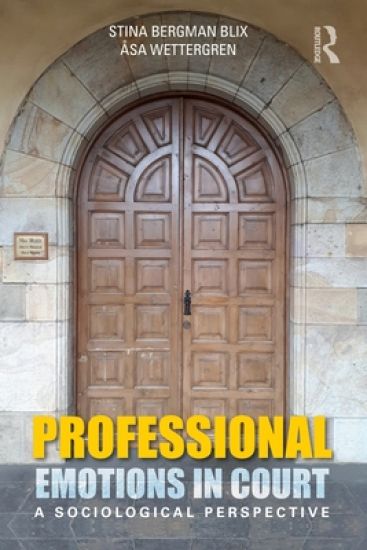
Professional Emotions in Court examines the paramount role of emotions in the legal professions and in the functioning of the democratic judicial system. Based on extensive interview and observation data in Sweden, the authors highlight the silenced background emotions and the tacitly habituated emotion management in the daily work at courts and prosecution offices. Following participants ‘backstage’ – whether at the office or at lunch – in order to observe preparations for and reflections on the performance in court itself, this book sheds light on the emotionality of courtroom interactions, such as professional collaboration, negotiations, and challenges, with the analysis of micro-interactions being situated in the broader structural regime of the legal system – the emotive-cognitive judicial frame – throughout. A demonstration of the false dichotomy between emotion and reason that lies behind the assumption of a judicial system that operates rationally and without emotion, Professional Emotions in Court reveals how this assumption shapes professionals’ perceptions and performance of their work, but hampers emotional reflexivity, and questions whether the judicial system might gain in legitimacy if the role of emotional processes were recognized and reflected upon.
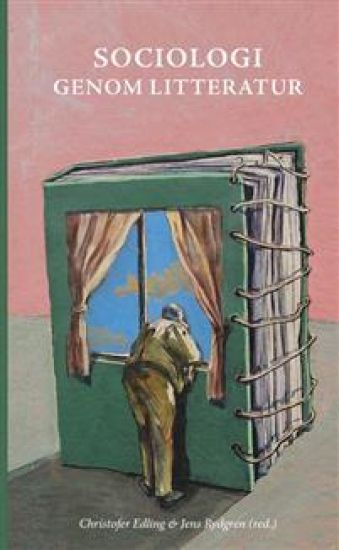
Den här boken är en hyllning till skönlitteraturens rikedom och till den sociologiska fantasin. Skönlitteraturen illustrerar samhällsvetenskapliga kärnresonemang, den väcker nya frågor om människans existentiella villkor och den sprider nytt ljus över vårt sätt att se på världen. Men trots att samhällsvetenskapen kan sägas ha uppstått under samma epok som den moderna litteraturen, och trots att de har fascinationen inför samhället och det sociala samspelet gemensamt, så har skönlitteraturen märkligt nog inte någon naturlig plats i samhällsvetarens verktygslåda. Sociologi genom litteratur tjänar både som en reflektion över samhällsvetenskapens egenart och som en inbjudan till samhällsvetare att använda skönlitteraturen som ett fönster mot den sociala verkligheten. Bokens redaktörer, Christofer Edling och Jens Rydgren, är professorer i sociologi vid Lunds respektive Stockholms universitet. Författarna representerar flera generationer av i dag verksamma svenska sociologer. Medverkande författare: Ola Agevall, Göran Ahrne, Patrik Aspers, Reza Azarian, Paavo Bergman, Stina Bergman Blix, Alexandra Bogren, Christofer Edling, Hedvig Ekerwald, Marie Evertsson, Mats Franzén, Magnus Haglunds, Carl-Göran Heidegren, Antoinette Hetzler, Bo Isenberg, Magnus Karlsson, Jonas Lindström, Gunnar Olofsson, Anders Persson, Abby Peterson, Jens Rydgren, Lambros Roumbanis, Lisbeth Stenberg, Lotta Stern, Mikaela Sundberg, Stefan Svallfors, Richard Swedberg, Maria Törnqvist, Denny Vågerö, Åsa Wettergren, Malin Åkerström.
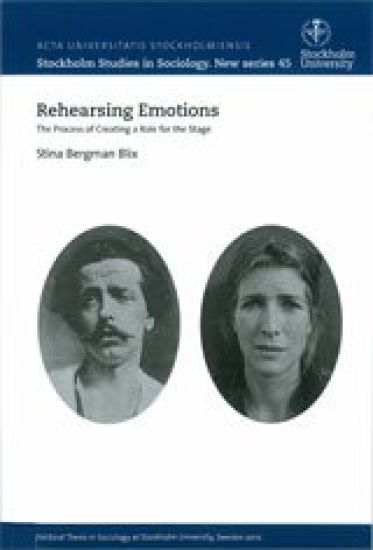
Rehearsing Emotions investigates how stage actors work with their roles, in particular with emotions. It thus expands sociological roles theories that often presume what stage acting is about in order to use it as a simile for everyday acting. Participant observation and interviews with stage actors were used during the rehearsal phase of two productions at a large theatre in Sweden. The inhabiting of a role for the stage was found to be more difficult and painstaking than has been assumed in role theories so far. Shame and insecurity are common, particularly in the start up phase of the rehearsals, emotions that do not disappear with growing experience, but instead become recognized and accepted as part of the work process. The interplay between the actors' experience and expression of emotions was analyzed in terms of surface and deep acting, concepts which are elaborated and put in a process perspective. Actors were found to gradually decouple the privately derived emotional experiences that they use to find their way into their characters from the emotions that they express on the stage. Thus private experiences are converted to professional emotional experiences and expressions. Step by step the physical manifestation of an emotion can be repeated with a weaker base in a simultaneous experience, since the body remembers the expression. The ability to professionalize emotions makes the transitions in and out of emotions less strenuous but can infiltrate and cause problems in the actors' intimate relations.