Kirjojen hintavertailu – 12 859 818 kirjaa ja 27 kauppaa

Kirjailija

Stoyan Stoyanov

Kirjat ja teokset yhdessä paikassa: 10 kirjaa, julkaisuja vuosilta 2013–2026, suosituimpiin kuuluu An Analysis of Chris Argyris's Integrating the Individual and the Organization. Vertaile teosten hintoja ja tarkista saatavuus suomalaisista kirjakaupoista.

10 kirjaa

Kirjojen julkaisuvuodet: 2013–2026.

Co-design And Modelling For Advanced Integration And Packaging: Manufacturing And Reliability

Co-design And Modelling For Advanced Integration And Packaging: Manufacturing And Reliability

Christopher Bailey; Stoyan Stoyanov; Hua Lu

World Scientific Publishing Co Pte Ltd
2026
sidottu
The aim of this book is to provide readers with an in-depth understanding of current state-of-the-art in the use of co-design and modeling tools to predict reliability and robustness of advanced packaging and integration technologies for both micro and power electronic systems. Authored by world leading experts in the field the of multiphysics/multi-domain modeling, the book starts with an overview of advanced packaging and integration technologies which details the manufacturing and reliability challenges that need to be addressed in the development of, for example, 3D-IC, novel bumping technologies such a copper column, lead-free solders and nano-sintering, and packaging technologies such as wafer level packaging. The book then progresses to discuss state-of-the-art modeling tools and techniques and the evolving progression towards co-design, and multi-domain analysis to ensure reliability and robustness. Finally a number of chapters demonstrate the application of these modeling methodologies and toolsets to advanced packaging and integration technologies.

An Analysis of Chris Argyris's Integrating the Individual and the Organization
A critical analysis of Argyris’s Integrating The Individual and the Organization, which forms part of a series of essays and books considering how organisations should be run. The essay explores the lack of congruence between the needs and expectations of individual employees and the organisations that employ them. The impact of the work depends heavily on reasoning skills. Chris Argyris used strong, well-structured arguments to make his point. His reasoning has strong implications for solving a problem that many organizations experience: disengaged and disloyal employees. Grounding his argument in studies on human nature, Argyris highlighted that demands of greater independence, an expansion of interests, and re-orientation of goals usually accompany maturation, which is at odds with higher control stemming from formal organisations. This frustration, he contends, is detrimental to productivity, increases the chance of failure and causes conflict.
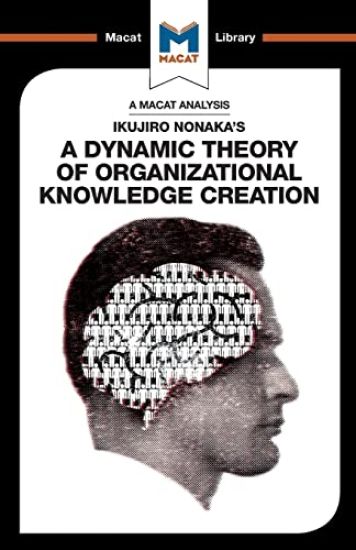
An Analysis of Ikujiro Nonaka's A Dynamic Theory of Organizational Knowledge Creation
Ikujiro Nonaka’s A Dynamic Theory of Organisational Knowledge Creation outlines the creation of organisational knowledge through the constant conversion of the two types of knowledge, tacit and explicit, which Nonaka believes has the potential to guide managers’ knowledge creation strategies. This argument is centred on the conviction that companies are not passive parties that simply utilise existing knowledge for providing solutions to the customers, and that organisations and environments simultaneously influence knowledge creation. This text is considered fundamental for the knowledge management field and as such, it has been utilised by a large number of academics.
An Analysis of Abraham H. Maslow's A Theory of Human Motivation

An Analysis of Abraham H. Maslow's A Theory of Human Motivation

Stoyan Stoyanov

Macat International Limited
2017
sidottu
US psychologist Abraham H. Maslow’s A Theory of Human Motivation is a classic of psychological research that helped change the field for good. Like many field-changing thinkers, Maslow was not just a talented researcher, he was also a creative thinker – able to see things from a new perspective and show them in a different light. At a time when psychology was dominated by two major schools of thought, Maslow was able to forge a new, third paradigm, that remains influential today. Sigmund Freud’s psychoanalysis had developed the idea of understanding the mind through dialogue between patient and analyst. The behaviorism of Ivan Pavlov and John Watson had focused on comprehending the mind through behaviors that could be measured, trained, and changed. Maslow, however, generated new ideas, forging what he called “positive” or “humanistic psychology”. His argument was that humans are psychologically motivated by a series of hierarchical needs, starting with the most essential first. Maslow thought it important for the advancement of psychology to identify, group and rank these needs in terms of priority. His belief in the value of this third way was important in leading those who studied psychology to redefine the discipline, and so see it in new ways.
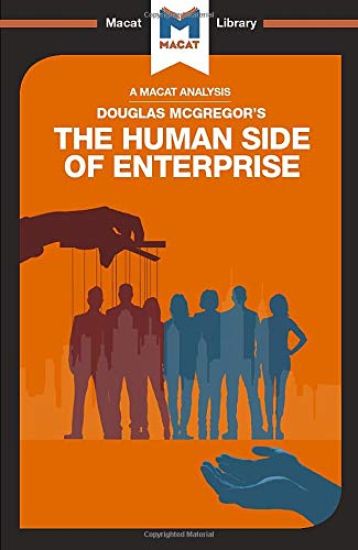
An Analysis of Douglas McGregor's The Human Side of Enterprise

An Analysis of Douglas McGregor's The Human Side of Enterprise

Stoyan Stoyanov; Monique Diderich

Macat International Limited
2017
sidottu
What makes a good manager? Though we can probably all point to someone we think of as a good manager, what precisely makes them so good at their job is a complex question – and one central to good business organization. Management scholar Douglas McGregor’s seminal 1960 book The Human Side of Enterprise is perhaps the most influential attempt to answer that question, and provides an excellent example of strong evaluative and reasoning skills in action. Evaluation is all about judging the strength and weakness of positions: a critical evaluation asks how acceptable a line of reasoning is, how adequate, relevant and convincing the evidence is. McGregor sought to find out what makes a good manager by evaluating different management approaches, their assumptions about human behavior, and effects they had. In his view, management approaches could be roughly broken down into two “theories”: Theory X, which held a negative idea of employee motivations; and Theory Y, which made positive assumptions about them. In McGregor’s evaluation, Theory Y produced markedly better results in productivity and other measurable areas. On this basis, McGregor reasoned out a strong, persuasive argument for adopting Theory Y strategies on a grand scale.
An Analysis of Douglas McGregor's The Human Side of Enterprise

An Analysis of Douglas McGregor's The Human Side of Enterprise

Stoyan Stoyanov; Monique Diderich

Macat International Limited
2017
nidottu
What makes a good manager? Though we can probably all point to someone we think of as a good manager, what precisely makes them so good at their job is a complex question – and one central to good business organization. Management scholar Douglas McGregor’s seminal 1960 book The Human Side of Enterprise is perhaps the most influential attempt to answer that question, and provides an excellent example of strong evaluative and reasoning skills in action. Evaluation is all about judging the strength and weakness of positions: a critical evaluation asks how acceptable a line of reasoning is, how adequate, relevant and convincing the evidence is. McGregor sought to find out what makes a good manager by evaluating different management approaches, their assumptions about human behavior, and effects they had. In his view, management approaches could be roughly broken down into two “theories”: Theory X, which held a negative idea of employee motivations; and Theory Y, which made positive assumptions about them. In McGregor’s evaluation, Theory Y produced markedly better results in productivity and other measurable areas. On this basis, McGregor reasoned out a strong, persuasive argument for adopting Theory Y strategies on a grand scale.
An Analysis of Abraham H. Maslow's A Theory of Human Motivation

An Analysis of Abraham H. Maslow's A Theory of Human Motivation

Stoyan Stoyanov

Macat International Limited
2017
nidottu
US psychologist Abraham H. Maslow’s A Theory of Human Motivation is a classic of psychological research that helped change the field for good. Like many field-changing thinkers, Maslow was not just a talented researcher, he was also a creative thinker – able to see things from a new perspective and show them in a different light. At a time when psychology was dominated by two major schools of thought, Maslow was able to forge a new, third paradigm, that remains influential today. Sigmund Freud’s psychoanalysis had developed the idea of understanding the mind through dialogue between patient and analyst. The behaviorism of Ivan Pavlov and John Watson had focused on comprehending the mind through behaviors that could be measured, trained, and changed. Maslow, however, generated new ideas, forging what he called “positive” or “humanistic psychology”. His argument was that humans are psychologically motivated by a series of hierarchical needs, starting with the most essential first. Maslow thought it important for the advancement of psychology to identify, group and rank these needs in terms of priority. His belief in the value of this third way was important in leading those who studied psychology to redefine the discipline, and so see it in new ways.