Kirjojen hintavertailu – 12 903 725 kirjaa ja 27 kauppaa

Kirjailija

Strabo

Kirjat ja teokset yhdessä paikassa: 19 kirjaa, julkaisuja vuosilta 1917–2026, suosituimpiin kuuluu The Geography of Strabo, Volume 3 (of 3) / Literally Translated, With Notes (Cram Edition). Vertaile teosten hintoja ja tarkista saatavuus suomalaisista kirjakaupoista.

19 kirjaa

Kirjojen julkaisuvuodet: 1917–2026.

Strabo The Geography in Two Volumes
First of two volumes. Strabo's Geography complete in two volumes in English. Volume I, Books I - IX ch. 2. Jones, Sterrett translation, notes, 9 maps & 5 figs. First of two volumes. Strabo's Geography complete in two volumes in English. Volume I, Books I - IX ch. 2. Jones, Sterrett translation, notes, 9 maps & 5 figs.
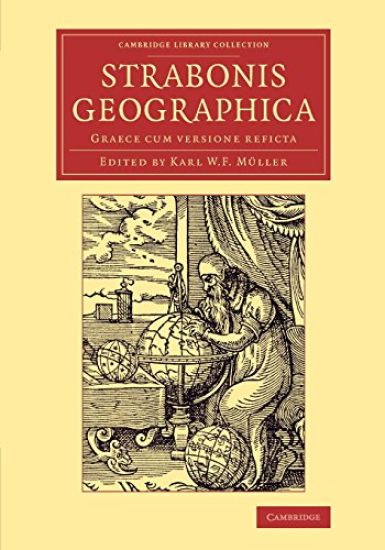
Strabonis Geographica

Strabonis Geographica

Strabo

Cambridge University Press
2015
pokkari
The Greek geographer and historian Strabo is known chiefly for this remarkable description of the known world in the early decades of the Roman Empire. The range and importance of the text ensured its copying and distribution in the medieval period, and multiple printed editions appeared later. Reissued here is the version published by the influential French publishing house Didot in 1853 as part of their series of Greek classics. It was prepared by the German classical scholars Karl Wilhelm Ludwig Müller (1813–94) and Johann Friedrich Dübner (1802–67). Müller's two-volume collection of the writings of lesser-known Greek geographers, Geographi Graeci Minores (1855–61), is also reissued in this series. The full text of Strabo's seventeen books is presented here in Greek with a parallel Latin translation as well as variant readings. Also included are several maps and a substantial index of names and places.
Geography, Volume VIII
The ecumene in prose. Strabo (ca. 64 BC to ca. AD 25), an Asiatic Greek of Amasia in Pontus, studied at Nysa and after 44 BC at Rome. He became a keen traveler who saw a large part of Italy, various near eastern regions including the Black Sea, various parts of Asia Minor, Egypt as far as Ethiopia, and parts of Greece. He was a long time in Alexandria where he no doubt studied mathematics, astronomy, and history. Strabo’s historical work is lost, but his most important Geography in seventeen books has survived. After two introductory books, numbers 3 and 4 deal with Spain and Gaul, 5 and 6 with Italy and Sicily, 7 with north and east Europe, 8–10 with Greek lands, 11–14 with the main regions of Asia and with Asia Minor, 15 with India and Iran, 16 with Assyria, Babylonia, Syria, and Arabia, 17 with Egypt and Africa. In outline he follows the great mathematical geographer Eratosthenes, but adds general descriptions of separate countries including physical, political, and historical details. A sequel to his historical memoirs, Geography is planned apparently for public servants rather than students—hence the accounts of physical features and of natural products. On the mathematical side it is an invaluable source of information about Eratosthenes, Hipparchus, and Posidonius. The Loeb Classical Library edition of Strabo is in eight volumes.

Geography, Volume VII
The ecumene in prose. Strabo (ca. 64 BC to ca. AD 25), an Asiatic Greek of Amasia in Pontus, studied at Nysa and after 44 BC at Rome. He became a keen traveler who saw a large part of Italy, various near eastern regions including the Black Sea, various parts of Asia Minor, Egypt as far as Ethiopia, and parts of Greece. He was a long time in Alexandria where he no doubt studied mathematics, astronomy, and history. Strabo’s historical work is lost, but his most important Geography in seventeen books has survived. After two introductory books, numbers 3 and 4 deal with Spain and Gaul, 5 and 6 with Italy and Sicily, 7 with north and east Europe, 8–10 with Greek lands, 11–14 with the main regions of Asia and with Asia Minor, 15 with India and Iran, 16 with Assyria, Babylonia, Syria, and Arabia, 17 with Egypt and Africa. In outline he follows the great mathematical geographer Eratosthenes, but adds general descriptions of separate countries including physical, political, and historical details. A sequel to his historical memoirs, Geography is planned apparently for public servants rather than students—hence the accounts of physical features and of natural products. On the mathematical side it is an invaluable source of information about Eratosthenes, Hipparchus, and Posidonius. The Loeb Classical Library edition of Strabo is in eight volumes.
Geography, Volume VI
The ecumene in prose. Strabo (ca. 64 BC to ca. AD 25), an Asiatic Greek of Amasia in Pontus, studied at Nysa and after 44 BC at Rome. He became a keen traveler who saw a large part of Italy, various near eastern regions including the Black Sea, various parts of Asia Minor, Egypt as far as Ethiopia, and parts of Greece. He was a long time in Alexandria where he no doubt studied mathematics, astronomy, and history. Strabo’s historical work is lost, but his most important Geography in seventeen books has survived. After two introductory books, numbers 3 and 4 deal with Spain and Gaul, 5 and 6 with Italy and Sicily, 7 with north and east Europe, 8–10 with Greek lands, 11–14 with the main regions of Asia and with Asia Minor, 15 with India and Iran, 16 with Assyria, Babylonia, Syria, and Arabia, 17 with Egypt and Africa. In outline he follows the great mathematical geographer Eratosthenes, but adds general descriptions of separate countries including physical, political, and historical details. A sequel to his historical memoirs, Geography is planned apparently for public servants rather than students—hence the accounts of physical features and of natural products. On the mathematical side it is an invaluable source of information about Eratosthenes, Hipparchus, and Posidonius. The Loeb Classical Library edition of Strabo is in eight volumes.

Geography, Volume V
The ecumene in prose. Strabo (ca. 64 BC to ca. AD 25), an Asiatic Greek of Amasia in Pontus, studied at Nysa and after 44 BC at Rome. He became a keen traveler who saw a large part of Italy, various near eastern regions including the Black Sea, various parts of Asia Minor, Egypt as far as Ethiopia, and parts of Greece. He was a long time in Alexandria where he no doubt studied mathematics, astronomy, and history. Strabo’s historical work is lost, but his most important Geography in seventeen books has survived. After two introductory books, numbers 3 and 4 deal with Spain and Gaul, 5 and 6 with Italy and Sicily, 7 with north and east Europe, 8–10 with Greek lands, 11–14 with the main regions of Asia and with Asia Minor, 15 with India and Iran, 16 with Assyria, Babylonia, Syria, and Arabia, 17 with Egypt and Africa. In outline he follows the great mathematical geographer Eratosthenes, but adds general descriptions of separate countries including physical, political, and historical details. A sequel to his historical memoirs, Geography is planned apparently for public servants rather than students—hence the accounts of physical features and of natural products. On the mathematical side it is an invaluable source of information about Eratosthenes, Hipparchus, and Posidonius. The Loeb Classical Library edition of Strabo is in eight volumes.
Geography, Volume IV
The ecumene in prose. Strabo (ca. 64 BC to ca. AD 25), an Asiatic Greek of Amasia in Pontus, studied at Nysa and after 44 BC at Rome. He became a keen traveler who saw a large part of Italy, various near eastern regions including the Black Sea, various parts of Asia Minor, Egypt as far as Ethiopia, and parts of Greece. He was a long time in Alexandria where he no doubt studied mathematics, astronomy, and history. Strabo’s historical work is lost, but his most important Geography in seventeen books has survived. After two introductory books, numbers 3 and 4 deal with Spain and Gaul, 5 and 6 with Italy and Sicily, 7 with north and east Europe, 8–10 with Greek lands, 11–14 with the main regions of Asia and with Asia Minor, 15 with India and Iran, 16 with Assyria, Babylonia, Syria, and Arabia, 17 with Egypt and Africa. In outline he follows the great mathematical geographer Eratosthenes, but adds general descriptions of separate countries including physical, political, and historical details. A sequel to his historical memoirs, Geography is planned apparently for public servants rather than students—hence the accounts of physical features and of natural products. On the mathematical side it is an invaluable source of information about Eratosthenes, Hipparchus, and Posidonius. The Loeb Classical Library edition of Strabo is in eight volumes.
Geography, Volume III
The ecumene in prose. Strabo (ca. 64 BC to ca. AD 25), an Asiatic Greek of Amasia in Pontus, studied at Nysa and after 44 BC at Rome. He became a keen traveler who saw a large part of Italy, various near eastern regions including the Black Sea, various parts of Asia Minor, Egypt as far as Ethiopia, and parts of Greece. He was a long time in Alexandria where he no doubt studied mathematics, astronomy, and history. Strabo’s historical work is lost, but his most important Geography in seventeen books has survived. After two introductory books, numbers 3 and 4 deal with Spain and Gaul, 5 and 6 with Italy and Sicily, 7 with north and east Europe, 8–10 with Greek lands, 11–14 with the main regions of Asia and with Asia Minor, 15 with India and Iran, 16 with Assyria, Babylonia, Syria, and Arabia, 17 with Egypt and Africa. In outline he follows the great mathematical geographer Eratosthenes, but adds general descriptions of separate countries including physical, political, and historical details. A sequel to his historical memoirs, Geography is planned apparently for public servants rather than students—hence the accounts of physical features and of natural products. On the mathematical side it is an invaluable source of information about Eratosthenes, Hipparchus, and Posidonius. The Loeb Classical Library edition of Strabo is in eight volumes.
Geography, Volume II
The ecumene in prose. Strabo (ca. 64 BC to ca. AD 25), an Asiatic Greek of Amasia in Pontus, studied at Nysa and after 44 BC at Rome. He became a keen traveler who saw a large part of Italy, various near eastern regions including the Black Sea, various parts of Asia Minor, Egypt as far as Ethiopia, and parts of Greece. He was a long time in Alexandria where he no doubt studied mathematics, astronomy, and history. Strabo’s historical work is lost, but his most important Geography in seventeen books has survived. After two introductory books, numbers 3 and 4 deal with Spain and Gaul, 5 and 6 with Italy and Sicily, 7 with north and east Europe, 8–10 with Greek lands, 11–14 with the main regions of Asia and with Asia Minor, 15 with India and Iran, 16 with Assyria, Babylonia, Syria, and Arabia, 17 with Egypt and Africa. In outline he follows the great mathematical geographer Eratosthenes, but adds general descriptions of separate countries including physical, political, and historical details. A sequel to his historical memoirs, Geography is planned apparently for public servants rather than students—hence the accounts of physical features and of natural products. On the mathematical side it is an invaluable source of information about Eratosthenes, Hipparchus, and Posidonius. The Loeb Classical Library edition of Strabo is in eight volumes.
Geography, Volume I
The ecumene in prose. Strabo (ca. 64 BC to ca. AD 25), an Asiatic Greek of Amasia in Pontus, studied at Nysa and after 44 BC at Rome. He became a keen traveler who saw a large part of Italy, various near eastern regions including the Black Sea, various parts of Asia Minor, Egypt as far as Ethiopia, and parts of Greece. He was a long time in Alexandria where he no doubt studied mathematics, astronomy, and history. Strabo’s historical work is lost, but his most important Geography in seventeen books has survived. After two introductory books, numbers 3 and 4 deal with Spain and Gaul, 5 and 6 with Italy and Sicily, 7 with north and east Europe, 8–10 with Greek lands, 11–14 with the main regions of Asia and with Asia Minor, 15 with India and Iran, 16 with Assyria, Babylonia, Syria, and Arabia, 17 with Egypt and Africa. In outline he follows the great mathematical geographer Eratosthenes, but adds general descriptions of separate countries including physical, political, and historical details. A sequel to his historical memoirs, Geography is planned apparently for public servants rather than students—hence the accounts of physical features and of natural products. On the mathematical side it is an invaluable source of information about Eratosthenes, Hipparchus, and Posidonius. The Loeb Classical Library edition of Strabo is in eight volumes.