Kirjojen hintavertailu – 12 859 818 kirjaa ja 27 kauppaa

Kirjailija

Stuart Alve Olson

Kirjat ja teokset yhdessä paikassa: 32 kirjaa, julkaisuja vuosilta 2001–2019, suosituimpiin kuuluu The Complete Guide to Northern Praying Mantis Kung Fu. Vertaile teosten hintoja ja tarkista saatavuus suomalaisista kirjakaupoista.

32 kirjaa

Kirjojen julkaisuvuodet: 2001–2019.

Li Qingyun: Longevity Methods of a 250-Year-Old Taoist Immortal

Li Qingyun: Longevity Methods of a 250-Year-Old Taoist Immortal

Stuart Alve Olson

Createspace Independent Publishing Platform
2016
nidottu
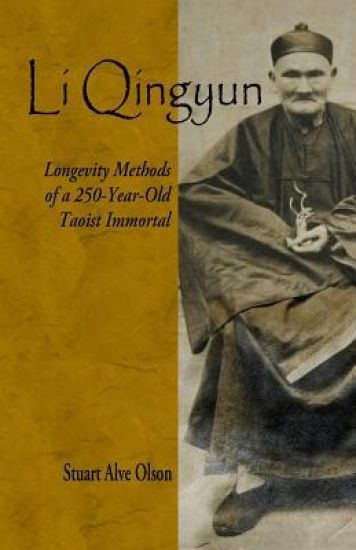
This book provides a succinct organization of materials and advice Li Qingyun provided on the subject for attaining health and longevity. Stuart Alve Olson's The Immortal: True Accounts of the 250-Year-Old Man, Li Qingyun is a large book covering many aspects of Li's teachings and life, and since it is a direct translation of Yang Sen's Chinese edition, it can be more challenging to navigate the teachings. Stuart's purpose in translating The Immortal was to present that work as Yang Sen intended, and he didn't provide any personal in-depth commentary and instructions to clarify the teachings. This book then fills in the gaps regarding Li Qingyun's advice and instructions for attaining health and longevity. The first chapter, The Fundamentals of Longevity, starts out with basic, but unique, regimes on acquiring longevity. The second chapter, Foods and Herbs for Longevity, covers more clearly the herbs Li Qingyun and Yang Sen recommended for improving health and life span. The third chapter, Sex and Longevity, explains what Li Qingyun meant by the sexual practices of Refining the Rosy Clouds. The fourth chapter, The Eight Diagrams Elemental Exercises, more popularly called Eight Brocades, includes a detailed look at these exercises. The fifth chapter, Embryonic Breathing and Longevity, delves into Li's teachings on Opening the Three Passes and Embryonic Breathing Qigong methods named after the two primary images from the Book of Changes (Yi Jing)-Qian (Creativity of Heaven) and Kun (Receptivity of Earth). The sixth chapter, The Six Qi, is about the practice of the Six Healing Sounds used for both the cure and prevention of illness and disease, and as a meditation practice. The seventh chapter, Calming the Mind, is about regulating the mind and calming the spirit, the very roots of maintaining good health and acquiring longevity. These seven chapters provide a clear path for improving health and attaining longevity. You may not incorporate all of them into your daily practice, but you'll find numerous little regimes and insights that can prove most useful in your daily life. The intention of this book is not to convince you to take on all the practices, even though that would be quite effective, but to select those elements you find useful and appropriate to your life and schedule.
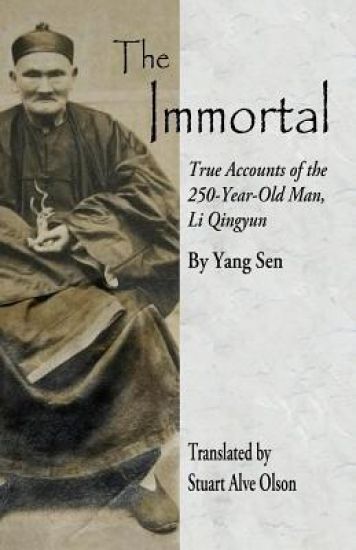
The Immortal: True Accounts of the 
250-Year-Old Man, Li Qingyun

The Immortal: True Accounts of the 
250-Year-Old Man, Li Qingyun

Yang Sen; Stuart Alve Olson

Createspace Independent Publishing Platform
2014
nidottu
In 1927, General Yang Sen invited Li Qingyun to Wanxian, China, to teach about health and longevity. Li Qingyun was reported to be 250 years old at the time, and his visit to Wanxian was big news. In 1970, Yang Sen compiled a book of his and others' accounts of Li Qingyun, titled An Authentic and True Record of a 250-Year-Old Man, which Stuart Alve Olson started translating into English in 1982. Besides the notion of someone living to 250 years of age, this book goes well beyond the biography of Li Qingyun's life. It has great historical value, especially for Westerners who are unfamiliar with much of Chinese history towards the end of the Qing dynasty. It also explains incredible health therapies and provides information on what is now called Medical Qigong. Much is explained about Daoism on meditation, breathing, qigong exercise, food, sex, and philosophy for Daoist living. Another true gem of this book is the philosophical teachings, as much of this material has never been presented in English. The depth of information provided in this book surpasses any previously published work on Daoist health practices and philosophy. It is rare to come across a text with such abundance of insights and written with such clarity as this material provides. Although Qigong Teachings of a Taoist Immortal: The Eight Essential Exercises of Master Li Ching-yun was published in 2002, which includes translations from Yang Sen's book, the entire translation is now finally available. This book belongs in everyone's library who studies or has an interest in Chinese philosophy, qigong regimes, and biographies. A companion DVD-Li Qingyun's Eight Brocades-is now available.
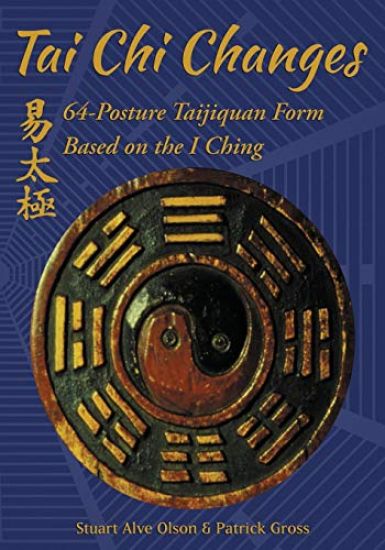
Tai Chi Changes: 64-Posture Taijiquan Form Based on the I Ching

Tai Chi Changes: 64-Posture Taijiquan Form Based on the I Ching

Patrick Gross; Stuart Alve Olson

Independently Published
2019
nidottu
Tai Chi Changes is the long-awaited followup to Stuart Alve Olson's T'ai Chi According to the I Ching: Embodying the Principals of the Book of Changes. That book focuses on the 16-posture Yi Tai Chi form which is part of the 64-posture form taught in this work. These 16- and 64-posture arrangements are Yang Style Taijiquan forms based on the workings of the Book of Changes. The 16-posture sequence relates to patterns of movement according to the Eight Trigrams, while the 64-posture form relates to a unique organization of the 64 Hexagrams. Stuart collectively refers to this style of Taijiquan as Yi Tai Chi (Tai Chi Changes), with the 16-posture form's full title being the Before Heaven Yi Tai Chi Form and the 64-posture form as the After Heaven Yi Tai Chi Form. Along with the descriptions for each count (or part) of a posture, the book includes photos showing the hand and arm positions as well as foot diagrams that provide a top-down view of the specific Taijiquan stance, the direction the body faces at the end of each count (in the highlighted trigram image), and which foot is carrying the weight (indicated by a white dot in the foot icons). Seeing the diagrams along with the photos of Stuart Olson are extremely helpful, not only for learning each posture but also to have as a quick reference guide for any particular section of the form. The posture photos and diagrams add to the instructions by showing stances and arm positions without having to constantly repeat such details in the text. At the end of each posture is a comprehensive chart diagramming every count in the After Heaven Yi Tai Chi Form. Just from the posture photos, foot and stance diagrams, and the posture summary charts, a great deal of detailed information is available for long-term study and mastery of Yi Tai Chi. Serving as the foundational work and source book of the entire Yi Tai Chi system-which Valley Spirit Arts teaches through online courses, workshops, and private lessons-Tai Chi Changes is as much for beginners as it is for the more advanced students of Taijiquan. All readers will acquire a great deal of information.
Tai Ji Bing Shu: Discourses on the Taijiquan Weapon Arts of Sword, Saber, and Staff

Tai Ji Bing Shu: Discourses on the Taijiquan Weapon Arts of Sword, Saber, and Staff

Chen Kung; Stuart Alve Olson

Createspace Independent Publishing Platform
2018
nidottu
The sword, saber, and staff weapons of Taijiquan are implements for improving your health, expressing qi, and issuing intrinsic energy (jin). Even though these three weapons are complete training systems of Taijiquan within themselves, each has a primary focus in its practice: Sword develops the skill of extending intrinsic energy through the arms and hands. The handling of the sword is likened to the skills of a Chinese calligrapher with a writing brush, making use of very refined yin and yang movements. Saber develops the skill of issuing qi from the spine. The handling of the saber is equated to the skills of a Chinese archer pulling a bow, making use of movements for drawing-in and releasing energy. Staff develops the skill of directing intrinsic energy through the waist. The wielding of the staff relates to the skills of a Chinese fisherman poling a boat across the water, moving the entire body as one unit with steady, relaxed, and flowing motions. All practicers of Taijiquan and other martial arts and health regimes should definitely consider training one or more of these incredible weapon arts. The Yang Family was truly genius in making these weapon practices "part and parcel" to their Taijiquan system of training. Without learning the skills inherent to each weapon, your level of skill can not reach its highest potential, as each weapon becomes an extension of the body, providing the skills of expressing intrinsic energy, qi, and spirit-whether within a self-defense situation or in your daily activities.
Embracing the One: Transformation Through Visualization

Embracing the One: Transformation Through Visualization

Stuart Alve Olson

Createspace Independent Publishing Platform
2018
nidottu
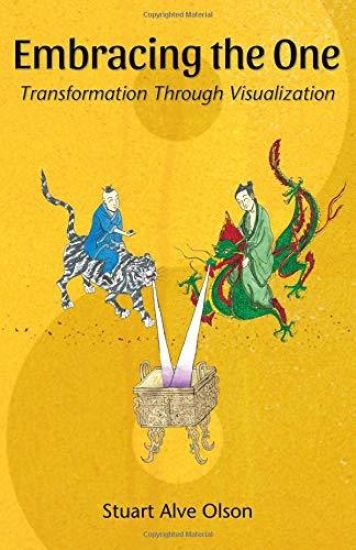
The Embracing the One (Bao Yi) visualization meditation method relies on the use of an illustration called "The Sexual Intercourse (or Marriage) of the Dragon and Tiger," which first appeared in the Ming dynasty text The Jade Tablet Decrees on Nature and Life, one of the most important Internal Alchemy works in all of Taoism. The Dragon represents Qi (vitality/breath), our spiritual energy; and the Tiger, the Jing (essence/the body), our sexual energy. Together they symbolize the two main aspects of the human consciousness and function, representing the ego (Dragon) and our instincts (Tiger). In Taoism, the Dragon is seen as what keeps us always in delusion of a self (ego) and the Tiger keeps us distracted by instincts (id). These two mental components are forever seeking to conquer the other. As long as the Dragon and Tiger battle in the mind (meaning, the ego attempting to overshadow the id, and the id overpowering the ego) we will remain in the state Taoism calls "perplexity and turbidity." But once the ego and id are revealed as false we experience "clarity and tranquility" or what is called "the naturally-just-so" or "attaining the Tao." In this book, Stuart Alve Olson provides a concise and detailed look at the Taoist visualization meditation method of Embracing the One, clearly explaining the underlying principles of this ancient practice and providing the first English translation of the text, illustration, procedures, and related chants. Even though the methods of Embracing the One are distinctly simple in application the effects of the overall practice are quite profound and deep. Through the simple act of visualizing the Dragon and Tiger a whole new mind ground can be discovered, naturally bringing forth the "Spirit." This little work is in many ways a landmark piece on Taoism and will definitely augment one's knowledge of meditation and Taoist philosophy.
Transformation Through Good Literature: Teachings of Wen Chang, Taoist God of Literature

Transformation Through Good Literature: Teachings of Wen Chang, Taoist God of Literature

Stuart Alve Olson

Createspace Independent Publishing Platform
2018
nidottu
With its unique system of philosophical and spiritual cultivation, Transformation Through Good Literature teaches how to be a good human being, or as other Taoist works might define this, a True Person. Not accomplished solely from Internal Alchemy practices, attaining deep meditative states of mind, nor even through the imbibing of secret formulas (such as a pill of immortality), becoming a True Person takes great philosophical understanding and mindfulness of one's conduct and thoughts. Just as Taoist internal arts take great discipline and effort to achieve, most people have neither the means, environment, nor ambition to seriously study them. Transformation through good literature is also not easy, but it does offer a system whereby the cultivator need not retire to a monastery or a mountain hermitage, as the practice is maintained right within one's daily life. It's a system devoted to the idea of correcting human behavior, of studying great works of literature to glean wisdom, and above all else to be mindful of your self, your actions, and your thoughts. In the end, becoming a True Person is not a matter of thinking you must be morally upright in all your thoughts and actions, which only leads to fanaticism, but rather about being mindful and aware of your thoughts and actions. As the Taoist Immortal Li Qingyun stated, "Do not be afraid of having thoughts, be afraid of not being aware of them."
Entering the Rosy Clouds: The Taoist Art of Sexual Pleasure, Restoration, and Transcendence

Entering the Rosy Clouds: The Taoist Art of Sexual Pleasure, Restoration, and Transcendence

Stuart Alve Olson

Createspace Independent Publishing Platform
2018
nidottu
Sex is the most powerful psychological and physiological energy in the human experience. Just treated recreationally, it becomes a catalyst for poor health and early death, but when used with a purpose and discipline, becomes an exceptional path for experiencing optimal health and longevity, and as a means for experiencing transcendental states. The first chapter on Rosy Clouds, as presented by Taoist Immortal Li Qingyun, teaches how sexual matters should be attuned to the workings and timing of nature in order to achieve health and longevity. The second chapter on The Plain Maiden Classic explains how sex can be employed for the advancement of health and longevity, providing many of the longstanding principles of self-care used in Chinese medicine even to this day. The third chapter, Thirty Sexual Types of Skills by Consort Tong Xuanzi, goes to the heart of harmonizing a person's emotional (Qi) needs for the attainment of optimum health and mental well-being. The fourth chapter, Three Oral Treasures, as attributed to Crimson Immortaless Wu of the Broad Cauldron Sect of Taoism, presents the more sexual Internal Alchemy teachings which, at best, catapult practitioners into forming the Elixir of Immortality or simply guide the participants into more euphoric or transcendent states of mind stimulated by sexual meditative means, as is found in the early traditions of tantra developed in India. Learning how to handle and utilize the energy of sexual activity is much more beneficial to one's life than just experiencing the normal trap of reacting to sexual impulses and desires. With understanding comes greater experience, greater benefit, and a greater sex life. The four gateways to Taoist sexuality and practice detailed in this book are but branches of a singular path leading to the same destination, a transformational experience of our innate sexuality and energy, rooted in compassion and wisdom.
Six Healing Sounds: Taoist Breathing Therapy for Health and Longevity

Six Healing Sounds: Taoist Breathing Therapy for Health and Longevity

Stuart Alve Olson

Createspace Independent Publishing Platform
2017
nidottu
Like its sister volume Embryonic Breathing: The Taoist Method of Opening the Dan Tian, the information in this book is quite extensive and, due to its compactness, more readily accessible. The full implications of practicing the Six Secret Words has far-reaching effects towards a person's health, longevity, and spiritual development. Sound therapies have been used in almost every culture throughout history, even in present-day Western medicine, but none have been quite as profound as those found in ancient Traditional Chinese Medicine (TCM). The use of sound in Chinese spiritual practices goes back deep into antiquity, and in many cases finding its roots in ancient India. This book provides three distinct sections. The first section goes over the particulars of the Six Healing Sounds attributed to the Han dynasty physician Hua Tuo, the second deals with the Six Qi as presented by Li Qingyun, the 250-Year-Old Man (1678-1933), and the third deals with the effects created by the vibration of the sounds, the Six Gentle Thunder Movements as taught in the Yellow Court Scripture.
Embryonic Breathing: The Taoist Method of Opening the Dan Tian

Embryonic Breathing: The Taoist Method of Opening the Dan Tian

Stuart Alve Olson

Createspace Independent Publishing Platform
2016
nidottu

Halvin toimitettuna 31,00 €

This book reveals the simple and effective method of Embryonic Breathing within Taoist meditation for the purpose of opening the lower Elixir Field, the very foundation of Internal Alchemy. It focuses on Stuart Alve Olson's translation of The Lofty and Foremost Jade Emperor's Canon on Embryonic Breathing, a very popular sixteenth century Taoist text comprising nine verses, as well as a translation of the brilliant commentary by Taoist Master Zhong Xuzi. In addition Olson provides a concise and informative introduction and commentary on the nine verses of the text, and shares much of what he had learned from Master T. T. Liang on this subject. Despite the brevity of this work the theory and practice of Embryonic Breathing is very profound. The text and commentaries are simple in their underlying message: congeal the Spirit and Qi in the lower Elixir Field. The nine verses succinctly cover the very foundation of this method in an uncomplicated manner by simply teaching that the proper use of Embryonic Breathing, swallowing the saliva, and deep concentration on the lower Elixir Field are the root conditions for opening the Elixir Field, thereby bringing about the causes and conditions for attaining longevity and immortality. This book teaches that the opening of the lower Elixir Field is accomplished through three functions: Embryonic Breathing, Swallowing the Saliva, and Retaining the Spirit. All three rely on directing attention to the lower Elixir Field where the three internal energies of Jing (Essence/Body), Qi (Vitality/Breath), and Shen (Spirit/Mind) converge. The experience of opening the lower Elixir Field is paramount to progressing in any meditation practice, and this work succinctly provides the instructions for doing so, no matter the tradition.
Monk Spade: The Martial Art Weapon of Sagacious Lu

Monk Spade: The Martial Art Weapon of Sagacious Lu

Stuart Alve Olson

Createspace Independent Publishing Platform
2016
nidottu
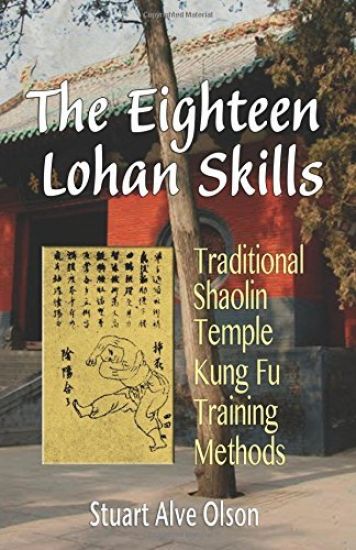
This monk spade form is attributed to Lu Da (Martial Hero Lu or Eminent Lu), whose Buddhist name was Sagacious Lu. This brash, fearless, martial rogue monk was popularized in the Song dynasty Chinese novel Outlaws of the Marsh by Shi Nai'an. The form originates out of Shaolin Temple Kung Fu, as documented in the book The Eighteen Weapon Types of Shaolin, compiled by Wang Changqing. The monk spade is one of the eighteen basic weapons a monk would learn. Traditionally, Taoist and Buddhist monks used it as both a weapon and implement during their pilgrimages and cloud wanderings. It was used for protection against fierce animals and bandits. As a tool it served to clear brush when making camp for the night, shoveling out a fire pit, and for digging holes in which to bury any dead animals encountered along their travels. This was especially true for Buddhist monks who would take vows to do this service. Stuart Alve Olson's purpose in publishing this book, as with his other translations of martial art works, such as The Eighteen Lohan Skills: Traditional Shaolin Temple Kung Fu Training Methods, is to present the text in English as close to the original Chinese as possible, and even using the original drawings. His goal is to help preserve these incredible teachings in their traditional form.
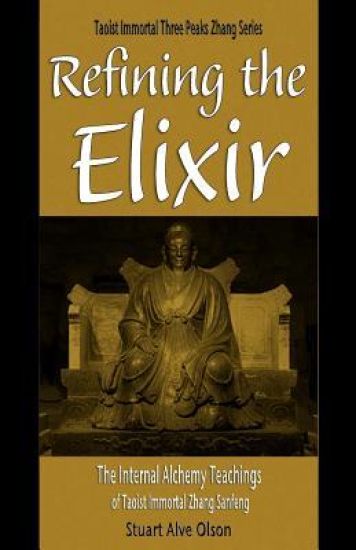
Refining the Elixir: The Internal Alchemy Teachings of Taoist Immortal Zhang Sanfeng

Refining the Elixir: The Internal Alchemy Teachings of Taoist Immortal Zhang Sanfeng

Stuart Alve Olson

Createspace Independent Publishing Platform
2016
nidottu

Halvin toimitettuna 41,90 €

Refining the Elixir is one of the clearest and most in-depth analyses on Internal Alchemy (Neidan) in English. Aside from the excellent translation work, Stuart Alve Olson provides extensive introductory sections and commentaries on the texts-a wonderful guide for practicing and learning the meditation art and science of Internal Alchemy. Stuart Alve Olson addresses the mystical terminology of Internal Alchemy by explaining it in understandable, detailed, and practical terms. Anyone, no matter the tradition of meditation followed, will find this book inspiring and enlightening. Four important works by Zhang Sanfeng (Three Peaks Zhang) are provided, along with commentaries: The Great Process for Refining the Elixir Treatise Verses on Seated Meditation The Sleeping Immortal Zhang Sanfeng's Commentary on Lu Zi's One Hundred Word Discourse These four works of Zhang Sanfeng outline clear perspectives on the Taoist practice of Internal Alchemy, a unique and effective system designed for the development of health, longevity, and immortality. Zhang Sanfeng, a Taoist priest of the twelfth century, is not only credited with the creation of Tai Ji Quan, but with some of the greatest Internal Alchemy texts. He reportedly lived 170 years, from the late Song dynasty through the Yuan and into the early Ming dynasty. Zhang's life exemplified the Chinese ideal of a true "cloud wandering" immortal. His internal alchemy and meditation texts reveal not only his deep wisdom, but his great influence on Taoism and the teachings leading to immortality.
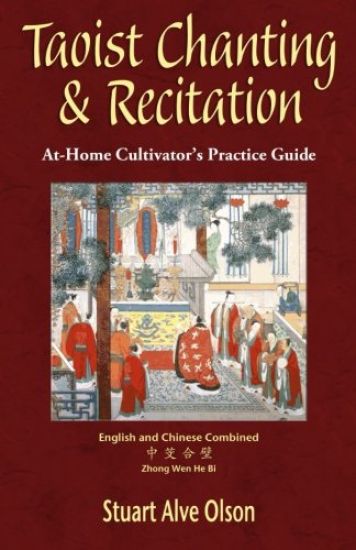
Taoist Chanting & Recitation: An At-Home Cultivator's Practice Guide

Taoist Chanting & Recitation: An At-Home Cultivator's Practice Guide

Stuart Alve Olson

Createspace Independent Publishing Platform
2015
nidottu
This extraordinary book presents the Taoist practices of chanting and ceremony along with the contemplative meditation method of reciting Taoist scriptures. Contained within are rare and first-time translations of Taoist ceremonial chants, four short Taoist texts, and a complete translation of Lao Zi's Scripture on Tao and Virtue (Tao Te Ching). The majority of chants come from the Chinese Taoist work The Highest Treasury of Truth Scripture. Stuart received this text many years ago from his teacher, Master T. T. Liang, who had originally acquired it from Taoist Master Liu Peizhong. In the 1950s, Liu was head of the Taoist Kun Lun Sect in Taipei, Taiwan, and Master Liang had become one of his disciples. The scripture states that the chants derived from the Quan Zhen Sect and were handed down through the Tang dynasty immortal Lu Dongbin. The other works appearing in Taoist Chanting & Recitation come from various Chinese sources, which can be divided into two forms: liturgy of chants and Taoist scripture texts for contemplation. Chanting, recitation, and ceremony may seem simple in use, but their effects are profound and far reaching. Just like casting a pebble into a pond, the ripples extend in all directions. Likewise, the actions, speech, and thoughts of these practices produce good responses. The small act of offering incense, bowing, and a little chanting each morning has a wonderful effect on the rest of the day. There is something beneficial about being reverent each morning that flows into all of your daily events. Chanting, reciting scriptures, and performing ceremony on a regular basis can add a great deal of clarity and calmness to your life.
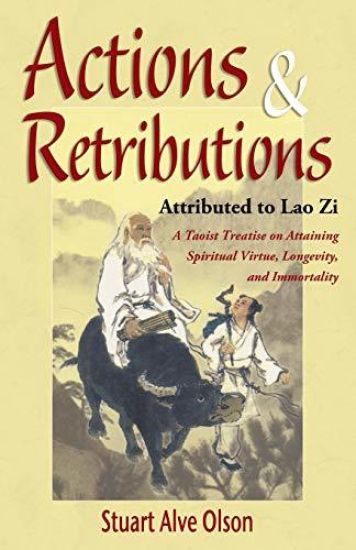
Actions & Retributions: A Taoist Treatise on Attaining Spiritual Virtue, Longevity, and Immortality

Actions & Retributions: A Taoist Treatise on Attaining Spiritual Virtue, Longevity, and Immortality

Lao Zi; Stuart Alve Olson

Createspace Independent Publishing Platform
2015
nidottu
The Treatise on Actions and Retributions is probably the most widely distributed and printed spiritual book in history, having been cherished by Taoist, Buddhist, Confucian clergy, and the Chinese populace for centuries. It is definitely Taoist in origin, and Stuart Alve Olson has done an excellent job of presenting its Taoist roots and showing how it's meant to be studied as a Taoist internal alchemy text. Much of this work provides first-time translations and explanations of this incredible source text on Taoist philosophy and internal spiritual cultivation. This book belongs in the library of everyone interested in Taoist teachings and practices. Actions & Retributions serves as a foundational guide for Taoist cultivators seeking the lofty goals of achieving virtue (spiritual strength), longevity, and immortality, presenting an alternative method of internal alchemy. This Taoist text teaches that our actions of performing good deeds and maintaining correct moral behavior brings good fortune; by quelling the negative influences of the inner spirits of the body and mind, we may attain longevity and optimum health; and through internal cultivation of our Heavenly (Hun) Spirits, we can achieve immortality. This treatise first appeared in tenth century CE along with its sister work, The Supreme Exalted One's Classic on Eradicating the Three Corpse Spirits and Nine Worms for the Protection of Life. Studied by Taoist clergy and familiar to serious Taoist cultivators, this lesser-known work is an integral document for understanding the Treatise on Actions and Retributions. Stuart Alve Olson incorporates excerpts from this text not only to clarify aspects of the Treatise on Actions and Retributions, but to also introduce the classic for a future volume, as these two complementary works should be studied together to fully appreciate the distinctly Taoist perspective and teachings they collectively provide.
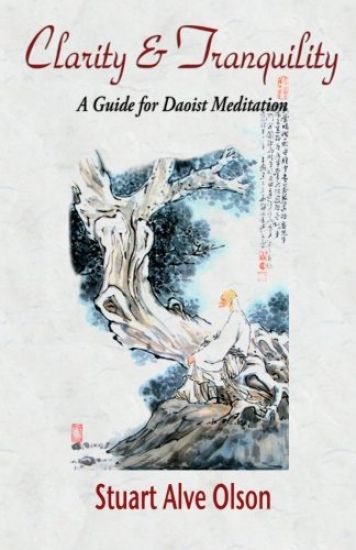
Clarity and Tranquility: A Guide for Daoist Meditation

Clarity and Tranquility: A Guide for Daoist Meditation

Stuart Alve Olson

Createspace Independent Publishing Platform
2015
nidottu
Clarity & Tranquility: A Guide for Daoist Meditation is an in-depth work on the method of Tranquil Sitting, a crucial and important practice for all Daoist practitioners. Stuart Alve Olson's introduction provides a great deal of valuable advice, history, and purpose for Tranquil Sitting. The main body of the work is divided into three integral sections that provide a comprehensive overview for anyone seriously seeking to practice meditation, whether one is a beginner or a longtime practitioner. Each section is distinct, yet they all work together to ensure the meditation practitioner has not only the insight of purpose for Daoist meditation, but the correct method. The Supreme Exalted One's Clarity and Tranquility of the Constant Scripture is a central and key text on Daoist meditation. During the Song dynasty (960-1279 CE), Bai Yuchan (Jade Toad immortal) said the following on its importance, "The main theme of this text is to reveal that the attainment of clarity and tranquility are the source conditions for obtaining immortality." In 1927, Li Qingyun, the 250-Year-Old Man, gave the following advice on Tranquil Sitting, "Meditation is the first important rule for the fundamentals of longevity. This stabilizes the Jing Essence], concentrates the Shen Spirit], and controls the Vital-Energy Qi]." Clarity & Tranquility, along with Refining the Elixir and The Seen and Unseen are all companion works to Olson's Being Daoist: The Way of Drifting with the Current, which focuses on the philosophical foundations of Daoism. Whereas Clarity & Tranquility confines itself to the practice and philosophy of Tranquil Sitting meditation, Refining the Elixir addresses the Daoist Internal Alchemy teachings, and The Seen and Unseen presents the practice of Daoist contemplative meditation. Stuart Alve Olson is also working on two other key meditation texts: The Yellow Court Scripture and The Secret of the Golden Flower.
Daoist Sexual Arts: A Guide for Attaining Health, Youthfulness, Vitality, and Awakening the Spirit
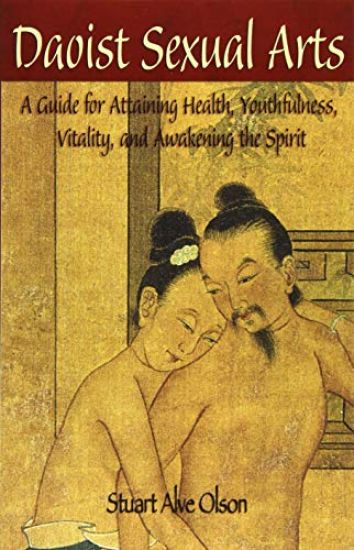
The subject of Daoist sexual teachings and practices has often been confusing to Western readers. This confusion is a result of how Daoism has intrinsically bound sexuality with spirituality and internal alchemy, making the language of its literature difficult to grasp by Western readers. In Daoist Sexual Arts, Stuart Alve Olson demystifies this specialized language through his insightful instructional notes and comments, culled from his many years of intense study and practice of Daoist arts. This book presents two of the most important texts of Daoist restorative and transformative sexual alchemy teachings (The Immortaless He Xiangu on the Correct Course for Female Practice and The Immortal Zhang Sanfeng's Summary on Gathering the True Root-Power), augmented with excerpts and insights from a variety of Daoist schools, all of which makes this book a valuable source guide for anyone interested in Daoist health, longevity, sexual-spiritual philosophy, and internal alchemy teachings. This work pays great attention to issues concerning sexual health and practices for women, as well as delving into methods for couples and advice for men. In the end, this book is about bringing harmony, not only in sexual partnerships, but for the individual as well. Those who practice sexual arts from any tradition will find this book both informative and enlightening.