Kirjojen hintavertailu – 12 903 724 kirjaa ja 27 kauppaa

Kirjailija

Stuart Croft

Kirjat ja teokset yhdessä paikassa: 8 kirjaa, julkaisuja vuosilta 1996–2019, suosituimpiin kuuluu Reconnect and Renew: Can the principles of Kurt Hahn and Rudolf Steiner be applied to recovery from addiction?. Vertaile teosten hintoja ja tarkista saatavuus suomalaisista kirjakaupoista.

8 kirjaa

Kirjojen julkaisuvuodet: 1996–2019.

Securitizing Islam

Securitizing Islam

Stuart Croft

Cambridge University Press
2012
pokkari
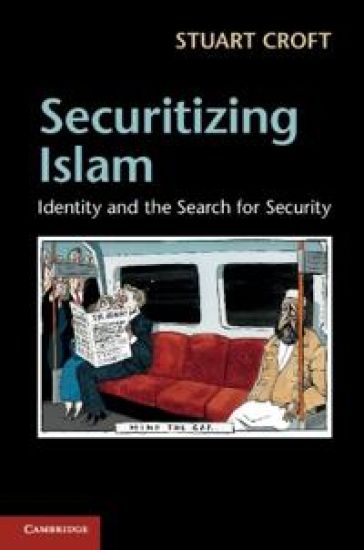
Securitizing Islam examines the impact of 9/11 on the lives and perceptions of individuals, focusing on the ways in which identities in Britain have been affected in relation to Islam. 'Securitization' describes the processes by which a particular group or issue comes to be seen as a threat, and thus subject to the perceptions and actions which go with national security. Croft applies this idea to the way in which the attitudes of individuals to their security and to Islam and Muslims have been transformed, affecting the everyday lives of both Muslims and non-Muslims. He argues that Muslims have come to be seen as the 'Other', outside the contemporary conception of Britishness. Reworking securitisation theory and drawing in the sociology of ontological security studies, Securitizing Islam produces a theoretically innovative framework for understanding a contemporary phenomenon that affects the everyday lives of millions.
Culture, Crisis and America's War on Terror

Culture, Crisis and America's War on Terror

Stuart Croft

Cambridge University Press
2006
sidottu
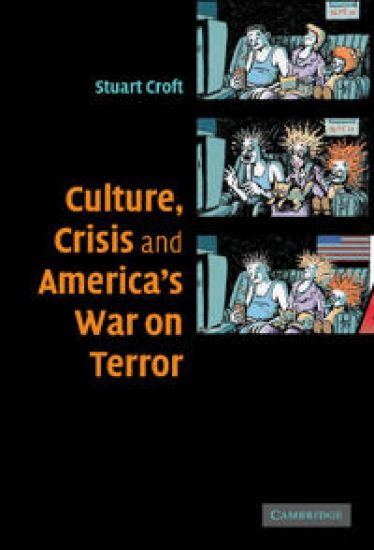
Since the infamous events of 9/11, the fear of terrorism and the determination to strike back against it has become a topic of enormous public debate. The 'war on terror' discourse has developed not only through American politics but via other channels including the media, the church, music, novels, films and television, and therefore permeates many aspects of American life. Stuart Croft suggests that the process of this production of knowledge has created a very particular form of common sense which shapes relationships, jokes and even forms of tattoos. Understanding how a social process of crisis can be mapped out and how that process creates assumptions allows policy-making in America's war on terror to be examined from new perspectives. Using IR approaches together with insights from cultural studies, this book develops a dynamic model of crisis which seeks to understand the war on terror as a cultural phenomenon.

Culture, Crisis and America's War on Terror

Culture, Crisis and America's War on Terror

Stuart Croft

Cambridge University Press
2006
pokkari
Since the infamous events of 9/11, the fear of terrorism and the determination to strike back against it has become a topic of enormous public debate. The 'war on terror' discourse has developed not only through American politics but via other channels including the media, the church, music, novels, films and television, and therefore permeates many aspects of American life. Stuart Croft suggests that the process of this production of knowledge has created a very particular form of common sense which shapes relationships, jokes and even forms of tattoos. Understanding how a social process of crisis can be mapped out and how that process creates assumptions allows policy-making in America's war on terror to be examined from new perspectives. Using IR approaches together with insights from cultural studies, this book develops a dynamic model of crisis which seeks to understand the war on terror as a cultural phenomenon.

Security Studies Today

Security Studies Today

Terry Terriff; Stuart Croft; Lucy James; Patrick Morgan

JOHN WILEY AND SONS LTD
1999
nidottu
This work examines the range of thinking about security that has emerged in academic literature over the past 15 years. Throughout this study, the authors focus on two central questions in the current debate: what is to be protected and who is it to be protected from?
Strategies of Arms Control

Strategies of Arms Control

Stuart Croft

Manchester University Press
1996
nidottu
Bringing the subject of arms control into the arena of complex, multi-polar international relations, this text traces the history of agreements over weapons back to ancient times. The author puts forward a typology of arms control: it occurs at the end of major conflicts, stabilizes balances between states, develops norms of behaviour, manages weapons proliferation, and acts as a tool of international organizations. He examines the evolution of five qualitatively different strategies, and applies the arms control typology to agreements in the post-Cold War world.