
Kirjojen hintavertailu – 12 859 819 kirjaa ja 27 kauppaa

Kirjailija

Stuart M. Blumin

Kirjat ja teokset yhdessä paikassa: 3 kirjaa, julkaisuja vuosilta 2001–2025, suosituimpiin kuuluu The Rise and Fall of Protestant Brooklyn. Vertaile teosten hintoja ja tarkista saatavuus suomalaisista kirjakaupoista.

3 kirjaa

Kirjojen julkaisuvuodet: 2001–2025.

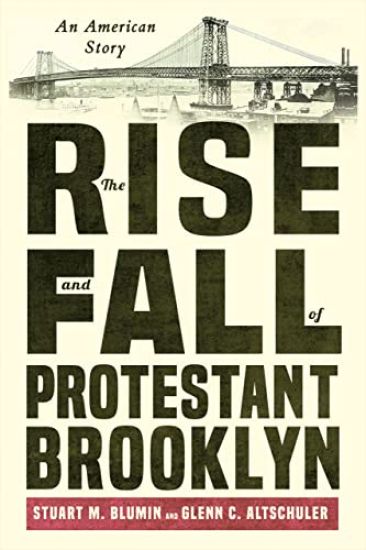
The Rise and Fall of Protestant Brooklyn

The Rise and Fall of Protestant Brooklyn

Stuart M. Blumin; Glenn C. Altschuler

CORNELL UNIVERSITY PRESS
2025
pokkari
Winner of the Herbert H. Lehman Prize from the New York Academy of History. In The Rise and Fall of Protestant Brooklyn, Stuart M. Blumin and Glenn C. Altschuler detail how nineteenth-century Brooklyn was dominated by Puritan New England Protestants and how their control unraveled with the arrival of diverse groups in the twentieth century. Before becoming a hub of urban diversity, Brooklyn was a charming "town across the river" from Manhattan, known for its churches and suburban life. This changed with the city's growth, new secular institutions, and Coney Island's attractions, which clashed with post-Puritan values. Despite these changes, Yankee-Protestant dominance continued until the influx of Southern and Eastern European immigrants. The Rise and Fall of Protestant Brooklyn explores how these new residents built a vibrant ethnic mosaic, laying the foundation for cultural pluralism and embedding it in the American Creed.
The Rise and Fall of Protestant Brooklyn

The Rise and Fall of Protestant Brooklyn

Stuart M. Blumin; Glenn C. Altschuler

CORNELL UNIVERSITY PRESS
2022
sidottu
Winner of the Herbert H. Lehman Prize from the New York Academy of History. In The Rise and Fall of Protestant Brooklyn, Stuart M. Blumin and Glenn C. Altschuler detail how nineteenth-century Brooklyn was dominated by Puritan New England Protestants and how their control unraveled with the arrival of diverse groups in the twentieth century. Before becoming a hub of urban diversity, Brooklyn was a charming "town across the river" from Manhattan, known for its churches and suburban life. This changed with the city's growth, new secular institutions, and Coney Island's attractions, which clashed with post-Puritan values. Despite these changes, Yankee-Protestant dominance continued until the influx of Southern and Eastern European immigrants. The Rise and Fall of Protestant Brooklyn explores how these new residents built a vibrant ethnic mosaic, laying the foundation for cultural pluralism and embedding it in the American Creed.
Rude Republic

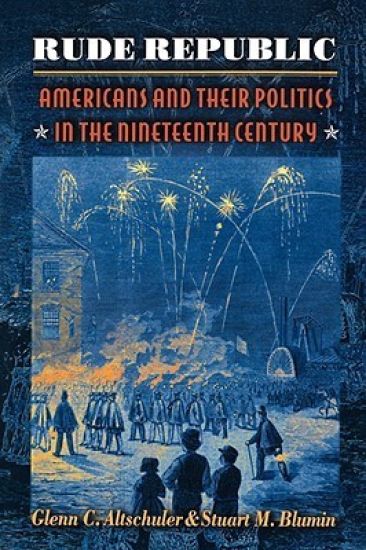
Rude Republic

Glenn C. Altschuler; Stuart M. Blumin

Princeton University Press
2001
pokkari
What did politics and public affairs mean to those generations of Americans who first experienced democratic self-rule? Taking their cue from vibrant political campaigns and very high voter turnouts, historians have depicted the nineteenth century as an era of intense and widespread political enthusiasm. But rarely have these historians examined popular political engagement directly, or within the broader contexts of day-to-day life. In this bold and in-depth look at Americans and their politics, Glenn Altschuler and Stuart Blumin argue for a more complex understanding of the "space" occupied by politics in nineteenth-century American society and culture. Mining such sources as diaries, letters, autobiographies, novels, cartoons, contested-election voter testimony to state legislative committees, and the partisan newspapers of representative American communities ranging from Massachusetts and Georgia to Texas and California, the authors explore a wide range of political actions and attitudes. They consider the enthusiastic commitment celebrated by historians together with various forms of skepticism, conflicted engagement, detachment, and hostility that rarely have been recognized as part of the American political landscape. Rude Republic sets the political parties and their noisy and attractive campaign spectacles, as well as the massive turnout of voters on election day, within the communal social structure and calendar, the local human landscape of farms, roads, and county towns, and the organizational capacities of emerging nineteenth-century institutions. Political action and engagement are set, too, within the tide of events: the construction of the mass-based party system, the gathering crisis over slavery and disunion, and the gradual expansion of government (and of cities) in the post-Civil War era. By placing the question of popular engagement within these broader social, cultural, and historical contexts, the authors bring new understanding to the complex trajectory of American democracy.