Kirjojen hintavertailu – 12 903 735 kirjaa ja 27 kauppaa

Kirjailija

Stuart Rutherford

Kirjat ja teokset yhdessä paikassa: 3 kirjaa, julkaisuja vuosilta 2009–2010, suosituimpiin kuuluu The Poor and their Money. Vertaile teosten hintoja ja tarkista saatavuus suomalaisista kirjakaupoista.

3 kirjaa

Kirjojen julkaisuvuodet: 2009–2010.

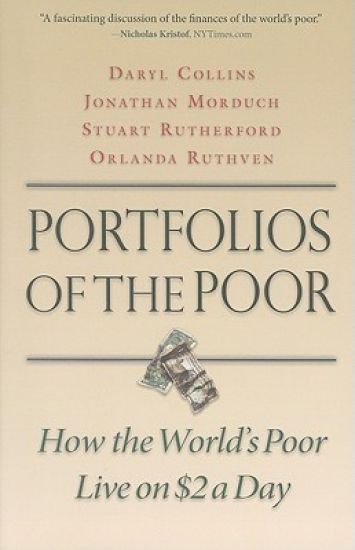
Portfolios of the Poor

Portfolios of the Poor

Daryl Collins; Jonathan Morduch; Stuart Rutherford; Orlanda Ruthven

Princeton University Press
2010
pokkari
Nearly forty percent of humanity lives on an average of two dollars a day or less. If you've never had to survive on an income so small, it is hard to imagine. How would you put food on the table, afford a home, and educate your children? How would you handle emergencies and old age? Every day, more than a billion people around the world must answer these questions. Portfolios of the Poor is the first book to systematically explain how the poor find solutions to their everyday financial problems. The authors conducted year-long interviews with impoverished villagers and slum dwellers in Bangladesh, India, and South Africa--records that track penny by penny how specific households manage their money. The stories of these families are often surprising and inspiring. Most poor households do not live hand to mouth, spending what they earn in a desperate bid to keep afloat. Instead, they employ financial tools, many linked to informal networks and family ties. They push money into savings for reserves, squeeze money out of creditors whenever possible, run sophisticated savings clubs, and use microfinancing wherever available. Their experiences reveal new methods to fight poverty and ways to envision the next generation of banks for the "bottom billion." Indispensable for those in development studies, economics, and microfinance, Portfolios of the Poor will appeal to anyone interested in knowing more about poverty and what can be done about it.
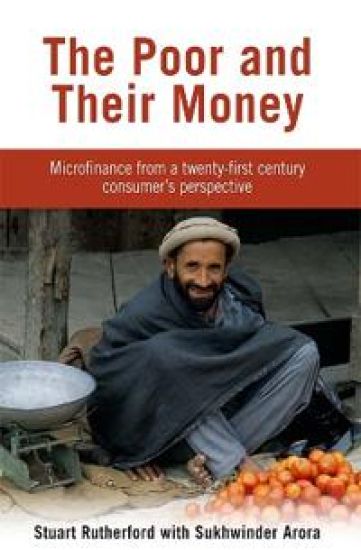
The Poor and their Money

The Poor and their Money

Stuart Rutherford

Practical Action Publishing
2009
nidottu
It is generally believed that microfinance revolution was led by NGOs, donor agencies, and more recently banks who offer poor people financial services. But what can we learn from the ways that poor people already manage their money? What are the essential elements that they prize so much that they are willing to pay high interest rates to money lenders, or spend time and energy setting up elaborate savings clubs? The Poor and Their Money emphasizes the pivotal role of savings in the lives of the poor, and in so doing overturns the common misconception that they are "too poor to save." Building on the huge acclaim that followed its first publication, the second edition of The Poor and Their Money brings readers up to date with microfinance developments in the twenty first century, including India's self-help group movement, village banks, and microfinance on Wall Street. It also describes the most detailed accounts to date of poor people's day-to-day financial strategies--their financial diaries. The book's clarity and lack of jargon make it appealing not only to microfinance students and practitioners, but to general readers as well.
The Pledge

The Pledge

Stuart Rutherford

Oxford University Press Inc
2009
sidottu
The Association for Social Advancement (ASA) of Bangladesh recently topped Forbes magazine's first-ever list of the world's best microfinance banks. This is an extraordinary achievement for an organization that started life as a revolutionary movement aiming to bring a peasant-led government to the newly created and desperately poor South Asian nation of Bangladesh. This book tells the story of how ASA's determined but practical-minded founder and leader, Shafiqual Haque Choudhury, steered his organization through the maze of competing ideas about how best to develop poor countries. The book sets Choudhury's accomplishments in the context of Bangladesh's chaotic but inspiring postcolonial history and is rich in its understanding and descriptions of how ordinary village and slum dwellers deal with the complicated web of politics, international donations, and development expertise. The author's long and intimate knowledge of ASA and of Bangladeshi microfinance makes this one of the best case studies of a development organization available to the general public.