Kirjailija
Stuart White
Kirjat ja teokset yhdessä paikassa: 17 kirjaa, julkaisuja vuosilta 2002–2025, suosituimpiin kuuluu National 5 Biology. Vertaile teosten hintoja ja tarkista saatavuus suomalaisista kirjakaupoista.
17 kirjaa
Kirjojen julkaisuvuodet: 2002–2025.
Exam Board: SQA Level: National 5 Subject: Biology First Teaching: 2017, First Exam: 2018 Because practice is proven to help you pass your SQA exams, we’ve loaded this N5 Biology Question Book with all the practice you could possibly need! Each and every topic is covered in this National 5 Biology book, with plenty of SQA exam-style practice questions. To make sure you’re extra prepared, we’ve included extra questions for each topic, with more of the tricky ones to boost your confidence ahead of the SQA National 5 Biology exam. Top tips throughout give advice on the best way to approach different kinds of questions and ace your exam. Example answers are worked out to help explain difficult concepts and can be downloaded for free from www.collins.co.uk/pages/scottish-curriculum-free-resources. This SQA Practice Question Book can be used alongside the N5 Biology Student Book (9780008282073) or as a versatile standalone resource for homework, independent study or exam revision. For more SQA exam practice, check out Leckie’s National 5 Biology Success Guide (9780008281649) and Practice Papers (9780008281670).
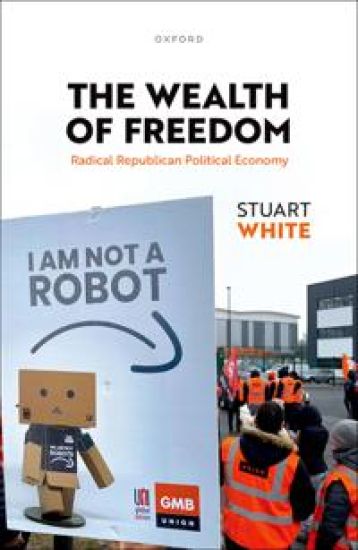
What is an economy for? The republican tradition in political thought offers a compelling way of exploring this question. The economy is for the common good, and the people, as the sovereign, properly have democratic authority to design it to satisfy their common good. Recent republican philosophers emphasize the centrality of freedom to the common good, where freedom is 'non-domination': the status of not being subject to another's uncontrolled power of interference. But insight into the common good can also be found in other sources, including liberal egalitarian theories of social justice. The common good provides a standard to evaluate existing institutions and to propose alternatives that, starting in our present context, look likely to make society more just. In this way, it helps to guide the collective political action of republican struggle. The Wealth of Freedom argues for universal basic income and universal capital grants, the fair taxation of inheritances and wealth, participatory democracy in the workplace, in investment, and in the design of public services, and for strong trade unions as key elements in a radical republican economy of the common good. Internationally, a radical republican economy of the common good calls for us to restructure existing systems of transnational governance and to support a major investment programme to address the climate emergency in a fair, reparative way. Focusing on demands for a Green New Deal, Stuart White shows how the book's institutional proposals may help to develop this agenda. The struggle for such a programme is the terrain on which we must now assert creative popular sovereignty over the economy to ensure that it does work for the common good.
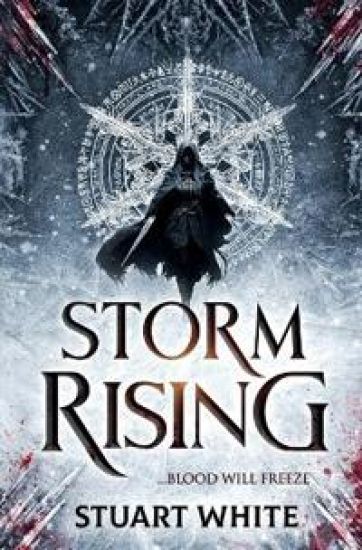
Eighteen-year-old Corena Storm, feared and cast out by her own parents for her Ice-Witch powers, is sent to the merciless Kurikon-an extremist religious order determined to strip her of magic, believing only the gods should wield such power. But Corena refuses to be broken. Escaping their clutches, she's thrust into a deadly game of survival, pursued by the relentless Kurikon and the Queen's elite killing squad. As she fights to stay ahead, she's forced to rely on unlikely allies-some old enemies, others new friends. When she falls for someone unexpected, Corena's quest for vengeance becomes far more complicated. Love wasn't part of the plan, but it may be the key to unlocking her true power. A storm is rising...and blood will freeze.
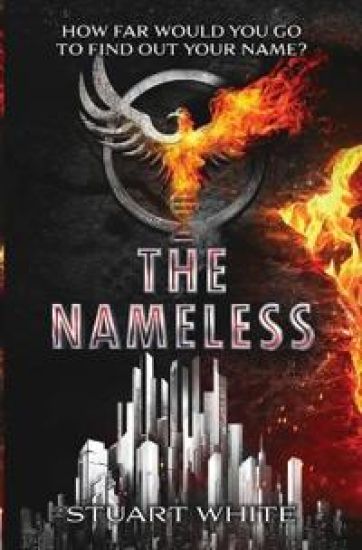
For dystopian fans of GATTACA, THE MAZE RUNNER, and THE HUNGER GAMES. The YA debut from award-winning author, Stuart White. IN A NAMELESS WORLD, ONE HERO RISES BY DISCOVERING THEIR IDENTITY. In a dystopian world dominated by genetic perfection and numbered gene pools, sixteen-year-old E820927, known as Seven, yearns for an identity beyond his assigned number. To escape a life as a Nameless Exile, and become a citizen of the Realm, he must pass a loyalty test to prove his allegiance to the totalitarian Autokratōr. But as the truth unfolds, Seven faces a difficult choice between revenge, love and discovering his identity.
How would you feel if you were born on Mars, were the most famous person in the Solar System, but could never leave the Red Planet? Mars. 2045. My name's Eva, and I'm a Martian. Well, technically the first Martianborn human - I'm not, like, green or anything. So listen, we're in trouble here; I need to steal a rover to rescue Dad, who's stuck in a mining vent, in a planet-wide dust-storm, far from our base, or he'll die. He may even be already dead. Oh, and I'm Type 1 Diabetic with no insulin. Wish me luck.
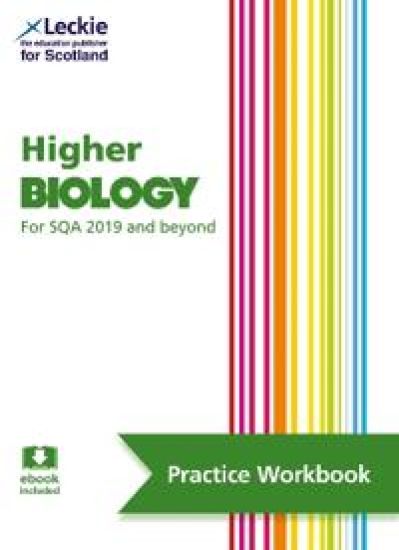
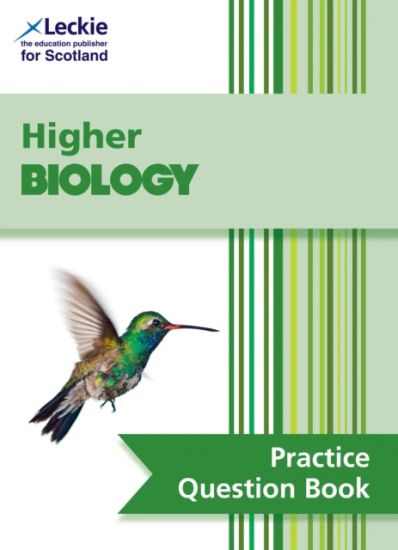
Exam Board: SQA Level: Higher Subject: Biology First Teaching: 2019, First Exam: 2020 Nail your Higher Biology by working through practice questions on every topic of the curriculum, then test your understanding with mixed exam question practice. Master even the trickiest of topics by practising tons of questionsCheck your understanding by reviewing the example answers which contain workings-outBuild your confidence with the Mixed Exam Question Practice section, to prepare for the type and level of questions you can expect in the SQA Higher Biology examUnderstand how your exam will be marked with detailed answers to all of the questionsLearn how to approach different types of question with hints and tipsAll answers can be found online at https://collins.co.uk/pages/scottish-curriculum-free-resources Can be used at school or at home – for revision, homework, independent study or exam practice. For more resources to help you do your very best, why not try Leckie’s Higher Biology Complete Revision & Practice (9780008365288).
National 5 Biology
John Di Mambro; Stuart White; Billy Dickson; Graham Moffat
HARPERCOLLINS PUBLISHERS
2020
nidottu
Work through practice questions on every topic of the National 5 Biology curriculum, then test your understanding with mixed exam question practice. Master even the trickiest of topics by practising tons of questionsCheck your understanding by reviewing the example answers which contain workings-outBuild your confidence with the Mixed Exam Question Practice section, to prepare for the type and level of questions you can expect in the SQA National 5 Biology examUnderstand how your exam will be marked with detailed answers to all of the questionsLearn how to approach different types of question with hints and tipsAll answers can be found online at https://collins.co.uk/pages/scottish-curriculum-free-resources Can be used at school or at home – for revision, homework, independent study or exam practice. For more resources to help you do your very best, why not try Leckie’s National 5 Biology Complete Revision & Practice (9780008435349).
Exam Board: SQA Level: Higher Subject: Biology First Teaching: 2018, First Exam: 2019 The Higher Biology Student Book helps teachers and students map their route through the CfE programme, providing comprehensive and authoritative guidance for the course. Full coverage of the new Higher course specifications with list of learning intentionsAttractive layout with clear text featuresKey questions highlight crucial concepts and techniques that need to be grasped by students in order to progress to the next learning intentionWhat the examiner/assessor is looking for to help teachers & students feel secureEnd of unit material – unit assessment, exam-style questions with worked answers and examiners commentary, self-assessment Student Books give a practical, supportive approach to help deliver the new curriculum and offer a blend of sound teaching and learning with assessment guidance.
Higher Human Biology
John Di Mambro; Deirdre McCarthy; Stuart White
HARPERCOLLINS PUBLISHERS
2020
nidottu
Exam Board: SQA Level: Higher Subject: Human Biology Two books in one! Combining a revision guide and a full set of practice test papers, this fantastic resource is all you need to revise for the exam. The revision guide• Covers all of the topics in the Higher Human Biology curriculum, broken down into manageable chunks for easy revision• Clearly explains key concepts, research evidence and real-life applications• Contains Quick Tests to let students check their knowledge and understanding as they go along The practice test papers• Are in the format and the style of the SQA exam, giving students an opportunity to practice taking the Higher Human Biology exam Marking instructions and sample answers are provided online, so students can check their progress.
Higher Biology
Angela Drummond; John Di Mambro; Deirdre McCarthy; Stuart White
HARPERCOLLINS PUBLISHERS
2020
nidottu
Exam Board: SQA Level: Higher Subject: Biology First Teaching: 2018, First Exam: 2019 Two books in one! Combining a revision guide and a full set of practice test papers, this fantastic resource is all you need to revise for the new 2020 exam. The revision guide• Covers all of the topics in the new CfE Higher Biology curriculum, broken down into manageable chunks for easy revision• Clearly explains key concepts, research evidence and real-life applications• Contains Quick Tests to let students check their knowledge and understanding as they go along The practice test papers• Are in the format and the style of the SQA exam, giving students an opportunity to practice taking the new 2020 Higher Biology exam Marking instructions and sample answers are provided online, so students can check their progress.
Exam Board: SQALevel: HigherSubject: BiologyFirst Teaching: 2014, First Exam: 2015 Masses of practice questions for every topic on the curriculum.
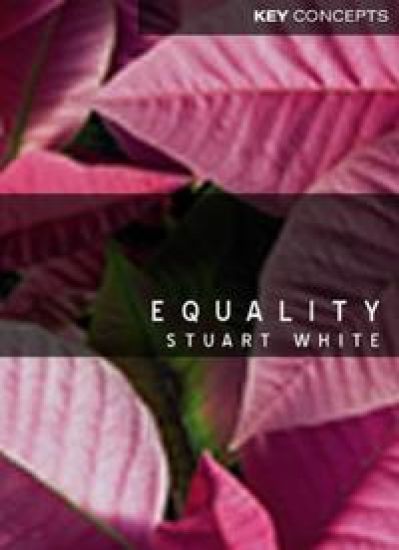
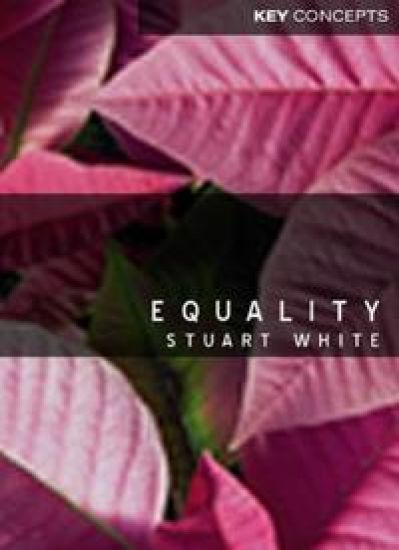
The demand for equality is central to modern politics. But what exactly do we mean by equality? Does it threaten other important values? Is it a demand we should support or question? This highly accessible book provides an engaging introduction to the concept of equality and to the debates, historical and contemporary, that surround it. It explains and critically considers how the demand for equality arises in different spheres. In the political sphere, it explores the relationship between equality and democracy. In the economic and social spheres, it explores the ideal of meritocracy and more radical theories of egalitarian justice developed in the works of John Rawls and Ronald Dworkin. In the legal sphere, the book discusses the challenges that feminism and multiculturalism pose to conventional conceptions of equal citizenship. It concludes with an examination of whether equality should go global, and by analyzing contemporary arguments for and against the continuing relevance of equality to the political life of affluent democracies. Throughout, the book considers the tensions internal to the demand for equality and between equality and other important values such as liberty and efficiency. Drawing on political philosophy, sociology and the history of political thought, the book will be of interest to students and researchers in philosophy and the social sciences and anyone interested in the values that animate democratic political life.
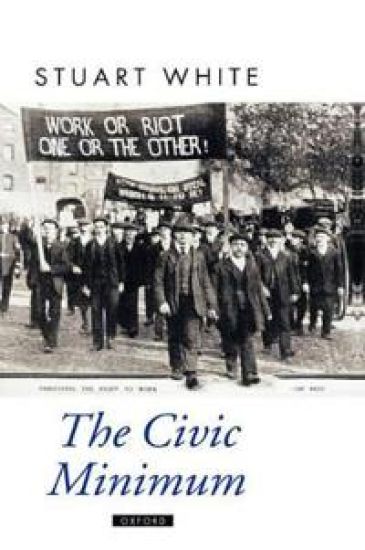
Many governments today are engaged in far-reaching programs of 'welfare reform'. But what would a just program of welfare reform consist in? Is the current emphasis on linking welfare 'rights' to 'responsibilities' justifiable? In this book, Stuart White reconsiders the principles of economic citizenship appropriate to a democratic society, and explores the radical implications of these principles for public policy. According to White, justice demands that economic cooperation satisfy a standard of 'fair reciprocity'. Against a background of institutions that are sufficiently just in other respects, those citizens who share in the social product have an obligation to make a productive contribution back to the community in return: every citizen should 'do her bit'. While prominent in the work of many past egalitarian thinkers, this duty to contribute has not received much attention in recent political theory. White seeks to redress this neglect, and to show why and how the claims of reciprocity should be integrated with other important concerns that have featured more prominently in recent literature. These include the concerns to prevent brute luck disadvantage and economic vulnerability. From the standpoint of fair reciprocity, it is not necessarily unjust to link welfare rights with the performance of work-related responsibilities. But the justice of such a linkage depends on how far economic institutions meet other requirements of justice. In policy terms, fair reciprocity thus calls for a generous 'civic minimum' in which work-related welfare benefits are complemented by other policies designed to prevent poverty and vulnerability, secure opportunity for meaningful work, and eliminate class-based inequalities in educational opportunity and inherited wealth. In concluding, White contests the fashionable view that egalitarian reform is unfeasible in contemporary circumstances. The philosophy of fair reciprocity provides the basis for a new public conversation about economic citizenship, in which all citizens - not just those currently amongst the welfare poor - are encouraged to confront their responsibility to others.
Fundamentals of Perioperative Management
David Green; Max Ervine; Stuart White
Greenwich Medical Media Ltd
2002
pokkari
This new title provides a concise, one-stop reference for anaesthetic trainees, surgical trainees and medical undergraduates, on the key topics in modern perioperative patient management, including detailed coverage of the essential physiological and pharmacological principles underlying basic perioperative skills. Essential topics such as antibiotics, fluid balance, DVT prophylaxis, pain management, drug pharmacology and respiratory failure, to name but a few, are all covered in detail, and in each case their effect on perioperative management is emphasised.