Kirjojen hintavertailu – 12 859 818 kirjaa ja 27 kauppaa

Kirjailija

Stylianos Papathanassopoulos

Kirjat ja teokset yhdessä paikassa: 8 kirjaa, julkaisuja vuosilta 1991–2011, suosituimpiin kuuluu The Professionalisation of Political Communication. Vertaile teosten hintoja ja tarkista saatavuus suomalaisista kirjakaupoista.

8 kirjaa

Kirjojen julkaisuvuodet: 1991–2011.

The Professionalisation of Political Communication

The Professionalisation of Political Communication

Ralph Negrine; Christina Holtz-Bacha; Stylianos Papathanassopoulos

Intellect Books
2007
nidottu
Has the communication of politics become professionalised? Who are the ‘professionals’ and what part do they play in the political process? Can the process of professionalisation be observed in different political systems? These, and related questions, about the changing nature of practices in political communication are explored in this book that looks at developments across a number of different countries. The different ways in which the idea of the professionalisation of political communication has been commonly used is explored and the authors develop a framework for understanding changing practices in political communication and in different contexts, for example, in respect of political campaigns and elections in general, and in respect of communication by governments. It is also focuses on these same themes in specific countries: Germany, France, Britain, Greece, the Netherlands, Hungary, Italy, Sweden.
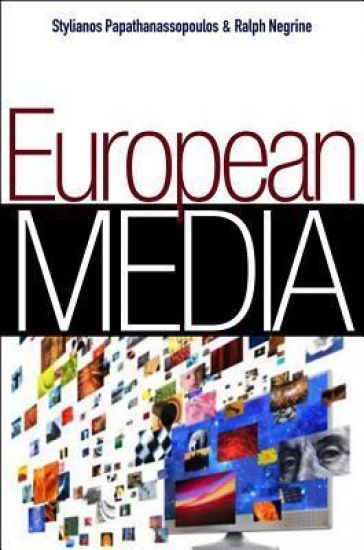
European Media

European Media

Stylianos Papathanassopoulos; Ralph M. Negrine

Polity Press
2011
nidottu
European Media provides a clear, concise account of the structures, dynamics and realities of the changing face of media in Europe. It offers a timely and illuminating appraisal of the issues surrounding the development of new media in Europe and explores debates about the role of the media in the formation of a European public sphere and a European identity. The book argues that Europe offers an ideal context for examining interactions between global, regional and national media processes and its individual chapters consider: the changing structure of the European media; the development of new media; the Europeanization of the media in the region; the challenges for the content; and audiences. Special emphasis is given to the transformation of political communication in Europe and the alleged emergence of a European public sphere and identity. European Media: Structures, Politics and Identity is an invaluable text for courses on media and international studies as well as courses dealing with European and national policy studies. It is also helpful to students, researchers and professionals in the media sector since it combines hard facts with theoretical insight.
European Media

European Media

Stylianos Papathanassopoulos; Ralph M. Negrine

Polity Press
2011
sidottu
European Media provides a clear, concise account of the structures, dynamics and realities of the changing face of media in Europe. It offers a timely and illuminating appraisal of the issues surrounding the development of new media in Europe and explores debates about the role of the media in the formation of a European public sphere and a European identity. The book argues that Europe offers an ideal context for examining interactions between global, regional and national media processes and its individual chapters consider: the changing structure of the European media; the development of new media; the Europeanization of the media in the region; the challenges for the content; and audiences. Special emphasis is given to the transformation of political communication in Europe and the alleged emergence of a European public sphere and identity. European Media: Structures, Politics and Identity is an invaluable text for courses on media and international studies as well as courses dealing with European and national policy studies. It is also helpful to students, researchers and professionals in the media sector since it combines hard facts with theoretical insight.
Communications Policy

Communications Policy

Stylianos Papathanassopoulos; Ralph Negrine

Red Globe Press
2010
sidottu
Culture, politics, economics and technology all impact upon policy decisions. To investigate the factors that influence communications policy, however, one has to go beyond conventional views of media and communication studies and combine these with policy studies. Communications Policy: Theories and Issues utilizes new research to highlight key debates and developments, and addresses a broad spectrum of contemporary concerns regarding the structure and the organization of communications systems in the past, present and future. Combining theoretical analysis with empirical research findings, this comprehensive text explores the contemporary theories and issues in communications policy that affect all democratic societies as they seek to address the challenges of emerging information and communications technologies. Featuring contributions from distinguished authors across a range of media disciplines, Communications Policy introduces challenging ideas about how communications should be structured in the future and is essential reading for all policy makers, researchers and students of communications policy. Editors: Stylianos Papathanassopoulos is Professor in Media Organization at the Faculty of Communication and Media Studies at the National and Kapodistrian University of Athens. He is the author of Television in the 21st Century (2005), Media and Politics (2004) and European Television in the Digital Age: Issues, Dynamics and Realities (2002). Ralph Negrine is Professor of Political Communication in the Journalism Studies Department at the University of Sheffield. His previous books include The Transformation of Political Communication (Palgrave, 2008), Television and the Press Since 1945 (1999) and The Communication of Politics (1996). Contributors: Bram Abramson, Johannes M. Bauer, Sandra Braman, Dom Caristi, Alistair Duff, Gisela Gil-Egui, Alison Harcourt, Jackie Harrison, Robert W. McChesney, Serge Proulx, Marc Raboy, Concetta M. Stewart, Yan Tian and Roxanne Welters.
Communications Policy

Communications Policy

Stylianos Papathanassopoulos; Ralph Negrine

Red Globe Press
2010
nidottu
Culture, politics, economics and technology all impact upon policy decisions. To investigate the factors that influence communications policy, however, one has to go beyond conventional views of media and communication studies and combine these with policy studies. Communications Policy: Theories and Issues utilizes new research to highlight key debates and developments, and addresses a broad spectrum of contemporary concerns regarding the structure and the organization of communications systems in the past, present and future. Combining theoretical analysis with empirical research findings, this comprehensive text explores the contemporary theories and issues in communications policy that affect all democratic societies as they seek to address the challenges of emerging information and communications technologies. Featuring contributions from distinguished authors across a range of media disciplines, Communications Policy introduces challenging ideas about how communications should be structured in the future and is essential reading for all policy makers, researchers and students of communications policy. Editors: Stylianos Papathanassopoulos is Professor in Media Organization at the Faculty of Communication and Media Studies at the National and Kapodistrian University of Athens. He is the author of Television in the 21st Century (2005), Media and Politics (2004) and European Television in the Digital Age: Issues, Dynamics and Realities (2002). Ralph Negrine is Professor of Political Communication in the Journalism Studies Department at the University of Sheffield. His previous books include The Transformation of Political Communication (Palgrave, 2008), Television and the Press Since 1945 (1999) and The Communication of Politics (1996). Contributors: Bram Abramson, Johannes M. Bauer, Sandra Braman, Dom Caristi, Alistair Duff, Gisela Gil-Egui, Alison Harcourt, Jackie Harrison, Robert W. McChesney, Serge Proulx, Marc Raboy, Concetta M. Stewart, Yan Tian and Roxanne Welters.
European Television in the Digital Age

European Television in the Digital Age

Stylianos Papathanassopoulos

Polity Press
2002
sidottu
European Television in the Digital Age traces the development of digital television and provides a clear, concise account of the dynamics and realities of the changing face of television in Europe. The book synthesizes an array of empirical research and case study work, summarizes theoretical arguments, and provides an up-to-date analysis of the European audiovisual landscape. The author offers a timely appraisal of the key issues surrounding digital television in Europe today and outlines the likely future trends. Papathanassopoulos considers the problems associated with the new digital developments in Western Europe, the effects of the deregulation of European television, the economies of the new era and the issue of consolidation in the media industries. He also examines the future of public broadcasters, the role of the European Union and the impact of television in political communication. Special emphasis is given to the emergence and the effect of thematic channels, particularly on news, sports, music and children's programming. European Television in the Digital Age is an invaluable textbook for students on courses in media and communication, European studies and national policy studies. It will also be a useful source for researchers and professionals in the field.
European Television in the Digital Age

European Television in the Digital Age

Stylianos Papathanassopoulos

JOHN WILEY AND SONS LTD
2002
nidottu
European Television in the Digital Age traces the development of digital television and provides a clear, concise account of the dynamics and realities of the changing face of television in Europe. The book synthesizes an array of empirical research and case study work, summarizes theoretical arguments, and provides an up-to-date analysis of the European audiovisual landscape. The author offers a timely appraisal of the key issues surrounding digital television in Europe today and outlines the likely future trends. Papathanassopoulos considers the problems associated with the new digital developments in Western Europe, the effects of the deregulation of European television, the economies of the new era and the issue of consolidation in the media industries. He also examines the future of public broadcasters, the role of the European Union and the impact of television in political communication. Special emphasis is given to the emergence and the effect of thematic channels, particularly on news, sports, music and children's programming. European Television in the Digital Age is an invaluable textbook for students on courses in media and communication, European studies and national policy studies. It will also be a useful source for researchers and professionals in the field.
The Democracy Gap

The Democracy Gap

Jill Hills; Stylianos Papathanassopoulos

Praeger Publishers Inc
1991
sidottu
This work examines the political choices that surround the new technologies of telecommunications and broadcasting, and focuses on the essential issues of who determines how they are implemented and why, as well as who benefits from them. In its study of the distributional potential of these technologies, the book concentrates on the political and economic interests that are in conflict over the possibilities, and, in particular, on the ways in which the American and European governments have attempted to innovate, organize, and control information technology, telecommunications, and broadcasting. The technological innovation backed by industrialized governments, the authors contend, has largely served political and military interests rather than those of the general population. Written from the perspective of the individual citizen, the book argues that the emphasis by governments on industrial leadership has preempted concern for access, information, and accountability. Among the issues discussed are the impact that the globalization of industry is having on national sovereignty; the evolution of three international trading blocs through the standardization of high definition television and digital networks; the politics of cable and satellite transmission; and the convergence of broadcasting and telecommunications. This work offers a unique linkage between telecommunications, broadcasting, and information technology, and it argues that governments have lost sight of the informational underpinnings of the democratic process. Students of politics, international relations, political economy, and media studies will find this book to be an invaluable resource.