
Kirjailija
Sudhir Hazareesingh
Kirjat ja teokset yhdessä paikassa: 15 kirjaa, julkaisuja vuosilta 1991–2026, suosituimpiin kuuluu Daring to be Free. Vertaile teosten hintoja ja tarkista saatavuus suomalaisista kirjakaupoista.
15 kirjaa
Kirjojen julkaisuvuodet: 1991–2026.
Daring to Be Free: Rebellion and Resistance of the Enslaved in the Atlantic World
Sudhir Hazareesingh
Farrar, Straus and Giroux
2025
sidottu
A revelatory history of enslaved people's resistance and self-emancipation, across the Atlantic world and beyond. The ending of the slave trade and the abolition of slavery by European powers during the nineteenth century is generally told as the work of enlightened liberals. Sudhir Hazareesingh turns this narrative on its head, showing the extraordinary degree to which the enslaved resisted their oppressors and emancipated themselves. Daring to Be Free portrays the struggle for liberation from the perspective of the enslaved and, wherever possible, in their own words. It shines a light on the lives of revolutionaries like Toussaint Louverture, Nat Turner, and the pregnant mutineer Solitude; freed writers of narrative accounts like Frederick Douglass; and the countless rebels, insurgents, and conspirators. Hazareesingh gives particular emphasis to the role of powerful women as campaigners, warriors, and disrupters. Drawing on both written archives and oral history, the book traces the networks of cooperation that connected runaway settlements and rebellions from Haiti, Jamaica, Brazil, and Cuba to Mauritius and the United States. It shows how the struggle for freedom was shaped less by Western Enlightenment ideals than by spiritual, martial, and religious influences from the lives of the enslaved in Africa before the Middle Passage. Daring to Be Free reshapes our understanding of Atlantic slavery by portraying how enslaved lives were defined not by their dehumanization at the hands of colonialists and slavers but by their own resilience, rebellion, and commitment to emancipation.
The ending of the slave trade and abolition of slavery by European powers during the 19th century is generally told as the work of enlightened liberals fighting against entrenched slaving interests in Africa, the Caribbean, and European capitals. Sudhir Hazareesingh here turns this narrative on its head, showing how the enslaved resisted their oppressors from the earliest years of the Atlantic slave trade in the 16th century until the abolition of slavery in the United States in 1865, and how this opposition was the driving force for change. Daring To Be Free portrays the struggle for liberation from the perspective of the enslaved, wherever possible in their own words. It shines a light on the lives of revolutionaries like Toussaint Louverture, José Antonio Aponte, Nat Turner, and the pregnant rebel Solitude; freed writers of narrative accounts like Frederick Douglass and Ottobah Cugoano; and the countless maroons, insurgents and conspirators whose acts of defiance destabilised the slave order in the colonies and galvanized the movement for abolition in France, Britain, and the United States. Hazareesingh gives particular emphasis to the powerful roles of women as campaigners, disruptors and warriors. Drawing on written archives and oral history, as well as a rich body of secondary sources, the book traces the networks of cooperation that connected runaway settlements, covert rebellions and organized uprisings from Haiti, Jamaica, Brazil and Cuba to Mauritius and the United States. It shows us how the struggle for liberty was shaped not only by western Enlightenment ideals but by the spiritual, martial, and religious influences from the lives of the enslaved in Africa before the Middle Passage – and by the inspiring example of Haiti, the first successful anticolonial revolution and the first independent black state, which echoed down the 19th century. Daring To Be Free reshapes our understanding of Atlantic slavery by portraying how enslaved lives were defined not by their dehumanisation at the hands of colonialists and slavers but by their own resilience, solidarity, and commitment to freedom. It also examines the afterlife of the slave trade in contemporary discussions about the legacy of slavery and possibilities for redress, reparations, and memorial in our own time.

The definitive modern biography of the great slave leader, military genius and revolutionary hero Toussaint LouvertureThe Haitian Revolution began in the French Caribbean colony of Saint-Domingue with a slave revolt in August 1791, and culminated a dozen years later in the proclamation of the world's first independent black state. After the abolition of slavery in 1793, Toussaint Louverture, himself a former slave, became the leader of the colony's black population, the commander of its republican army and eventually its governor. During the course of his extraordinary life he confronted some of the dominant forces of his age - slavery, settler colonialism, imperialism and racial hierarchy. Treacherously seized by Napoleon's invading army in 1802, this charismatic figure ended his days, in Wordsworth's phrase, 'the most unhappy man of men', imprisoned in a fortress in France. Black Spartacus draws on a wealth of archival material, much of it overlooked by previous biographers, to follow every step of Louverture's singular journey, from his triumphs against French, Spanish and British troops to his skilful regional diplomacy, his Machiavellian dealings with successive French colonial administrators and his bold promulgation of an autonomous Constitution. Sudhir Hazareesingh shows that Louverture developed his unique vision and leadership not solely in response to imported Enlightenment ideals and revolutionary events in Europe and the Americas, but through a hybrid heritage of fraternal slave organisations, Caribbean mysticism and African political traditions. Above all, Hazareesingh retrieves Louverture's rousing voice and force of personality, making this the most engaging, as well as the most complete, biography to date. After his death in the French fortress, Louverture became a figure of legend, a beacon for slaves across the Atlantic and for generations of European republicans and progressive figures in the Americas. He inspired the anti-slavery campaigner Frederick Douglass, the most eminent nineteenth-century African-American; his emancipatory struggle was hailed by those who defied imperial and colonial rule well into the twentieth. In the modern era, his life informed the French poet Aimé Césaire's seminal idea of négritude and has been celebrated in a remarkable range of plays, songs, novels and statues. Here, in all its drama, is the epic story of the world's first black superhero.
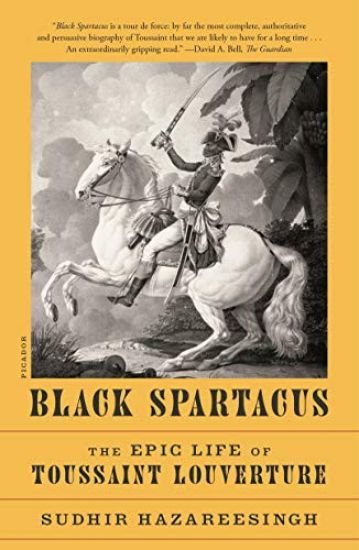
Winner of the 2021 Wolfson History Prize"Black Spartacus is a tour de force: by far the most complete, authoritative and persuasive biography of Toussaint that we are likely to have for a long time . . . An extraordinarily gripping read." --David A. Bell, The GuardianA new interpretation of the life of the Haitian revolutionary Toussaint Louverture Among the defining figures of the Age of Revolution, Toussaint Louverture is the most enigmatic. Though the Haitian revolutionary's image has multiplied across the globe--appearing on banknotes and in bronze, on T-shirts and in film--the only definitive portrait executed in his lifetime has been lost. Well versed in the work of everyone from Machiavelli to Rousseau, he was nonetheless dismissed by Thomas Jefferson as a "cannibal." A Caribbean acolyte of the European Enlightenment, Toussaint nurtured a class of black Catholic clergymen who became one of the pillars of his rule, while his supporters also believed he communicated with vodou spirits. And for a leader who once summed up his modus operandi with the phrase "Say little but do as much as possible," he was a prolific and indefatigable correspondent, famous for exhausting the five secretaries he maintained, simultaneously, at the height of his power in the 1790s. Employing groundbreaking archival research and a keen interpretive lens, Sudhir Hazareesingh restores Toussaint to his full complexity in Black Spartacus. At a time when his subject has, variously, been reduced to little more than a one-dimensional icon of liberation or criticized for his personal failings--his white mistresses, his early ownership of slaves, his authoritarianism --Hazareesingh proposes a new conception of Toussaint's understanding of himself and his role in the Atlantic world of the late eighteenth century. Black Spartacus is a work of both biography and intellectual history, rich with insights into Toussaint's fundamental hybridity--his ability to unite European, African, and Caribbean traditions in the service of his revolutionary aims. Hazareesingh offers a new and resonant interpretation of Toussaint's racial politics, showing how he used Enlightenment ideas to argue for the equal dignity of all human beings while simultaneously insisting on his own world-historical importance and the universal pertinence of blackness--a message which chimed particularly powerfully among African Americans. Ultimately, Black Spartacus offers a vigorous argument in favor of "getting back to Toussaint"--a call to take Haiti's founding father seriously on his own terms, and to honor his role in shaping the postcolonial world to come. Shortlisted for the Baillie Gifford Prize Finalist for the PEN / Jacqueline Bograd Weld Award for BiographyNamed a best book of the year by the The Economist Times Literary Supplement New Statesman
WINNER OF THE GRAND PRIX DU LIVRE D'IDÃ? ESThe French: serious and frivolous, charming and infuriating, rational and mystical, pessimistic, pleasure-loving - and perhaps more than any other people, intellectual. This original and entertaining book shows exactly what makes the French so ... French.

From Subject to Citizen offers an original account of the Second Empire (1852-1870) as a turning point in modern French political culture: a period in which thinkers of all political persuasions combined forces to create the participatory democracy alive in France today. Here Sudhir Hazareesingh probes beyond well-known features of the Second Empire, its centralized government and authoritarianism, and reveals the political, social, and cultural advances that enabled publicists to engage an increasingly educated public on issues of political order and good citizenship. He portrays the 1860s in particular as a remarkably intellectual decade during which Bonapartists, legitimists, liberals, and republicans applied their ideologies to the pressing problem of decentralization. Ideals such as communal freedom and civic cohesion rapidly assumed concrete and lasting meaning for many French people as their country entered the age of nationalism. With the restoration of universal suffrage for men in 1851, constitutionalist political ideas and values could no longer be expressed within the narrow confines of the Parisian elite. Tracing these ideas through the books, pamphlets, articles, speeches, and memoirs of the period, Hazareesingh examines a discourse that connects the central state and local political life. In a striking reappraisal of the historical roots of current French democracy, he ultimately shows how the French constructed an ideal of citizenship that was "local in form but national in substance." Originally published in 1998. The Princeton Legacy Library uses the latest print-on-demand technology to again make available previously out-of-print books from the distinguished backlist of Princeton University Press. These editions preserve the original texts of these important books while presenting them in durable paperback and hardcover editions. The goal of the Princeton Legacy Library is to vastly increase access to the rich scholarly heritage found in the thousands of books published by Princeton University Press since its founding in 1905.

From Subject to Citizen offers an original account of the Second Empire (1852-1870) as a turning point in modern French political culture: a period in which thinkers of all political persuasions combined forces to create the participatory democracy alive in France today. Here Sudhir Hazareesingh probes beyond well-known features of the Second Empire, its centralized government and authoritarianism, and reveals the political, social, and cultural advances that enabled publicists to engage an increasingly educated public on issues of political order and good citizenship. He portrays the 1860s in particular as a remarkably intellectual decade during which Bonapartists, legitimists, liberals, and republicans applied their ideologies to the pressing problem of decentralization. Ideals such as communal freedom and civic cohesion rapidly assumed concrete and lasting meaning for many French people as their country entered the age of nationalism. With the restoration of universal suffrage for men in 1851, constitutionalist political ideas and values could no longer be expressed within the narrow confines of the Parisian elite. Tracing these ideas through the books, pamphlets, articles, speeches, and memoirs of the period, Hazareesingh examines a discourse that connects the central state and local political life. In a striking reappraisal of the historical roots of current French democracy, he ultimately shows how the French constructed an ideal of citizenship that was "local in form but national in substance." Originally published in 1998. The Princeton Legacy Library uses the latest print-on-demand technology to again make available previously out-of-print books from the distinguished backlist of Princeton University Press. These editions preserve the original texts of these important books while presenting them in durable paperback and hardcover editions. The goal of the Princeton Legacy Library is to vastly increase access to the rich scholarly heritage found in the thousands of books published by Princeton University Press since its founding in 1905.

In contemporary France, Charles de Gaulle has become a figure of legend, consistently acclaimed as the nation's pre-eminent "historical" figure. But paradoxes abound. For one, his personal popularity sits oddly with his social origins and professional background. Neither the nobility, nor the Catholic Church, nor the Army is particularly well-regarded in France today, as they are seen to represent antiquated traditions and values. So why, then, do the French nonetheless identify with, celebrate, and even revere this austere and devout nobleman, who remained closely wedded to military values throughout his life? The Shadow of the General resolves this mystery and explains how de Gaulle has come to occupy such a privileged position in the French imagination. Sudhir Hazareesingh's story of how an individual life was transformed into national myth also tells a great deal about the French collective self in the twenty-first century: its fractured memory, its aspirations to greatness, and its manifold anxieties. Indeed, alongside the tale of de Gaulle's legacy, the author unfolds a much broader narrative: the story of modern France.

In this innovative study of French political culture, the author re-examines the origins of modern republicanism through the writings and political practices of five key nineteenth-century intellectuals: Jules Barni, Charles Dupont-White, Emile Littré, Eugène Pelletan, and Etienne Vacherot. Drawing on a range of archival and published sources this study explores the transformation of republican ideology, and stresses the continuing influences of Saint-Simonism, socialism, doctrinaire liberalism, and neo-Kantianism on republican thinking during this period. The book sheds new light on French republican conceptions of good citizenship, the meaning of patriotism, the role of the state, the value of individual liberty, and the place of education and religion in public and private life. Offering challenging insights into modern French politics as well as the history of political thought, Intellectual Founders of the Republic opens up new perspectives on republican ideology and political practice.
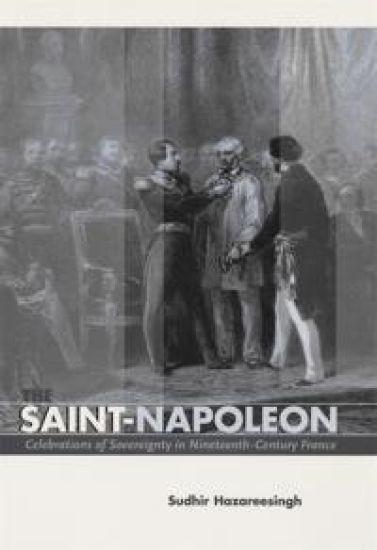
In 1852, President Louis Napoleon of France declared that August 15--Napoleon Bonaparte's birthday--would be celebrated as France's national day. Leading up to the creation of the Second Empire, this was the first in a series of attempts to "Bonapartize" his regime and strengthen its popular legitimacy. Across France, public institutions sought to draw local citizens together to celebrate civic ideals of unity, order, and patriotism. But the new sense of French togetherness was fraught with tensions. Drawing on a wealth of archival evidence, Sudhir Hazareesingh vividly reconstructs the symbolic richness and political complexity of the Saint-Napoleon festivities in a work that opens up broader questions about the nature of the French state, unity and lines of fracture in society, changing boundaries between public and private spheres, and the role of myth and memory in constructing nationhood. The state's Bonapartist identity was at times vigorously contested by local social, political, and religious groups. In various regions, people used the national day to celebrate their own communities and to honor their hometown veterans; but elsewhere, the revival of republican sentiment clashed sharply with imperial attitudes. Sophisticated and gracefully written, this book offers rich insights into modern French history and culture.

This innovative study of French political culture re-examines the origins of modern republicanism through the lives and political thought of five nineteenth-century intellectuals: Jules Barni, Charles Dupont-White, Emile Littré, Eugène Pelletan, and Etienne Vacherot. By their writings and their political practices at the local, national, international levels these thinkers made major contributions to the founding of the new republican order in France. Drawing on a range of archival and published sources, the book sheds new light on classical republican thinking on such key issues as the interpretation of the 1789 Revolution, the definition of citizenship, the meaning of patriotism, the relationship between central government and local democracy, the value of individual liberty, and the place of education and religion in publica and private life. These five studies also break new ground in the conceptualization of nineteenth-century French intellectual history. The writings of these thinkers demonstrate the ideological pluralism and diversity of moderate French republican thought during this period. Positivism appears as an important and influential doctrine, but its hegemonic aspirations were successfully resisted by the abiding incluences of Saint-Simonism, socialism, doctrinaire liberalism, and neo-Kantianism. It emerges that the ideological potency of republican doctrine lay in its complexity and sophistication, as reflected in its capacity to effect a synthesis among these different approaches. Through its analysis of the writings and political practices of these five thinkers Intellectual Founders of the Republic offers critical insights into the history of political thought as well as modern French republicanism. It underlines both the significance of contextuality in the interpretation of political discourse, and the continuing relevance of classical republicanism in making sense of contemporary moral and political dilemmas.
This book provides an integrated account of French political experience, explaining three key features: the role of political ideas, the nature of political movements, and the significance of history in creating and sustaining divisions among political groups. It has chapters on the roles of intellectuals, the ideologies of republicanism, clericalism, and nationalism, and the functions of the state. The last four chapters examine the political traditions of liberalism, socialism, Gaullism, and Communism.

Examining the emergence and subsequent demise of intellectual identification with the French Communist Party between 1945 and 1989, Sudhir Hazareesingh argues that, after 1978, political conflicts between the Communist leadership and party intellectuals led to an erosion of support. These conflicts were sharpened by the party's institutional decline during the 1980s. Dr Hazareesingh links these internal factors with wider ideological changes during the 1970s and 1980s: the decreasing relevance of class-based politics, the explosion of the myth of radical change, the reconsideration of the goals of political commitment, and, finally, the rejection of the Soviet model, all contributed significantly to an altered political climate. Based on a critical examination of the available literature, in both French and English, this systematic exploration of the role of intellectuals in French politics also explains why this social group has been so prominent in public life throughout the modern era.