Kirjojen hintavertailu – 12 859 829 kirjaa ja 27 kauppaa

Kirjailija

Sudhir Kakar

Kirjat ja teokset yhdessä paikassa: 15 kirjaa, julkaisuja vuosilta 1991–2026, suosituimpiin kuuluu The Inner World. Vertaile teosten hintoja ja tarkista saatavuus suomalaisista kirjakaupoista.

15 kirjaa

Kirjojen julkaisuvuodet: 1991–2026.

The Inner World

The Inner World

Sudhir Kakar

OUP India
2026
Nidottu
Feelings, impulses, wishes, and fantasies-the dynamic content of the inner world-occupy the deepest recesses of the psyche. It is through introspection and empathy, essential to psychotherapy, that the outside observer can grasp the meaning of the inner world of an individual. First published in 1978, The Inner World is an inquiry into the development of Indian identity. It examines the network of social roles, traditional values, and customs with which the threads of Indian psychological development are interwoven and, in doing so, reveals important aspects of Indian society, myths, rituals, fables, and arts. Hailed by critics globally as the best application of psychoanalysis to Indian culture, this Oxford India Perennials edition of The Inner World includes a new Prologue situating the work in the contemporary scenario.
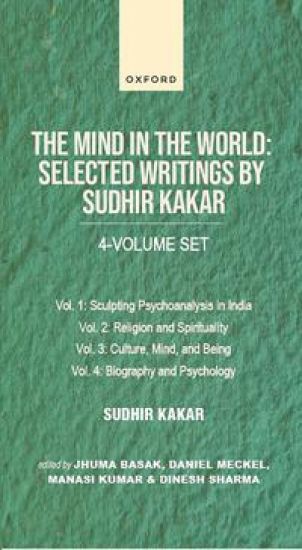
The Mind in the World

The Mind in the World

Sudhir Kakar

OUP INDIA
2025
sidottu
The four volumes cover Sudhir Kakar's selected writings on psychoanalysis, culture and society, and religion and biography over the last four decades. As the 'psychoanalyst of civilizations', Kakar uniquely captures wide swathes of Indian cultural imagination through his essays. The first volume unfolds his psychoanalytic journey comprising both his theoretical innovations and clinical speculations. It recounts his personal travelogue in psychoanalysis that gave birth to the later macro spectrum of his analytic explorations into the concept of maternal enthralment, Oedipal alliance, and spiritual healing traditions. Kakar's thinking from his earliest works to the most recent is traced in the four sections of the second volume: Hinduism and psychoanalysis; psychoanalytic and spiritual healing in India; violence, self, and the sacred; and spirit and psyche. The third focusses on Kakar's original contributions on culture and society and maps the landscape of Indian cultural imagination from multiple vantage points, thus demonstrating Kakar's dynamism as a prominent, deep, and fierce Indian thinker who has combined Western philosophical thinking with critical Indian cultural thinking. The fourth volume presents psychological biographies to advance the claim that the study of life narratives across cultures needs to be pursued, especially in the era of globalization and increased cross-cultural exchange and connectivity.
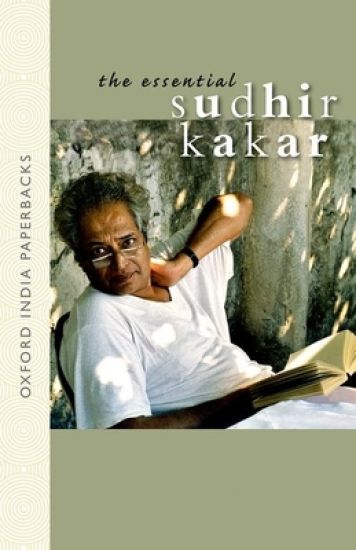
The Essential Sudhir Kakar OIP

The Essential Sudhir Kakar OIP

Sudhir Kakar

OUP India
2021
nidottu
The fifteen essays included in this volume celebrate three streams of knowledge-psychoanalysis, culture, and religion-and their confluence in Kakar's work. From the role of empathy in psychoanalysis, male-female relationships, and Indian sexuality to modern mysticism, religious conflict, Hindu childhood, and the significance of imagination-these writings represent a breakthrough in Indian social consciousness and indigenous knowledge systems. In the Preface, Ramin Jahanbegloo looks at the depth and influence of Kakar's ideas, while the Introduction by Manasi Kumar critically comments on how Kakar's ideas fit the larger context of psychoanalytic theory and culture. An interesting inclusion is a conversation between Sudhir Kakar and Madhu Sarin which explores the evolution of Kakar's relationship with psychoanalysis-from being influenced by psychoanalysis to playing a formative role in the psychoanalytic culture in India.
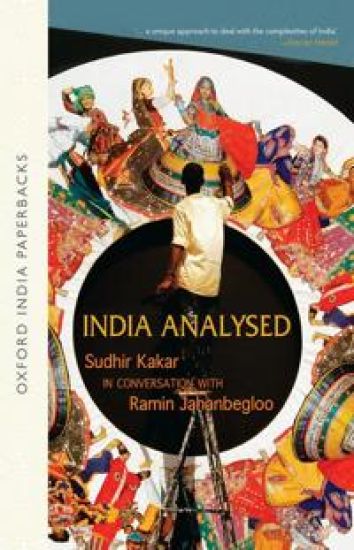
India Analysed

India Analysed

Sudhir Kakar; Ramin Jahanbegloo

OUP India
2015
nidottu
Flowing effortlessly from Sudhir Kakar's descriptions of his early life in undivided India to discussions on the Indian psyche and sexuality, India Analysed discusses Kakar's views on secularism and modern Indian leaders such as Gandhi and Nehru wherein he brings to bear his intellect on a wide range of issues such as philosophy, Indian culture and tradition, and the Partition, and, in doing so, reveals the psychological make-up of the contemporary Indian. Part of Ramin Jahanbegloo's series of interviews with prominent intellectuals who have influenced modern Indian thought, this candid and freewheeling conversation demystifies many of the complex ideas of the eminent psychoanalyst Sudhir Kakar.
Mad and Divine

Mad and Divine

Sudhir Kakar

University of Chicago Press
2009
sidottu
Sudhir Kakar, India's foremost practitioner of psychoanalysis, has focused his career on infusing this preeminently Western discipline with ideas and views from the East. In "Mad and Divine", he takes on the separation of the spirit and the body favored by psychoanalysts, cautioning that a single-minded focus on the physical denies a person's wholeness. Similarly, Kakar argues, to focus on the spirit alone is to hold in contempt the body that makes us human. "Mad and Divine" looks at the interplay between spirit and psyche and the moments of creativity and transformation that occur when the spirit overcomes desire and narcissism. Kakar examines this relationship in religious rituals and healing traditions - both Eastern and Western - as well as in the lives of some extraordinary men: the mystic and guru Rajneesh, Gandhi, and the Buddhist saint Drukpa Kunley. Enriched with a novelist's felicity of language and an analyst's piercing insights and startling interpretations, "Mad and Divine" is a valuable addition to the literature on the integration of the spirit and psyche in the evolving psychology of the individual.
The Seeker

The Seeker

Sudhir Kakar

Trumpeter
2007
nidottu
With India's independence movement in disarray and with the country wracked by factionalism and unrest, Mahatma Gandhi withdraws from society to an ashram, but his quest for peace and enlightenment is interrupted by the arrival of Madeline Slade, the daughter of a British admiral, who aims to become his greatest disciple. Original. 20,000 first printing.
The Colors of Violence

The Colors of Violence

Sudhir Kakar

University of Chicago Press
1996
sidottu
For decades India has been the scene of outbursts of religious violence, thrusting many ordinary Hindus and Muslims into bloody conflict. This work analyzes the psychological roots of Hindu-Muslim violence and examines the subjective experience of religious hatred in the author's native land. Sudhir Kakar discusses the profoundly enigmatic relations that link individual egos to cultural moralities and religious violence. His psychological approach offers a framework for understanding the kind of ethnic-religious conflict that characterizes the turmoil in India. Using case studies, he explores cultural stereotypes, religious antagonisms, ethnocentric histories and episodic violence to trace the development of both Hindu and Muslim psyches. Kakar argues that in early childhood the social identity of every Indian is grounded in traditional religious identifications and communalism. Together these bring about deep-set psychological anxieties and animosities toward the other. For Hindus and Muslims alike, violence becomes morally acceptable when communally and religiously sanctioned. As the changing pressures of modernization and secularism in a multicultural society grate at this entrenched communalism, and as each group vies for power, ethnic-religious conflicts ignite. Sudhir Kakar is also the author of "The Analyst and the Mystic: Psychoanalytic Reflections on Religion and Mysticism", "Intimate Relations: Exploring Indian Sexuality" and "Shamans, Mystics and Doctors: A Psychological Inquiry into India and its Healing Traditions", all published by the University of Chicago Press.
The Colors of Violence

The Colors of Violence

Sudhir Kakar

University of Chicago Press
1996
nidottu
For decades India has been the scene of outbursts of religious violence, thrusting many ordinary Hindus and Muslims into bloody conflict. This work analyzes the psychological roots of Hindu-Muslim violence and examines the subjective experience of religious hatred in the author's native land. Sudhir Kakar discusses the profoundly enigmatic relations that link individual egos to cultural moralities and religious violence. His psychological approach offers a framework for understanding the kind of ethnic-religious conflict that characterizes the turmoil in India. Using case studies, he explores cultural stereotypes, religious antagonisms, ethnocentric histories and episodic violence to trace the development of both Hindu and Muslim psyches. Kakar argues that in early childhood the social identity of every Indian is grounded in traditional religious identifications and communalism. Together these bring about deep-set psychological anxieties and animosities toward the other. For Hindus and Muslims alike, violence becomes morally acceptable when communally and religiously sanctioned. As the changing pressures of modernization and secularism in a multicultural society grate at this entrenched communalism, and as each group vies for power, ethnic-religious conflicts ignite. Sudhir Kakar is also the author of "The Analyst and the Mystic: Psychoanalytic Reflections on Religion and Mysticism", "Intimate Relations: Exploring Indian Sexuality" and "Shamans, Mystics and Doctors: A Psychological Inquiry into India and its Healing Traditions", all published by the University of Chicago Press.
Shamans, Mystics and Doctors

Shamans, Mystics and Doctors

Sudhir Kakar

University of Chicago Press
1991
nidottu

Halvin toimitettuna 39,30 €

Sudhir Kakar, a psychoanalyst and scholar, brilliantly illuminates the ancient healing traditions of India embodied in the rituals of shamans, the teachings of gurus, and the precepts of the school of medicine known as Ayurveda. With extraordinary sympathy, open-mindedness, and insight Sudhir Kakar has drawn from both his Eastern and Western backgrounds to show how the gulf that divides native healer from Western psychiatrist can be spanned.--Rosemary Dinnage, New York Review of BooksEach chapter describes the geographical and cultural context within which the healers work, their unique approach to healing mental illness, and . . . the philosophical and religious underpinnings of their theories compared with psychoanalytical theory.--Choice