
Kirjailija
Sue Branford
Kirjat ja teokset yhdessä paikassa: 9 kirjaa, julkaisuja vuosilta 1995–2018, suosituimpiin kuuluu Brazil under the Workers Party. Vertaile teosten hintoja ja tarkista saatavuus suomalaisista kirjakaupoista.
9 kirjaa
Kirjojen julkaisuvuodet: 1995–2018.
In 2002, after a long political struggle, Lula was elected Brazil's first working class President amid huge expectations that he and the Workers' Party would bring much-needed reform. A great deal was achieved, including a dramatic reduction in poverty. But, just months before the staging of the World Cup in 2014, a series of social protests swept across the country. In 2015, further demonstrations erupted, with insistent calls for the impeachment--for corruption--of Lula's re-elected successor, President Dilma Rousseff. Brazil Under the Workers' Party, the first serious look at what went right--and what went wrong--during the 12 years of Workers' Party rule, tells a fascinating story of realpolitik, as Brazil's first ethical party uses the old corrupt ways of Brazil's dysfunctional political system to achieve real change and is then devoured by the political system it has failed to reform. An enthralling tale, of great significance for Latin America and the world, told by two experienced commentators on Brazil.
Faces of Latin America has sold more than 50,000 copies since it first appeared in 1991, and is widely considered to be the best available introduction in English to the economies, politics, demography, social structures, environment and cultures of Latin America. Duncan Green and Sue Branford take the reader beyond the conventional media's fixation on the drug trade, corrupt politicians and military leaders, death squads, and guerrilla movements to celebrate the vibrant history and culture of Latin America's people. Faces of Latin America examines some of the key forces--from conquest and the growth of the commodity trade, military rule, land distribution, industrialization, and migration to civil wars and revolutions, the debt crisis, neoliberalism, and NAFTA--shaping the region's political and social history. Green also analyzes the response to these transformations--the rise of freedom fighters and populists, guerrilla wars and grassroots social movements, union organizing and trade movements, liberation theology, and the women's movement, sustainable development and the fight for the rainforest, popular culture and the mass media--providing a fascinating and unparalleled portrait of the continent. This new edition is thoroughly updated and covers recent developments in Latin America such as the growing costs of export agriculture, the rise of Brazilian manufacturing, connections between the war on drugs and the war on terror, the social costs of neoliberalism, the Argentinian default, the search for new economic models in Venezuela and elsewhere, the decline in direct U. S. military intervention in the region, growing urbanization, urban poverty and casual employment, outmigration and the importance of family remittances from abroad, rampant environmental destruction, the struggles of indigenous movements, and more.
Faces of Latin America has sold more than 50,000 copies since it first appeared in 1991, and is widely considered to be the best available introduction in English to the economies, politics, demography, social structures, environment and cultures of Latin America. Duncan Green and Sue Branford take the reader beyond the conventional media's fixation on the drug trade, corrupt politicians and military leaders, death squads, and guerrilla movements to celebrate the vibrant history and culture of Latin America's people. Faces of Latin America examines some of the key forces--from conquest and the growth of the commodity trade, military rule, land distribution, industrialization, and migration to civil wars and revolutions, the debt crisis, neoliberalism, and NAFTA--shaping the region's political and social history. Green also analyzes the response to these transformations--the rise of freedom fighters and populists, guerrilla wars and grassroots social movements, union organizing and trade movements, liberation theology, and the women's movement, sustainable development and the fight for the rainforest, popular culture and the mass media--providing a fascinating and unparalleled portrait of the continent. This new edition is thoroughly updated and covers recent developments in Latin America such as the growing costs of export agriculture, the rise of Brazilian manufacturing, connections between the war on drugs and the war on terror, the social costs of neoliberalism, the Argentinian default, the search for new economic models in Venezuela and elsewhere, the decline in direct U. S. military intervention in the region, growing urbanization, urban poverty and casual employment, outmigration and the importance of family remittances from abroad, rampant environmental destruction, the struggles of indigenous movements, and more.
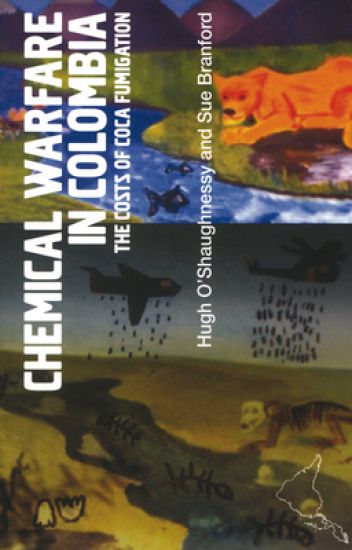
While the US wages the 'War on Terror' in the Middle East, it is conducting a terror campaign of its own closer to home. Chemical spraying is being used in Colombia as a deterrent and to destroy 'illicit' coca crops. But most people growing coca are poor campesinos with no alternatives to make a living. Whole towns, rivers, livestock and legitimate food crops have been sprayed and livelihoods destroyed by these US-administered fumigation programmes, backed by the Colombian state. Herbicides such as Glyphosate and Cosmo Flux are being used in high concentrations and sprayed from low-flying planes. The effects of heavy exposure to these chemicals on humans is still unknown. As O'Shaughnessy reveals, fumigation doesn't just harm people - farmers' livestock are being killed, and much of the area sprayed is rainforest - a fragile environment rich in diversity that is being poisoned by chemicals. This path-breaking book of investigative journalism lifts the veil on fumigation: why is it really happening, and who benefits? O'Shaughnessy travels to the Putumayo and Bolivar departments of Colombia, where most of the spraying takes place, talking to those affected. He draws a vivid and damning picture of a futile and indiscriminate chemical war, waged largely on the poor.

Politics Transformed
Sue Branford; Bernardo Kucinski; Hilary Wainwright
Latin America Bureau
2003
nidottu
Luiz Inacio Lula da Silva (Lula) became Latin America's first democratically elected socialist leaders since Salvador Allende on October 27, 2002. He achieved nearly 62 per cent of the vote, to become the first left-wing politician to win his country's presidency. But behind this victory for Lula and his Workers' party (Partido dos Trabalhadores, or PT) is a long and difficult struggle for ascendancy which began in the early 1980s. Written by a Brazilian academic and a British journalist who have long associations with the PT, this book tells the story of the PT's origins and electoral history, outlining the key politicians behind it, as well as their four subsequent tries for power.
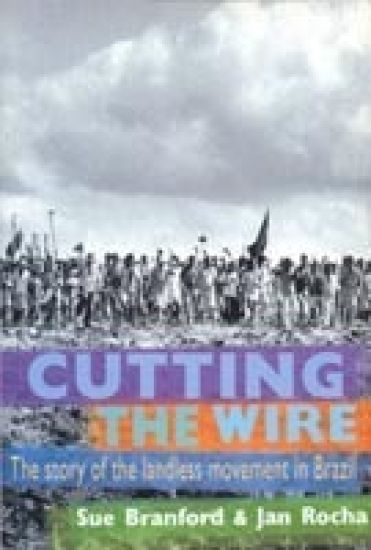
Summary: Access to land is one of the key issues for developing countries - and Brazil has one of the most inequitable land distributions in the world, with vast tracts of land held by often absentee landowners. Meanwhile thousands of peasants live in marginal lands in cities and rural areas. The Brazilian Landless Workers' Movement (MST) has proved a huge success with the disenfranchised rural and urban poor in Brazil - becoming one of the largest social movements in the world. Cutting the Wire is the first account in English of the origins, history and current challenges faced by Brazil's poor majority. The authors have traveled the vast expanse of the country to record the words and actions of hundreds of activists who have taken their lives into their own hands. Cutting the Wire is how the MST describes the act of occupying the land, the cornerstone of their movement. It is the baptism of fire for the militant, an essential part of their identity and it plays a key role in the mistica, the moment of collective ritual that kicks off all MST events. Cutting the Wire is the story of the MST told in their own words, in vivid first-hand accounts of a continuing struggle.
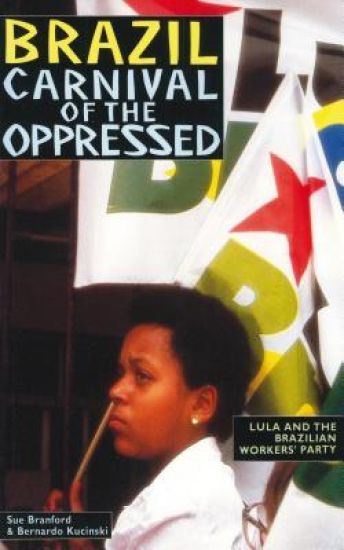

Brazil - Carnival of the Oppressed: Lula and the Brazilian Workers' Party
Sue Branford; Bernardo Kucinski
MONTHLY REVIEW PRESS
1995
nidottu