Kirjojen hintavertailu – 12 903 725 kirjaa ja 27 kauppaa

Kirjailija

Sue Donaldson

Kirjat ja teokset yhdessä paikassa: 10 kirjaa, julkaisuja vuosilta 2011–2025, suosituimpiin kuuluu Chimpanzee Rights. Vertaile teosten hintoja ja tarkista saatavuus suomalaisista kirjakaupoista.

10 kirjaa

Kirjojen julkaisuvuodet: 2011–2025.

Chimpanzee Rights

Chimpanzee Rights

Kristin Andrews; Gary Comstock; Crozier G.K.D.; Sue Donaldson; Andrew Fenton; Tyler John; L. Syd M Johnson; Robert Jones; Will Kymlicka; Letitia Meynell; Nathan Nobis; David Pena-Guzman; Jeff Sebo

Routledge
2018
nidottu
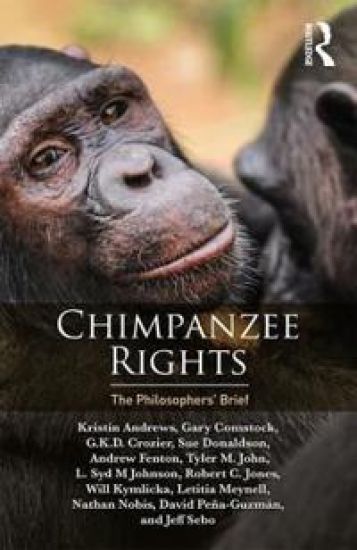
Since 2013, an organization called the Nonhuman Rights Project has brought before the New York State courts an unusual request—asking for habeas corpus hearings to determine whether Kiko and Tommy, two captive chimpanzees, should be considered legal persons with the fundamental right to bodily liberty. While the courts have agreed that chimpanzees share emotional, behavioural, and cognitive similarities with humans, they have denied that chimpanzees are persons on superficial and sometimes conflicting grounds. Consequently, Kiko and Tommy remain confined as legal "things" with no rights. The major moral and legal question remains unanswered: are chimpanzees mere "things", as the law currently sees them, or can they be "persons" possessing fundamental rights? In Chimpanzee Rights: The Philosophers’ Brief, a group of renowned philosophers considers these questions. Carefully and clearly, they examine the four lines of reasoning the courts have used to deny chimpanzee personhood: species, contract, community, and capacities. None of these, they argue, merits disqualifying chimpanzees from personhood. The authors conclude that when judges face the choice between seeing Kiko and Tommy as things and seeing them as persons—the only options under current law—they should conclude that Kiko and Tommy are persons who should therefore be protected from unlawful confinement "in keeping with the best philosophical standards of rational judgment and ethical standards of justice." Chimpanzee Rights: The Philosophers’ Brief—an extended version of the amicus brief submitted to the New York Court of Appeals in Kiko’s and Tommy’s cases—goes to the heart of fundamental issues concerning animal rights, personhood, and the question of human and nonhuman nature. It is essential reading for anyone interested in these issues.
Chimpanzee Rights

Chimpanzee Rights

Kristin Andrews; Gary Comstock; Crozier G.K.D.; Sue Donaldson; Andrew Fenton; Tyler John; L. Syd M Johnson; Robert Jones; Will Kymlicka; Letitia Meynell; Nathan Nobis; David Pena-Guzman; Jeff Sebo

Routledge
2018
sidottu
Since 2013, an organization called the Nonhuman Rights Project has brought before the New York State courts an unusual request—asking for habeas corpus hearings to determine whether Kiko and Tommy, two captive chimpanzees, should be considered legal persons with the fundamental right to bodily liberty. While the courts have agreed that chimpanzees share emotional, behavioural, and cognitive similarities with humans, they have denied that chimpanzees are persons on superficial and sometimes conflicting grounds. Consequently, Kiko and Tommy remain confined as legal "things" with no rights. The major moral and legal question remains unanswered: are chimpanzees mere "things", as the law currently sees them, or can they be "persons" possessing fundamental rights? In Chimpanzee Rights: The Philosophers’ Brief, a group of renowned philosophers considers these questions. Carefully and clearly, they examine the four lines of reasoning the courts have used to deny chimpanzee personhood: species, contract, community, and capacities. None of these, they argue, merits disqualifying chimpanzees from personhood. The authors conclude that when judges face the choice between seeing Kiko and Tommy as things and seeing them as persons—the only options under current law—they should conclude that Kiko and Tommy are persons who should therefore be protected from unlawful confinement "in keeping with the best philosophical standards of rational judgment and ethical standards of justice." Chimpanzee Rights: The Philosophers’ Brief—an extended version of the amicus brief submitted to the New York Court of Appeals in Kiko’s and Tommy’s cases—goes to the heart of fundamental issues concerning animal rights, personhood, and the question of human and nonhuman nature. It is essential reading for anyone interested in these issues.
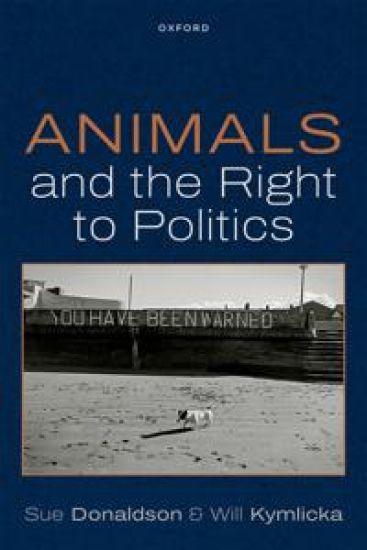
Animals and the Right to Politics

Animals and the Right to Politics

Sue Donaldson; Will Kymlicka

Oxford University Press
2025
nidottu
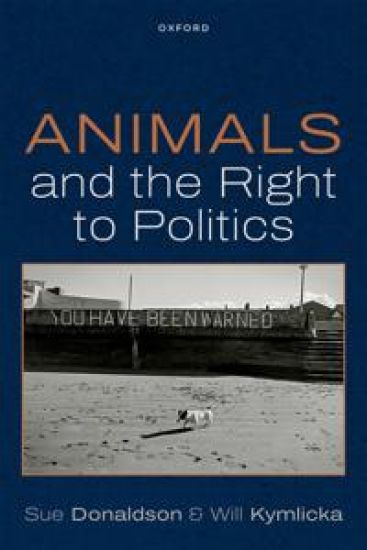
The assumption that only humans can engage in politics - that only humans are 'zoon politikon' - is foundational to the Western tradition of political philosophy. While there is increasing recognition of animals' moral status (both within moral philosophy and at the level of public opinion), animals are not recognized as political subjects. This carefully researched but accessibly written volume - following on from the authors' earlier book Zoopolis - argues that animals too have a right to politics: a right to be recognized as political subjects and agents, and as members of political communities entitled to collective self-determination. The book draws on recent scientific work on animal societies, cultures, and decision-making, as well as recent work by political theorists rethinking ideas of agency and community - especially the significance of emplaced and embodied encounters and relationships to the activity of politics. Sue Donaldson and Will Kymlicka draw a picture of what it would mean to create spaces and practices, not only for politics conducted by humans on behalf of animals, but also politics with and by animals on their own terms. It then explores how this approach could inform a wide range of contemporary debates in human-animal relations, including wildlife conservation, urban planning, and animal labour.
Animals and the Right to Politics

Animals and the Right to Politics

Sue Donaldson; Will Kymlicka

Oxford University Press
2025
sidottu
The assumption that only humans can engage in politics - that only humans are 'zoon politikon' - is foundational to the Western tradition of political philosophy. While there is increasing recognition of animals' moral status (both within moral philosophy and at the level of public opinion), animals are not recognized as political subjects. This carefully researched but accessibly written volume - following on from the authors' earlier book Zoopolis - argues that animals too have a right to politics: a right to be recognized as political subjects and agents, and as members of political communities entitled to collective self-determination. The book draws on recent scientific work on animal societies, cultures, and decision-making, as well as recent work by political theorists rethinking ideas of agency and community - especially the significance of emplaced and embodied encounters and relationships to the activity of politics. Sue Donaldson and Will Kymlicka draw a picture of what it would mean to create spaces and practices, not only for politics conducted by humans on behalf of animals, but also politics with and by animals on their own terms. It then explores how this approach could inform a wide range of contemporary debates in human-animal relations, including wildlife conservation, urban planning, and animal labour.
BTEC Level 2 Certificate in Business Enterprise Learner Handbook with ActiveBook

BTEC Level 2 Certificate in Business Enterprise Learner Handbook with ActiveBook

Sue Donaldson; Claire Parry; Julie Smith; Charlotte Bunn

Pearson Education Limited
2017
muu
Packed with practical activities and planning support to help you deliver these exciting new qualifications.* A complete unit-by-unit course companion for learners.* Helps prepare learners for specific job roles.* Includes 'Hands on' and 'Ready for Work?' features to develop practical skills.* Assessment practice activities and dedicated 'Getting Ready for Assessment' sections support preparation for assignments, tasks and external tests.
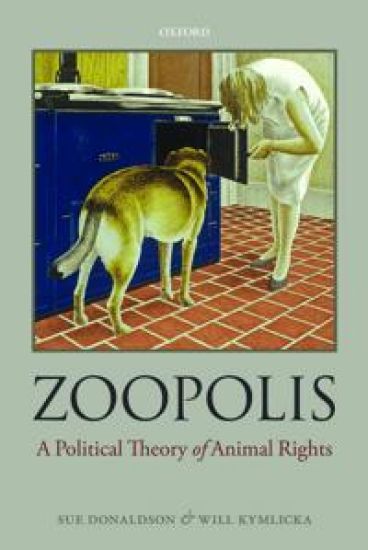
Zoopolis

Zoopolis

Sue Donaldson; Will Kymlicka

Oxford University Press
2013
nidottu

Halvin toimitettuna 44,60 €

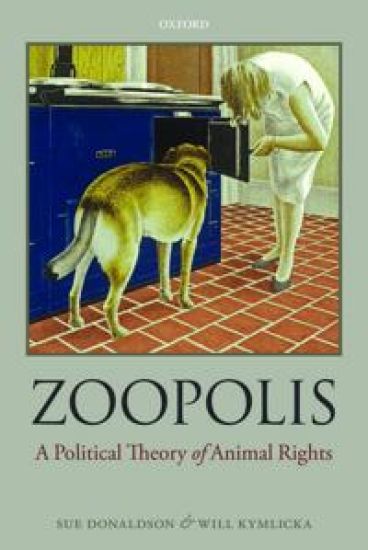
Zoopolis offers a new agenda for the theory and practice of animal rights. Most animal rights theory focuses on the intrinsic capacities or interests of animals, and the moral status and moral rights that these intrinsic characteristics give rise to. Zoopolis shifts the debate from the realm of moral theory and applied ethics to the realm of political theory, focusing on the relational obligations that arise from the varied ways that animals relate to human societies and institutions. Building on recent developments in the political theory of group-differentiated citizenship, Zoopolis introduces us to the genuine "political animal". It argues that different types of animals stand in different relationships to human political communities. Domesticated animals should be seen as full members of human-animal mixed communities, participating in the cooperative project of shared citizenship. Wilderness animals, by contrast, form their own sovereign communities entitled to protection against colonization, invasion, domination and other threats to self-determination. "Liminal" animals who are wild but live in the midst of human settlement (such as crows or raccoons) should be seen as "denizens", resident of our societies, but not fully included in rights and responsibilities of citizenship. To all of these animals we owe respect for their basic inviolable rights. But we inevitably and appropriately have very different relations with them, with different types of obligations. Humans and animals are inextricably bound in a complex web of relationships, and Zoopolis offers an original and profoundly affirmative vision of how to ground this complex web of relations on principles of justice and compassion.
Zoopolis

Zoopolis

Sue Donaldson; Will Kymlicka

Oxford University Press
2011
sidottu
Zoopolis offers a new agenda for the theory and practice of animal rights. Most animal rights theory focuses on the intrinsic capacities or interests of animals, and the moral status and moral rights that these intrinsic characteristics give rise to. Zoopolis shifts the debate from the realm of moral theory and applied ethics to the realm of political theory, focusing on the relational obligations that arise from the varied ways that animals relate to human societies and institutions. Building on recent developments in the political theory of group-differentiated citizenship, Zoopolis introduces us to the genuine "political animal". It argues that different types of animals stand in different relationships to human political communities. Domesticated animals should be seen as full members of human-animal mixed communities, participating in the cooperative project of shared citizenship. Wilderness animals, by contrast, form their own sovereign communities entitled to protection against colonization, invasion, domination and other threats to self-determination. `Liminal' animals who are wild but live in the midst of human settlement (such as crows or raccoons) should be seen as "denizens", resident of our societies, but not fully included in rights and responsibilities of citizenship. To all of these animals we owe respect for their basic inviolable rights. But we inevitably and appropriately have very different relations with them, with different types of obligations. Humans and animals are inextricably bound in a complex web of relationships, and Zoopolis offers an original and profoundly affirmative vision of how to ground this complex web of relations on principles of justice and compassion.