
Kirjailija
Sue Harper
Kirjat ja teokset yhdessä paikassa: 13 kirjaa, julkaisuja vuosilta 2000–2024, suosituimpiin kuuluu Time to Wonder - Volume 1. Vertaile teosten hintoja ja tarkista saatavuus suomalaisista kirjakaupoista.
13 kirjaa
Kirjojen julkaisuvuodet: 2000–2024.
Time to Wonder: Volume 3 A Kid's Guide to BC's Regional Museums
S. Lesley Buxton; Sue Harper
ROCKY MOUNTAIN BOOKS
2024
nidottu
Go on... be a time traveller, an anthropologist, an archeologist, an artist, or an explorer Be everything at once When you visit a museum, you enter an amazing world where you are limited only by your imagination. The books in the Time to Wonder series give adventurous families a backstage pass to explore behind the scenes in regional museums throughout British Columbia. Once again, all will be revealed with the help of dozens of colour photographs, regional maps, lists of activities, historical information, and interviews with a team of amazing experts who specialize in a variety of locations along the coast of British Columbia. Whether families are experienced museumgoers or just curious about something new, this is a book they will read over and over. Kids and families looking for a complete British Columbia museum journey should also check out Time to Wonder - Volume 1: A Kid's Guide to BC's Regional Museums: Thompson-Okanagan-Kootenay-Cariboo-Chilcotin, along with future volumes in the series, which will include Vancouver Island, Vancouver and the Lower Mainland, and the North Coast and Nechako.

Outdoor enthusiast Sue Harper shares over 60 easy to prepare recipes for those camping in small trailers, or under canvas. It's amazing what you can do with limited ingredients, a campfire, pot and grill. Plus, Sue proves there's no need to spend hours creating a meal, when there so much more to do exploring or sharing great stories around a campfire. Enjoy these delicious recipes, and may your camping be filled with great experiences and great food under the stars.
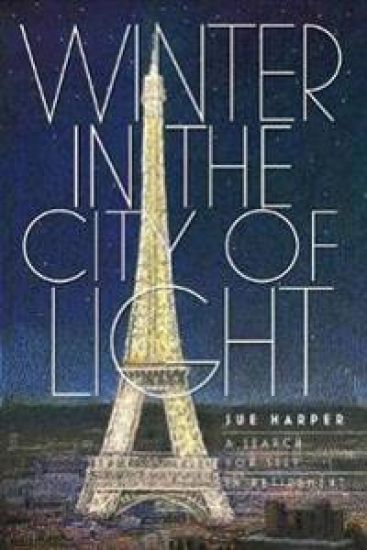
About two things, Sue Harper was absolutely certain. Paris was the most exciting city in the world and retirement was supposed to be a time when anything was possible. But she was terrified. From the tragic life of a French diva to the story of a Jewish family destroyed by the Nazis, Harper discovered connections to Paris and to herself as she struggled with retirement. When the rush of post-work life - that time when everything seemed possible - crashed into the panic of "Oh-oh, what now?" Harper felt rootless and disengaged. Worse still, from the outside, her retirement looked perfect. She and her partner travelled, skied in two hemispheres, and seemed to have it all. But at home, she filled her days with obsessive exercising, coffee dates and endless hours of mindless television. Then her partner was accepted into an art course in Paris. Harper claimed she was going to be like Hemingway, become a fl neur and write about her adventures. She knew it was a lie. But slowly, as she mapped out her walks through cobblestoned neighbourhoods, city cemeteries and halls of ancient Greek vases in the vast Louvre museum, she found her way back to herself.
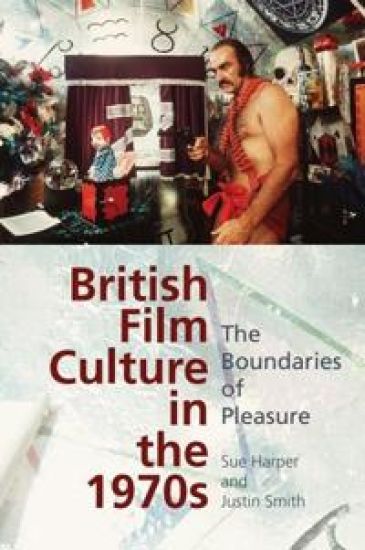
This is an authoritative history of 1970s British Cinema. This volume draws a map of British film culture in the 1970s and provides a wide-ranging history of the period. It examines the cross-cultural relationship between British cinema and other media, including popular music and television. The analysis covers mainstream and experimental film cultures, identifying their production contexts and the economic, legislative and censorship constraints on British cinema throughout the decade. The essays in Part I contextualise the study and illustrate the diversity of 1970s moving image culture. In Part II, Sue Harper and Justin Smith examine how gender relations and social space were addressed in film. They show how a shared visual manner and performance style characterises this fragmented cinema, and how irony and anxiety suffuse the whole film culture. This volume charts the shifting boundaries of permission in 1970s film culture and changes in audience taste. This book is the culmination of an AHRC-funded project at the University of Portsmouth.
This volume draws a map of British film culture in the 1970s and provides a wide-ranging history of the period. It examines the cross-cultural relationship between British cinema and other media, including popular music and television. The analysis covers mainstream and experimental film cultures, identifying their production contexts and the economic, legislative and censorship constraints on British cinema throughout the decade. The essays in Part I contextualise the study and illustrate the diversity of 1970s moving image culture. In Part II, Sue Harper and Justin Smith examine how gender relations and social space were addressed in film. They show how a shared visual manner and performance style characterises this fragmented cinema, and how irony and anxiety suffuse the whole film culture. This volume charts the shifting boundaries of permission in 1970s film culture and changes in audience taste. This book is the culmination of an AHRC-funded project at the University of Portsmouth, For more information about '1970s British Cinema, Film and Video: Mainstream and Counter-Culture' (2006-2009) please visit the project website at www.1970sproject.co.uk.
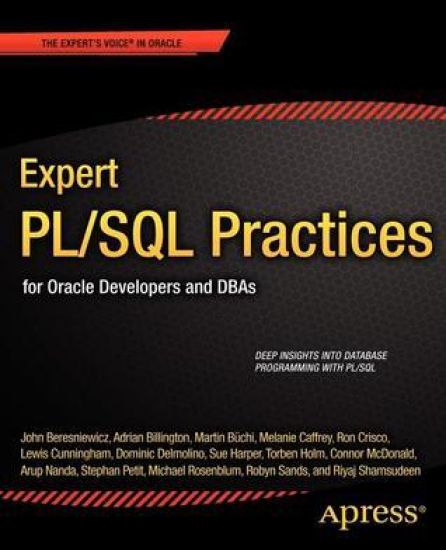
Expert PL/SQL Practices
Michael Rosenblum; Dominic Delmolino; Lewis Cunningham; Riyaj Shamsudeen; Connor McDonald; Melanie Caffrey; Sue Harper; Torben Holm; Robyn Sands; John Beresniewicz; Ron Crisco; Martin Bchi; Adrian Billington; Stephan Petit; Arup Nanda
APress
2011
nidottu
Expert PL/SQL Practices is a book of collected wisdom on PL/SQL programming from some of the best and the brightest in the field. Each chapter is a deep-dive into a specific problem, technology, or feature set that you’ll face as a PL/SQL programmer. Each author has chosen their topic out of the strong belief that what they share can make a positive difference in the quality and scalability of code that you write. The path to mastery begins with syntax and the mechanics of writing statements to make things happen. If you’ve reached that point with PL/SQL, then let the authors of Expert PL/SQL Practices show you how to combine syntax and mechanics with features and techniques to really make the language sing. You’ll learn to do more with less effort, to write code that scales and performs well, and to eliminate and avoid defects. These authors are passionate about PL/SQL and the power it places at your disposal. They want you to succeed, to know all that PL/SQL can offer. Let Expert PL/SQL Practices open your eyes to the full power of Oracle’s world-class language for the database engine. Goes beyond the manual to cover good techniques and best practices Delivers knowledge usually gained only by hard experience Covers the functionality that distinguishes PL/SQL as a powerful and scalable programming language for deploying logic inside the database engine
Covering SQL Developer fundamentals as well more intermediate and advanced topics, this book uses in-depth explanation and detailed examples to help you get the most out of Oracle SQL Developer. The book has a modular structure, so that you can dip into any chapter that covers your current area of focus and get going. This book is for Oracle developers who want to ease their database development, and enhance their productivity using Oracle SQL Developer. You should have a programming knowledge of SQL and PL/SQL, and a general familiarity with Oracle database concepts.

In this definitive and long-awaited history of 1950s British cinema, Sue Harper and Vincent Porter draw extensively on previously unknown archive material to chart the growing rejection of post-war deference by both film-makers and cinema audiences. Competition from television and successive changes in government policy all forced the production industry to become more market-sensitive. The films produced by Rank and Ealing, many of which harked back to wartime structures of feeling, were challenged by those backed by Anglo-Amalgamated and Hammer. The latter knew how to address the rebellious feelings and growing sexual discontents of a new generation of consumers. Even the British Board of Film Censors had to adopt a more liberal attitude. The collapse of the studio system also meant that the screenwriters and the art directors had to cede creative control to a new generation of independent producers and film directors. Harper and Porter explore the effects of these social, cultural, industrial, and economic changes on 1950s British cinema.

In this definitive and long-awaited history of 1950s British cinema, Sue Harper and Vincent Porter draw extensively on previously unknown archive material to chart the growing rejection of post-war deference by both film-makers and cinema audiences. Competition from television and successive changes in government policy all forced the production industry to become more market-sensitive. The films produced by Rank and Ealing, many of which harked back to wartime structures of feeling, were challenged by those backed by Anglo-Amalgamated and Hammer. The latter knew how to address the rebellious feelings and growing sexual discontents of a new generation of consumers. Even the British Board of Film Censors had to adopt a more liberal attitude. The collapse of the studio system also meant that the screenwriters and the art directors had to cede creative control to a new generation of independent producers and film directors. Harper and Porter explore the effects of these social, cultural, industrial, and economic changes on 1950s British cinema.
A survey of the ways in which women have been represented in British cinema from the 1930s to the end of the 20th century. It analyzes the input women have had on the industry, and charts the difficulties they encountered and the successes they achieved. Using a range of archive and interview material, the author raises the issues of representation and the studio system, and different types of creative control. She also establishes the historically specific nature of the social and sexual fantasies produced by the cinema. The book is written in a lively and confrontational manner and contains some swinging attacks on received opinions about women and the cinema.