

Kirjailija
Suely Rolnik
Kirjat ja teokset yhdessä paikassa: 7 kirjaa, julkaisuja vuosilta 2003–2024, suosituimpiin kuuluu Sphären des Aufstands. Vertaile teosten hintoja ja tarkista saatavuus suomalaisista kirjakaupoista.
7 kirjaa
Kirjojen julkaisuvuodet: 2003–2024.
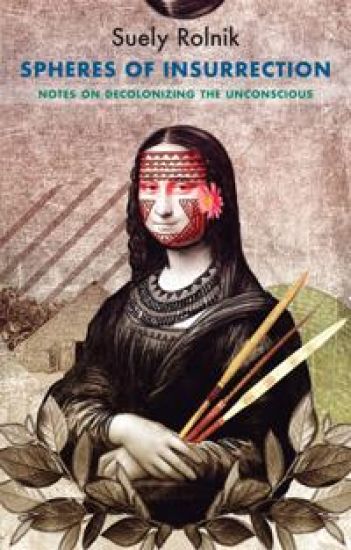
As the globalized regime of neoliberal capitalism consolidates its grip on the world, it refines the micropolitics proper to the capitalist system and makes it more perverse. This micropolitics involves the appropriation – what Suely Rolnik calls the “pimping” – of life, as it turns the life drive itself away from creation and cooperation and towards the deadening, destructive practice necessary for capital accumulation. This dynamic is the engine of what Rolnik calls the colonial-capitalistic unconscious regime. She also identifies the conditions necessary to fight against this regime – namely, a reappropriation of the life drive, the energetic basis at the heart of all life forms, human life included, and the principal source of extraction for capitalism. Drawing on examples from across the Americas, including Brazil and the United States, Rolnik examines the circumstances that have given rise to regressive, reactionary governments throughout the world. These circumstances include, at the macro level, an alliance between neoliberalism and extreme conservatism and, at the micro level, a crisis of the hegemonic subject in the face of the emergent empowerment of marginalized communities that practice other modes of subjectivation. This crucial book by one of the most prominent intellectuals in Latin America today will be of great value to anyone interested in contemporary politics and social struggles.
Spheres of Insurrection
Suely Rolnik
JOHN WILEY AND SONS LTD
2023
nidottu
Halvin toimitettuna 28,10 €
As the globalized regime of neoliberal capitalism consolidates its grip on the world, it refines the micropolitics proper to the capitalist system and makes it more perverse. This micropolitics involves the appropriation – what Suely Rolnik calls the “pimping” – of life, as it turns the life drive itself away from creation and cooperation and towards the deadening, destructive practice necessary for capital accumulation. This dynamic is the engine of what Rolnik calls the colonial-capitalistic unconscious regime. She also identifies the conditions necessary to fight against this regime – namely, a reappropriation of the life drive, the energetic basis at the heart of all life forms, human life included, and the principal source of extraction for capitalism. Drawing on examples from across the Americas, including Brazil and the United States, Rolnik examines the circumstances that have given rise to regressive, reactionary governments throughout the world. These circumstances include, at the macro level, an alliance between neoliberalism and extreme conservatism and, at the micro level, a crisis of the hegemonic subject in the face of the emergent empowerment of marginalized communities that practice other modes of subjectivation. This crucial book by one of the most prominent intellectuals in Latin America today will be of great value to anyone interested in contemporary politics and social struggles.

Cadernos Ultramares seeks to present Brazilian culture and thought in a qualified way, through volumes bringing together important essays by renowned authors in different areas of knowledge. This volume contains two complementary essays by Suely Rolnik, one of Brazil's most original and active contemporary thinkers: "Zumbi Anthropophagy" and "What the Guarani teach us about micropolitics".
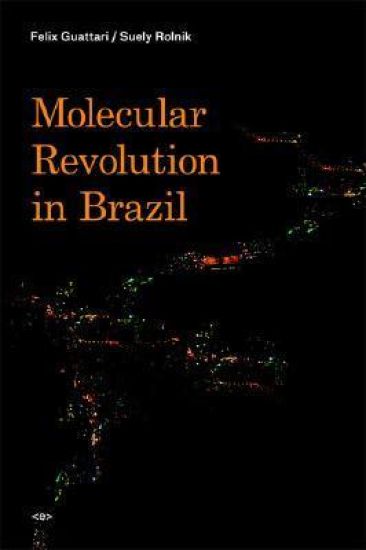
The post-'68 psychoanalyst and philosopher visits a newly democratic Brazil in 1982 and meets future President Luis Ignacia Lula da Silva: a guide to the radical thought and optimism at the root of today's Brazil. Yes, I believe that there is a multiple people, a people of mutants, a people of potentialities that appears and disappears, that is embodied in social, literary, and musical events.... I think that we're in a period of productivity, proliferation, creation, utterly fabulous revolutions from the viewpoint of this emergence of a people. That's molecular revolution: it isn't a slogan or a program, it's something that I feel, that I live....-from Molecular Revolution in BrazilFollowing Brazil's first democratic election after two decades of military dictatorship, French philosopher Felix Guattari traveled through Brazil in 1982 with Brazilian psychoanalyst Suely Rolnik and discovered an exciting, new political vitality. In the infancy of its new republic, Brazil was moving against traditional hierarchies of control and totalitarian regimes and founding a revolution of ideas and politics. Molecular Revolution in Brazil documents the conversations, discussions, and debates that arose during the trip, including a dialogue between Guattari and Brazil's future President Luis Ignacia Lula da Silva, then a young gubernatorial candidate. Through these exchanges, Guattari cuts through to the shadowy practices of globalization gone awry and boldly charts a revolution in practice. Assembled and edited by Rolnik, Molecular Revolution in Brazil is organized thematically; aphoristic at times, it presents a lesser-known, more overtly political aspect of Guattari's work. Originally published in Brazil in 1986 as Micropolitica: Cartografias do desejo, the book became a crucial reference for political movements in Brazil in the 1980s and 1990s. It now provides English-speaking readers with an invaluable picture of the radical thought and optimism that lies at the root of Lula's Brazil.

Dias & Riedweg
Mauricio Dias; Walter Riedweg; Catherine David; Suely Rolnik; Roland Groenboom
ActarD Inc
2003
pokkari
Since 1993, Mauricio Dias and Walter Riedweg have been developing a collaborative work that probes the relationship between ethics and aesthetics through precise interventions in specific individual and group situations. Their methods, ranging from scientific documentation to complex video dramatizations, focus especially on issues associated with identity and the tension between group and individual mechanisms. The direct involvement of the public in their work process is crucial. This catalogue contains a retrospective of their works to date, including "Voracidad maxima, their joint project for the Museu d'Art Contemporani de Barcelona. The enclosed DVD includes a video fragment from that piece, which explores the relationship between sexuality and economics and was made in cooperation with male sex workers from the museum's neighborhood, El Raval.