
Kirjailija
Suetonius
Kirjat ja teokset yhdessä paikassa: 61 kirjaa, julkaisuja vuosilta 1914–2026, suosituimpiin kuuluu The Lives of the Twelve Caesars. Vertaile teosten hintoja ja tarkista saatavuus suomalaisista kirjakaupoista.
61 kirjaa
Kirjojen julkaisuvuodet: 1914–2026.
Suetone, Des Vies Des Douze Cesars, Empereurs Romains (1663)
Suetonius
KESSINGER PUBLISHING, LLC
2009
pokkari
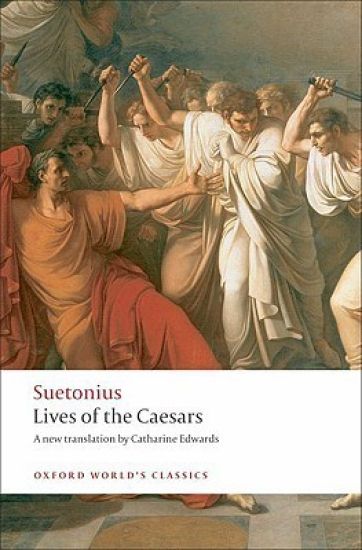
The Lives of the Caesars include the biographies of Julius Caesar and the eleven subsequent emperors: Augustus, Tiberius, Gaius Caligula, Claudius, Nero, Galba, Otho, Vitelius, Vespasian, Titus, Domitian. Suetonius composed his material from a variety of sources, without much concern for their reliability. His biographies consist the ancestry and career of each emperor in turn; however, his interest is not so much analytical or historical, but anecdotal and salacious which gives rise to a lively and provocative succession of portraits. The account of Julius Caesar does not simply mention his crossing of the Rubicon and his assassination, but draws attention to his dark piercing eyes and attempts to conceal his baldness. The Live of Caligula presents a vivid picture of the emperor's grotesque appearance, his waywardness, and his insane cruelties. The format and style of Suetonius' Lives of the Caesars was to set the tone for biography throughout western literature - his work remains thoroughly readable and full of interest. ABOUT THE SERIES: For over 100 years Oxford World's Classics has made available the widest range of literature from around the globe. Each affordable volume reflects Oxford's commitment to scholarship, providing the most accurate text plus a wealth of other valuable features, including expert introductions by leading authorities, helpful notes to clarify the text, up-to-date bibliographies for further study, and much more.
The first-century emperor Claudius did not leave the fledgling Roman Empire as he had found it: his contribution was to turn its developing institutions into an imperial tradition. But the ancient sources represent him as an odd personality - active but manipulated by his inferiors, at once distracted and awkward and cruel. Suetonius’ biography is a rich offering of both solid fact and the prejudicial anecdotes that his contemporaries and the generation that followed thought worth repeating, raw material for exploring the man and his reign. This commentary provides context for the text’s abundant information, but form is not neglected, and attention is given to Suetonius’ intelligent and conscious marshalling of his material, and guidance offered to students reading the biographer’s often densely compressed style. This is the first English commentary on the Claudius Life to deal with both historical and stylistic issues.
The emperor Vespasian (AD69-79) is universally regarded as one of the better Roman emperors. Coming to the throne after the demise of Nero and the bitterness of a year-long civil war, he restored the empire's finances and inaugurated a period of peace and prosperity. Tacitus, Pliny and Josephus had a high regard for Vespasian, portraying him as an astute commander and an excellent emperor. In comparison with the comments of these contemporary or near-contemporary writers, Suetonius' biography, produced some fifty years after the emperor's death, is quite detailed. He too admired Vespasian. For him, Vespasian was a very shrewd administrator, who liked to be seen as having the common touch and as an ex-soldier with a ribald sense of humour. These and other aspects of his character are revealed in a series of anecdotes, always amusing and always opposite. This edition (the first since 1930) offers a newly revised text with a general introduction and detailed commentary. Comparison is continually drawn between Vespasian and other accounts of the reign, especially that of Dio Cassius, the only other substantial account but written a century after that of Suetonius.
This new edition of Suetonius' "Nero" is updated to take account of research on Suetonius. It includes the original author's corrections and updating, along with suggestions from regular users of the book, which was first published in 1977.
An analysis of Suetonius' account of the emperor Domitian. The book provides a detailed commentary on matters of historical importance in the text, together with a discussion of Suetonius' life. A comparison is offered between Suetonius' account and Dio's version. Latin sources are utilized.
This edition of the Roman historian Suetonius' life of the notorious emperor Caligula includes an introduction giving historical background, the Latin text, and commentary/notes on the text.
Suetonius' biographical sketches of the teachers of "grammar" and rhetoric survive only in part and are fairly brief; yet it would be difficult to name another text of similar scope that is a more productive resource for the study of Roman cultural history in the classical period. For the early history of Roman education it is literally indispensable, and it is a precious repository as well for the understanding of Roman Social and cultural relations, and even for the social history of freedmen and slaves. This new critical edition of Suetonius' rich and often curious text is accompanied by commentary, the most thorough and detailed so far available, elucidates Suetonius' method of compilatioon and places the stories he tells in their social and historical context.
This edition comprises the Roman historian Suetonius' lives of the first three emperors of AD 69, the Year of the Four Emperors. The Latin text is accompanied by an introduction and useful historical commentary.
This useful edition of Suetonius' Life of Augustus, one of twelve imperial biographies contained in that author's De vita Caesarum, was first published by Oxford University Press in 1927. It includes the Latin text, Chronology, detailed Notes on the text and comprehensive indexes. In 1982 it was substantially updated with an Introduction including an overview of Suetonius' life and works and an assessment of the value of the Divus Julius, a Bibliography and Additional Notes by J. Carter for this Bristol Classical press edition.
Antiquity’s imperial biographer par excellence. Suetonius (C. Suetonius Tranquillus, born ca. AD 70), son of a military tribune, was at first an advocate and a teacher of rhetoric, but later became the emperor Hadrian’s private secretary, 119–121. He dedicated to C. Septicius Clarus, prefect of the praetorian guard, his Lives of the Caesars. After the dismissal of both men for some breach of court etiquette, Suetonius apparently retired and probably continued his writing. His other works, many known by title, are now lost except for part of the Lives of Illustrious Men (of letters). Friend of Pliny the Younger, Suetonius was a studious and careful collector of facts, so that the extant lives of the emperors (including Julius Caesar the dictator) to Domitian are invaluable. His plan in Lives of the Caesars is the emperor’s family and early years; public and private life; death. We find many anecdotes, much gossip of the imperial court, and various details of character and personal appearance. Suetonius’ account of Nero’s death is justly famous. The Loeb Classical Library edition of Suetonius is in two volumes.