Kirjojen hintavertailu – 12 903 725 kirjaa ja 27 kauppaa

Kirjailija

Suisheng Zhao

Kirjat ja teokset yhdessä paikassa: 11 kirjaa, julkaisuja vuosilta 1995–2022, suosituimpiin kuuluu Decision-making in Deng's China. Vertaile teosten hintoja ja tarkista saatavuus suomalaisista kirjakaupoista.

11 kirjaa

Kirjojen julkaisuvuodet: 1995–2022.

The Dragon Roars Back

The Dragon Roars Back

Suisheng Zhao

STANFORD UNIVERSITY PRESS
2022
sidottu
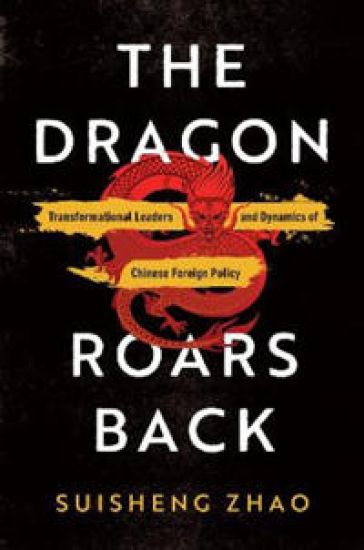
Selected among Foreign Affairs's "Best of Books 2024" China is unique in modern world history. No other rising power has experienced China's turbulent history in its relations with neighbors and Western countries. Its sheer size dominates the region. With leader Xi Jinping's political authority unmatched, Xi's sense of mission to restore what he believes is China's natural position as a great power drives the current course of the nation's foreign policy. When China was weak, it was subordinated to others. Now, China is strong, and it wants others to subordinate, at least on the issues involving what it regards as core national interests. What are the primary forces and how have these forces driven China's reemergence to global power? This book weaves together complex events, processes, and players to provide a historically in-depth, conceptually comprehensive, and up-to-date analysis of Chinese foreign policy transition since the founding of the People's Republic of China (PRC), arguing that transformational leaders with new visions and political wisdom to make their visions prevail are the game changers. Mao Zedong, Deng Xiaoping, and Xi Jinping are transformational leaders who have charted unique courses of Chinese foreign policy in the quest for security, prosperity, and power. With the ultimate decision-making authority on national security and strategic policies, these leaders have made political use of ideational forces, tailoring bureaucratic institutions, exploiting the international power distribution, and responding strategically to the international norms and rules to advance their foreign policy agendas in the path of China's ascendance.
The Dragon Roars Back

The Dragon Roars Back

Suisheng Zhao

STANFORD UNIVERSITY PRESS
2022
pokkari
Selected among Foreign Affairs's "Best of Books 2024" China is unique in modern world history. No other rising power has experienced China's turbulent history in its relations with neighbors and Western countries. Its sheer size dominates the region. With leader Xi Jinping's political authority unmatched, Xi's sense of mission to restore what he believes is China's natural position as a great power drives the current course of the nation's foreign policy. When China was weak, it was subordinated to others. Now, China is strong, and it wants others to subordinate, at least on the issues involving what it regards as core national interests. What are the primary forces and how have these forces driven China's reemergence to global power? This book weaves together complex events, processes, and players to provide a historically in-depth, conceptually comprehensive, and up-to-date analysis of Chinese foreign policy transition since the founding of the People's Republic of China (PRC), arguing that transformational leaders with new visions and political wisdom to make their visions prevail are the game changers. Mao Zedong, Deng Xiaoping, and Xi Jinping are transformational leaders who have charted unique courses of Chinese foreign policy in the quest for security, prosperity, and power. With the ultimate decision-making authority on national security and strategic policies, these leaders have made political use of ideational forces, tailoring bureaucratic institutions, exploiting the international power distribution, and responding strategically to the international norms and rules to advance their foreign policy agendas in the path of China's ascendance.
Debating Political Reform in China

Debating Political Reform in China

Suisheng Zhao

Routledge
2006
nidottu
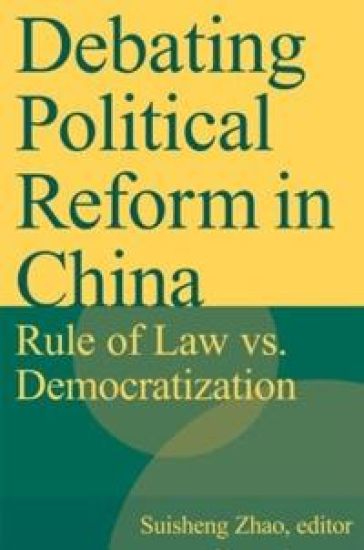
The growing disconnect between China's market-oriented economy with its emerging civil society, and the brittle, anacronistic, and authoritarian state has given rise to intense discussion and debate about political reform, not only by Western observers, but also among Chinese intellectuals. While some expect China's political reform to lead to democratization, others have proposed to strengthen the institution of single-party rule and provide it with a solid legal base. This book brings the ongoing debate to life and explores the options for political reform. Offering the perspectives of both Western and Chinese scholars, it presents the controversial argument for building a consultive rule of law regime as an alternative to liberal democracy. It provides several critiques of this thesis, and then tests the thesis through empirical studies on the development of the rule of law in China.
Debating Political Reform in China

Debating Political Reform in China

Suisheng Zhao

Routledge
2006
sidottu
The growing disconnect between China's market-oriented economy with its emerging civil society, and the brittle, anacronistic, and authoritarian state has given rise to intense discussion and debate about political reform, not only by Western observers, but also among Chinese intellectuals. While some expect China's political reform to lead to democratization, others have proposed to strengthen the institution of single-party rule and provide it with a solid legal base. This book brings the ongoing debate to life and explores the options for political reform. Offering the perspectives of both Western and Chinese scholars, it presents the controversial argument for building a consultive rule of law regime as an alternative to liberal democracy. It provides several critiques of this thesis, and then tests the thesis through empirical studies on the development of the rule of law in China.
A Nation-State by Construction

A Nation-State by Construction

Suisheng Zhao

Stanford University Press
2004
sidottu
This is the first historically comprehensive, up-to-date analysis of the causes, content, and consequences of nationalism in China, an ancient empire that has struggled to construct a nation-state and find its place in the modern world. It shows how Chinese political elites have competed to promote different types of nationalism linked to their political values and interests and imposed them on the nation while trying to repress other types of nationalism. In particular, the book reveals how leaders of the PRC have adopted a pragmatic strategy to use nationalism while struggling to prevent it from turning into a menace rather than a prop.
A Nation-State by Construction

A Nation-State by Construction

Suisheng Zhao

Stanford University Press
2004
pokkari

Halvin toimitettuna 38,20 €

This is the first historically comprehensive, up-to-date analysis of the causes, content, and consequences of nationalism in China, an ancient empire that has struggled to construct a nation-state and find its place in the modern world. It shows how Chinese political elites have competed to promote different types of nationalism linked to their political values and interests and imposed them on the nation while trying to repress other types of nationalism. In particular, the book reveals how leaders of the PRC have adopted a pragmatic strategy to use nationalism while struggling to prevent it from turning into a menace rather than a prop.
Chinese Foreign Policy

Chinese Foreign Policy

Suisheng Zhao

Routledge
2004
nidottu
This volume explores how China is adapting to international norms and practices while still giving primacy to its national interests. It examines China's strategic behaviour on the world stage, particularly in its relationships with major powers and Asian neighbours.
Chinese Foreign Policy

Chinese Foreign Policy

Suisheng Zhao

Routledge
2003
sidottu
This volume explores how China is adapting to international norms and practices while still giving primacy to its national interests. It examines China's strategic behaviour on the world stage, particularly in its relationships with major powers and Asian neighbours.
Power by Design

Power by Design

Suisheng Zhao

University of Hawai'i Press
1995
sidottu
First established as a cabinet system in Guangzhou in 1925, the Nationalist Government of China was replaced three years later by a presidential system under a unified Nationalist government in Nanjing. The cabinet government was restored in 1931 and existed until the presidential system was again installed by the 1936 constitution. Why did presidential and cabinet systems exist alternately during this formative period of the Nationalist government? Why was the presidential system finally adopted in 1936? Suisheng Zhao answers these and other questions fundamental to understanding authoritarian regimes in this pioneering study of the design of the Nationalist Government of China from 1925 to 1937. although scholars of comparative politics have shown great interest in the institutional choice between parliamentarianism and presidentialism in democratic countries, they have paid little attention to the study of constitutional frameworks in authoritarian settings. By offering a clear and original re-interpretation of the history of this power struggle between Chiang Kai-shek and his rivals over institutional design, Zhao challenges the conventional wisdom that has underestimated the importance of formal institutions in non-democratic regimes. Borrowing ideas from public choice theory, Zhao proposes that political actors who design governmental institutions are diven by power-maximization strategies just as business firms are driven by wealth-maximization strategies. Constitution-making reflects the underlying distribution of power among authoritarian leaders, who attempt to design political institutions that will consolidate their personal power and position. Thus, Zhao argues, if political actors possess more power resources than their rivals and anticipate themselves becoming dominant, they will choose the singular leadership of the presidential system. If they are in a weaker position and do not anticipate becoming dominant, they will prefer the collective leadership of the cabinet form of government. Notable for its persuasive integration of political science theory and the historical evidence, Power by Design is an insightful re-interpretation of Chinese history that will be welcomed by scholars of modern China and those interested in the consequences of the nationalist politics that continue to reverberate in contemporary Chine, as well as by comparative political scientists studying constitution-making and institutional design.
Decision-making in Deng's China

Decision-making in Deng's China

Carol Lee Hamrin; Suisheng Zhao; A. Doak Barnett

M.E. Sharpe
1995
sidottu
Considers the politics of central decision-making by focusing on senior policy makers and implementing bureaucracies on the one hand, and actors in economic and non-economic arenas on the other. The contributors held significant party and government positions in China up to 1989.
Decision-making in Deng's China

Decision-making in Deng's China

Carol Lee Hamrin; Suisheng Zhao; A. Doak Barnett

M.E. Sharpe
1995
nidottu
Considers the politics of central decision-making by focusing on senior policy makers and implementing bureaucracies on the one hand, and actors in economic and non-economic arenas on the other. The contributors held significant party and government positions in China up to 1989.