Kirjojen hintavertailu – 12 903 725 kirjaa ja 27 kauppaa

Kirjailija

Suman Gupta

Kirjat ja teokset yhdessä paikassa: 30 kirjaa, julkaisuja vuosilta 2001–2026, suosituimpiin kuuluu AI, Textuality and the Humanities. Vertaile teosten hintoja ja tarkista saatavuus suomalaisista kirjakaupoista.

30 kirjaa

Kirjojen julkaisuvuodet: 2001–2026.

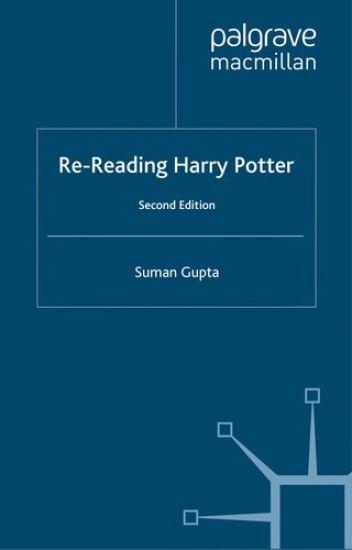
Re-Reading Harry Potter

Re-Reading Harry Potter

Suman Gupta

Palgrave Macmillan
2009
nidottu
This book discusses the political and social presumptions ingrained in the texts of the Harry Potter series and examines the manner in which they have been received in different contexts and media. The 2nd edition also contains extensive new material which comments on the later books and examines the impact of the phenomenon across the world.
Re-Reading Harry Potter

Re-Reading Harry Potter

Suman Gupta

Palgrave Macmillan
2009
sidottu
This book discusses the political and social presumptions ingrained in the texts of the Harry Potter series and examines the manner in which they have been received in different contexts and media. The 2nd edition also contains extensive new material which comments on the later books and examines the impact of the phenomenon across the world.
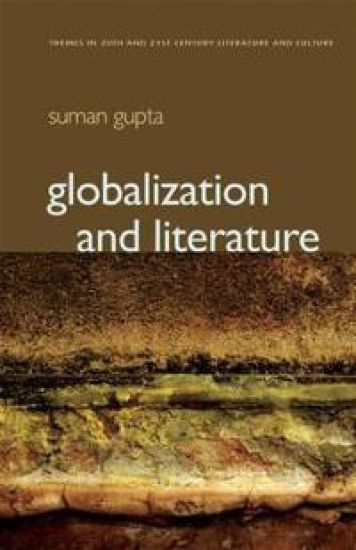
Globalization and Literature

Globalization and Literature

Suman Gupta

Polity Press
2008
sidottu
This book presents a state-of-the-art overview of the relationship between globalization studies and literature and literary studies, and the bearing that they have on each other. It engages with the manner in which globalization is thematized in literary works, examines the relationship between globalization theory and literary theory, and discusses the impact of globalization processes on the production and reception of literary texts. Suman Gupta argues that, while literature has registered globalization processes in relevant ways, there has been a missed articulation between globalization studies and literary studies. Examples are given of some of the ways in which this slippage is now being addressed and may be taken forward, taking up such themes as the manner in which anti-globalization protests and world cities have figured in literary works; the ways in which theories of postmodernism and postcolonialism, familiar in literary studies, have diverged from and converged with globalization studies; and how industries to do with the circulation of literature are becoming globalized. This book is intended for university-level students and teachers, researchers, and other informed readers with an interest in the above issues, and serves as both a survey of the field and an intervention within it.

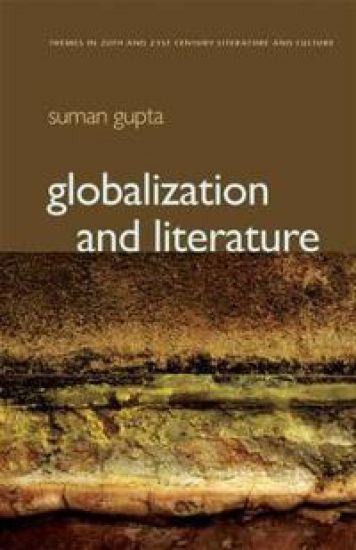
Globalization and Literature

Globalization and Literature

Suman Gupta

Polity Press
2008
nidottu
This book presents a state-of-the-art overview of the relationship between globalization studies and literature and literary studies, and the bearing that they have on each other. It engages with the manner in which globalization is thematized in literary works, examines the relationship between globalization theory and literary theory, and discusses the impact of globalization processes on the production and reception of literary texts. Suman Gupta argues that, while literature has registered globalization processes in relevant ways, there has been a missed articulation between globalization studies and literary studies. Examples are given of some of the ways in which this slippage is now being addressed and may be taken forward, taking up such themes as the manner in which anti-globalization protests and world cities have figured in literary works; the ways in which theories of postmodernism and postcolonialism, familiar in literary studies, have diverged from and converged with globalization studies; and how industries to do with the circulation of literature are becoming globalized. This book is intended for university-level students and teachers, researchers, and other informed readers with an interest in the above issues, and serves as both a survey of the field and an intervention within it.

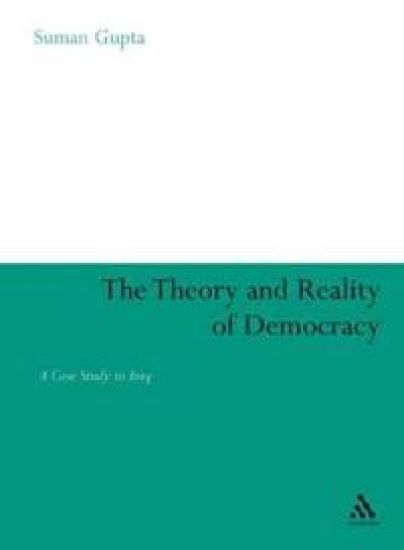
Theory and Reality of Democracy

Theory and Reality of Democracy

Suman Gupta

Continuum International Publishing Group Ltd.
2007
nidottu
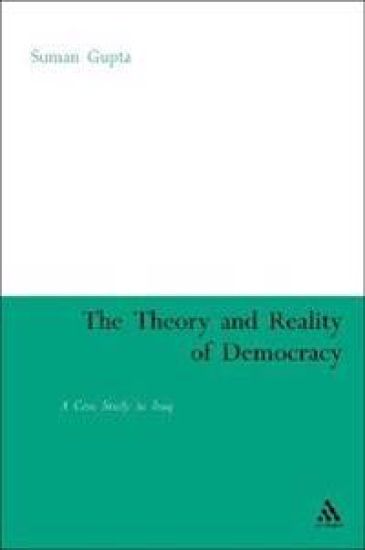
This is a study of conceptualizations and applications of the idea of democracy in international and transnational politics (outside the confines of constituted political states, or outside a broadly understood domestic political sphere), which uses a politically realist methodology. This study provides a critical survey of current conceptual positions assumed in this area, and tests these against specific real world events, using the invasion and occupation of Iraq by a US-UK led coalition as a case study. Several aspects of this context are examined here, with a view to discerning how existing conceptualizations of democracy in the international/transnational domain impinge upon and are tested by the real world. Ultimately, this study focuses on the confusions and obfuscations that follow from conflating the normative connotations of democracy with the oligarchic multiparty elective arrangements that are denoted as democratic. The book is divided into two parts - the first examines the six prevailing conceptual positions on democracy in the international/transnational domain in terms of: their normative and legislative connotations; and the manner in which they negotiate boundaries. The second part tests the observations made in Part 1 against real-world events, using the build up to military intervention in and subsequent occupation of Iraq. During these events, the notion of democracy was continually being deployed and dissected in a wide variety of different ways: justifications for and against military action were constantly framed in terms of democracy; the democratic structure and credentials of the UN were stretched almost to breaking point; mass marches and rallies were claimed as a democratic expression of protest; and a discourse of 'democratization' has dominated the occupation period.
Theory and Reality of Democracy

Theory and Reality of Democracy

Suman Gupta

Continuum International Publishing Group Ltd.
2006
sidottu
This is a study of conceptualizations and applications of the idea of democracy in international and trans-national politics (outside the confines of constituted political states, or outside a broadly understood domestic political sphere), which uses a politically realist methodology. This study provides a critical survey of current conceptual positions assumed in this area, and tests these against specific real world events, using the invasion and occupation of Iraq by a US-UK led coalition as a case study. This book is divided into two parts - the first examines the six prevailing conceptual positions on democracy in the international/trans-national domain in terms of (a) their normative and legislative connotations and (b) the manner in which they negotiate boundaries. The second part tests the observations made in Part 1 against real-world events, using the build up to military intervention in and subsequent occupation of Iraq. During these events the notion of democracy was continually being deployed and dissected in a wide variety of different ways: justifications for and against military action were constantly framed in terms of democracy; the democratic structure and credentials of the UN were stretched almost at breaking point; mass marches and rallies were claimed as a democratic expression of protest; and a discourse of 'democratization' has dominated the occupation period.
The Replication of Violence: Thoughts on International Terrorism After September 11th 2001
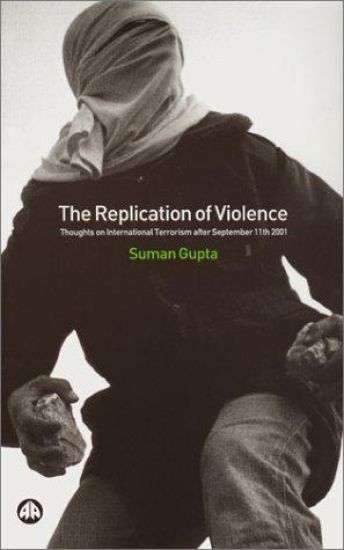
Here, Suman Gupta argues that it has long been difficult to define what constitutes a "terrorist act". Examining how acts of terrorism and counter-terrorist measures are portrayed in the western media and the impact this has on public perception, the book is intended to be a counterpoint to the often sensationalized reporting in the mainstream.
The Replication of Violence

The Replication of Violence

Suman Gupta

Pluto Press
2002
pokkari
An immense amount of media space has been devoted to the catastrophic terrorist attacks in New York and Washington. George Bush was quick to declare a 'war on terrorism' that may engulf many countries in addition to Afghanistan. But what does this say about Western perceptions of violence - what does 'war on terrorism' mean? This book sharpens our understanding of what phrases such as 'international terrorism' and 'the war against terror' have come to mean since 9/11. Taking on the issues from a philosophical standpoint, Gupta observes that it has long been difficult to define what constitutes a 'terrorist act'. He explains how the events of last year have jolted even existing understandings in unexpected ways and, importantly, why this difficulty of definition persists. Examining how acts of terrorism and counter-terrorist measures are portrayed in the Western media and the impact this has on public perception, this thoughtful and provocative account provides a refreshing counterpoint to the sensationalised and often oversimplified reporting in the mainstream media.
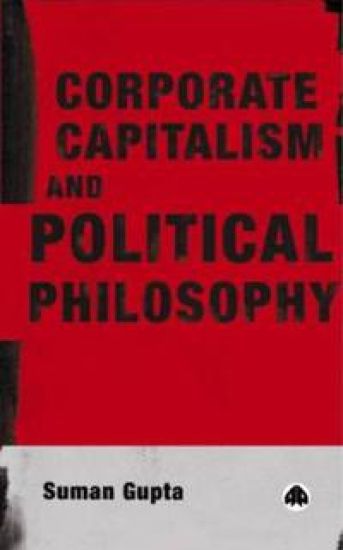
Corporate Capitalism and Political Philosophy
Corporate capitalism is usually examined from a sociological or economic viewpoint, and this book breaks new ground in providing a thorough account of the mechanisms which define it from a philosophical perspective, revealing how these processes determine the way we live today. Marxist and other left-oriented political philosophies had ideological roots that were based, sometimes incongruously, on particular economic and sociological readings of the capitalist process. Political philosophies associated with conservatism and neoliberalism have either been assimilated within capitalist discourses, or they have been designed to justify corporate capitalist processes. This book re-examines these issues with an unusually dispassionate approach, providing a systematic view of contemporary corporate capitalism in all its complexity, without expecting the reader to have a specialist knowledge of sociology or economics. It clarifies the scope of political philosophy by reflecting on its own methodology and practice, and offers a controversial conclusion that within contemporary corporate capitalist modes of organisation there is actually no space left for political philosophy at all, as corporate capitalism systematically denies all political agents an ability to exercise their political will.
Corporate Capitalism and Political Philosophy
Corporate capitalism is usually examined from a sociological or economic viewpoint, and this book breaks new ground in providing a thorough account of the mechanisms which define it from a philosophical perspective, revealing how these processes determine the way we live today. Marxist and other left-oriented political philosophies had ideological roots that were based, sometimes incongruously, on particular economic and sociological readings of the capitalist process. Political philosophies associated with conservatism and neoliberalism have either been assimilated within capitalist discourses, or they have been designed to justify corporate capitalist processes. This book re-examines these issues with an unusually dispassionate approach, providing a systematic view of contemporary corporate capitalism in all its complexity, without expecting the reader to have a specialist knowledge of sociology or economics. It clarifies the scope of political philosophy by reflecting on its own methodology and practice, and offers a controversial conclusion that within contemporary corporate capitalist modes of organisation there is actually no space left for political philosophy at all, as corporate capitalism systematically denies all political agents an ability to exercise their political will.