Kirjojen hintavertailu – 12 903 725 kirjaa ja 27 kauppaa

Kirjailija

Sumira Jan

Kirjat ja teokset yhdessä paikassa: 8 kirjaa, julkaisuja vuosilta 2010–2026, suosituimpiin kuuluu Ecometabolomics. Vertaile teosten hintoja ja tarkista saatavuus suomalaisista kirjakaupoista.

8 kirjaa

Kirjojen julkaisuvuodet: 2010–2026.

Radiation Spectrum and Plant Metabolism

Radiation Spectrum and Plant Metabolism

Sumira Jan; Gowhar Hussain Bhat

ELSEVIER SCIENCE PUBLISHING CO INC
2026
nidottu
Radiation Spectrum and Plant Metabolism: Interaction from the Sub-cellular to Ecosystem Level offers a clear illustration of the interaction between radiation spectrums and the dynamics of biological systems in plants. Explaining the light-Phyllosphere relationship, this volume describes metabolite chemistry, thus reflecting the developmental and functional fitness of the plant. As climate change has resulted in a natural variation in the cosmic radiation spectrum, a knowledge gap has emerged about the changing radiation spectrum and its impacts on plant metabolism. This book addresses the subject in-depth, providing insights into the functional role of photoreceptors, pigments, and various metabolites in coping with this alteration. It will be a valuable reference for photo biologists, biophysicists, and biochemists for deciphering the impacts of radiation spectrum on plant metabolism. Researchers working in the field of metabolite chemistry and metabolomics will also find it useful to comprehend the physical laws governing the interaction of radiation spectrum with biological system.
Ecophysiology of Pesticides

Ecophysiology of Pesticides

Talat Parween; Sumira Jan

Academic Press Inc
2019
nidottu
Ecophysiology of Pesticides: Interface between Pesticide Chemistry and Plant Physiology is the first comprehensive overview of the physical impact of this increasingly complex environmental challenge. Designed to offer state-of-the-art knowledge, the book covers pesticide usage and its consequences on the ecophysiology of plants. It includes the challenge of policymaking in pesticide consumption and a risk analysis of conventional and modern approaches on standard usage. In addition, it summarizes research reports pertaining to the physio-ecological effects of pesticides, discusses the environmental risks associated with the over-utilization of pesticides, and covers pesticide usage on the micro-flora and rhizosphere. This book is a valuable reference for plant ecologists, plant biochemists and chemists who want to study pesticide consumption and its biochemical and physiological evaluation effects on plants. It will also be of immense help to university and college teachers and students of environmental biotechnology, environmental botany and plant ecophysiology.
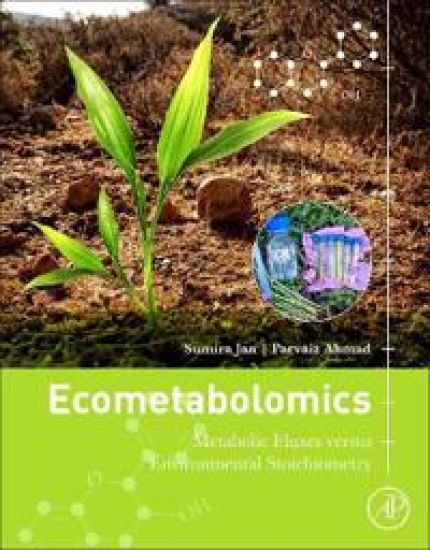
Ecometabolomics

Ecometabolomics

Sumira Jan; Parvaiz Ahmad

Academic Press Inc
2019
nidottu
Ecometabolomics: Metabolic Fluxes versus Environmental Stoichiometry focuses on the interaction between plants—particularly plants that have vigorous secondary metabolites—and the environment. The book offers a comprehensive overview of the responses of the metabolome of organisms to biotic and abiotic environmental changes. It includes an introduction to metabolomics, summaries of metabolomic techniques and applications, studies of stress in plants, and insights into challenges. This is a must-have reference for plant biologists, plant biochemists, plant ecologists and phytochemists researching the interface between plants and the environment using metabolomics.
Approaches to Heavy Metal Tolerance in Plants

Approaches to Heavy Metal Tolerance in Plants

Sumira Jan; Javid Ahmad Parray

Springer Verlag, Singapore
2018
nidottu
This book summarizes the development of highly tolerant cultivars via plant breeding, genomics, and proteomic approaches. This book could supplement data for budding researchers by providing extensive ongoing measures to improve the detoxification competence of appropriate species via wide range of plant improvement approaches. It also offers insights into heavy metal signalling,metal chelation by organic acids, amino acids, and phosphate derivatives, and illustrates other strategies that have been extensively investigated, such as genetic engineering, ecological improvement of the rhizosphere using mycorrhiza and chelator enhanced phytoremediation technology. This book could provide simple anthology for undergraduate and postgraduate students to understand fundamentals of heavy metal pollution in the environment. The book closes with a prelude to an inclusive study of biodiversity that could provide new biofilters for metal detoxification.
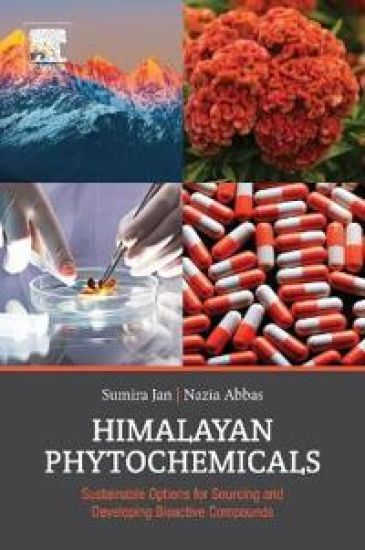
Himalayan Phytochemicals

Himalayan Phytochemicals

Sumira Jan; Nazia Abbas

Elsevier / The Lancet
2018
nidottu
Himalayan Phytochemicals: Sustainable Options for Sourcing and Developing Bioactive Compounds provides a detailed review of the important medicinal plants which have already been discovered in the Himalayan region, outlining their discovery, activity and underlying chemistry. In addition, it supports a global shift towards sustainable sourcing of natural products from delicate ecosystems. Across the world, environmental destruction and overharvesting of medicinal plants are reducing and destroying multiple important sources and potential leads before researchers have the chance to discover, explore or synthesize them effectively. By identifying this problem and discussing its impact on the Himalayan region, Himalayan Phytochemicals: Sustainable Options for Sourcing and Developing Bioactive Compounds frames the ongoing global struggle and highlights the key factors that must be considered and addressed when working with phytochemicals from endemic plant sources.
Approaches to Heavy Metal Tolerance in Plants

Approaches to Heavy Metal Tolerance in Plants

Sumira Jan; Javid Ahmad Parray

Springer Verlag, Singapore
2016
sidottu
This book summarizes the development of highly tolerant cultivars via plant breeding, genomics, and proteomic approaches. This book could supplement data for budding researchers by providing extensive ongoing measures to improve the detoxification competence of appropriate species via wide range of plant improvement approaches. It also offers insights into heavy metal signalling,metal chelation by organic acids, amino acids, and phosphate derivatives, and illustrates other strategies that have been extensively investigated, such as genetic engineering, ecological improvement of the rhizosphere using mycorrhiza and chelator enhanced phytoremediation technology. This book could provide simple anthology for undergraduate and postgraduate students to understand fundamentals of heavy metal pollution in the environment. The book closes with a prelude to an inclusive study of biodiversity that could provide new biofilters for metal detoxification.
GENOTOXICITY OF CADMIUM ON ROOT MERISTEM OF Vicia faba L.

GENOTOXICITY OF CADMIUM ON ROOT MERISTEM OF Vicia faba L.

Talat Parween; Sumira Jan

LAP Lambert Academic Publishing
2011
pokkari
The chromosomal aberration of V. faba due to CdCl2 may be due to its potential to enter into nucleus where it bind to the sulphydryl group of -tubulin of spindle fibres that alter the ability of tubulin to form microtubules. In an environmental perspective, the bioavailability of Cd++ is an increasing concern for the range of living organisms including cultivated plants. Therefore combining plant bioassays and root analysis of Cd++ content would allow us to define phytotoxicity thresholds in plants.