Kirjojen hintavertailu – 12 859 818 kirjaa ja 27 kauppaa
Kirjailija
Sun Tzu
Kirjat ja teokset yhdessä paikassa: 525 kirjaa, julkaisuja vuosilta 1910–2027, suosituimpiin kuuluu The Art of War and Other Chinese Military Classics. Vertaile teosten hintoja ja tarkista saatavuus suomalaisista kirjakaupoista.
Nimi esiintyy myös muodoissa: Sun-Tzu, Sun Tzu (??? ??)
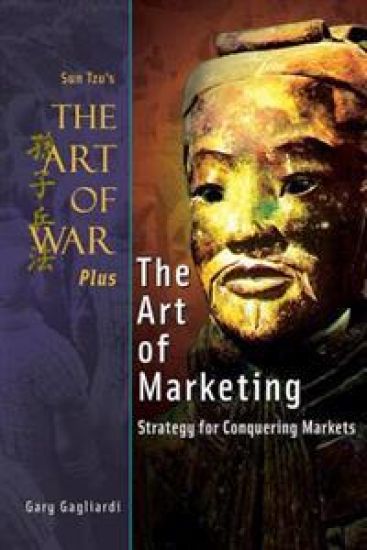
Two books in one, this award-winning work contains the complete original text of The Art of War on the left-hand pages and its line-by-line adaptation for facing marketing challenges, The Art of Marketing on the facing right-hand pages. This book applies Sun Tzu's methods to positioning a brand in the marketplace and creating market awareness of that brand. It focuses specifically on choosing the right target markets and seeing opportunities among specific groups of people. It won Ben Franklin Book Award recognition as one of the best Business books of the year. This book also contains the only award-winning complete English translation of Sun Tzu's The Art of War. Sample Text: Sun Tzu said: This is war. It is the most important skill in the nation. It is the basis of life and death. It is the philosophy of survival or destruction. You must know it well. Your skill comes from five factors. Study these factors when you plan war. You must insist on knowing your situation. 1. Discuss philosophy. 2. Discuss the climate. 3. Discuss the ground. 4. Discuss leadership. 5. Discuss military methods. This is market competition. Without marketing strategy, your organization will fail. Marketing is the foundation of fortunes and failures. Your marketing strategy is to preserve the best and destroy the rest. You must see all aspects of your market position. There are five aspects that define your position in a marketplace. Weigh these factors in your market analysis. You must insist on knowing your marketing situation. 1. Discuss your business mission. 2. Discuss the marketplace trends. 3. Discuss your market segment. 4. Discuss decision-making. 5. Discuss the marketing process. Table of Contents: The Art of War Plus The Art of Marketing Foreword: Using This Book9 Introduction: Sun Tzu's Basic Concepts19 1 Analysis25 Research27 2 Going to War39 Targeting41 3Planning an Attack51 Focus53 4Positioning63 Branding65 5Momentum 75 Creativity77 6Weakness and Strength87 Needs and Satisfaction89 7 Armed Conflict103 Communication105 8 Adaptability 117 Resilience119 9Armed March127 Campaigns129 10Field Position 147 Opportunities149 11Types of Terrain 165 Stages167 12 Attacking with Fire191 Desires193 13 Using Spies 203 Intelligence205 Glossary of Strategic Concepts216 Index of Topics in The Art of War220 About the Authors222
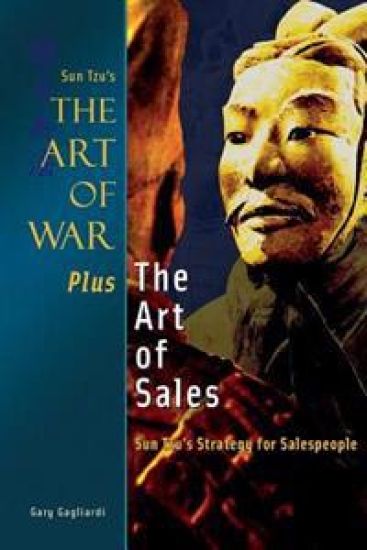
Two books in one The complete text of The Art of War PLUS a special adaptation for strategically developing your sales territory. This was Gary Gagliardi's first adaptation of Sun Tzu, written for the salespeople of his own software company that became one of the Inc. 500 fastest growing companies in America. The sales methods presented in this book follow Sun Tzu's principles line by line, with the complete text of The Art of War The Art of War is on the left-hand pages, and the sales adaptation, Sales Warrior, on the facing right-hand pages. In the . EPUB and . MOBI formats, each stanza of The Art of War is followed by the stanza adapted for salespeople. Readers get both the proven philosophy that has survived 2,500 years and a practical sales adaptation of those ideas. A Complete Sales GuideThe Art of War for the Sales Warrior and The Art of War plus the Art of Sales (the title of an earlier editions) cover every aspect of sales. Each chapter is a highly condensed tutorial in basic sales strategy. Below we offer a brief description of each of the sales chapters. Sales Analysis covers Sun Tzu's basic sales concepts and the five factors that determine success in sales. Choosing to Sell analyzes the investment you must make selling and the way you generate income quickly and easily. Planning Your Territory discusses the importance of focus, using your time well, and the five ingredients you need to win customers. Sales Position talks about how to use the six steps in the sales process to avoid losing customers while you patiently discover how to win them. Persuasion explores the way you combine standard and creative techniques to sway customers, and the timing necessary to close them. Disadvantages and Advantages shows you how to build a dominant position with the customer and how you manage different types of customers. Sales Contact explains how to control the sales situation and how your efforts alone determine its outcome. Adjusting to the Sales Situation emphasizes flexibiReviews"Two books in one, this re-translating of Sun Tzu's classic warfare text, The Art of War, runs side by side with Gagliardi's application of it to the business of selling. Both are excellent guides to their subject...the material it delivers provides the weapons any sales professional needs to achieve his or her mission and win." F. JOHN REH, About.com Guide to Management"In these hectic and competitive times, you always need to know better ways to sell. The Art of War for the Sales Warrior is full of techniques that you can read about on your way to a sales call and use during your meeting. I've already recommended it to my clients." JAN WALLEN, Consultant and Author of "CRM-Powered Selling" Column"When you are in the trenches, The Art of War for the Sales Warrior gives you the strategy and tactics to pick your battles and win the war. A unique approach." MARJORIE BRODY, CSP, CMC, President, Brody Communications Ltd." One of the most unique and well-written sales books I have seen in many years. It is full of wisdom, power, and dignity. It stands in sharp contrast to the many hype-filled books on 'sales motivation' and the wimpy 'new age' books that rail on and on against the use of power and influence in selling. Sales Warrior is a breath of fresh air in the stale, stodgy world of sales training books." DONALD J. MOINE, Ph. D., Sales Psychologist, Coauthor, Unlimited Selling Power
El arte de la guerra (original title: The Art of War) es un antiguo tratado chino writter by Sun Tzu in the year 401) que recopila ense anzas sobre estrategia, t ctica, liderazgo y conflicto. Aunque fue escrito como gu a para comandantes militares, su sabidur a ha trascendido el campo de batalla y se aplica ampliamente en negocios, pol tica, deporte, desarrollo personal y relaciones humanas. El texto se compone de 13 cap tulos breves, cada uno dedicado a un aspecto fundamental del conflicto, como la planificaci n, el terreno, el uso de esp as, la energ a, la estrategia ofensiva y la evaluaci n del enemigo. En esta poca en que tantas personas creen que la soluci n a los problemas del siglo XXI es la violencia, esta obra es importante y necesaria, no porque sus reflexiones sean una invitaci n a practicar la guerra, sino porque para Sun Tzu la guerra es algo m s que la simple fuerza bruta y la irracionalidad de la destrucci n. Se trata del arte de evitar los conflictos: requiere de una sabidur a mayor, pero sobre todo, exige de nuestra parte una gran sensibilidad para detectar cu les son las exigencias que nos demanda la armon a universal. Hoy en d a, la filosof a de El arte de la guerra ha ido m s all de lo estrictamente militar, para aplicarlo a los negocios, los deportes, la diplomacia y el comportamiento personal. El objetivo de las estrategias es poner de nuestra parte las condiciones m s favorables, juzgando el momento preciso para atacar o retirarse, y siempre evaluando correctamente los l mites del combate.
"If you know the enemy and know yourself, you need not fear the result of a hundred battles. If you know yourself but not the enemy, for every victory gained you will also suffer a defeat. If you know neither the enemy nor yourself, you will succumb in every battle..." The Art of War is an ancient Chinese military treatise attributed to Sun Tzu (544-496 BCE) that has influenced warfare and business. Discover it in this classical Lionel Giles translation (1910) with the original comments and footnotes prepared for a better reading experience.
Una nueva traducci n de El Arte de la Guerra de Sun Tzu. Esta traducci n, ntegra y rigurosa del chino cl sico, del gran tratado sobre la estrategia de Sun Tzu se encuentra a cargo del Dr. Alejandro B rcenas, profesor de historia de la filosof a de la Universidad Estatal de Texas. El Arte de la Guerra de Sun Tzu es de lectura obligatoria en la Academia Militar de West Point y para el cuerpo de Marines de los Estados Unidos. El diario "The New York Times" lo considera una obra esencial para comprender y operar en el mercado burs til de Nueva York. Entre sus asiduos lectores se encuentran el general Colin Powell, el seleccionador Luis Felipe Scolari, el cinco veces ganador del Super Bowl Bill Belichick y el piloto de Formula 1 Fernando Alonso. "Absorba por completo esta obra, y despu s deseche todos esos libros contempor neos sobre el liderazgo en la gerencia empresarial."- Newsweek "'El Arte de la Guerra' fascina tanto a los lectores casuales como a los l deres militares y empresariales con su delineaci n inusualmente clara de pensamiento estrat gico... Esta obra ha perdurado, no s lo como un simple manual para la conducta b lica, sino gracias a la profundidad de los principios sobre los cuales se basa y su aplicabilidad a las situaciones cotidianas." - Library Journal
Dated to about the fifth century B. C., "The Art of War" is considered the world's oldest treatise on war. Attributed to Sun Tzu of the Zhou dynasty, the book is composed of 13 chapters, each addressing a particular aspect of warfare such as planning offenses, military combat, and the employment of spies. Influential in Eastern civilization for millennia and in Western culture since its first translation in the 18th century, the teachings of this book have been applied to scenarios as varied as office politics, the Vietnam War, and American football. Now this living military heirloom is available as part of the "Word Cloud Classics" series in a chic, affordable edition for readers everywhere.
Der chinesische General Sun Tzu beschrieb als Erster die Grunds tze milit rischer Strategie und Organisation. Sein Werk, das der Nachwelt als Die Kunst des Krieges bekannt ist, entstand wahrscheinlich im China des 5. vorchristlichen Jahrhunderts. Seine Doktrinen erwiesen sich als so erfolgreich, dass Sie viele Generationen lang, als Geheimwissen nur hohen und zuverl ssigen Offizieren zug nglich waren. Was ist so faszinieren an diesem Buch? Warum findet das Werk von Sun Tzu auch nach 2500 Jahren noch Anwendung? Warum begeistert Die Kunst des Krieges nicht nur Milit rstrategen, sondern wird auch in vielen nichtmilit rischen Bereichen aufmerksam beachtet? Es liegt daran, dass die Regeln und Doktrin, die Sun Tzu aufgestellt hat, auch heute noch die Basis vieler Unternehmensbereiche mitbestimmen. Dies gilt sowohl f r Unternehmensf hrung, Personalwesen und Projekt-Management, als auch f r Operations, Controlling oder Finanzen. Sun Tzu war ein erfolgreicher General. Seine Ausf hrungen und seine Wortwahl sind die eines Milit rs. Sie beziehen sich auf die F hrung einer Armee und nicht auf die F hrung eines Wirtschaftsunternehmens. Dennoch erkennt der Leser sofort die hnlichkeiten der Szenarien von milit rischen und wirtschaftlichen Operationen. Jeder erfasst sofort die Weisheit der Aussagen, die f r eine erfolgreiche Truppenf hrung gleicherma en gelten, wie f r die Mitarbeiterf hrung in kleinen oder gro en Unternehmen. Es wird deutlich, dass die Regeln einer milit rischen Auseinandersetzung auf vergleichbaren organisatorischen und strategischen Grunds tzen beruhen, wie die Durchf hrung einer globalen Marketingkampagne oder hnlicher Projekte. Sun Tzu ging es vor allem um Professionalit t und Effizienz. Eine Armee muss professionell ausgebildet sein und effizient gef hrt werden. Nur so k nnen die gew nschten Ziele erreicht werden, ohne dass dabei der eigene Staat leidet. Die Kunst des Krieges besteht aus 13 Kapiteln, die sich jeweils mit bestimmten Themengebieten aus theoretischer, praktischer und strategischer Sicht befassen. Dabei werden unter anderem die Grundlagen der Truppenf hrung, offensive und defensive Strategien, Gel ndekunde und die finanziellen Aspekte der Kriegsf hrung umfangreich besprochen. Die beschriebenen Regeln und Doktrin lassen sich einfach auf wirtschaftliche Bereiche wie Mitarbeiterf hrung- und F rderung, Unternehmensplanung, Sales- und Marketingkampagnen, Controlling und Finanzen anwenden. Dabei gibt es zwei Kernaussagen, die sich wie rote F den durch das Buch ziehen:1. Es ist zwingend Notwendigkeit, den Gegner, das Gel nde und die jeweils eigene Situation fortw hrend zu analysieren und zu bewerten. Nur so k nnen die f r den Sieg erforderlichen Entscheidungen getroffen werden.2. Nur eine gut gef hrte Armee kann auf Dauer erfolgreich sein. Gute F hrung ergibt vor allem aus den grunds tzlichen charakterlichen Eigenschaften des Generals und der F higkeiten seiner Offiziere. Gerade in den letzten Jahrzehnten haben sich viele Aussagen aus Die Kunst des Krieges als Schlagw rter in der ffentlichkeit etabliert. Spr che wie "Krieg basiert nur auf T uschung" oder "Kenne deinen Gegner und kenne dich selbst und in einhundert Schlachten wirst du nie in Gefahr sein.", sind allgegenw rtig. Doch wer das Buch nicht gelesen hat und nur die Schlagw rter kennt, dem ist sicher auch nicht bewusst, dass es dort hei t: Wer sowohl den Gegner als auch seine eigenen Eigenschaften ignoriert, wird sicherlich in jeder Schlacht in Gefahr sein. Die Kunst des Krieges ist viel mehr, als nur eine Sammlung von Schlagw rtern. Es die Weisheit eines der bekanntesten Gener le der Menschheitsgeschichte. Nehmen Sie seine Doktrin an, dann werden auch Sie in der Lage sein, eigene Situationen und Strategien zu erschaffen und diese zu Ihrem Vorteile zu nutzen. Sollten Sie seinen Doktrinen keine Beachtung schenken, k nnen Sie nur darauf hoffen, dass Gl ck Ihnen zum Erfolg verhilft.3. vollst ndig berarbeitete A
El Arte de la Guerra es el mejor libro de estrategia de todos los tiempos. Inspir a Napole n, Maquiavelo, Mao Tse Tung y muchas m s figuras hist ricas. Este libro de dos quinientos mil a os de antig edad, es uno de los m s importantes textos cl sicos chinos, en el que, a pesar del tiempo transcurrido, ninguna de sus m ximas ha quedado anticuada, ni hay un solo consejo que hoy no sea til. Pero la obra del general Sun Tzu no es nicamente un libro de pr ctica militar, sino un tratado que ense a la estrategia suprema de aplicar con sabidur a el conocimiento de la naturaleza humana en los momentos de confrontaci n. No es, por tanto, un libro sobre la guerra; es una obra para comprender las ra ces de un conflicto y buscar una soluci n. "la mejor victoria es vencer sin combatir", nos dice Sun Tzu, "y sa es la distinci n entre el hombre prudente y el ignorante".
L'arte della guerra un trattato di strategia militare attribuito, a seguito di una tradizione orale lunga almeno due secoli, al generale Sunzi (Sun Tzu), vissuto in Cina probabilmente fra il VI e il V secolo a. C. Importante stato il ritrovamento di un manoscritto in lingua originale scritto su un rotolo di bamb intorno al III secolo a. C. Si tratta probabilmente del pi antico testo di arte militare esistente (VI secolo a. C. circa). Sono tredici capitoli, ognuno dedicato ad un aspetto della guerra. Ebbe una grande influenza anche nella strategia militare europea. un compendio i cui consigli si possono applicare, al pari di altre opere della cultura sino-giapponese, a molti aspetti della vita, oltre che alla strategia militare. Ad esempio all'economia e alla conduzione degli affari. Il libro tuttora usato per la gestione del management di molte aziende di tutto il mondo.
The Art of War is an ancient Chinese military treatise attributed to Sun Tzu, a high-ranking military general, strategist and tactician. The text is composed of 13 chapters, each of which is devoted to one aspect of warfare. It is commonly known to be the definitive work on military strategy and tactics of its time. It has been the most famous and influential of China's Seven Military Classics, and "for the last two thousand years it remained the most important military treatise in Asia, where even the common people knew it by name." It has had an influence on Eastern and Western military thinking, business tactics, legal strategy and beyond. The book was first translated into the French language in 1772 by French Jesuit Jean Joseph Marie Amiot and a partial translation into English was attempted by British officer Everard Ferguson Calthrop in 1905. The first annotated English language translation was completed and published by Lionel Giles in 1910. Leaders as diverse as Mao Zedong, General Vo Nguyen Giap, Baron Antoine-Henri Jomini, General Douglas MacArthur and leaders of Imperial Japan have drawn inspiration from the work. Sun Tzu considered war as a necessary evil that must be avoided whenever possible. The war should be fought swiftly to avoid economic losses: "No long war ever profited any country: 100 victories in 100 battles is simply ridiculous. Anyone who excels in defeating his enemies triumphs before his enemy's threats become real". According to the book, one must avoid massacres and atrocities because this can provoke resistance and possibly allow an enemy to turn the war in his favor. For the victor, "the best policy is to capture the state intact; it should be destroyed only if no other options are available". Sun Tzu emphasized the importance of positioning in military strategy. The decision to position an army must be based on both objective conditions in the physical environment and the subjective beliefs of other, competitive actors in that environment. He thought that strategy was not planning in the sense of working through an established list, but rather that it requires quick and appropriate responses to changing conditions. Planning works in a controlled environment; but in a changing environment, competing plans collide, creating unexpected situations.