
Kirjailija
Sunanda K. Datta-Ray
Kirjat ja teokset yhdessä paikassa: 3 kirjaa, julkaisuja vuosilta 2010–2025, suosituimpiin kuuluu Looking East to Look West. Vertaile teosten hintoja ja tarkista saatavuus suomalaisista kirjakaupoista.
Nimi esiintyy myös muodoissa: Sunanda K Datta-Ray
3 kirjaa
Kirjojen julkaisuvuodet: 2010–2025.
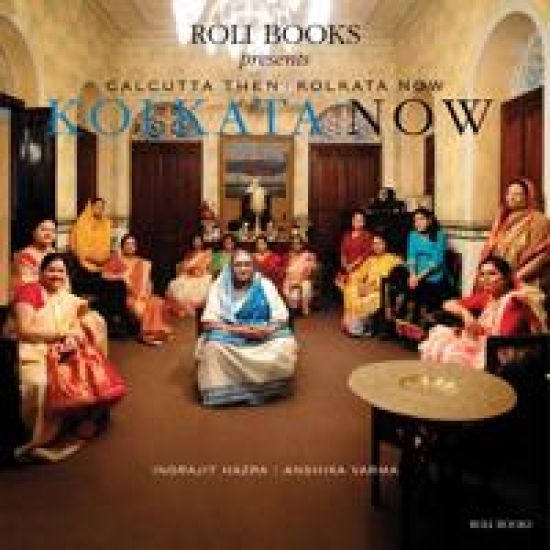
Calcutta Then Kolkata Now
Sunanda K Datta-Ray; Pramod Kapoor; Indrajit Hazra; Anshika Varma
Roli Books Pvt Ltd
2019
sidottu
Calcutta Then: Calcutta is where it all began. The city symbolised India's transformation from medievalism to modernity. The British created the framework. The prophets and pioneers who operated within it were Indian. Raja Rammohan Roy linked past and present. After him came the poets, patriots and politicians. They made banian, boxwallah, bhadralok and biplab - trader, company executive, gentleman and revolutionary - the four props of the new metropolitan culture that inspired Gopal Krishna Gokhale's memorable comment, "What Bengal thinks today, India thinks tomorrow". Much water has flown down the Hooghly since then. But the lifestyle that evolved in the city is still the hallmark of success throughout the country. Calcutta was modern India's first capital, from 1772 to 1931. Announcing the shift to Delhi during his visit to Calcutta, King George V declared, "Calcutta must always remain the premier city of India. Its population, its importance as a commercial centre and great emporium of trade, its splendid historical traditions, all continue to invest Calcutta with a unique character which should preserve to it a pre-eminent position". Kolkata Now: Love it, endure it, call it what you will, Kolkata is Life as 'kháos' as no other city is. Once a bubble, holding out the rest of Bengal - and, indeed, India - it is today a city that contains a multitude of cities: Kolkata, Calcutta, Kalkatta . Its cosmopolitanism and liberal values are clichés because they are true, even as they stand witness to its past insurrections and present anomalies as much as to its genius to enjoy life - through pujo, mishti, Culture (always with a capital 'C'), neighbourhood addas, fajlami (innocent naughtiness), football and fish. For visitors and those who once left the city, it can be a walk through time, a ride on a tram, or a constant return to the scene of old happy crimes on Park Street, in its colonial-style clubs, or its sprawling mansions that exist cheek-by-jowl with malls and multiplexes. For the Kolkatan, Kolkata Now keeps its own beat and time, where everyday struggles and quibbles unerringly give way to the ability to live Life - both peripatetic and sedentary, bustling and empty, noisy and gone-quiet, Technicolor and Noir - in the 21st-century mahanagar as it moves, always pretending to succumb, to the future.
When P. V. Narasimha Rao and Manmohan Singh launched India's "Look East" policy, it was only the first stage of the strategy to foster economic and security cooperation with the United States. But "Looking East" became an end in itself, and Singapore a valid destination, largely because of Lee Kuan Yew. He had been trying since the 1950s to persuade India's leaders that China would steal a march on them if they neglected domestic reform and ignored a region that India had influenced profoundly in ancient times. With his deep understanding of Indian life, close ties with India's leaders from Jawaharlal Nehru on, and sound grasp of realpolitik, Lee never tired of stressing that Asia would be "submerged" if India did not "emerge". Looking East to Look West recounts how India and Singapore rediscovered long-forgotten ties in the endeavour to create a new Asia. Singapore sponsored India's membership of regional institutions. India and Singapore broke diplomatic convention with unprecedented economic and defence agreements that are set to transform boundaries of trade and cooperation. This book traces the process from the earliest mention of Suvarnadbhumi in the Ramayana to Lee Kuan Yew's letter to Lal Bahadur Shastri within moments of declaring independence on 9 August 1965, from the Tata's pioneering industrial training venture in Singapore to Singapore's Information Technology Park in Bangalore. It explains the part Lee played in India's emergence as a player in the emerging Concert of Asia. History comes alive in these pages as Sunanda K. Datta-Ray, who had eight long conversations with Lee Kuan Yew, tells the story in the words of the main actors and with a wealth of anecdotes and personal details not available to many chroniclers.