Kirjojen hintavertailu – 12 903 725 kirjaa ja 27 kauppaa

Kirjailija

SungYong Lee

Kirjat ja teokset yhdessä paikassa: 6 kirjaa, julkaisuja vuosilta 2015–2023, suosituimpiin kuuluu Everyday Reconciliation in Post-Khmer Rouge Cambodia. Vertaile teosten hintoja ja tarkista saatavuus suomalaisista kirjakaupoista.

6 kirjaa

Kirjojen julkaisuvuodet: 2015–2023.

Everyday Reconciliation in Post-Khmer Rouge Cambodia

Everyday Reconciliation in Post-Khmer Rouge Cambodia

SungYong Lee

Springer International Publishing AG
2023
nidottu
This book examines the nature of everyday peace mobilised in post-conflict settings. It specifically aims to examine the reconstruction of relationships between local communities and former Khmer Rouge leaders in Cambodia, using social reconciliation as an indicator of peace. Based on the empirical examination, this study will reveal key features of everyday peace like plurality, connectivity and subtlety, and local communities’ agency for peacebuilding. Research questions that will be examined include what does everyday peace look like? What forms of everyday practice have community members developed and utilised? How is the local process for relationship building related to the wider peacebuilding and governance contexts in the country? And how have community members handled and destabilised the mainstream narratives related to the Khmer Rouge in the process? The volume will present new conceptual and theoretical innovations relevant to the central debates on everyday peace, withan empirical examination of Cambodia.
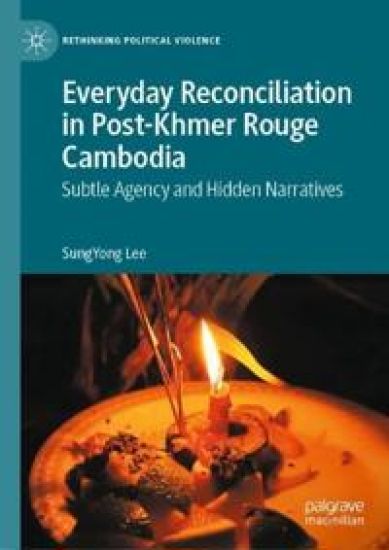
Everyday Reconciliation in Post-Khmer Rouge Cambodia

Everyday Reconciliation in Post-Khmer Rouge Cambodia

SungYong Lee

Springer International Publishing AG
2022
sidottu
This book examines the nature of everyday peace mobilised in post-conflict settings. It specifically aims to examine the reconstruction of relationships between local communities and former Khmer Rouge leaders in Cambodia, using social reconciliation as an indicator of peace. Based on the empirical examination, this study will reveal key features of everyday peace like plurality, connectivity and subtlety, and local communities’ agency for peacebuilding. Research questions that will be examined include what does everyday peace look like? What forms of everyday practice have community members developed and utilised? How is the local process for relationship building related to the wider peacebuilding and governance contexts in the country? And how have community members handled and destabilised the mainstream narratives related to the Khmer Rouge in the process? The volume will present new conceptual and theoretical innovations relevant to the central debates on everyday peace, withan empirical examination of Cambodia.
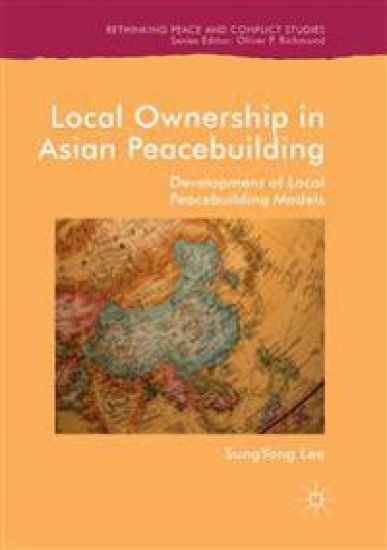
Local Ownership in Asian Peacebuilding

Local Ownership in Asian Peacebuilding

SungYong Lee

Springer Nature Switzerland AG
2019
nidottu
This book examines how local agencies in Cambodia and Mindanao (the Philippines) have developed their own models of peacebuilding under the strong influence and advocacy of external intervention. It identifies four distinct patterns in the development of local peacebuilders’ ownership: ownership inheritance from external advocates, management of external reliance, friction-avoiding approaches, and utilisation of religious/traditional leadership. This book then analyses each pattern, focusing on its operational features, its significance and limitations as a local peacebuilding model. This study makes theoretical contributions to the academic debates on the ‘local turn’, local ownership, hybrid peace and everyday peace. Particularly, it engages in and further develops four specific lines of discussion: norm diffusions into local communities, patterns of local-external interaction, concepts of ownership, dual structure of power, and multiplicity in the identities of local.
Local Ownership in Asian Peacebuilding

Local Ownership in Asian Peacebuilding

SungYong Lee

Springer International Publishing AG
2018
sidottu
This book examines how local agencies in Cambodia and Mindanao (the Philippines) have developed their own models of peacebuilding under the strong influence and advocacy of external intervention. It identifies four distinct patterns in the development of local peacebuilders’ ownership: ownership inheritance from external advocates, management of external reliance, friction-avoiding approaches, and utilisation of religious/traditional leadership. This book then analyses each pattern, focusing on its operational features, its significance and limitations as a local peacebuilding model. This study makes theoretical contributions to the academic debates on the ‘local turn’, local ownership, hybrid peace and everyday peace. Particularly, it engages in and further develops four specific lines of discussion: norm diffusions into local communities, patterns of local-external interaction, concepts of ownership, dual structure of power, and multiplicity in the identities of local.
International Peacebuilding

International Peacebuilding

Alpaslan Ozerdem; SungYong Lee

Routledge
2015
sidottu
International Peacebuilding offers a concise, practical and accessible introduction to the growing field of peacebuilding for students and practitioners. This new textbook comprises three parts, each dealing with a key aspect of peacebuilding: Part I defines the core concepts and theoretical discussions that provide the philosophical grounds for contemporary peacebuilding activities. Part II divides the procedures of peacebuilding into three phases and examines some of the important features of each phase. Part III examines the key areas of the practice of peacebuilding. The volume approaches peacebuilding from the viewpoints of individual actors or institutions, introducing a range of theoretical discussions with which students can critically examine contemporary peacebuilding practice, as well as presenting detailed case studies for key issues highlighted in the text. In doing so, the book aims to provide more concrete ideas on how peacebuilding programmes are planned and implemented in the field and which major issues should be addressed by peacebuilding practitioners. This book will be essential reading for all students of peacebuilding, conflict transformation and post-conflict reconstruction, and recommended reading for students of international organisations, international security and IR in general.
International Peacebuilding

International Peacebuilding

Alpaslan Ozerdem; SungYong Lee

Routledge
2015
nidottu
International Peacebuilding offers a concise, practical and accessible introduction to the growing field of peacebuilding for students and practitioners. This new textbook comprises three parts, each dealing with a key aspect of peacebuilding: Part I defines the core concepts and theoretical discussions that provide the philosophical grounds for contemporary peacebuilding activities. Part II divides the procedures of peacebuilding into three phases and examines some of the important features of each phase. Part III examines the key areas of the practice of peacebuilding. The volume approaches peacebuilding from the viewpoints of individual actors or institutions, introducing a range of theoretical discussions with which students can critically examine contemporary peacebuilding practice, as well as presenting detailed case studies for key issues highlighted in the text. In doing so, the book aims to provide more concrete ideas on how peacebuilding programmes are planned and implemented in the field and which major issues should be addressed by peacebuilding practitioners. This book will be essential reading for all students of peacebuilding, conflict transformation and post-conflict reconstruction, and recommended reading for students of international organisations, international security and IR in general.