Kirjojen hintavertailu – 12 903 724 kirjaa ja 27 kauppaa

Kirjailija

Sunil Singh

Kirjat ja teokset yhdessä paikassa: 16 kirjaa, julkaisuja vuosilta 2011–2025, suosituimpiin kuuluu Efeito dos fatores climáticos e do intervalo entre colheitas no crescimento e rendimento do chá. Vertaile teosten hintoja ja tarkista saatavuus suomalaisista kirjakaupoista.

16 kirjaa

Kirjojen julkaisuvuodet: 2011–2025.

Efeito dos fatores climáticos e do intervalo entre colheitas no crescimento e rendimento do chá
Em Uttaranchal, o ch cultivado como uma cultura de sequeiro. Por depender quase totalmente da chuva, a sua quantidade e distribui o s o muito importantes para o crescimento e a produ o do ch . Nas planta es de ch da regi o de Kausani, em Uttaranchal, as varia es anuais na precipita o total e na sua distribui o s o significativas. A precipita o anual total foi de 1061 mm, 1354 mm e 1401 mm em 2002, 2003 e 2004, respetivamente (Fig. 18). Durante janeiro a mar o, foram registados 238 mm, 271 mm e 47 mm de precipita o, nessa mesma ordem. Durante 2004, 82% da precipita o ocorreu nos meses de junho a agosto. Portanto, a distribui o da precipita o n o foi uniforme. N o houve precipita o no m s de mar o e a precipita o total de abril a maio foi de apenas 148 mm. Embora a precipita o tenha sido mais alta em 2004, n o houve precipita o no m s de mar o. Efeito dos intervalos de colheita na absor o de nutrientes Em geral, a absor o de azoto, f sforo e pot ssio foi mais elevada no intervalo de colheita de 9 dias, seguido dos intervalos de colheita de 7 e 5 dias (Tabela 4.1-4.15) em abril e junho. Al m disso, a absor o de todos os nutrientes aumentou em junho em compara o com abril.
Wplyw czynników klimatycznych i czestotliwosci zrywania lisci na wzrost i plony herbaty
W Uttaranchal herbata jest uprawiana jako roślina deszczowa. Ponieważ uprawa ta jest prawie calkowicie uzależniona od opad w deszczu, ich ilośc i rozklad mają ogromne znaczenie dla wzrostu i produkcji herbaty. Na plantacjach herbaty w regionie Kausani w Uttaranchal wahania calkowitej ilości opad w i ich rozkladu w poszczeg lnych latach są znaczne. W latach 2002, 2003 i 2004 calkowita roczna suma opad w wyniosla odpowiednio 1061 mm, 1354 mm i 1401 mm (rys. 18). W okresie od stycznia do marca opady wyniosly odpowiednio 238 mm, 271 mm i 47 mm. W 2004 r. 82% opad w wystąpilo w miesiącach czerwiec-sierpień. Dlatego też rozklad opad w nie byl r wnomierny. W marcu nie odnotowano żadnych opad w, a calkowita suma opad w od kwietnia do maja wyniosla zaledwie 148 mm. Chociaż w 2004 r. odnotowano najwyższe opady, to jednak w marcu nie wystąpily żadne opady. Wplyw częstotliwości zbior w na pobieranie skladnik w odżywczych Og lnie rzecz biorąc, pobieranie azotu, fosforu i potasu bylo najwyższe przy 9-dniowej częstotliwości zbior w, a następnie przy 7- i 5-dniowej częstotliwości zbior w (tabela 4.1-4.15) zar wno w kwietniu, jak i czerwcu. Ponadto pobieranie wszystkich skladnik w odżywczych wzroslo w czerwcu w por wnaniu z kwietniem.
Effetto dei fattori climatici e dell'intervallo di raccolta sulla crescita e sulla resa del tè
Nell'Uttaranchal, il t viene coltivato come coltura pluviale. Essendo dipendente quasi interamente dalla pioggia, la sua quantit e distribuzione sono molto importanti per la crescita e la produzione del t . Nelle piantagioni di t della regione di Kausani nell'Uttaranchal, le variazioni annuali delle precipitazioni totali e della loro distribuzione sono significative. Nel 2002, 2003 e 2004 sono state registrate precipitazioni annuali totali rispettivamente di 1061 mm, 1354 mm e 1401 mm (Fig. 18). Da gennaio a marzo sono stati registrati 238 mm, 271 mm e 47 mm di precipitazioni, nello stesso ordine. Nel 2004, l'82% delle precipitazioni si verificato nei mesi di giugno-agosto. Pertanto, la distribuzione delle precipitazioni non stata uniforme. Non ci sono state precipitazioni nel mese di marzo e le precipitazioni totali da aprile a maggio sono state solo 148 mm. Sebbene le precipitazioni siano state pi elevate nel 2004, non ci sono state precipitazioni nel mese di marzo. Effetto degli intervalli di raccolta sull'assorbimento dei nutrienti In generale, l'assorbimento di azoto, fosforo e potassio stato pi elevato con un intervallo di raccolta di 9 giorni, seguito da intervalli di 7 e 5 giorni (Tabella 4.1-4.15) sia in aprile che in giugno. Inoltre, l'assorbimento di tutti i nutrienti aumentato in giugno rispetto ad aprile.
Effet des facteurs climatiques et de l'intervalle entre les récoltes sur la croissance et le rendement du thé
Dans l'Uttaranchal, le th est cultiv en culture pluviale. tant presque enti rement d pendant de la pluie, sa quantit et sa r partition sont tr s importantes pour la croissance et la production du th . Dans les plantations de th de la r gion de Kausani, dans l'Uttaranchal, les variations d'une ann e l'autre du total des pr cipitations et de leur r partition sont importantes. Les pr cipitations annuelles totales ont t respectivement de 1 061 mm, 1 354 mm et 1 401 mm en 2002, 2003 et 2004 (fig. 18). Entre janvier et mars, les pr cipitations ont t respectivement de 238 mm, 271 mm et 47 mm. En 2004, 82 % des pr cipitations sont tomb es entre juin et ao t. La r partition des pr cipitations n' tait donc pas uniforme. Il n'y a pas eu de pr cipitations au mois de mars et les pr cipitations totales entre avril et mai n'ont atteint que 148 mm. Bien que les pr cipitations aient t les plus lev es en 2004, il n'y a pas eu de pr cipitations au mois de mars. Effet des intervalles de cueillette sur l'absorption des nutriments En g n ral, l'absorption d'azote, de phosphore et de potassium a t la plus lev e avec un intervalle de cueillette de 9 jours, suivi d'intervalles de 7 et 5 jours (tableaux 4.1-4.15) en avril et en juin. De plus, l'absorption de tous les nutriments a augment en juin par rapport avril.
Auswirkungen klimatischer Faktoren und Pflückintervalle auf Wachstum und Ertrag von Tee
In Uttaranchal wird Tee als Regenfeldfrucht angebaut. Da der Anbau fast vollst ndig vom Regen abh ngig ist, sind dessen Menge und Verteilung f r das Wachstum und die Produktion von Tee sehr wichtig. In den Teeplantagen der Region Kausani in Uttaranchal sind die j hrlichen Schwankungen der Gesamtniederschlagsmenge und ihrer Verteilung erheblich. In den Jahren 2002, 2003 und 2004 betrug die j hrliche Niederschlagsmenge 1061 mm, 1354 mm bzw. 1401 mm (Abb. 18). Von Januar bis M rz fielen 238 mm, 271 mm bzw. 47 mm Niederschlag in derselben Reihenfolge. Im Jahr 2004 fielen 82 % der Niederschl ge in den Monaten Juni bis August. Daher war die Niederschlagsverteilung ungleichm ig. Im M rz gab es keine Niederschl ge, und die Gesamtniederschlagsmenge von April bis Mai betrug nur 148 mm. Obwohl die Niederschlagsmenge 2004 am h chsten war, gab es im M rz keine Niederschl ge. Auswirkung der Pfl ckintervalle auf die N hrstoffaufnahme Im Allgemeinen war die Stickstoff-, Phosphor- und Kaliumaufnahme bei einem Pfl ckintervall von 9 Tagen am h chsten, gefolgt von Pfl ckintervallen von 7 und 5 Tagen (Tabelle 4.1-4.15) sowohl im April als auch im Juni. Au erdem stieg die Aufnahme aller N hrstoffe im Juni im Vergleich zum April an.
Word Soup

Word Soup

Sunil Singh

Pencil (One Point Six Technologies Pvt Ltd)
2022
pokkari
Word soup is a collection of poems . Some are light, some poignant and pensive. These poems are woven around the values of life proximate to finding meaning to one's existence. Enjoy the depth of life and fly to the heights of infinity with the yarn full of soul and human touch . It's a soothing warm bowl of poems about the journey of life, objections, ordeals and loss of a loved one, it's about resilience, where one starts living a new story, it's about how falling in love makes life more meaningful . May the spark you feel and chase in your life turn into the brightest of lights . Godspeed
Words

Words

Sunil Singh

Pencil (One Point Six Technologies Pvt Ltd)
2022
pokkari
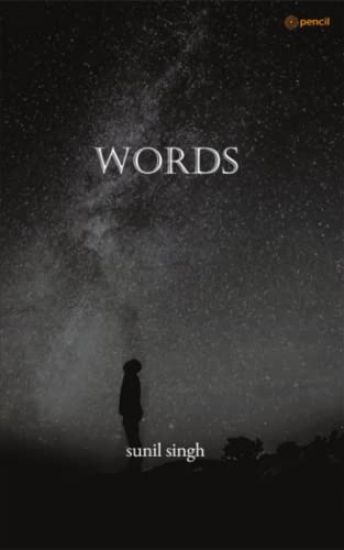
words is a collection of poems...its a self talk translated into poetry on different subjects viz. life, love, self-respect, storytelling, living, surviving . the poems are nothing however a collection of words organised to convey an emotion or a perception .. hence the name "words".. context & perception is everything and the poet has tried to use the context to convey his perception . finally these are just words for engagement and entertainment and if some of the poems can help someone to see things differently it could be educational too .
Math Recess: Playful Learning for an Age of Disruption

Math Recess: Playful Learning for an Age of Disruption

Sunil Singh; Brownell S. Christopher

Impress, LP
2019
sidottu
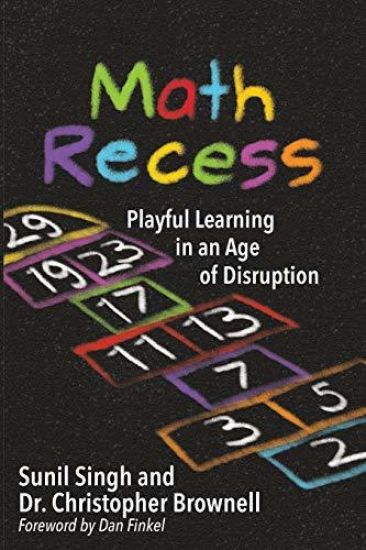
In the theme of recess, where a treasure chest of balls, ropes, and toys would be kept for children to play with, this book holds a deep and imaginative collection of fun mathematical ideas, puzzles, and problems. Written for anyone interested in or actively engaged in schools--parents, teachers, administrators, school board members--Math Recess by Sunil Singh and Chris Brownell shows math as a playful, fun, and wonderfully human activity that everyone can enjoy... for a lifetime "Math Recess is a breathless ride "--Kimberly Morrow-Leong, NCSM 2018 program chair, author of Mathematize It "I absolutely adore this book. With clarity, power, and exuberance, Chris and Sunil spell out and make concrete what it means to play."--James Tanton, PhD, founder of the Global Math Project"Here's to the dabblers. The tinkerers. The fantasizers. The curious ones who believe math education can and should be about play. Here's to the humanity of friendships that lead to mathematical love. Sunil Singh and Christopher S. Brownell are bold. Go, be bold with them. All are welcome."--Mary Kemper, president of the Texas Association of Supervisors of Mathematics"Through rich storytelling and powerful examples, Singh and Brownell make the clear case for upending math education as we know it and replacing it with an ideology we can all embrace: Mathematics is and can be deeply learned through play."--Denis Sheeran, author, Instant Relevance and Hacking Math "Disruption begins with 'Re.' Rather than trying to fix a broken system, it is time to reimagine a new one, and Math Recess completely satisfies my appetite for destruction."--Brian Aspinall, educator, author of Code Breaker and Block Breaker
Pi of Life

Pi of Life

Sunil Singh

Rowman Littlefield
2017
sidottu
Is the most important language in the universe also capable of making us happy in simple and profound ways? Can we really weave the foundations of lifelong joy—humility, gratitude, connection, etc.—through the apparent complexity of numbers? Have we oversold the practicality of mathematics, while ignoring its larger and more human purposes—happiness? In Pi of Life: The Hidden Happiness of Mathematics, Sunil Singh takes the readers on a unique adventure, discovering that all the elements that are essential for lifelong happiness are deeply intertwined with the magic of mathematics. Blending classic wisdom with over 100 pop culture references—music, television and film—Singh whimsically switches the lens in this book from the traditional society teaching math to a new and bold math teaching society. Written with charming buoyancy and intimacy, he takes us on an emotional and surprising journey through the deepest goldmine of mathematics—our personal happiness.
Pi of Life

Pi of Life

Sunil Singh

Rowman Littlefield
2017
nidottu
Is the most important language in the universe also capable of making us happy in simple and profound ways? Can we really weave the foundations of lifelong joy—humility, gratitude, connection, etc.—through the apparent complexity of numbers? Have we oversold the practicality of mathematics, while ignoring its larger and more human purposes—happiness? In Pi of Life: The Hidden Happiness of Mathematics, Sunil Singh takes the readers on a unique adventure, discovering that all the elements that are essential for lifelong happiness are deeply intertwined with the magic of mathematics. Blending classic wisdom with over 100 pop culture references—music, television and film—Singh whimsically switches the lens in this book from the traditional society teaching math to a new and bold math teaching society. Written with charming buoyancy and intimacy, he takes us on an emotional and surprising journey through the deepest goldmine of mathematics—our personal happiness.