
Kirjailija
Supriya Singh
Kirjat ja teokset yhdessä paikassa: 15 kirjaa, julkaisuja vuosilta 2013–2026, suosituimpiin kuuluu Agni y microbioma. Vertaile teosten hintoja ja tarkista saatavuus suomalaisista kirjakaupoista.
15 kirjaa
Kirjojen julkaisuvuodet: 2013–2026.
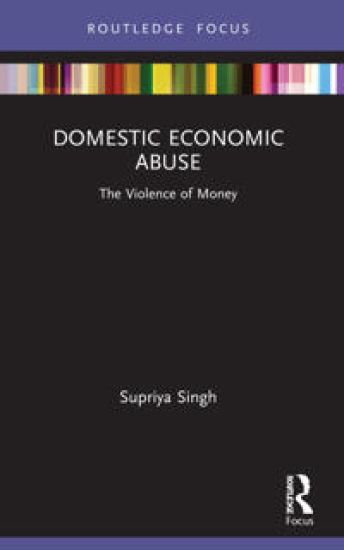
Supriya Singh tells the stories of 12 Anglo-Celtic and Indian women in Australia who survived economic abuse. She describes the lived experience of coercive control underlying economic abuse across cultures. Each story shows how the woman was trapped and lost her freedom because her husband denied her money, appropriated her assets and sabotaged her ability to be in paid work. These stories are about silence, shame and embarrassment that this could happen despite professional and graduate education. Some of the women were the main earners in their household. Women spoke of being afraid, of trying to leave, of losing their sense of self. Many suffered physical and mental ill-health, not knowing what would trigger the violence. Some attempted suicide. None of the women fully realised they were suffering family violence through economic abuse, whilst it was happening to them. The stories of Anglo-Celtic and Indian women show economic abuse is not associated with a specific system of money management and control. It is when the morality of money is betrayed that control becomes coercive. Money as a medium of care then becomes a medium of abuse. The women’s stories demonstrate the importance of talking about money and relationships with future partners, across life stages and with their sons and daughters. The women saw this as an essential step for preventing and lessening economic abuse. A vital read for scholars of domestic abuse and family violence that will also be valuable for sociologists of money.

Effet de diff?rentes concentrations de conservateur sur la conservation.
Jitendra Kumar; Balveer Singh; Supriya Singh
Editions Notre Savoir
2023
pokkari

Efeito de diferentes concentra??es de conservante no armazenamento
Jitendra Kumar; Balveer Singh; Supriya Singh
Edicoes Nosso Conhecimento
2023
pokkari
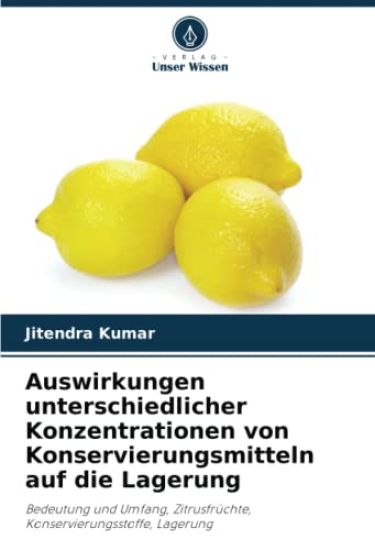
Auswirkungen unterschiedlicher Konzentrationen von Konservierungsmitteln auf die Lagerung
Jitendra Kumar; Balveer Singh; Supriya Singh
Verlag Unser Wissen
2023
pokkari
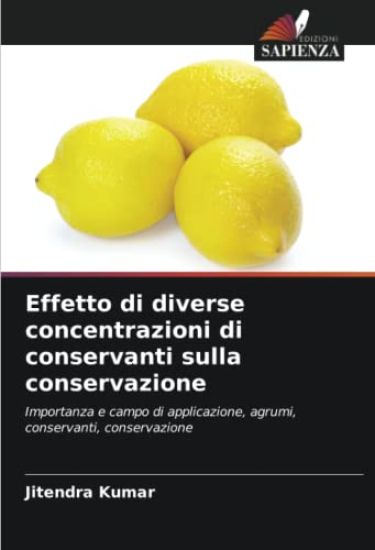
Effetto di diverse concentrazioni di conservanti sulla conservazione
Jitendra Kumar; Balveer Singh; Supriya Singh
Edizioni Sapienza
2023
pokkari

Efecto de diferentes concentraciones de conservante en el almacenamiento
Jitendra Kumar; Balveer Singh; Supriya Singh
Ediciones Nuestro Conocimiento
2023
nidottu

Do you like the idea of Social Media Management but don't know how exactly to get started? Or have you started but just feel stuck, unable to land high-quality clients while also striking a good work-life balance? If you found yourself saying yes to any of these, you've picked up just the right book. In here you get access to all the secrets you need to take your business off the ground and land your first and successive clients. From how to get rid of competition to how to manage time, this book is packed with actionable, easy to implement steps that will help you build a business from your phone but not tied to it.
Supriya Singh tells the stories of 12 Anglo-Celtic and Indian women in Australia who survived economic abuse. She describes the lived experience of coercive control underlying economic abuse across cultures. Each story shows how the woman was trapped and lost her freedom because her husband denied her money, appropriated her assets and sabotaged her ability to be in paid work. These stories are about silence, shame and embarrassment that this could happen despite professional and graduate education. Some of the women were the main earners in their household. Women spoke of being afraid, of trying to leave, of losing their sense of self. Many suffered physical and mental ill-health, not knowing what would trigger the violence. Some attempted suicide. None of the women fully realised they were suffering family violence through economic abuse, whilst it was happening to them. The stories of Anglo-Celtic and Indian women show economic abuse is not associated with a specific system of money management and control. It is when the morality of money is betrayed that control becomes coercive. Money as a medium of care then becomes a medium of abuse. The women’s stories demonstrate the importance of talking about money and relationships with future partners, across life stages and with their sons and daughters. The women saw this as an essential step for preventing and lessening economic abuse. A vital read for scholars of domestic abuse and family violence that will also be valuable for sociologists of money.
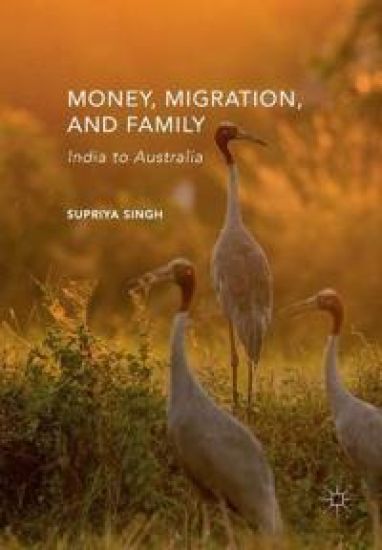
This book tells the story of nearly five decades of Indian migration to Australia from the late 1960s to 2015, through the eyes of migrants and their families. Firstly, there is the marked increase of Indian migrants, shifting from the earlier professionals to a dominance of student-migrants. The India-born in Australia are the fourth largest overseas born group. Secondly, remittances flow two ways in families between Australia and India. Thirdly, family communication across borders has become instantaneous and frequent, changing the experience of migration, family and money. Fourthly, mobility replaces the earlier assumption of settlement. Recent migrants hope to settle, but the large group who have come to study face a long period of precarious mobility. Lastly, recent migrants re-imagine the joint family in Australia, buying homes to accommodate siblings and parents. This is changing the contours of some major cities in Australia.
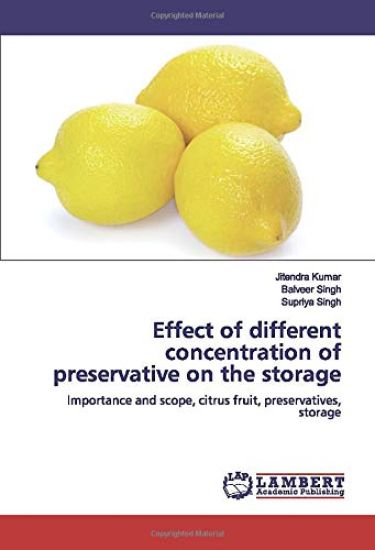
Effect of different concentration of preservative on the storage
Jitendra Kumar; Balveer Singh; Supriya Singh
Lap Lambert Academic Publishing
2018
nidottu
This book tells the story of nearly five decades of Indian migration to Australia from the late 1960s to 2015, through the eyes of migrants and their families. Firstly, there is the marked increase of Indian migrants, shifting from the earlier professionals to a dominance of student-migrants. The India-born in Australia are the fourth largest overseas born group. Secondly, remittances flow two ways in families between Australia and India. Thirdly, family communication across borders has become instantaneous and frequent, changing the experience of migration, family and money. Fourthly, mobility replaces the earlier assumption of settlement. Recent migrants hope to settle, but the large group who have come to study face a long period of precarious mobility. Lastly, recent migrants re-imagine the joint family in Australia, buying homes to accommodate siblings and parents. This is changing the contours of some major cities in Australia.
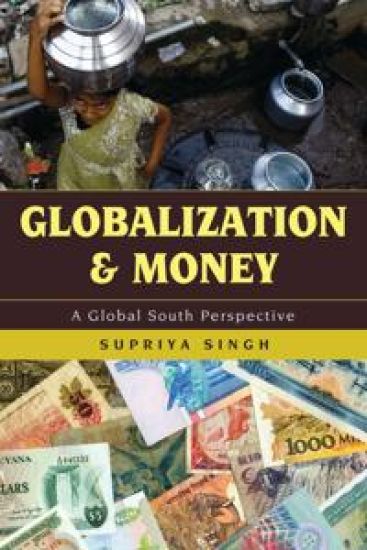
Globalization and Money explores how men and women, particularly the poor and the unbanked in the global South, use money in ways that empower themselves and their families. Supriya Singh argues that money as a medium of relationships across cultures is a central component of globalization. She deftly weaves theory and individual stories to show how money is emblematic of interconnected markets, the half of the world that is unbanked, and gender disparities. She shows how men’s and women’s banking patterns are tied to their management of money in the household. Migrants send money home to show they care for their families and communities left behind. Yet these remittances are far from symbolic; instead they represent more than three times the total amount of official development assistance. This book illustrates how many of the most exciting changes in harnessing people’s savings; widening credit and insurance; and lowering the cost of technologies, payments and money transfers are taking place in Africa, Asia, and Latin America. Singh demonstrates how strategies to help the poor and marginalized have gone global in South–South conversations, making us rethink the contours of globalization and money.
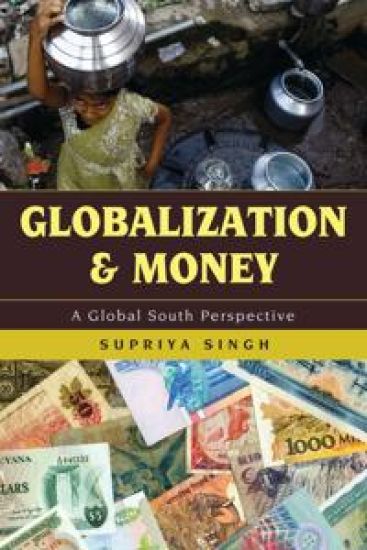
Globalization and Money explores how men and women, particularly the poor and the unbanked in the global South, use money in ways that empower themselves and their families. Supriya Singh argues that money as a medium of relationships across cultures is a central component of globalization. She deftly weaves theory and individual stories to show how money is emblematic of interconnected markets, the half of the world that is unbanked, and gender disparities. She shows how men’s and women’s banking patterns are tied to their management of money in the household. Migrants send money home to show they care for their families and communities left behind. Yet these remittances are far from symbolic; instead they represent more than three times the total amount of official development assistance. This book illustrates how many of the most exciting changes in harnessing people’s savings; widening credit and insurance; and lowering the cost of technologies, payments and money transfers are taking place in Africa, Asia, and Latin America. Singh demonstrates how strategies to help the poor and marginalized have gone global in South–South conversations, making us rethink the contours of globalization and money.