

Kirjojen hintavertailu – 12 903 724 kirjaa ja 27 kauppaa

Kirjailija

Suren Pillay

Kirjat ja teokset yhdessä paikassa: 2 kirjaa, julkaisuja vuosilta 2011–2024, suosituimpiin kuuluu Glänta 2(2011) Biopolitiken, begäret, rasismen. Vertaile teosten hintoja ja tarkista saatavuus suomalaisista kirjakaupoista.

2 kirjaa

Kirjojen julkaisuvuodet: 2011–2024.

Glänta 2(2011) Biopolitiken, begäret, rasismen

Glänta 2(2011) Biopolitiken, begäret, rasismen

Johannes Anyuru; Cesilie Holck; Tobias Hübinette; Catrin Lundström; Andrés Stoopendaal; Mette Moestrup; Suren Pillay; Gustavo Perillo Nogueira; Angela Mitropoulos; Sven-Olov Wallenstein; Axel Andersson; Bill Rankin; Jacques Rancière; Mara Lee; Linn Hansén; Göran Dahlberg; Hedvig Härnsten

Glänta
2011
lehtivihko, moniste
Rasismen har muterat. Dess närvaro är omisskännlig, men tycks samtidigt allt svårare att tala om. Den senaste tiden har vi ägnat åt att finna nya och gamla frågor och svar, varianter av de som återaktualiserats efter förra valet. Hypotesen har varit att rasismens nya former ? och motståndet mot dem ? kanske är lättare att urskilja i ljuset av begrepp som biopolitik och begär.
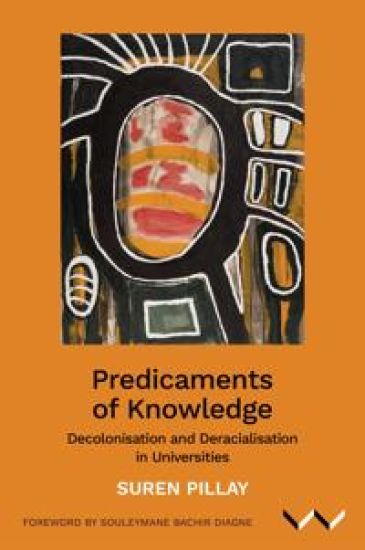
Predicaments of Knowledge

Predicaments of Knowledge

Suren Pillay

WITS UNIVERSITY PRESS
2024
pokkari
Predicaments of Knowledge explores the difficult questions South African universities face after apartheid: Is there a difference between Africanising a university and decolonising a university? What about differences between deracialising and decolonising the curricula taught at universities across disciplines? Through a range of reflections on race, language, colonial, postcolonial and decolonial knowledge projects from Africa and Latin America, this book explores the pitfalls and possibilities that face a post-apartheid generation inventing the future of knowledge. The distinctions between Africanisation, decolonisation and deracialisation are often conflated in the political demands put to universities. Suren Pillay emphasises all three as important but distinct imperatives. If an intervention is undertaken with the aim of decolonising the university while actually addressing deracialisation, it can undermine the effort to decolonise. Similarly, if an initiative to Africanise the university does not address decolonisation, both processes can be undermined. Drawing on more than two and a half decades of the author's participation in these debates, these essays aim to intervene in and elucidate questions and predicaments, rather than offering blue prints; they are dialogical in spirit even when polemical in tone. In conversation with existing continental African and Latin American experiences, they offer incisive reflections on current South African debates.